Jeddah to Moscow Direct: Saudia Launches Boeing 787 Flights, Al Balad Heritage Guide, and Red Sea Travel

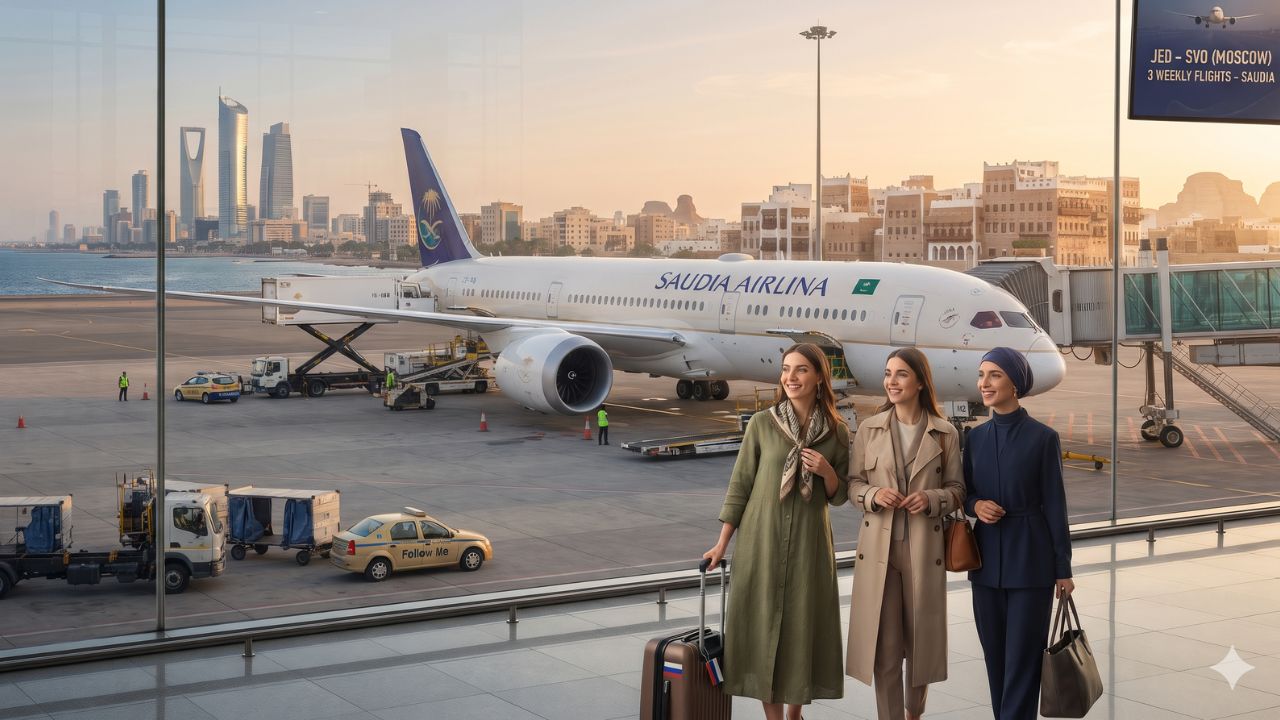
While many international travelers still imagine Saudi Arabia solely through strict pilgrimage quotas or desert oil fields, the Kingdom welcomed approximately 123 million domestic and international tourists in 2025 alone—including over 30 million international arrivals. On 1 December 2026, flag carrier Saudia will unlock an essential new air corridor by introducing three weekly nonstop flights connecting Jeddah’s King Abdulaziz International Airport (JED) directly to Moscow’s Sheremetyevo International Airport (SVO) aboard Boeing 787-9 Dreamliner widebody aircraft.
Supported by Saudi Arabia's state-backed Air Connectivity Program (ACP), the new maritime-to-metropolis link complements existing nonstop services between Riyadh and Moscow. For independent travelers, cultural enthusiasts, and winter sun-seekers in northern Eurasia, the connection bypasses Gulf transit stops, landing passengers directly on the historic Red Sea shore where centuries-old merchant coral towers meet contemporary coastal development.
The Transcontinental Route: Saudia's Dreamliner Schedule and Aviation Strategy
The three weekly flights between Jeddah and Moscow Sheremetyevo represent a deliberate expansion under the Kingdom's National Tourism Strategy and National Aviation Strategy. Operating the long-haul sector with the twin-aisle Boeing 787-9 Dreamliner provides travelers with enhanced cabin humidity, lower cabin altitude pressurization, and full lie-flat seating in business class.
The route's inception highlights the aggressive route-development push managed by the Air Connectivity Program. Published operational records show that during 2025, the program collaborated with 17 partner airlines across 69 international flight routes, successfully generating around 4.8 million airline seats to feed Saudi destinations.
Travelers can monitor booking calendars and route announcements directly through Saudia.
| Flight & Strategic Metric | Service Parameter | Operational Context |
|---|---|---|
| Operating Airline | Saudia (Saudi Arabian Airlines) | National flag carrier of Saudi Arabia |
| Inaugural Flight Date | 1 December 2026 | Expands winter transcontinental connectivity |
| Weekly Frequency | 3 weekly nonstop rotations | Complements existing direct Riyadh–Moscow service |
| Aircraft Deployment | Boeing 787-9 Dreamliner | Twin-aisle widebody with two-class layout |
| Airport Pair | King Abdulaziz Int'l (JED) ↔ Sheremetyevo Int'l (SVO) | Terminal 1 operations in Jeddah |
| Air Connectivity Program Metrics | 17 airlines, 69 routes, ~4.8M seats (2025) | Mandated state route development initiative |
| National Visitor Benchmarks | ~123 million total visitors in 2025 | Target: 150 million annual visitors by 2030 |
What Makes Jeddah Different: Coral Architecture, Souks, and Coastal Rhythm
Unlike the hyper-modern vertical skyline of Riyadh, Jeddah possesses an atmospheric, salt-crusted maritime identity shaped by centuries of Indian Ocean trade and African pilgrim arrivals. The beating heart of this identity is the historic Al Balad quarter, protected as a UNESCO World Heritage site since 2014 under Historic Jeddah, the Gate to Makkah.
Walking through Al Balad reveals an architectural vernacular found nowhere else in the Arabian Peninsula:
- Tower Houses (Burj): Built in the late 19th century by wealthy Hijazi merchant dynasties, these four-to-six-story residences were constructed entirely from fossilized marine coral stone harvested from the Red Sea reef shelf, reinforced with acacia wood timbers.
- Intricate Rawasheen Lattices: Ornate teak and mahogany projecting bay windows—known locally as rawasheen—envelope the building facades. Designed to catch humid sea breezes and channel cooling air through interior rooms while preserving household privacy, they cast geometric lace shadows across the alleys.
- Living Heritage Markets: Wander through Souq Al Alawi, the oldest market street in the Kingdom, where frankincense burners, sumac, wild cardamom, and Yemeni amber perfume the air.
Jeddah serves a dual purpose as both a destination and a regional springboard:
- The Gateway to Holy Cities: For religious visitors, the high-speed Haramain rail line directly links King Abdulaziz Airport to Mecca (35 minutes) and Medina (under two hours).
- The Red Sea Marine Shelf: Heading north brings travelers to virgin coral reefs and luxury archipelagos developed under The Red Sea ecotourism initiative, where zero-emission watercraft tour untouched barrier islands.
- Inland Archaeology: Quick domestic connections link Jeddah to AlUla, where ancient Nabataean tombs carved into desert sandstone monoliths mirror Petra without the crowds.
Travelers can research regional touring regulations and seasonal events on the official Visit Saudi portal.
The Mutual 90-Day Visa Exemption Framework
A primary catalyst for this new air route is regulatory diplomacy. In December 2025, Saudi Arabia and the Russian Federation concluded a formal bilateral mutual visa-exemption agreement.
Key operational stipulations of the visa agreement include:
- Eligible Passports: Covers ordinary, diplomatic, and special passport holders from both nations.
- Permitted Duration of Stay: Allows qualifying visitors to remain up to 90 days within any 365-day period for leisure tourism, personal visits, family reunions, and business meetings.
- Explicit Exclusions: The agreement explicitly excludes employment, higher education, long-term residential permits, and the formal religious Hajj pilgrimage, which continues to require dedicated, quota-managed Hajj visas issued through official pilgrimage channels.
Combining simplified entry formalities with direct widebody flights removes administrative friction for independent travelers designing customized winter itineraries.
Visitor Insider Tips: Exploring Jeddah and Beyond Like an Insider
- Timing Your Old Town Exploration: Never explore Al Balad before 4:30 PM. The coral buildings retain extreme heat during midday, and traditional souk vendors do not raise their shutters until late afternoon. Arrive around the Asr afternoon prayer call, walk the pedestrian alleys under the glowing rawasheen at dusk, and stay for open-air tea at historic cafes like Café Magad.
- Culinary Specialties You Must Seek Out: Skip standard hotel buffets and taste authentic Hijazi street dishes. Order saleeg (slow-cooked fragrant rice infused with mastic, cardamom, and broth, topped with crisp roasted chicken), fresh Red Sea najil (coral trout fried in spiced batter at the central fish market, Souq Al Bangalah), and sweet cardamom-spiced ma'amoul date pastries.
- Navigating Local Etiquette: While dress codes have relaxed dramatically under Vision 2030, modesty remains respected in public spaces. Lightweight linen trousers and shirts with sleeve coverage work best in the humid climate. While non-Muslim visitors are welcome across Jeddah, the city limits leading to holy Mecca and Medina are strictly signposted and restricted according to Saudi religious law.
- Airport Transit Protocol: King Abdulaziz International Airport is massive. Terminal 1 features a colossal 14-meter-tall indoor cylindrical aquarium housing thousands of Red Sea marine creatures. Build in at least 90 minutes for passport control and internal transit between departure gates and rail stations.
- Local Transportation Logistics: Rideshare apps like Uber and Careem operate reliably across the city and offer transparent fixed pricing compared to hailed street taxis, whose meters are rarely switched on for foreign arrivals.
Cultural and Environmental Context: Balancing Modernity with Marine Conservation
As Saudi Arabia accelerates toward its target of 150 million annual visitors by 2030, balancing rapid hospitality construction with ecological and historic preservation has become a defining municipal challenge. In Al Balad, the Ministry of Culture has undertaken a meticulous restoration campaign, stabilizing over 600 fragile coral-stone structures using traditional lime plasters and hand-carved wood to reverse decades of structural decay.
Along the marine shelf, tourism development encounters one of the most resilient coral ecosystems in the world. Red Sea corals display an unusual genetic tolerance to elevated sea temperatures and salinity levels.
To safeguard this biodiversity, regional conservation standards strictly regulate coastal dredging, enforce mandatory greywater filtration for waterfront hotels, and restrict vessel anchorage near pristine fringe reefs. Travelers are expected to utilize eco-friendly sunscreens, refrain from purchasing coral or seashell curios in local markets, and hire certified maritime boat skippers who utilize permanent mooring buoys.
FAQ: Visiting Jeddah in 2026
When do direct flights between Jeddah and Moscow commence?
Saudia launches its three weekly nonstop flights between Jeddah’s King Abdulaziz International Airport and Moscow Sheremetyevo on 1 December 2026 using Boeing 787-9 aircraft.
What are the entry terms under the mutual visa-exemption agreement?
Citizens with ordinary passports can visit for up to 90 days within a year for tourism, business, and family visits without a prior visa. Work, study, residency, and Hajj are excluded.
What is the best time of year to visit Jeddah?
The best travel window is from November through March, when daytime temperatures hover comfortably between 24°C and 29°C (75°F to 84°F) alongside pleasant coastal evening sea breezes.
Can non-Muslim travelers visit historic Al Balad in Jeddah?
Yes. Al Balad is fully open to all international travelers and cultural tourists. However, non-Muslim visitors cannot proceed past designated highway checkpoints toward holy Mecca or Medina.
Related Travel Guides
- Red Sea Coastal Marine Conservation and Island Ecotourism Standards
- Middle East Flight Connection Guides and Airport Transit Hubs
- Heritage Tourism and Ancient Silk Road Trade Routes
Where ancient coral stone meets the Red Sea tide, centuries of trading history now open directly to the northern winter.
This article is for informational purposes. Flight routes, passenger regulations, visa rules, and transit advisories are subject to change by airlines and aviation authorities. Readers are advised to verify schedules and travel documentation with relevant carriers and border agencies before departure.
Related Stories

Cozumel Welcomes Direct Europe Flights: Neos Milan Route, Reef Conservation, and Island Travel Guide

Saudi Arabia Maintains Ebola Travel Ban on Kenya Despite Africa CDC Plea for Lift