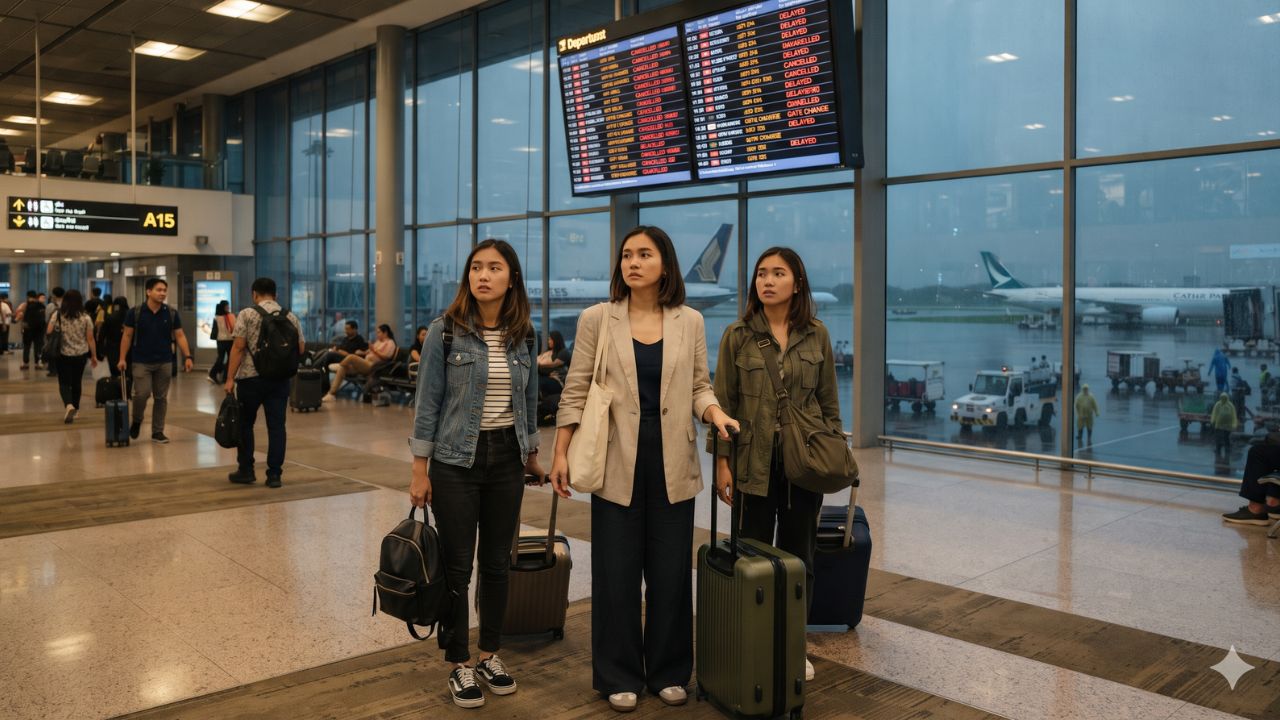
Over 450 Cancellations and 5,031 Delays Snarl Asia Travel Across Mumbai, Jakarta, and Hohhot

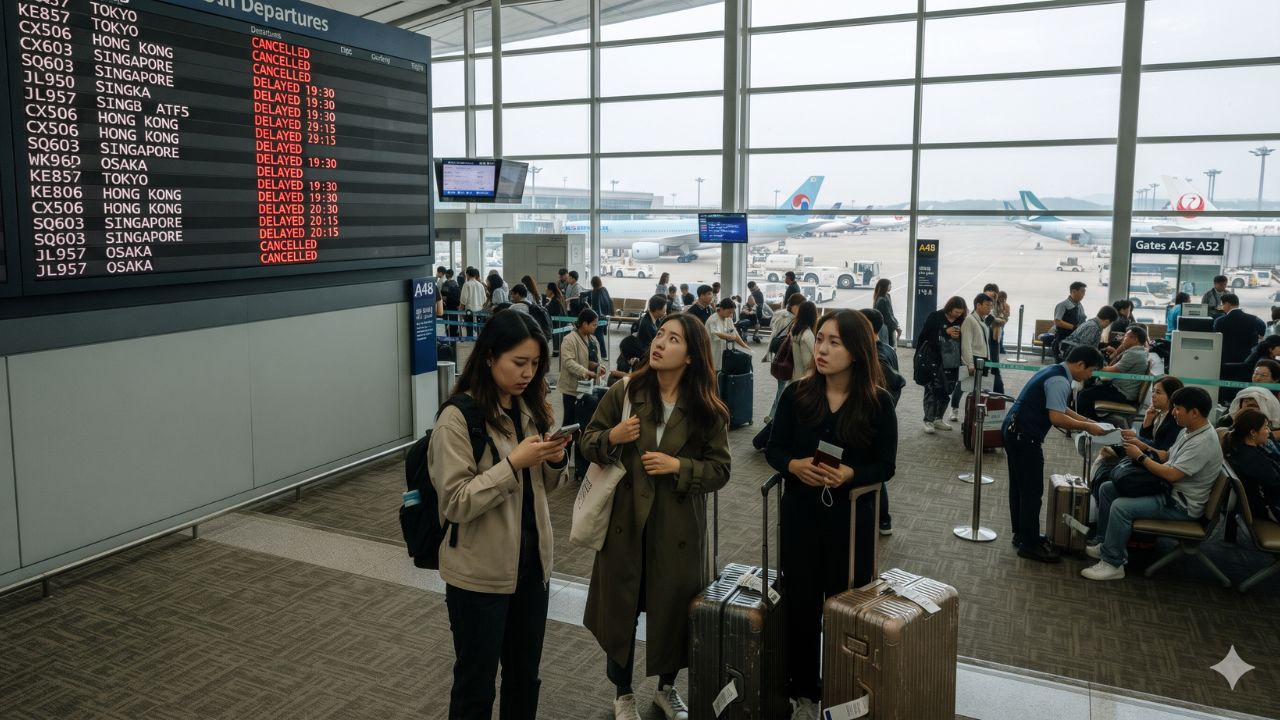
While seasonal shallow fog in New Delhi and convective thunderstorms over Ho Chi Minh City triggered regional flight holds, it was Jakarta's Soekarno-Hatta Airport that suffered the single highest cancellation tally in Asia, racking up 25 grounded flights alongside 249 delays as 5,031 flights stalled across Asian skies. Verified aviation records compiled on 5 November 2026 at 2:23 pm Eastern Time (corresponding to 6 November at 3:23 am China Standard Time) via FlightAware and regional monitors show 459 flight cancellations and 5,031 delays rippling through primary hubs and regional spokes.
This operational gridlock reflects compounding challenges across the region. Middle East security tensions and carrier suspensions disrupt Gulf links, Pakistani airspace restrictions force Indian flights onto longer southerly tracks, and Indonesian routes face forest-fire smoke. With major Indian and Chinese hubs logging heavy disruptions, thousands of connecting passengers face missed onward flights.
The Cascading Gridlock: Weather, Haze, and Airspace Bottlenecks
The disruption spans five distinct geographic sectors. In India, flight delays accumulated rapidly even without severe weather warnings. Chhatrapati Shivaji Maharaj International Airport in Mumbai recorded 394 delays and 18 cancellations, while Delhi's Indira Gandhi International logged 268 delays and 14 cancellations. The India Meteorological Department forecast shallow fog across New Delhi for 6 November, reducing runway visibility during morning departure banks.
In Southeast Asia, storms and haze caused severe backlogs. On 4 November, heavy rain and thunderstorms at Ho Chi Minh City's Tan Son Nhat forced controllers to cap arrival capacity at 16 flights per hour, assigning revised departure slots to 31 aircraft and spilling delays into Hanoi Noi Bai (176 delays, 3 cancellations) and Da Nang (50 delays, 3 cancellations). In Indonesia, peatland forest-fire smoke disrupted airports around Sampit and Palangka Raya, with services gradually restoring by 5 November.
Hub-by-Hub Disruption Profile: India, China, the Gulf, and East Asia
Across India, secondary hubs absorbed delays: Bengaluru recorded 147 delays and 16 cancellations, Ahmedabad logged 64 delays and five cancellations, Pune posted 53 delays and eight cancellations, Navi Mumbai had 37 delays and nine cancellations, and Kochi logged 25 delays and 11 cancellations, alongside Bagdogra, Calicut, and Jammu.
In China, Shanghai Pudong recorded 177 delays and 12 cancellations, Beijing Daxing logged 160 delays and eight cancellations, Guangzhou Baiyun saw 162 delays and six cancellations, Shenzhen Bao'an had 133 delays and six cancellations, and Wuhan Tianhe reported 132 delays and six cancellations. Inland, Hohhot Baita posted 20 delays and 11 cancellations, Xi'an Xianyang recorded 65 delays and 14 cancellations, and Kunming Changshui faced 55 delays and ten cancellations, alongside disruptions at Shanghai Hongqiao, Hangzhou Xiaoshan, Nanjing Lukou, Fuzhou Changle, Chongqing Jiangbei, and Beijing Capital.
In the Gulf, Riyadh logged 37 delays and 20 cancellations, Jeddah recorded 110 delays and 15 cancellations, and Dammam posted 54 delays and nine cancellations. Kuwait International saw 18 delays and 12 cancellations, Bahrain logged 24 delays and 12 cancellations, and Amman Queen Alia recorded 20 delays and six cancellations. In the UAE, Dubai logged 244 delays and seven cancellations, Abu Dhabi had 110 delays and three cancellations, and Sharjah recorded 60 delays and three cancellations.
In Southeast Asia, Jakarta led cancellations with 249 delays and 25 cancellations. Bali Ngurah Rai logged 71 delays and four cancellations, Surabaya Juanda reported 36 delays and five cancellations, and Batam Hang Nadim had 29 delays and three cancellations. In East Asia, Tokyo Haneda logged 211 delays and one cancellation, while Jeju and Seoul Gimpo each reported three cancellations, with 98 and 60 delays.
Airport Delays, Cancellations, and Carrier Disruption Data
The table below summarizes operational disruption metrics across major airlines operating in Asian airspace.
| Airline Operator | Flight Cancellations | Cancellation Rate | Flight Delays | Delay Rate | Operational Coverage |
|---|---|---|---|---|---|
| SpiceJet | 45 | 37% | 33 | 27% | Indian domestic and regional routes |
| Akasa Air | 39 | 15% | 43 | 16% | Indian domestic trunk network |
| China Eastern | 34 | 1% | 300 | 12% | Chinese domestic and East Asian routes |
| Tianjin Airlines | 23 | 7% | 21 | 7% | Northern and Western China domestic |
| Batik Air | 18 | 5% | 82 | 26% | Indonesian domestic and ASEAN routes |
| XiamenAir | 18 | 2% | 56 | 8% | Coastal China and regional Asia |
| Saudia | 16 | 3% | 51 | 11% | Middle East and international routes |
| Air China | 15 | 0% (rounded) | 125 | 7% | Chinese domestic and global routes |
| IndiGo | 3 | 0% (rounded) | 568 | 25% | Pan-Indian network and South Asia |
| Air India | 4 | 0% (rounded) | 148 | 23% | Indian domestic and long-haul routes |
| Jetstar | 5 | 1% | 111 | 28% | Asia-Pacific low-cost leisure |
| Emirates | 1 | 0% (rounded) | 117 | 21% | Global long-haul hub connections |
| flydubai | 4 | 1% | 89 | 32% | Regional Middle East and Central Asia |
| Vietnam Airlines | 9 | 2% | 77 | 18% | Southeast Asian domestic and regional |
| Thai Vietjet Air | 1 | 0% (rounded) | 74 | 46% | Thailand domestic and regional |
IndiGo experienced heavy delay volume with 568 flights delayed (25%), while SpiceJet suffered the highest cancellation proportion, cutting 37 percent of scheduled flights (45 cancellations).
Visitor Insider Tips: Rebooking Hacks, Rail Alternatives, and Compensation Rights
- Use Mobile Rebooking Channels: Airport service desks in Mumbai, Delhi, and Jakarta exceed two hours during disruptions. Rebook via your airline's app or messaging desk.
- Know Indian DGCA Passenger Rights: Under the Directorate General of Civil Aviation India passenger charter, carriers must provide free refreshments for delays over two hours, and full refunds or rerouting for cancellations.
- Opt for Express Rail Corridors: Between Mumbai, Pune, and Ahmedabad, bypass flights by taking the Vande Bharat Express, reaching cities in three to four hours.
- Document Delay Notices for Insurance: Retain boarding passes and secure written delay proof from airline staff to claim hotel expenses.
- Allow Long Transit Buffers in Vietnam: Transiting Ho Chi Minh City or Hanoi with Civil Aviation Authority of Vietnam carriers requires three-hour buffers during late-afternoon storms.
Cultural and Environmental Context: Meteorology, Forest Fires, and Airspace Detours
The fragility of Asia's aviation network highlights seasonal environmental pressures. In early winter, the Indo-Gangetic plain experiences thermal atmospheric inversions that trap particulate haze and moisture, creating shallow fog that slows morning runway movements across Delhi and northern India.
In Southeast Asia, agricultural peatland burning in Kalimantan and Sumatra creates persistent smoke, reducing visibility in regional Indonesian airports. Concurrently, geopolitical restrictions—such as the continuing closure of Pakistani airspace to Indian commercial carriers—force flights onto circuitous southerly detours over the Arabian Sea. These extended tracks add flight time and fuel consumption, leaving airlines without schedule buffers when local weather disrupts flight banks.
FAQ: Navigating Asian Flight Disruptions November 2026
What caused the 5,031 flight delays across Asia in early November 2026?
Disruptions stemmed from shallow fog in New Delhi, thunderstorm ground-stops in Ho Chi Minh City, forest-fire haze in Indonesia, and Pakistani and Middle Eastern airspace detours.
Which Asian airport recorded the highest number of cancellations?
Jakarta's Soekarno-Hatta International Airport (CGK) recorded the highest cancellation count among surveyed hubs, with 25 cancellations alongside 249 delays.
Are passengers entitled to meals during flight delays in India?
Yes. DGCA India regulations require airlines to provide complimentary refreshments and meals for domestic flights delayed beyond two hours.
What should I do if my connecting flight is delayed or canceled?
Use the airline app to request immediate rebooking, obtain written proof of disruption from airport personnel, and keep receipts for emergency food and accommodation.
As winter weather, seasonal haze, and airspace limits converge, travelers across Asia must build ample buffer times into their holiday itineraries.
Related Travel Guides
This article is for informational purposes. Flight routes, passenger regulations, visa rules, and transit advisories are subject to change by airlines and aviation authorities. Readers are advised to verify schedules and travel documentation with relevant carriers and border agencies before departure.
Related Stories
Malaysia Enters Northeast Monsoon Season as AirAsia Issues Urgent KLIA Terminal 2 Travel Advisory

Haiti Marine Weather Alert 2026: Navigating 6-Foot Waves and Storm Risks on Northern Coast