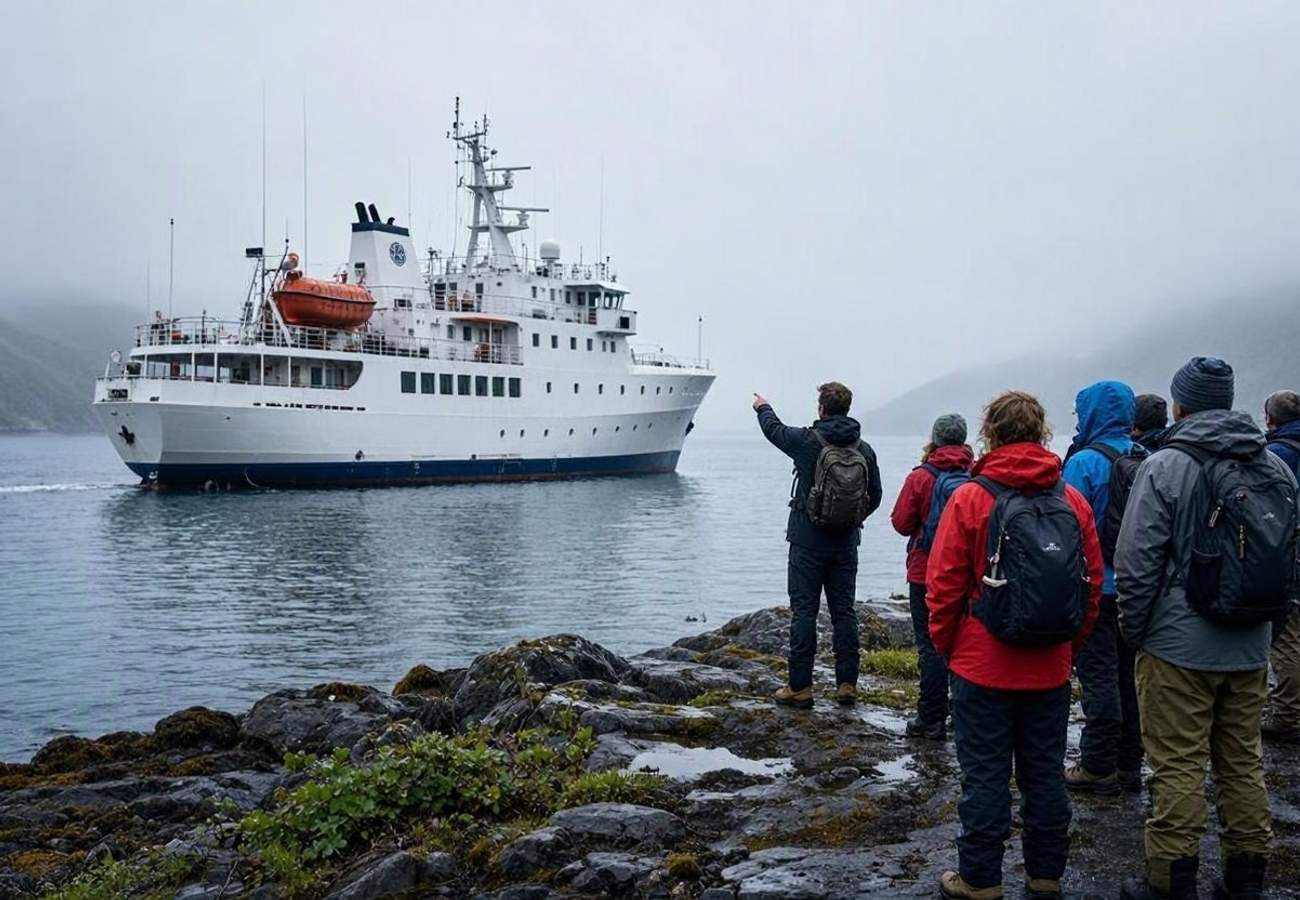
Quark Expeditions Completes Historic Snow Hill Helicopter Landing as 137 Guests Witness Over 4,000 Emperor Penguin Pairs in Antarctica

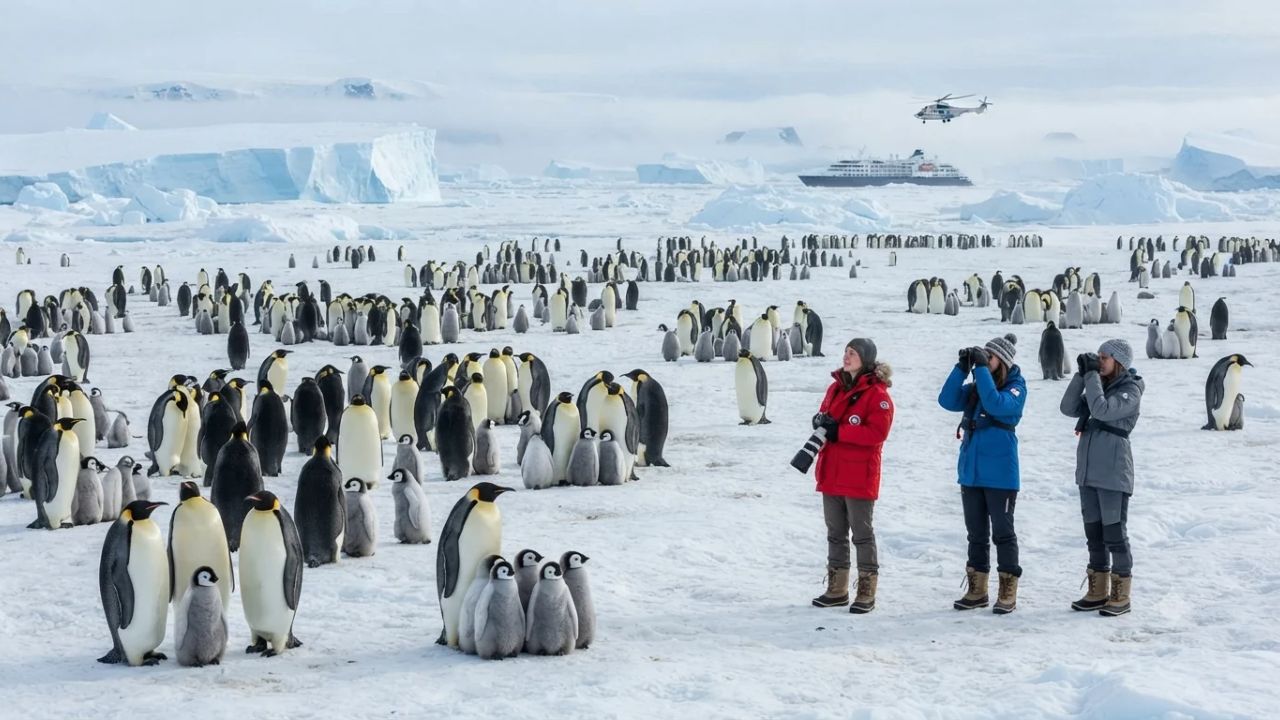
Quark Expeditions has achieved a major polar milestone in the Weddell Sea, safely transporting 137 passengers via twin-engine helicopters from the purpose-built polar vessel Ultramarine to the isolated Snow Hill Island emperor penguin colony. Landing across two days of carefully timed weather windows, guests walked across thick seasonal sea ice to observe more than 4,000 breeding pairs of emperor penguins and their newly hatched chicks in their natural habitat. Coming exactly 22 years after Quark Expeditions made polar tourism history by orchestrating the world's first commercial passenger visit to the rookery in 2004, the complex operation highlights how advanced dual-helicopter aviation, ice-class maritime engineering, and rigorous IAATO wildlife protocols have transformed specialist polar expeditions while preserving one of the planet's most fragile ecological frontiers.
The successful expedition to Snow Hill Island represents one of the most logistically demanding passenger operations ever mounted in commercial polar travel. Located on fast sea ice off the southern coast of Snow Hill Island in the western Weddell Sea, the colony is shielded by vast expanses of pack ice and massive tabular icebergs that routinely halt standard maritime navigation. Reaching the site required an intricate balance of satellite ice tracking, precision maritime handling by Captain Roy Laud, coordinated flight operations directed by Lead Pilot Jonathan Mutch, and expert ice guiding under Head Mountain Guide Phil Wickens, all unified under the command of Expedition Leader Ryan McDevitt.
========================================================================================
QUARK EXPEDITIONS SNOW HILL EMPEROR PENGUIN QUEST: EXPEDITION SCORECARD
========================================================================================
Operational Parameter             Mission Specification             Field Details
----------------------------------------------------------------------------------------
Target Wildlife Site              Snow Hill Emperor Colony          Southern sea ice, Weddell Sea
Vessel Platform                   Ultramarine                       Polar Class 6, 199-guest capacity
Passenger Participation           137 Expedition Guests             Divided into small flight cohorts
Aviation Transport                Two Twin-Engine H145 Helicopters  Shipboard flight deck transfers
Observed Colony Population        >4,000 Breeding Pairs + Chicks    Aptenodytes forsteri rookery
Mission Duration                  48-Hour Operational Window        Staged across two landing days
Historical Benchmark              22nd Anniversary of 2004 First    Pioneered by Susan Adie
Expedition Command                Ryan McDevitt                     Expedition Leader
Vessel Master                     Captain Roy Laud                  Master, Ultramarine
Flight Operations Leader          Jonathan Mutch                    Lead Pilot
Safety & Mountain Operations      Phil Wickens                      Head Mountain Guide
Final Colony Access Route         Guided Fast-Ice Trek              Designated perimeter route
Wildlife Protection Benchmark     IAATO Polar Wildlife Standards    Mandatory 5-15 meter buffer zone
Biosecurity Controls              Virkon S Decontamination          Avian pathogen mitigation
========================================================================================
Source: Quark Expeditions Operational Field Briefing (November 2026).
========================================================================================
The Geographic Challenge: Navigating the Frozen Reaches of the Weddell Sea
Snow Hill Island lies off the east coast of the Antarctic Peninsula, separated from James Ross Island to the west by the Admiralty Sound and bordered on the east by the swirling waters of the Weddell Sea. First sighted in 1843 by British explorer Sir James Clark Ross, who named it Snow Hill because its snow-covered dome contrasted sharply with the bare rock of nearby islands, the area has long held a legendary status in the annals of heroic polar exploration.
In 1902, the Swedish South Polar Expedition led by Dr. Otto Nordenskjöld was forced to winter at Snow Hill Island when their ship, the Antarctic, was trapped and crushed by pack ice in Erebus and Terror Gulf. The stone hut built by Nordenskjöld’s team still stands on the island's northern tip, preserved as Historic Site and Monument No. 39 under the Antarctic Treaty System.
The emperor penguin colony itself does not nest on rocky soil; instead, it occupies the fast ice that forms each winter off the island’s southern edge. This marine environment presents extreme operational challenges:
- Circulating Weddell Sea Gyre: A massive clockwise ocean current pushes heavy multi-year sea ice against the eastern flank of the Antarctic Peninsula, creating unpredictable pack-ice jams that can trap ships within hours.
- Tabular Iceberg Fields: Gigantic tabular icebergs calving from the Larsen Ice Shelf drift northwards through the western Weddell Sea, requiring constant radar watch and flexible ship route adjustments.
- Fragile Fast-Ice Platform: Fast ice is sea ice that is frozen solid and "fastened" to the coastline or grounded icebergs. It provides the firm, stable platform that emperor penguins require to rear their young, but it prevents marine vessels from getting within miles of the nesting grounds.
- Volatile Katabatic Winds: Cold, dense air masses tumble down from the Antarctic Ice Sheet, generating abrupt wind shifts and squalls that can reduce aviation visibility from twenty nautical miles to zero in minutes.
Because the rookery is positioned miles across unstable sea ice, no passenger vessel can dock or land Zodiac inflatable boats directly at the colony. As a result, the rookery remained completely inaccessible to international travelers until specialized aerial polar operations were developed.
========================================================================================
WEDDELL SEA MARITIME & ENVIRONMENTAL DYNAMICS COMPARISON
========================================================================================
Feature                    Western Antarctic Peninsula           Western Weddell Sea (Snow Hill)
----------------------------------------------------------------------------------------
Dominant Ice Type          Seasonal pack ice & brash ice         Heavy multi-year fast ice & pack
Iceberg Frequency          Moderate bergy bits & growlers        Giant tabular shelf-calved bergs
Maritime Access            Reliable Zodiac landing beaches       Impenetrable coastal fast ice
Summer Navigation Window   Late October through April            Short, variable late-spring window
Predominant Wildlife       Gentoo, Chinstrap, Adelie Penguins    Emperor Penguins, Weddell Seals
Aviation Requirement      Optional sightseeing flights          Mandated for interior access
Primary Weather Hazard     Rapid rain/snow maritime fronts       Freezing fog, katabatic squalls
========================================================================================
Aviation Engineering: How the Dual H145 Helicopters Executed the Small-Group Shuttle
The cornerstone of Quark Expeditions' successful mission was the deployment of the two twin-engine Airbus H145 helicopters stationed permanently aboard the Ultramarine. Built specifically for polar exploration, the Ultramarine is equipped with two internal hangars and dedicated dual helidecks, allowing both aircraft to be readied, launched, and retrieved simultaneously without reconfiguring ship deck structures.
Transporting 137 passengers to a remote polar ice shelf requires rigorous planning. In the sub-zero environment of the Weddell Sea, aviation operations face distinct thermodynamic challenges:
- Carb-Ice and Turbine Protection: Modern turbine engines must operate with intake particle separators and anti-icing systems to avoid compressor stalls caused by supercooled cloud moisture.
- Payload and Fuel Balancing: Helicopters must carry enough fuel reserve to hold or divert in the event that sea smoke or sudden ground blizzards obscure the ship's landing deck, while carrying small passenger groups to avoid high gross weight over sea ice.
- Ice Staging Selection: Aircraft cannot land directly at or adjacent to the emperor penguin colony. Rotors generate acoustic signatures and rotor-wash winds that can scatter penguin creches, exposing vulnerable chicks to predatory south polar skuas or freezing winds.
Under the direction of Lead Pilot Jonathan Mutch, the aviation team established a remote staging area on firm sea ice located well over one mile away from the rookery perimeter. Flying at regulated altitudes designed to minimize wildlife disturbance, the helicopters carried guests in small cohorts across the icebound expanse of the Weddell Sea, gliding past massive blue tabular icebergs before touching down gently on the designated sea-ice helipad.
The flight operations were spread across two full days, allowing the flight deck crew to monitor ambient barometric pressure, wind vectors, and surface contrast. By moving passengers in small groups, the expedition team ensured that guest numbers on the ice remained tightly controlled, keeping human presence unobtrusive and adhering strictly to international polar safety codes.
========================================================================================
ULTRAMARINE AVIATION LOGISTICS SCORECARD
========================================================================================
Helicopter Model:          Airbus H145 Twin-Engine Polar Specification
Hangar & Flight Facility:  Dual internal hangars with integrated launch deck
Group Staging Size:        Small cohorts of 6 to 8 passengers per rotation
Aviation Buffer Distance:  Landing staging zone established >1.5 km from active rookery
Flight Path Profile:       Maintained above 2,000 feet AGL during transit until final approach
Weather Thresholds:        Minimum visual ground reference; wind speeds below 25 knots
Emergency Provisioning:    Dual polar survival bags, satellite beacons, cold-weather shelter
========================================================================================
The Fast-Ice Trek: Field Safety and Mountain Guides on the Frozen Sea
Once the helicopters set down on the sea ice, the second phase of the journey began: a guided trek across the frozen ocean to the viewing perimeter of the rookery. Moving dozens of travelers over sea ice requires an entirely different skill set from standard alpine guiding, requiring intimate familiarity with oceanographic ice dynamics.
Under the leadership of Head Mountain Guide Phil Wickens, the safety team conducted comprehensive reconnaissance before allowing the first passenger cohort to step onto the ice. Guided by ice-probing techniques and crevasse rescue protocols, the guides mapped out a secure walking route that avoided active tidal cracks, slushy brine pockets, and pressure ridges caused by tectonic compression of the pack ice.
Ice Safety and Surface Preparation
Fast ice is subjected to constant ocean swell and tidal movement. Even when ice appears solid on the surface, tidal ranges can cause flexure cracks along the shoreline and around grounded icebergs. Phil Wickens and his guide team marked the safe corridor with bright field flags, establishing survival caches equipped with polar tents, emergency rations, medical kits, and satellite communications along the route.
Polar Gear and Physical Mobility
Each passenger was outfitted in specialized polar gear:
- Multi-layer breathable base and mid-layers beneath windproof, waterproof Gore-Tex outer shells.
- Heavy-duty insulated polar expedition boots designed to prevent conductive heat loss through the soles into the sea ice.
- Traction devices and adjustable trekking poles to ensure stability over wind-sculpted sastrugi (hard snow ridges) and glazed melt-crusts.
- Protective face masks, polar goggles, and high-SPF sun protection to counter intense ultraviolet reflection off the snowfield.
The trek across the sea ice was an essential component of the wilderness experience. Walking through the stark, monochrome expanse of the Weddell Sea gave travelers a direct, physical appreciation for the isolation of Antarctica. Rather than stepping straight out of a transport vehicle into an observation pen, passengers approached the colony on foot at an unhurried, respectful pace, hearing the distant calls of thousands of penguins growing louder as they neared the rookery.
========================================================================================
FAST-ICE EXPEDITION FIELD RISK MITIGATION
========================================================================================
Operational Threat          Assessment Methodology          Field Countermeasure
----------------------------------------------------------------------------------------
Tidal Cracks & Leads        Drill testing & ice augers      Route rerouting away from hinge lines
Slush Pockets (Brine)       Visual scout by advance guides  Marked flags along thick multi-year ice
Sudden Whiteout Conditions  Continuous radio contact        Flagged trail line with survival caches
Hypothermia & Cold Shock    Mandatory layered gear audits   Insulated boot packs & windproof shells
Wildlife Disturbance        Strict guide perimeter watch    Enforced 5 to 15-meter viewing perimeter
Rotor Acoustic Disturbance  Noise contour flight mapping    Remote helipad placement beyond buffer
========================================================================================
Biology of the Emperor Penguin: Breeding Cycles and Survival in Extreme Cold
The emperor penguin (Aptenodytes forsteri) is the undisputed sovereign of the polar realm. As the largest of all living penguin species—standing over 115 centimeters (45 inches) tall and weighing between 22 and 45 kilograms (48 to 100 pounds)—it is the only animal that breeds during the brutal depths of the Antarctic winter.
Witnessing more than 4,000 breeding pairs with their chicks at Snow Hill provides visitors with a rare look at an evolutionary marvel. The biological adaptations that allow emperor penguins to thrive in temperatures dropping below -50 degrees Celsius (-58 degrees Fahrenheit) and during hurricane-force blizzards are unmatched in the animal kingdom:
Morphological and Physiological Adaptations
- Four Layers of Scale-like Feathers: Emperor penguins possess the highest feather density of any bird, with up to 100 feathers per square inch. The feathers overlap like roof shingles, forming an impenetrable wind- and waterproof barrier over a thick layer of down.
- Thick Subcutaneous Blubber: A layer of fat up to three centimeters thick insulates internal organs against conductive and convective heat loss.
- Counter-Current Heat Exchangers: Blood vessels leading to the feet and flippers are arranged in specialized counter-current networks. Warm arterial blood leaving the heart warms cold venous blood returning from the extremities, conserving core body heat while preventing the feet from freezing to the sea ice.
- Nasal Turbinates: Specialized nasal chambers reclaim heat and moisture from exhaled breath, preventing dehydration and thermal loss in the arid polar atmosphere.
========================================================================================
EMPEROR PENGUIN (*Aptenodytes forsteri*) BIOLOGICAL PROFILE
========================================================================================
Average Height:            115 to 125 cm (45 to 49 in)
Average Weight:            22 to 45 kg (48 to 100 lb)
Incubation Strategy:       Solely by the male on top of feet under brood pouch
Incubation Duration:       60 to 65 days throughout Antarctic winter darkness
Winter Fasting Period:     Up to 115 consecutive days for males without feeding
Feeding Strategy:          Pursuit-diving for fish, Antarctic krill, and squid
Maximum Recorded Dive:     Depth: 564 meters (1,850 ft) | Duration: Over 28 minutes
Chick Rearing Cycle:       April mating; winter incubation; November-December fledging
Global Conservation:       Near Threatened (IUCN) / Dependent on seasonal fast ice
========================================================================================
The Annual Breeding Cycle Observed at Snow Hill
The visit by Ultramarine's guests coincided with the critical late-spring phase of the emperor penguin breeding cycle:
- Winter Courting and Incubation (April–July): In autumn, adult penguins march dozens of miles inland across the newly frozen sea ice to the rookery. Females lay a single egg in May or June and promptly pass it to their mates before trekking back to open water to feed. The males balance the egg on their feet beneath an insulated brood pouch, huddling together in tightly packed formations to survive two months of freezing darkness without eating.
- Spring Hatching and Chick Rearing (August–October): When the eggs hatch in August, the females return with bellies full of fish and krill to feed the chicks, taking over brooding duties while the exhausted males finally head to the sea to break their long fast.
- The Creche Phase (November): By November, when Quark Expeditions arrived, the chicks have grown substantially. Covered in dense silver-gray down with black-and-white head caps, the chicks are too large for the brood pouch and gather into large groups called creches. Both parents alternate foraging trips to the edge of the ice pack, returning to locate their specific chick by recognizing its distinct vocal frequency.
- Fledging and Sea Ice Breakup (December–January): In mid-to-late summer, the sea ice naturally fractures and melts. By that time, the young penguins have shed their down for juvenile waterproof plumage and take to the ocean independently.
The guests on the Ultramarine witnessed this vibrant, active creche stage, observing energetic nursery groups, parent-chick reunions, and the feeding rituals that ensure the survival of the next generation.
Twenty-Two Years of History: Susan Adie’s 2004 Breakthrough and Fleet Modernization
The successful November 2026 landing carried deep historical resonance across the polar expedition industry, taking place one day after the 22nd anniversary of the first passenger visit to the Snow Hill rookery. That pioneering achievement, carried out in November 2004 under the guidance of legendary Quark Expeditions leader Susan Adie, permanently expanded the possibilities of high-latitude tourism.
In 2004, accessing Snow Hill Island was considered almost impossible for civilian travel groups. Reaching the site required chartered Russian icebreakers—such as the heavy Soviet-era vessel Kapitan Khlebnikov—equipped with heavy-lift helicopters like the Mil Mi-8 or Kamov Ka-32. Operations were raw, noisy, and dependent on massive diesel consumption and extensive mechanical support.
Susan Adie’s team established the baseline protocols that proved commercial travelers could visit the rookery safely without causing panic among breeding birds or damaging the sea ice. Those foundational procedures established the template for modern polar wildlife guidelines.
========================================================================================
TWENTY-TWO YEARS OF POLAR PROGRESSION: 2004 VS. 2026
========================================================================================
Expedition Vector         2004 Historic Inaugural Landing   2026 Ultramarine Mission
----------------------------------------------------------------------------------------
Primary Vessel            Kapitan Khlebnikov                Ultramarine
Vessel Class              Soviet Icebreaker (Heavy Polar)   Polar Class 6 Luxury Expedition
Propulsion & Efficiency   Heavy marine diesel / high drag   Clean diesel-electric hybrid
Helicopter Technology     Single large Mil Mi-8 or Ka-32    Two modern Airbus H145 aircraft
Acoustic Footprint        Extremely loud rotor signature    Low-noise Fenestron tail rotors
Passenger Comfort         Utilitarian research cabins       High-end expedition suites & spa
Ice Reconnaissance        Visual lookout & basic radar      Satellite SAR imagery & real-time radar
Wildlife Safety Standard  Early exploratory procedures      Refined IAATO conservation code
Expedition Leadership     Susan Adie                        Ryan McDevitt
========================================================================================
Reflecting on the 22-year anniversary, Expedition Leader Ryan McDevitt pointed out that while modern technology has made journeys smoother and quieter, the Antarctic elements remain completely untamed. "Two decades of experience give our teams unmatched insight into the behavior of the Weddell Sea," McDevitt explained. "However, the ice makes the final decision every time. You can have the most advanced vessel in the world, but without an experienced captain, skilled pilots, dedicated mountain guides, and deep respect for the environment, Snow Hill will remain out of reach."
The modernization represented by the Ultramarine—from its dynamic positioning systems that hold the vessel steady without dropping anchors in sensitive seabeds, to its advanced wastewater treatment plants—demonstrates how luxury travel and polar exploration have coalesced into highly controlled, environmentally conscious operations.
Passenger Experiences: Immersion in One of Earth's Last Wild Frontiers
For the 137 passengers aboard the Ultramarine, visiting the Snow Hill colony was an unforgettable journey far removed from conventional leisure travel.
Among the travelers was Julie Chen, a wildlife enthusiast from Sacramento, California. Standing quietly at the perimeter of the colony on the frozen Weddell Sea, Chen observed:
"You see photographs of emperor penguins your entire life, but nothing prepares you for the sheer scale and sound of the rookery. You are standing on frozen sea miles from anywhere, surrounded by thousands of birds calling out to their chicks. When you look closely, you notice each penguin has its own personality—some are curious and walk right toward you, others are attentively guarding their chicks, and the young ones are constantly practicing their waddling on the ice. It is an emotional, humbling experience that changes the way you view the wild world."
Chen's account captures the unique allure of expedition cruising. Unlike standard mega-cruises where passengers observe coastlines through stateroom windows, expedition voyages immerse travelers directly in extreme natural landscapes.
The sensory reality of the rookery leaves an indelible mark:
- The Acoustic Soundscape: The colony is filled with trumpeting bugle calls, chirps, and the rhythmic begging whistles of thousands of chicks echoing across the ice.
- The Visual Contrast: Against the blinding white plains of sea ice and the deep turquoise shadows of distant tabular bergs, the rich yellow and gold neck markings of the adult penguins stand out in brilliant relief.
- The Deep Sense of Scale: Observing thousands of large birds thriving on a fragile sheet of frozen ocean reminds visitors of the vastness of the natural world and the delicate balance that sustains polar ecosystems.
========================================================================================
CONVENTIONAL LEISURE CRUISING VS. SPECIALIST POLAR EXPEDITION CRUISING
========================================================================================
Category                  Conventional Leisure Cruising     Specialist Polar Expedition
----------------------------------------------------------------------------------------
Primary Purpose           Relaxation, resort amenities      Active wildlife & geographic discovery
Itinerary Flexibility     Fixed schedule, guaranteed ports  Fluid route dictated by ice & weather
Passenger Involvement     Passive observation & dining      Active trekking, Zodiac trips, flights
Onboard Staff             Hospitality & entertainers        Polar scientists, marine biologists, guides
Vessel Capabilities       Open-water hull, large capacity   Reinforced ice-class hull, small cohort
Destination Access        Developed ports & terminals       Untouched wilderness & sea-ice shelves
Environmental Impact      High port throughput             Zero-trace landing & strict wildlife buffers
========================================================================================
Environmental Stewardship and IAATO Wildlife Protection Standards
Because the emperor penguin colony at Snow Hill is an irreplaceable biological sanctuary, visiting the site requires adherence to strict conservation rules. The International Association of Antarctica Tour Operators (IAATO), founded in 1991 to promote safe and environmentally responsible private-sector travel to the Antarctic, has established detailed wildlife watching guidelines that governed every phase of the Ultramarine operation.
Under the Antarctic Treaty and IAATO bylaws, human activities must have no more than a minor or transitory impact on the polar environment. For the Snow Hill expedition, this involved a multilayered system of environmental precautions:
Aviation Distance and Noise Controls
- Altitude Minimums: In transit, helicopters must maintain altitudes above 2,000 feet (610 meters) above ground level (AGL) whenever practical to avoid disturbing bird colonies and marine mammals.
- Horizontal Distance Buffers: Aircraft are strictly prohibited from flying directly over the rookery. Helipads must be positioned well outside the acoustic footprint of the colony, separated by natural ice barriers and vast buffer distances.
Strict Fast-Ice Approach Distances
- Minimum Wildlife Buffer: Visitors must remain at least five meters (16 feet) away from adult penguins and at least 15 meters (50 feet) away from active chick creches.
- Wildlife Right-of-Way: If an inquisitive penguin chooses to approach a stationary human, the traveler must stand completely still, avoid sudden movements or loud noises, and slowly back away if the bird continues toward them.
- No Path Obstruction: Travelers are strictly forbidden from cutting off access between penguins and their access routes to open water leads where they hunt.
Rigorous Biosecurity and Pathogen Prevention
With the emergence of highly pathogenic avian influenza (HPAI H5N1) across sub-Antarctic island chains, biosecurity protocols were elevated to the highest level aboard the Ultramarine:
- Boot and Gear Scrubbing: Before leaving the ship and immediately upon return, every passenger walked through Virkon S disinfectant footbaths and manually scrubbed all mud and snow from footwear.
- Gear Vacuuming and Inspection: All outerwear, camera bags, tripod feet, and trekking poles underwent thorough vacuuming and visual inspections to eliminate foreign organic particles, seeds, or microscopic spores.
- Zero Surface Contact: Visitors were prohibited from placing backpacks, cameras, or gloves directly on the snow or ice unless resting on sanitized tarpaulins, preventing cross-contamination between landing sites.
By enforcing these protocols, Quark Expeditions confirmed that 137 passengers could observe the colony without disrupting the reproductive rituals of the emperor penguins.
========================================================================================
IAATO SNOW HILL WILDLIFE OBSERVATION PROTOCOLS
========================================================================================
Operational Dimension         Standard Requirement              Quark Field Implementation
----------------------------------------------------------------------------------------
Adult Penguin Distance        Minimum 5 meters (16 ft)          Maintained 10 to 15-meter cordon
Chick Creche Distance         Minimum 15 meters (50 ft)         Monitored by field guides
Helicopter Approach           >1,500 meters lateral buffer      Helipad placed >1.5 km away
Transit Flight Altitude       Above 2,000 ft AGL over land/ice  Strict GPS flight paths followed
Decontamination Protocol      Virkon S broad-spectrum wash      Mandatory pre- and post-flight wash
Organic Waste Disposal        Absolute zero-trace rule          All human waste evacuated to ship
Trekking Route Controls       Single-file guided corridor       Flagged path marked by safety team
========================================================================================
Source Market Dynamics: North American and British Inbound Demand
The success of the Snow Hill expedition highlights the growing international demand for high-end, transformative travel experiences. While mainstream cruising has expanded rapidly in the Caribbean and Mediterranean, specialist polar journeys attract experienced travelers seeking rare, immersive encounters in the world's most remote environments.
Three core markets account for the vast majority of guests participating in high-complexity Antarctic expeditions:
1. United States
The United States remains the largest single market for polar expedition travel, representing more than 40 percent of total visitors to the Antarctic continent. Passengers like Julie Chen of Sacramento reflect the demographics of this segment: affluent professionals, retirees, and dedicated wildlife photographers who prioritize bucket-list natural history journeys. American travelers are increasingly drawn to expeditions that offer active pursuits, such as helicopter trekking, sea kayaking, and alpine ski-touring, rather than traditional passive voyages.
2. Canada
With its own extensive sub-Arctic and Arctic territories, Canada possesses a well-established outdoor culture that values wilderness travel. Canadian travelers appreciate the expeditionary heritage of polar journeys and frequently seek out itineraries focused on glaciology, marine biology, and high-latitude exploration. Canadian expedition operators, including Quark Expeditions itself (headquartered in Toronto), have long led the development of specialized polar travel infrastructure.
3. United Kingdom
The United Kingdom has a deep, storied connection to Antarctic history through the expeditions of Captain Robert Falcon Scott, Sir Ernest Shackleton, and Sir James Clark Ross. British travelers display a strong interest in polar history and scientific discovery, often combining visits to the Antarctic Peninsula with explorations of the sub-Antarctic wildlife haven of South Georgia and the Falkland Islands.
========================================================================================
GLOBAL POLAR EXPEDITION INBOUND SOURCE MARKETS
========================================================================================
Market Region             Visitor Share       Key Demographic & Travel Motivation
----------------------------------------------------------------------------------------
United States             42.5%               Wildlife photography, milestone bucket-list journeys
Canada                    11.2%               Wilderness enthusiasts, eco-conscious expeditions
United Kingdom            10.8%               Historical fascination, polar heritage, birding
Australia & New Zealand   12.4%               Proximity to East Antarctica, active adventurers
Continental Europe        14.6%               Scientific interest, natural history enthusiasts
Rest of World             8.5%                Emerging luxury travelers from Asia & Middle East
========================================================================================
Source: Aggregated Polar Expedition Operator Industry Estimates (2025/2026 Season).
========================================================================================
The Future of Polar Cruising: Balancing Access, Climate, and Conservation
The successful landing at Snow Hill Island arrives during a period of intense global scientific focus on the Antarctic cryosphere. In recent years, satellite observations recorded historical anomalies in Antarctic winter sea-ice extent, raising concerns among climatologists about the long-term stability of the seasonal fast ice that emperor penguins rely on to rear their chicks.
If fast ice breaks up prematurely in November or early December before chicks develop their waterproof adult feathers, entire colonies can suffer severe breeding failures. The robust population of over 4,000 breeding pairs observed at Snow Hill indicates that in the western Weddell Sea, regional atmospheric circulation and sea-ice patterns have maintained favorable local breeding conditions.
For the expedition industry, these environmental realities mean that itineraries must remain adaptive:
- Predictive Satellite Ice Mapping: Modern expedition vessels rely on Synthetic Aperture Radar (SAR) imagery and daily high-resolution satellite updates to identify navigable ice channels and verify the stability of fast-ice platforms before attempting approaches.
- The Primacy of Nature Over Schedules: Expedition companies must emphasize to travelers that visits to remote colonies can never be guaranteed. Operating in Antarctica requires patience and respect for changing weather and ice patterns.
- Tourism as an Educational Catalyst: Operators like Quark Expeditions stress the concept of "polar ambassadorship." When travelers observe emperor penguins in person and witness the raw grandeur of the polar ice sheets, they return home as passionate advocates for global climate action and marine conservation.
========================================================================================
FUTURE POLAR EXPEDITION PARADIGM
========================================================================================
Historical Polar Tourism (1990s-2000s)       Next-Generation Polar Exploration (2026+)
----------------------------------------------------------------------------------------
Repurposed commercial or naval vessels      Purpose-built Polar Class luxury ships
High fuel consumption & diesel emissions     Hybrid propulsion & dynamic positioning
Basic weather forecasts & lookout towers    Real-time satellite SAR ice telemetry
Fixed itineraries with high cancellation     Adaptive routing based on localized conditions
Simple rubber boots & passive viewing        Full bio-sanitization & scientific lectures
Passive tourism viewing                     Active guest participation & citizen science
========================================================================================
Comprehensive Frequently Asked Questions
Where is the Snow Hill Island emperor penguin colony located?
The colony is located on seasonal fast sea ice off the southern coast of Snow Hill Island, situated in the western Weddell Sea off the northeast tip of the Antarctic Peninsula.
How did the 137 passengers travel from the ship to the colony?
Passengers traveled aboard the Ultramarine's two twin-engine Airbus H145 helicopters from the ship's flight deck to a secure sea-ice staging pad established over one mile from the colony. From there, guests completed the final approach on foot across the fast ice under the supervision of professional mountain guides.
Why cannot expedition cruise ships sail directly to the penguin rookery?
The emperor penguin rookery is situated on thick, unmoving fast ice that freezes solid across coastal bays each winter. Because ships cannot sail through continuous, unbroken fast ice without destroying the penguins' breeding ground, vessels must remain miles away in open water or broken pack ice, making helicopter transport essential.
What is the estimated population of the Snow Hill colony?
The latest Quark Expeditions operational survey reported more than 4,000 breeding pairs of emperor penguins and their newly hatched chicks, confirming the rookery as one of the largest and most significant colonies in the Antarctic Peninsula sector.
Who were the key expedition leaders responsible for the landing?
The operation was directed by Expedition Leader Ryan McDevitt, working closely with Ultramarine Master Captain Roy Laud, Lead Pilot Jonathan Mutch, and Head Mountain Guide Phil Wickens.
Why is the timing of the expedition in mid-November so important?
November represents the ideal biological window to visit the colony. By this time, the chicks have grown large enough to gather into active creches, while the seasonal fast ice remains firm, cold, and safe for helicopter landings and walking. By late December, the ice begins to break up as summer advances.
What makes emperor penguins unique among polar seabirds?
Emperor penguins (Aptenodytes forsteri) are the tallest and heaviest of all living penguins. They are the only bird species that breeds during the harsh Antarctic winter, with males incubating a single egg on their feet beneath an insulated brood pouch in sub-zero temperatures for over two months without eating.
What historical milestone did this expedition celebrate?
The landing took place one day after the 22nd anniversary of the first commercial passenger visit to the Snow Hill rookery, which was pioneered in November 2004 by Quark Expeditions under former Expedition Leader Susan Adie using the icebreaker Kapitan Khlebnikov.
What environmental rules must travelers follow near the penguins?
Under IAATO regulations, visitors must maintain a minimum distance of five meters (16 feet) from adult penguins and 15 meters (50 feet) from chick creches. Travelers must yield right-of-way to wildlife, follow single-file marked trails, and undergo thorough biosecurity scrubbing to avoid introducing foreign pathogens.
Is a landing at Snow Hill Island guaranteed on polar cruise bookings?
No. All Antarctic expedition itineraries, particularly those targeting remote sites like Snow Hill, depend entirely on dynamic weather, wind, visibility, and sea-ice conditions. Safety remains the paramount priority, and expedition leaders continuously adjust plans based on real-time polar conditions.
Strategic Takeaways: The Evolution of Polar Expedition Governance
The successful landing at Snow Hill Island highlights how modern expedition cruising has redefined remote travel:
========================================================================================
STRATEGIC LESSONS IN POLAR EXPEDITION EXCELLENCE
========================================================================================
Conventional Tourism Thinking             Modern Polar Expedition Governance
----------------------------------------------------------------------------------------
Expects fixed, rigid sightseeing schedules. Adapts operations dynamically to weather & ice.
Relies on mass transit shore excursions.   Deploys small helicopter cohorts with zero trace.
Treats wildlife as casual photography.     Enforces strict 5-15m IAATO scientific cordons.
Uses standard open-water cruise vessels.   Invests in PC6 hulls & dual-helicopter hangars.
Views tourism as leisure consumption.      Transforms guests into passionate polar ambassadors.
========================================================================================
First, the mission proves that accessing the planet's most remote ecosystems is entirely compatible with rigorous environmental conservation. By establishing distant helicopter landing pads, enforcing strict wildlife buffers, and carrying out comprehensive biosecurity decontamination, Quark Expeditions demonstrated that commercial travelers can experience fragile habitats without disrupting local wildlife.
Second, the operation highlights the indispensable value of technological investment and field expertise. The combination of the Ultramarine's ice-class PC6 hull, twin-engine Airbus H145 aircraft, and veteran expedition leaders allowed the team to safely capitalize on a narrow 48-hour weather window in the unpredictable Weddell Sea.
Finally, the emotional resonance expressed by travelers like Julie Chen illustrates the enduring power of wilderness exploration. As the global travel market increasingly seeks out authentic, transformative journeys, the successful visit to the Snow Hill emperor penguin colony stands as a benchmark of operational precision, ecological responsibility, and maritime achievement in the majestic white wilderness of Antarctica.
Related Travel Guides
- Tunisia Tourism Receipts Reach $2.38 Billion as Over Nine Million Visitors Drive 2027 Parliamentary Budget Strategy
- Macao Targets 41 Million Visitors in 2026 as European Travel Rebound and Greater Bay Area Gateways Power Global Inbound Revival
- Abu Dhabi Expands Marine Tourism with New Waterfront and Luxury Yacht Charter Guides Across Eight Marinas
- Cyprus Leaders Agree to Open Two New Crossing Points Along the Green Line in Historic UN-Mediated Accord
This article is for informational purposes. Flight routes, passenger regulations, visa rules, and transit advisories are subject to change by airlines and aviation authorities. Readers are advised to verify schedules and travel documentation with relevant carriers and border agencies before departure.
Related Stories
Coral Expeditions Expands 2027-28 Asia-Pacific Remote Cruises: New Kimberley and Raja Ampat Routes
Swan Hellenic Announces 6 Explore Space at Sea Cruises with SETI Scientists for 2027