
Amsterdam Airport Schiphol Capacity Faces a New Era as Netherlands Tightens Flight and Noise Rules
Amsterdam Airport Schiphol Capacity Faces a New Era as Netherlands Tightens Flight and Noise Rules

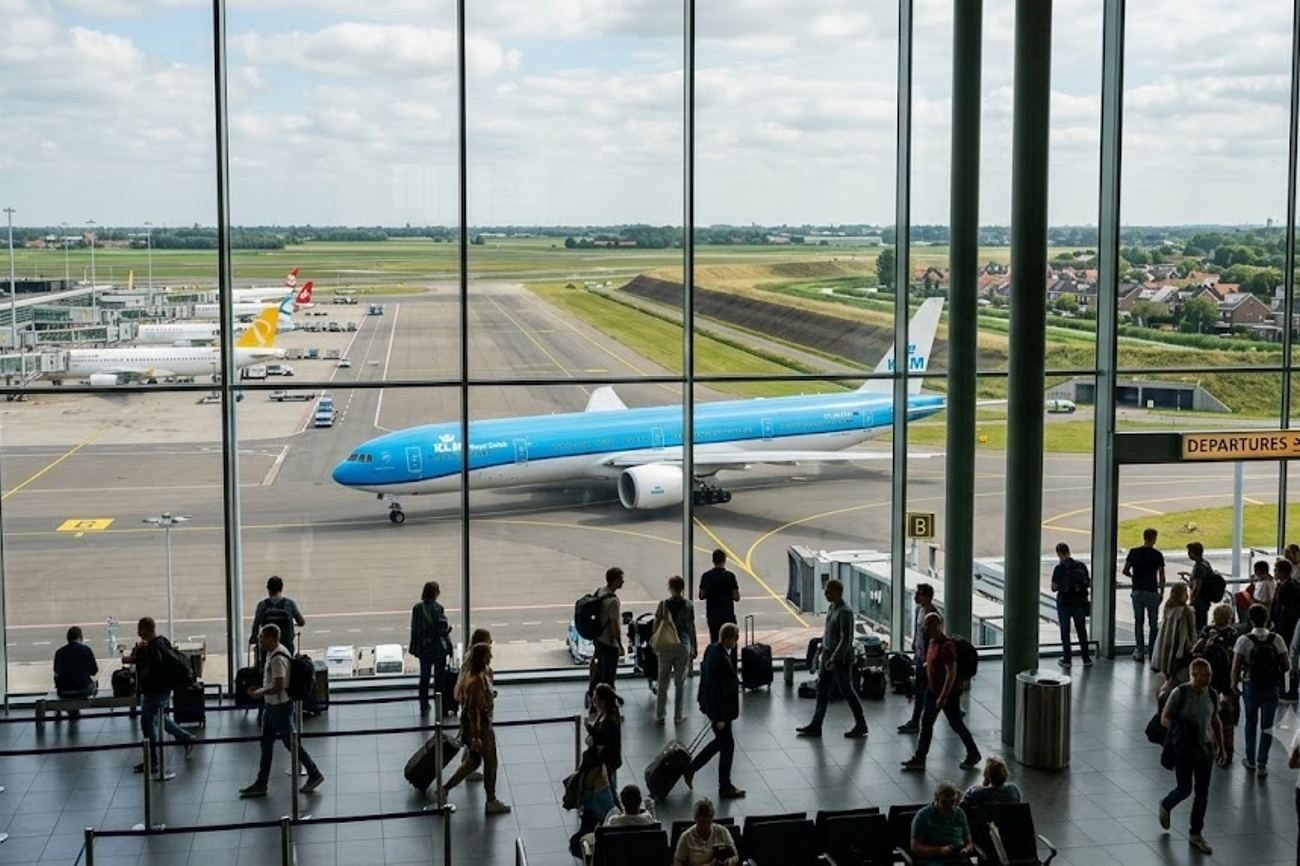
Image generated by AI
Schiphol is currently operating at 99.9% of its proposed annual flight capacity, leaving a razor-thin margin of only 448 movements before hitting its legal ceiling. This numerical tightrope walk means the airport is no longer growing by adding more flights, but by fundamentally changing the type of aircraft that touch down on its runways.
The Shift Toward High-Capacity Silence
Amsterdam is currently the site of a high-stakes experiment in aviation logistics. For years, the growth of a hub was measured by the number of take-offs and landings. However, Schiphol is transitioning into an era where "movements" are the currency of regulation, but "passenger volume" is the currency of business. In 2025, the airport recorded 477,552 movements and 68.8 million passengers. By the first half of 2026, a telling trend emerged: while aircraft movements dropped by 4%, the airport still managed to process 32.7 million passengers.
This discrepancy reveals a strategic pivot. Airlines are swapping smaller, louder planes for massive, whisper-quiet wide-bodies. The efficiency ratio—the number of people carried per flight—rose from roughly 141 in 2024 to 144 in 2025, and further to 146 by the first half of 2026. For the traveler, this means that while there may be fewer flight options on the board, the planes themselves are larger and more modern.
The Dutch government is enforcing a proposed framework of 478,000 annual movements, which includes a strict limit of 27,000 night flights. While there is a theoretical pathway to 500,000 movements, this is conditional on meeting aggressive noise and emission targets. The legal battle is ongoing; as recently as March 11, 2026, the Raad van State’s Administrative Jurisdiction Division intervened to maintain the 27,000 commercial night-movement limit between 23:00 and 07:00.
What Makes Schiphol’s Evolution Different
Unlike many global hubs that simply expand their physical footprint, Schiphol is attempting to grow "inward" through technological refinement. The focus has shifted from quantity to quality—specifically, the acoustic quality of the airspace. The airport is utilizing a differentiated charging system that financially penalizes loud aircraft and rewards quiet ones.
The results are measurable. In the first half of 2026, 38% of flights fell into the two quietest charging categories, a significant jump from 29% during the same period in 2025. The transition is visible in the fleet: older Boeing 737s are being replaced by Airbus A320neo and A321neo models, while the aging A330s and Boeing 777s are giving way to the A330neo, A350, and Boeing 787.
These newer wide-body aircraft are measured at 3 to 5 decibels quieter upon departure. In the world of acoustics, a 3-decibel drop represents a halving of sound intensity. This technical shift allows the airport to maintain its connectivity to 300 destinations across five continents—including 124 intercontinental routes—without violating the noise thresholds that keep the surrounding residential communities from revolting.
Visitor Insider Tips
Navigating Schiphol and Amsterdam requires an understanding of the local rhythm, which is increasingly geared toward efficiency and sustainability.
Timing Your Arrival: Because the airport is operating so close to its movement ceiling, any weather disruption can cause a massive ripple effect. If you are arriving on a long-haul flight, avoid the peak morning rush (06:00 to 09:00) when the limited number of slots are most congested. Use the NS (Nederlandse Spoorwegen) app to track trains directly from the terminal to Centraal Station; it is significantly faster and cheaper than any taxi.
Neighborhood Strategy: If you are visiting for business or long-term stays, avoid basing yourself in the immediate airport perimeter. Instead, look at the Noord or West districts of Amsterdam. These areas provide a more authentic local experience and better access to the city's cycling infrastructure, reducing your reliance on the congested airport-city corridors.
Local Etiquette: The Dutch are intensely protective of their "leefbaarheid" (livability). When staying in hotels or rentals near flight paths, be mindful that noise is a heated political issue. Avoid complaining about "the noise" to locals in a way that suggests it's a novelty; for them, it is a decades-long regulatory struggle.
Regional Specialties: Once you leave the airport, skip the tourist traps around Dam Square. Head to the Jordaan district for traditional appeltaart (apple tart) or visit a local bruin café (brown cafe) for a genuine glimpse into Amsterdam's social fabric.
Cultural and Environmental Context
The tension at Schiphol is a microcosm of the broader European struggle between economic connectivity and environmental preservation. The Dutch government's 2026 coalition agreement is one of the most aggressive in the world, calling for the airport to be 50% quieter between 23:00 and 07:00 by 2030 compared to 2024 levels. This includes a planned total night closure between midnight and 05:00.
To mitigate the impact on residents, a €50 million fund has been proposed for home insulation in the surrounding areas. This acknowledges that while the airport is a vital economic engine, the "cost" of that engine is paid by the people living under the flight paths.
The regulatory environment is becoming incredibly dense. The number of daytime noise enforcement points is proposed to increase from 35 to 148, and nighttime points from 25 to 59. This level of surveillance means that airlines cannot simply "game" the system; they must invest in the newest fleet technology to maintain their slots. For those interested in how the Netherlands balances heritage with modernity, the UNESCO World Heritage sites within the city provide a stark contrast to the hyper-modern, regulated efficiency of the airport.
FAQ: Visiting Amsterdam 2026
What is the best time to visit? Spring (April to May) offers the best balance of weather and crowds, coinciding with the tulip season. Avoid the peak summer months if you want to avoid the heaviest crowds at the city's main attractions.
Do I need a visa for the Netherlands? It depends on your nationality. Citizens of the US, Canada, and UK generally do not need a visa for short stays (Schengen Area rules). Always check the official Netherlands Worldwide portal for current requirements.
How do I get to the city center from Schiphol? The train is the most efficient method. Trains run frequently from the airport station directly to Amsterdam Centraal, taking approximately 15-20 minutes. Tickets can be purchased via contactless payment (OV-pay) at the gates.
Is it safe for solo travelers? Yes, Amsterdam is exceptionally safe for solo travelers. The city is walkable, has excellent public transport, and the local population is generally fluent in English, making navigation straightforward.
The future of flight in the Netherlands is no longer about how many planes can land, but how quietly they can do it.
Related Travel Guides
- New Zealand Beats Hong Kong and Others as Australia Reports Rising Arrivals and Strong Asian Travel Demand
- Philippines’ Biggest Transport Upgrade Begins as Ninoy Aquino International Airport Terminal 3 Subway Link Targets 40-Minute Journeys
- Montenegro Travel Growth Reaches New Heights as Seventy Seven Thousand Tourists Boost September Visitor Numbers
Disclaimer
This article is for informational and educational purposes only. It does not constitute legal, financial, or professional advice. While we strive to provide accurate and up-to-date information, travel policies, regulations, and conditions change rapidly. Always verify information with official sources before making travel decisions. Nomad Lawyer makes no representations about the accuracy, reliability, completeness, or suitability of the information provided. Readers should consult qualified professionals for advice specific to their circumstances. The views expressed in this article are those of the author and do not necessarily reflect the views of Nomad Lawyer.
Naina Thakur
Contributor & Travel Specialist
Travel enthusiast and legal writer covering visa regulations, responsible tourism, and cultural journeys across global destinations.
Learn more about our team →