
American Airlines Jet Blows Two Tires at Chicago O'Hare: Fourth Tire Failure in Two Weeks
An American Airlines passenger jet suffered a double tire failure while taxiing at Chicago O'Hare, marking the fourth such incident at the hub in approximately 14 days.
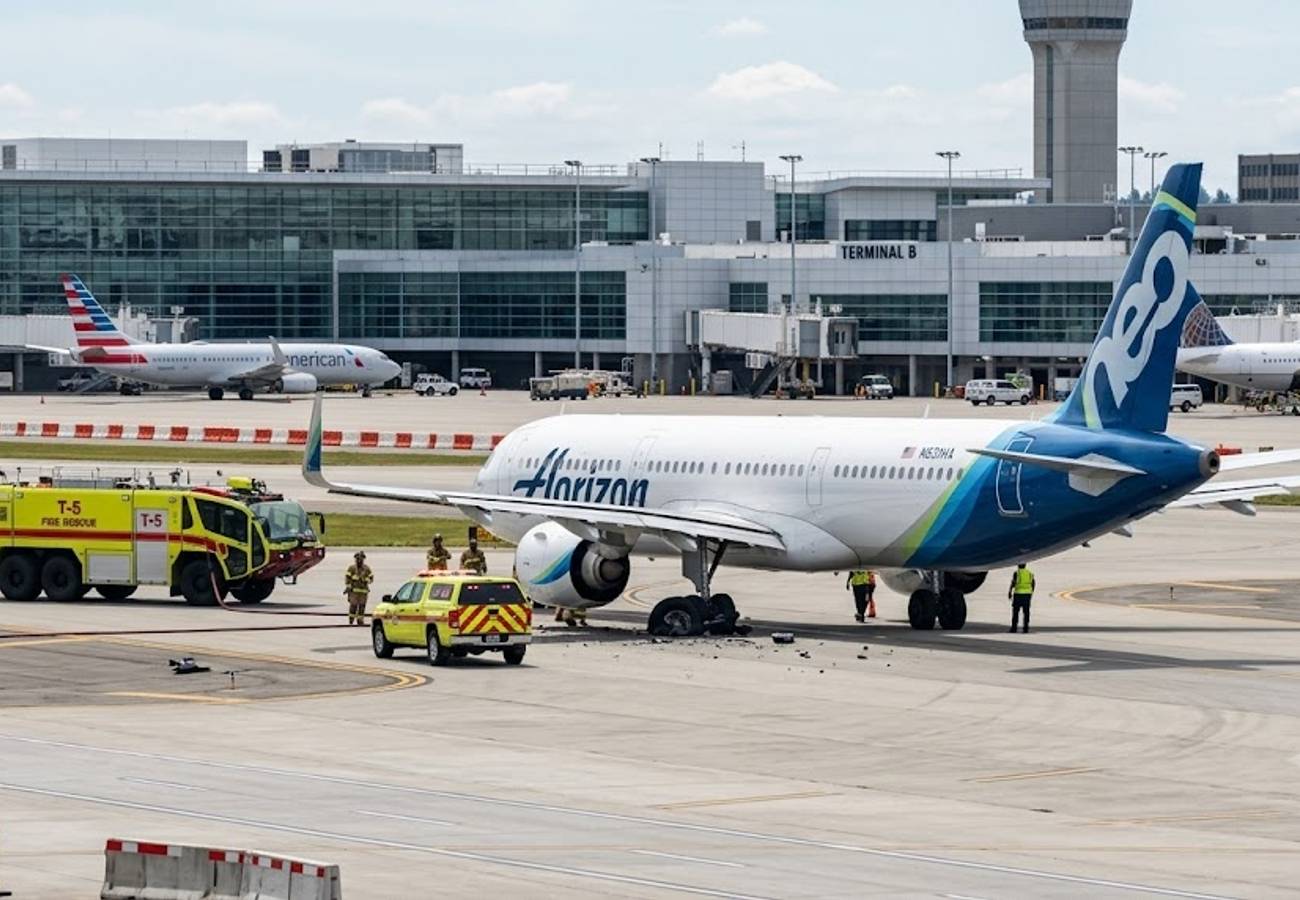
Image generated by AI
A passenger aircraft operated by American Airlines suffered a double tire failure during taxiing operations at Chicago O'Hare International Airport on Wednesday, August 26, 2026. This event represents the fourth tire-related incident at the Chicago hub within a roughly two-week window.
The aircraft was preparing for departure when the failure occurred. Federal Aviation Administration (FAA) data confirms the jet came to a complete stop on the ground before takeoff. Emergency crews responded as a precaution, though no injuries were reported among passengers or crew.
The disabled aircraft necessitated an immediate halt to departures on the affected taxiway, causing localized delays as airport managers rerouted ground traffic. Passengers were offloaded and re-accommodated while the aircraft was towed for maintenance.
Sequence of Tire-Related Incidents at O'Hare
Our analysis of recent aviation data indicates a concerning cluster of wheel and tire failures at O'Hare involving both American and United Airlines.
- August 26, 2026: American Airlines mainline jet blows two tires while taxiing for departure.
- Recent Days: American Airlines Flight 386, arriving from New York’s LaGuardia Airport, blew two tires during landing.
- Early August 2026: A United Airlines flight bound for Phoenix aborted its takeoff run following high-speed tire damage.
- Additional Incident: A fourth unnamed tire-related event occurred within this same 14-day period.
Operational Response and Investigation
Standard aviation protocols were triggered immediately following the August 26 event. Air traffic control halted all movements on the affected pavement to inspect for debris that could pose a Foreign Object Debris (FOD) risk to other aircraft.
The FAA has launched a formal investigation into the latest American Airlines incident. Investigators are currently reviewing:
- Tire remnants and wheel assembly integrity.
- Aircraft maintenance logs and tire wear history.
- Runway and taxiway surface conditions.
- On-board recorded data to determine the exact moment of failure.
O'Hare Tire Incident Summary
| Incident Date | Airline | Flight/Route | Phase of Flight | Outcome |
|---|---|---|---|---|
| Aug 26, 2026 | American Airlines | O'Hare Departure | Taxiing | No injuries; aircraft grounded |
| Recent | American Airlines | Flight 386 (LGA $\rightarrow$ ORD) | Landing | No injuries; aircraft grounded |
| Early Aug 2026 | United Airlines | O'Hare $\rightarrow$ Phoenix | Takeoff Run | Aborted takeoff; safe stop |
| Recent | Unspecified | Unspecified | Unspecified | Tire failure reported |
Why This Matters
From a logistical perspective, the frequency of these events is statistically anomalous for a single hub. While commercial tires are engineered for extreme weight and temperature fluctuations, four failures in two weeks suggest a potential systemic issue.
For travelers on these routes, the real impact is schedule instability. A disabled aircraft on a taxiway creates a "ripple effect," forcing airlines to reroute subsequent flights and potentially pushing crews beyond their legal duty limits.
Our analysis suggests two primary possibilities: either a localized infrastructure issue at O'Hare (such as runway debris or surface degradation) or a coincidental cluster of maintenance lapses across different carriers. If the FAA identifies a pattern related to runway conditions, we can expect temporary closures or emergency resurfacing projects that will further disrupt Chicago air traffic.
Industry Outlook
The FAA's findings will likely dictate whether this remains a series of isolated mechanical failures or triggers a broader safety advisory. If a manufacturing defect or specific wear pattern is identified, it could lead to fleet-wide inspections for American and United Airlines.
Frequent flyers utilizing O'Hare should anticipate potential delays as airlines increase the rigor of pre-flight tire inspections to mitigate risk. We expect the final investigation reports to be released in the coming weeks, which will clarify if O'Hare's operational tempo is contributing to accelerated equipment wear.
Safety redundancy prevented disaster, but the frequency of these failures demands a systemic explanation.
Related Travel Guides
Disclaimer
This article is for informational and educational purposes only. It does not constitute legal, financial, or professional advice. While we strive to provide accurate and up-to-date information, travel policies, regulations, and conditions change rapidly. Always verify information with official sources before making travel decisions. Nomad Lawyer makes no representations about the accuracy, reliability, completeness, or suitability of the information provided. Readers should consult qualified professionals for advice specific to their circumstances. The views expressed in this article are those of the author and do not necessarily reflect the views of Nomad Lawyer.