
American Airlines Flight AA1049 Boeing 737-800 Diverts to Washington Dulles Airport Due to New York Weather
American Airlines Flight AA1049, a Boeing 737-800 traveling from Dallas to New York, was forced to divert to Washington Dulles International Airport on July 18 following severe weather disruptions.

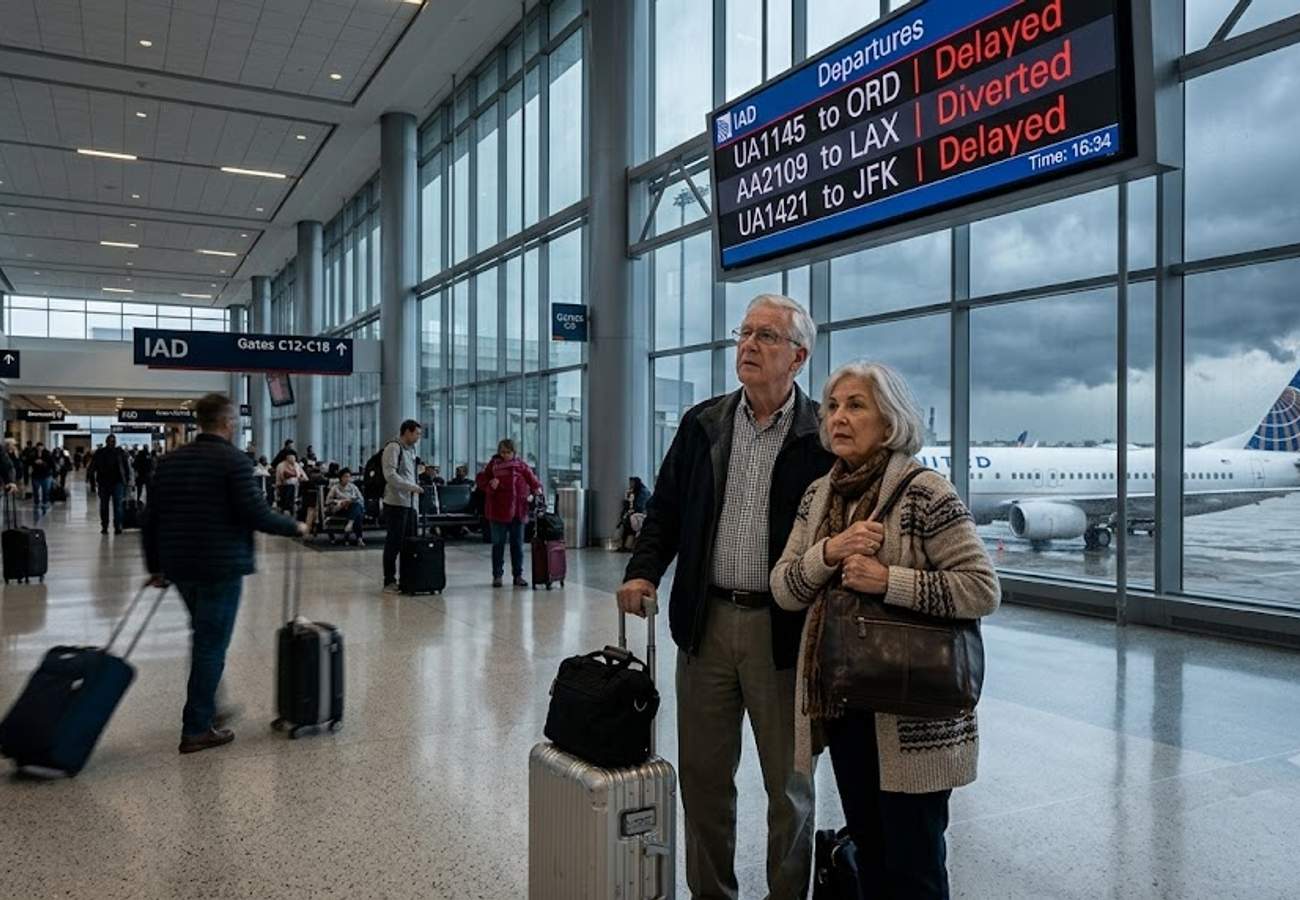
Image generated by AI
[Washington, D.C., July 20, 2026] — An American Airlines Boeing 737-800, operating as Flight AA1049 from Dallas to New York, was forced to execute an emergency diversion to Washington Dulles International Airport on July 18. The route change occurred after severe atmospheric conditions and air traffic congestion rendered a landing in the New York metropolitan area unsafe.
The incident underscores the volatile nature of summer aviation corridors on the US East Coast, where rapid weather shifts can trigger immediate operational crises. According to reports, the aircraft departed Dallas/Fort Worth (DFW) on schedule but encountered significant obstacles as it approached its final destination.
Weather Disruptions and Fuel Management at New York Airspace
The diversion of Flight AA1049 was primarily driven by severe convective weather systems that gridlocked the skies around New York John F. Kennedy International Airport (JFK). Industry observers indicate that these thunderstorms led air traffic controllers to implement strict arrival delays, resulting in heavy congestion.
As the Boeing 737-800 entered holding patterns, the flight crew monitored fuel levels closely. Standard aviation safety protocols dictate that aircraft must maintain a specific reserve of fuel for emergency maneuvers and missed approaches. Because the prolonged delays threatened to deplete these mandatory safety margins, the captain opted to divert the flight to a secondary location.
Washington Dulles International Airport (IAD) was selected as the landing site due to its robust runway infrastructure and the presence of established American Airlines ground operations. This decision ensured that the airframe and all passengers could be landed safely without risking a fuel-critical emergency in the midst of a storm.
Passenger Logistics and Regulatory Crew Constraints
When a commercial jet diverts to an unscheduled destination, a complex logistical framework is activated to manage traveler welfare and regulatory compliance. Upon arriving at Washington Dulles, the Boeing 737-800 had to coordinate with ground teams to secure a gate, a process that can be delayed if the hub is experiencing high traffic volumes.
Once the aircraft reached the jet bridge, the airline had to evaluate "crew duty hours." Federal aviation laws impose strict limits on how many consecutive hours a pilot can operate to prevent fatigue-related accidents. If a diversion pushes a crew past these legal limits, they are prohibited from continuing the flight, even if the aircraft is mechanically sound.
In the case of Flight AA1049, passengers were faced with two primary options: waiting for the aircraft to refuel and for crew hours to be reset, or being rebooked onto alternative regional flights to reach New York. This process highlights the friction between maintaining strict safety regulations and the desire for schedule adherence.
Pre-Flight Planning and Alternate Airport Selection
The choice of Washington Dulles was not a spontaneous decision made in the cockpit, but rather a result of rigorous pre-flight planning. Before any aircraft departs, dispatchers must legally designate alternate airports based on real-time operational capabilities.
These alternates are vetted based on several critical factors:
- Fuel Burn: The distance from the primary route to ensure the plane can reach the alternate safely.
- Runway Length: Ensuring the runway can accommodate the specific aircraft model, such as the Boeing 737-800.
- Local Forecasts: Verifying that the alternate airport is not experiencing the same weather disruptions as the primary destination.
For flights targeting New York, airports in Philadelphia, Baltimore, and Washington Dulles serve as primary backups. This systemic redundancy ensures that pilots have a verified "escape route" and do not have to improvise during a crisis.
Operational and Financial Consequences of Diversions
While diversions are viewed by airline operations centers as successful safety interventions, they carry heavy financial burdens. The cost of a diversion extends far beyond the immediate burn of extra aviation fuel.
| Cost Category | Impact Detail |
|---|---|
| Direct Fees | Landing fees and ground handling charges at the diversion airport. |
| Passenger Care | Potential hotel accommodations and meal vouchers for displaced travelers. |
| Network Ripple | Delay or cancellation of subsequent flights scheduled for that specific airframe. |
| Labor Costs | Premium pay for ground staff and the cost of flying in relief crews. |
The displacement of a single Boeing 737-800 can create a domino effect, disrupting the airline's broader network for several days. Despite these expenses, industry standards maintain that the financial loss is a necessary trade-off for an uncompromising approach to passenger safety.
Why This Matters: The Intersection of Safety and Climate
The diversion of Flight AA1049 is a textbook example of how aviation safety systems function under pressure. From a journalistic and industry perspective, this event provides "information gain" regarding the critical role of fuel reserves and the rigidity of crew duty laws.
The incident reveals a growing tension in modern aviation: as summer weather patterns become more severe and convective, the reliance on "alternate airport" infrastructure increases. The fact that the flight crew chose to divert rather than attempt a landing in hazardous conditions demonstrates a cultural shift toward risk aversion in the cockpit, prioritizing the "safe landing" over the "on-time arrival."
Furthermore, the seamless transition to Washington Dulles proves that the systemic redundancy built into US airspace—where multiple major hubs act as safety valves for one another—is essential for maintaining the integrity of the global transport grid.
The successful resolution of Flight AA1049 confirms that strict adherence to safety protocols remains the primary defense against unpredictable atmospheric volatility.
Related Travel Guides
Disclaimer
This article is for informational and educational purposes only. It does not constitute legal, financial, or professional advice. While we strive to provide accurate and up-to-date information, travel policies, regulations, and conditions change rapidly. Always verify information with official sources before making travel decisions. Nomad Lawyer makes no representations about the accuracy, reliability, completeness, or suitability of the information provided. Readers should consult qualified professionals for advice specific to their circumstances. The views expressed in this article are those of the author and do not necessarily reflect the views of Nomad Lawyer.
Kunal K Choudhary
Co-Founder & Contributor
A passionate traveller and tech enthusiast. Kunal contributes to the vision and growth of Nomad Lawyer, bringing fresh perspectives and driving the community forward.
Learn more about our team →