
American Airlines Boeing 737-800 Flight AAL3160 Returns to Philadelphia After In-Flight Emergency
An American Airlines Boeing 737-800 bound for Chicago was forced to return to Philadelphia International Airport on August 9 following an onboard emergency.

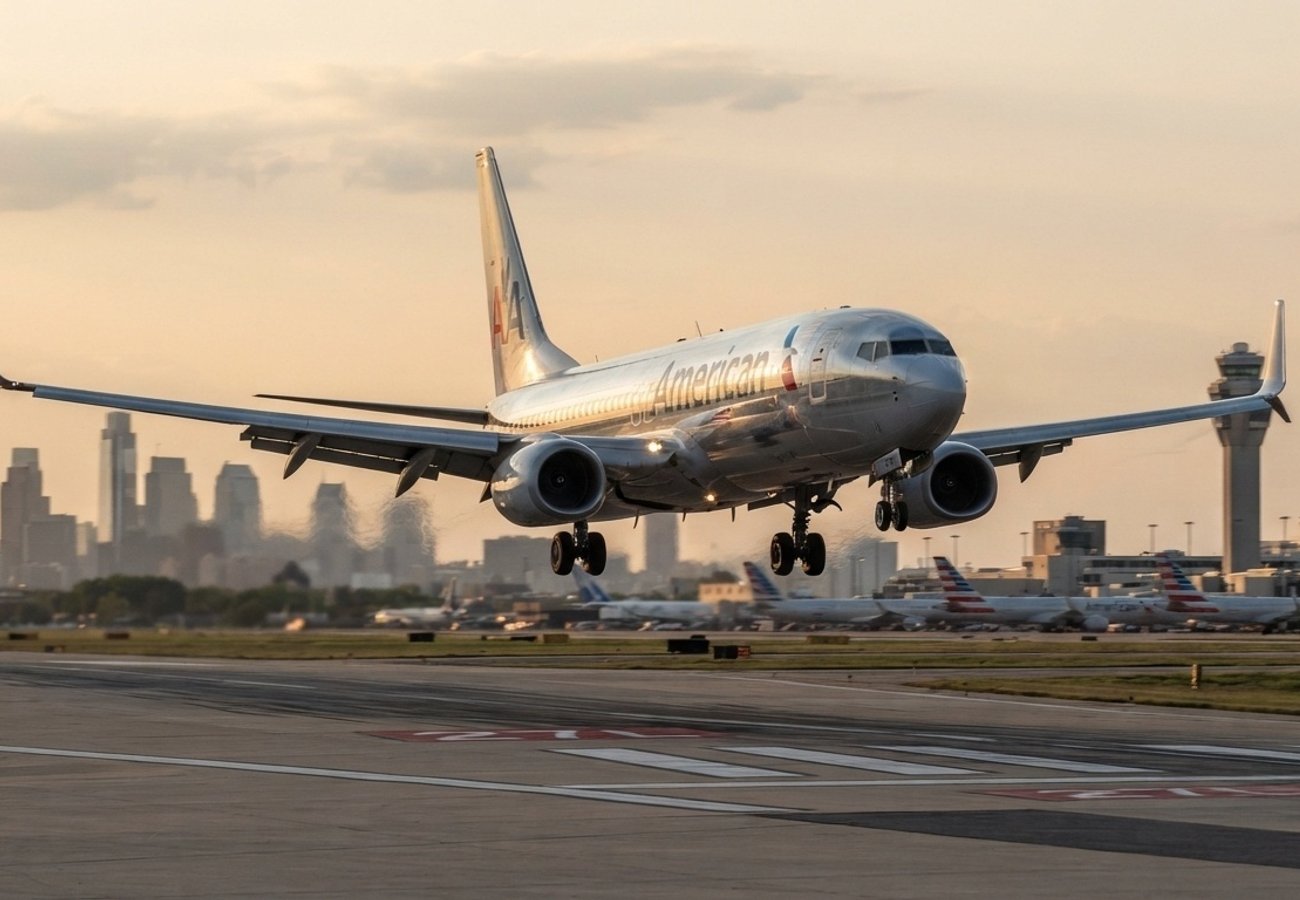
Image generated by AI
A Boeing 737-800 operated by American Airlines was forced to abort its journey to Chicago and return to Philadelphia International Airport on August 9 after the crew declared an emergency. No injuries were reported among the passengers or crew following the precautionary landing.
The incident involved flight AAL3160, a routine domestic service connecting two major U.S. hubs. According to flight tracking data and industry reports, the aircraft departed Philadelphia as scheduled but encountered an onboard issue shortly after takeoff, prompting the flight crew to discontinue the trip and initiate a return to the departure point.
Flight AAL3160 Aborts Chicago Route
Flight AAL3160 was utilizing a Boeing 737-800, a staple of the American Airlines narrowbody fleet. While the aircraft initially followed its planned trajectory toward the Midwest, tracking records indicate a sudden deviation from standard operating procedures. The aircraft leveled off at an altitude significantly lower than the typical cruising height for the Philadelphia-to-Chicago corridor.
Before making its final approach, the aircraft entered a holding pattern near the departure zone. This maneuver allowed the crew to stabilize the aircraft and coordinate with air traffic control before executing a turn back toward Philadelphia International Airport. The descent followed a stable profile, and the aircraft landed safely before taxiing to its assigned gate for passenger disembarkation.
Industry sources indicate the decision to return was a precautionary measure triggered by an onboard alert. While the specific nature of the technical fault has not been detailed in public filings, the absence of reported injuries suggests the crew managed the situation according to standard emergency protocols.
Operational Role of the Boeing 737-800
The Boeing 737-800 is one of the most prolific aircraft models used for medium-haul domestic routes in the United States. Its deployment on the Philadelphia-Chicago route is common due to its efficiency and capacity. Aviation data confirms that the 737-800 maintains a robust safety record across global commercial operations.
In the context of aviation safety, an event such as the return of AAL3160 is classified as an "incident" rather than an "accident," provided there is no structural damage or physical harm to those on board. Experts note that the choice to return to the origin airport—especially when the aircraft is still in the early stages of flight—reflects a conservative safety culture. By returning to a primary hub, the airline ensures that the aircraft has immediate access to full maintenance facilities and a larger pool of standby aircraft for passenger re-accommodation.
Passenger Disruptions and Rebooking Protocols
While specific testimonials from the passengers of AAL3160 have not been widely publicized, the operational aftermath follows established airline industry patterns. Upon returning to the terminal, passengers are typically processed through a rebooking system.
For domestic flights within the U.S., carriers generally prioritize moving affected travelers onto the next available service. Given that American Airlines operates multiple daily frequencies between Philadelphia and Chicago, passengers likely had several same-day alternatives. In instances where immediate seats are unavailable, airlines may route passengers through alternative hubs or provide overnight accommodations.
From a regulatory standpoint, U.S. passenger rights emphasize the carrier's responsibility to provide timely communication and support during significant disruptions. While mandatory financial compensation for technical diversions is not always required under U.S. law (unlike certain EU regulations), the priority remains the logistical resolution of the traveler's itinerary.
Analysis of Aviation Diversion Protocols
The return of flight AAL3160 is consistent with broader industry trends regarding precautionary diversions. Data on Boeing 737-800 operations shows that "turn-backs" are often triggered by:
- Erroneous sensor alerts that cannot be verified in flight.
- Minor system malfunctions that do not compromise safety but prevent the aircraft from meeting full operational standards.
- Cabin irregularities or medical emergencies.
Modern aircraft are engineered with extensive redundancy. If a primary system shows a fault, a backup is almost always available; however, safety protocols dictate that if a fault cannot be definitively cleared, the aircraft must land at the nearest suitable airport. Returning to the departure airport is often the most controlled option, as the crew is already familiar with the local airspace and the airline has ground support ready.
Why This Matters: The Traveler's Perspective
For the average traveler, an emergency declaration can be an alarming experience. However, from a logistical and safety standpoint, a "return to base" is actually a sign that the system is working. It demonstrates that pilots are prioritizing risk mitigation over schedule adherence.
For those flying on high-frequency corridors, this incident highlights the importance of:
- Buffer Timing: When traveling on routes that feed into international connections, a single diversion can collapse an entire itinerary. Building in a multi-hour window at hub airports is a necessary safeguard.
- Real-Time Monitoring: Using independent flight tracking apps allows passengers to see deviations in altitude or heading before the crew may make a formal announcement, providing a psychological head-start on the situation.
- Understanding "Emergency" Terminology: In aviation, "declaring an emergency" is often a procedural tool used to gain priority handling from air traffic control, not necessarily an indication of an imminent crash.
The safe landing of AAL3160 reinforces the efficacy of modern pilot training and the redundancy of Boeing's narrowbody systems. While the disruption was inconvenient for those bound for Chicago, the outcome confirms that conservative decision-making remains the gold standard in commercial aviation.
Safe landings are the result of cautious decisions made long before the wheels touch the tarmac.
Related Travel Guides
Disclaimer
This article is for informational and educational purposes only. It does not constitute legal, financial, or professional advice. While we strive to provide accurate and up-to-date information, travel policies, regulations, and conditions change rapidly. Always verify information with official sources before making travel decisions. Nomad Lawyer makes no representations about the accuracy, reliability, completeness, or suitability of the information provided. Readers should consult qualified professionals for advice specific to their circumstances. The views expressed in this article are those of the author and do not necessarily reflect the views of Nomad Lawyer.
Raushan Kumar
Founder & Lead Developer
Full-stack developer with 11+ years of experience and a passionate traveller. Raushan built Nomad Lawyer from the ground up with a vision to create the best travel and law experience on the web.
Learn more about our team →