
American Airlines Boeing 777-300ER Redesign: Flagship Suite & Premium Upgrades
American Airlines deploys redesigned Boeing 777-300ER featuring the Flagship Suite with privacy doors and expanded Premium Economy for key global routes.
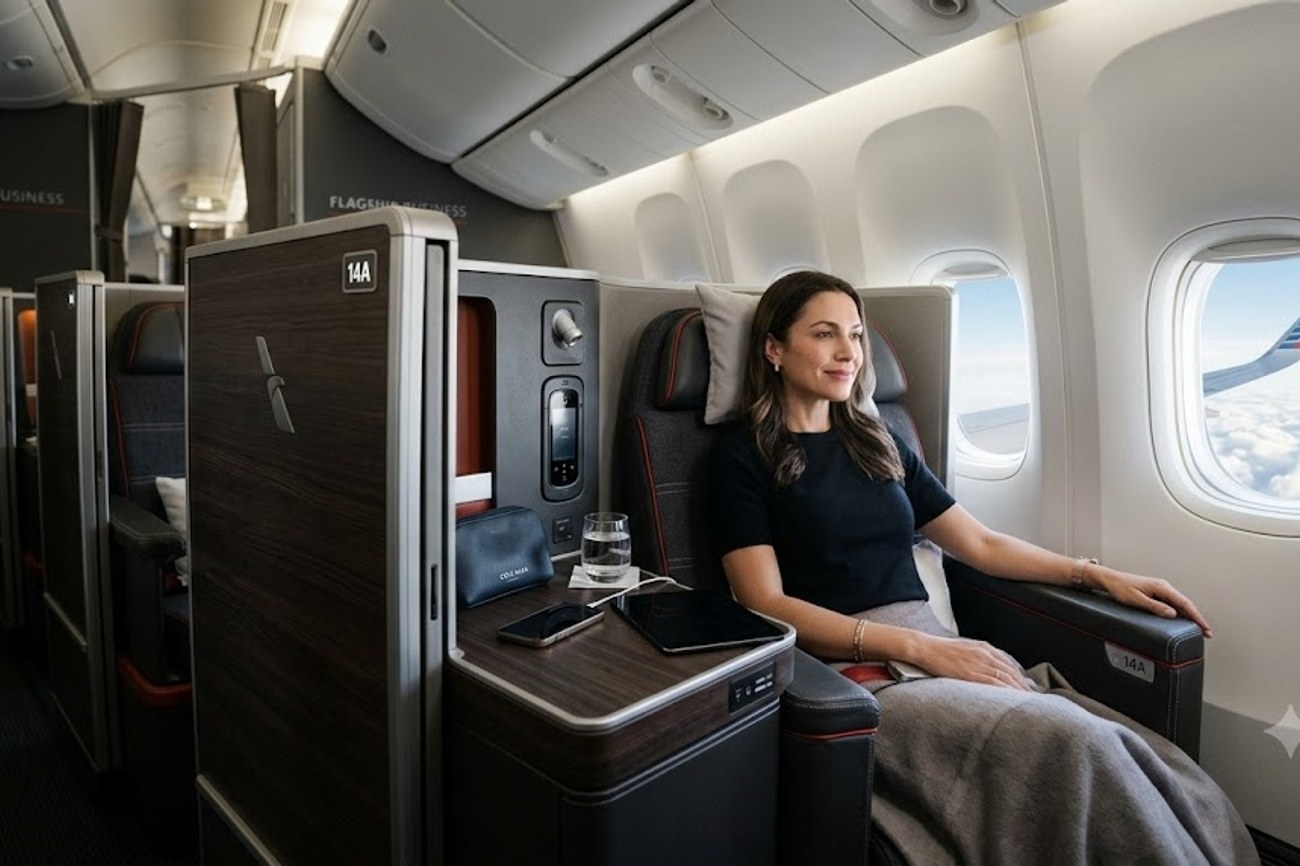
Image generated by AI
American Airlines Deploys Redesigned Boeing 777-300ER with Flagship Suite
American Airlines has entered a new phase of its premium cabin strategy with the rollout of a refurbished Boeing 777-300ER. The aircraft emphasizes passenger privacy and digital connectivity, debuting in September 2026 on the New York (JFK) to Buenos Aires route.
The upgrade is part of a broader fleet modernization aimed at the airline's most competitive long-haul markets. Beyond South America, these aircraft are slated for deployment on routes connecting the U.S. to London, Tokyo, São Paulo, and Sydney.
The redesign integrates elements from the Boeing 787-9 and Airbus A321XLR, focusing on a cohesive aesthetic of modern textures and advanced lighting systems.
Key Facts Breakdown
- Total Premium Seats: 144
- Flagship Suite: 70 business class seats featuring privacy doors, increased storage, and flexible seating positions.
- Premium Economy: 44 seats with enhanced head support, adjustable leg/foot rests, and expanded personal space.
- Main Cabin Extra: 30 seats providing additional legroom.
- Connectivity: Free high-speed inflight Wi-Fi for eligible AAdvantage® members.
- Hardware Upgrades: USB-C connections, AC power, and wireless charging in Premium Economy.
- Ground Experience: Priority check-in, security, boarding, and access to Flagship® Lounges.
Aircraft Configuration Data
| Cabin Class | Seat Count | Key Features |
|---|---|---|
| Flagship Suite | 70 | Privacy doors, multi-course dining, mattress pads |
| Premium Economy | 44 | Wireless charging, USB-C, enhanced leg rests |
| Main Cabin Extra | 30 | Additional legroom |
| Total Premium | 144 | Combined high-tier seating capacity |
Why This Matters
From a logistical perspective, this move signals a shift in how U.S. carriers compete for the "premium leisure" segment. By increasing the premium seat count to 144, American Airlines is moving away from a volume-based economy model toward a yield-based premium model.
For travelers on these routes, the real impact is the introduction of the privacy door. In the current aviation market, the "suite" experience is no longer a luxury—it is the baseline expectation for long-haul business travel. By retrofitting the 777-300ER, American is closing the gap between its legacy wide-body fleet and the newer 787s, ensuring a consistent product across its global network. Furthermore, the integration of free high-speed Wi-Fi removes a significant friction point for corporate travelers who require seamless connectivity for productivity.
Industry Outlook
Market trends suggest a continued aggressive expansion of the "middle ground" cabin. The focus on the 44 Premium Economy seats indicates that American Airlines expects sustained demand from passengers who find standard economy insufficient but cannot justify a full business class fare. Expect further retrofits across the remaining 777-300ER fleet to standardize this configuration before the next generation of wide-body aircraft fully takes over.
Internal Link Suggestions:
- Compare: Boeing 787-9 vs. Boeing 777-300ER Premium Cabin Specs
- Guide: Maximizing AAdvantage® Benefits for International Travel
- Analysis: The Rise of Premium Economy in Long-Haul Aviation
Related Travel Guides
Disclaimer
This article is for informational and educational purposes only. It does not constitute legal, financial, or professional advice. While we strive to provide accurate and up-to-date information, travel policies, regulations, and conditions change rapidly. Always verify information with official sources before making travel decisions. Nomad Lawyer makes no representations about the accuracy, reliability, completeness, or suitability of the information provided. Readers should consult qualified professionals for advice specific to their circumstances. The views expressed in this article are those of the author and do not necessarily reflect the views of Nomad Lawyer.