
Brazil Nears 100 Million Air Passengers in 2026 Amid Divergent Global Aviation Growth
Brazil's commercial aviation sector handled 99.6 million passengers in the first nine months of 2026, marking a 4.3% annual expansion driven by a 7.3% surge in international flights and a record-breaking September.

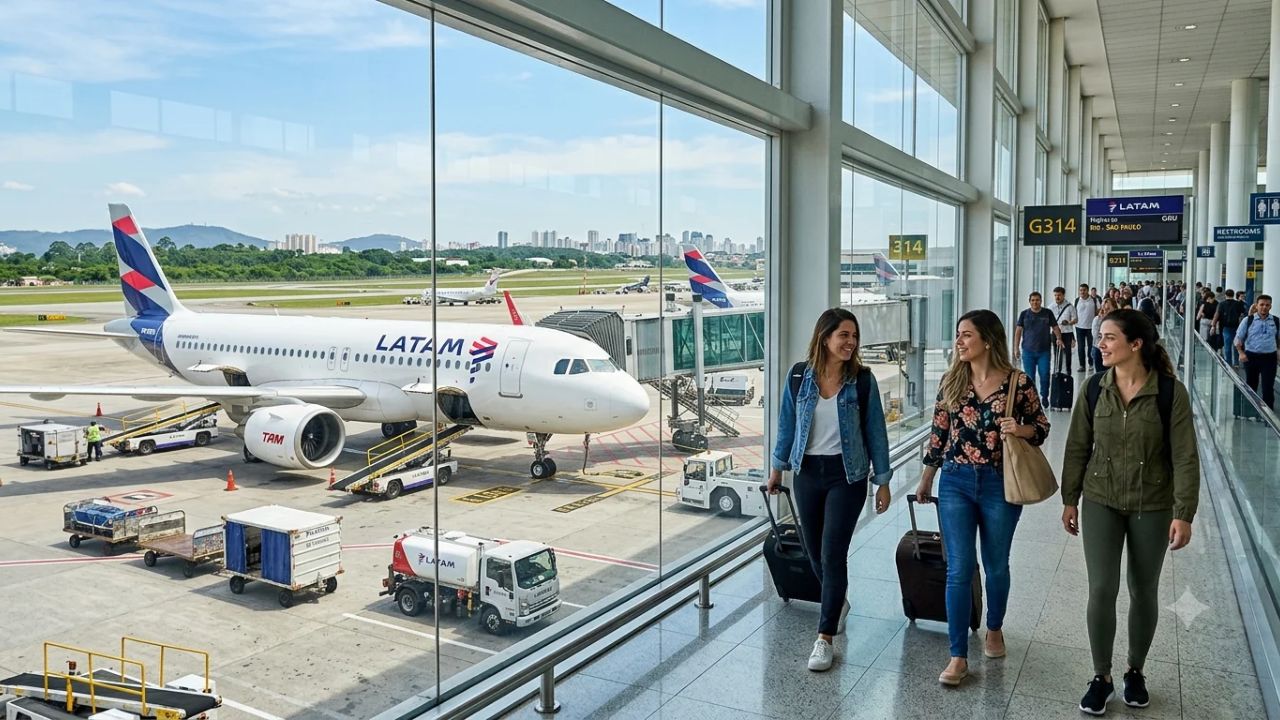
Brazil's commercial aviation sector handled 99.6 million passengers during the first nine months of 2026, advancing 4.3% year-on-year to near the historic 100-million threshold on the back of resilient domestic demand, double-digit regional hub gains, and an accelerated 7.3% surge in cross-border air travel.
Official nine-month operational data released by the Brazilian Ministry of Ports and Airports (MPor) demonstrates that South America’s largest economy is outperforming neighboring markets in air passenger recovery. While international travel patterns across the globe show sharp divergence—marked by explosive double-digit rebounds in Southeast Asia alongside contractions in parts of South America and domestic India—Brazil’s balanced growth across both domestic and international segments underscores the vitality of its continental network. A record-setting September, which saw more than 10.8 million travellers take to the skies, delivered the single strongest September performance recorded by Brazilian civil aviation in 26 years.
Brazil’s 99.6-Million Milestone: Domestic Backbone Meets International Velocity
Between January 1 and September 30, 2026, commercial airlines operating across Brazil carried exactly 99.6 million scheduled and non-scheduled passengers, representing a net gain of 4.3% compared to the identical period in 2025.
                               BRAZILIAN PASSENGER VOLUME (JAN–SEP 2026)
  ========================================================================================
  Segment            Passengers (Millions)     YoY Growth Rate      Share of Total Market
  ----------------------------------------------------------------------------------------
  Domestic Flights           76.8M                  +3.4%                   77.1%
  International Routes       22.7M                  +7.3%                   22.9%
  ----------------------------------------------------------------------------------------
  Total Traffic              99.6M                  +4.3%                  100.0%
  ========================================================================================
While domestic flights continue to form the operational bedrock of Brazilian connectivity—accounting for 76.8 million passengers and expanding by 3.4%—the primary growth engine in percentage terms has shifted decisively toward international routes. Overseas travel expanded by 7.3% to reach 22.7 million passengers.
This acceleration reflects enhanced long-haul capacity deployed by international carriers connecting São Paulo Guarulhos (GRU), Rio de Janeiro Galeão (GIG), and Brasília (BSB) to North America, Europe, and neighboring South American capitals. Code-share agreements, increased frequencies from Gulf carriers, and streamlined border processing managed in coordination with the National Civil Aviation Agency of Brazil (ANAC) have helped funnel both business visitors and overseas leisure tourists directly into Brazil's multi-hub network.
A Historic September: 26-Year Peak for Brazilian Skies
The trajectory toward 100 million cumulative journeys was capped by an unprecedented performance in September 2026, when domestic and international carriers handled more than 10.8 million passengers nationwide.
Aviation historians and civil aviation authorities noted that this represents the highest passenger movement registered in the month of September since modern electronic tracking began 26 years ago in 2000.
Several key structural dynamics converged to deliver the September record:
- Shoulder-Season Leisure Travel: Prolonged mild weather across coastal Bahia, Ceará, and Rio de Janeiro extended winter travel demand into late spring, narrowing the traditional dip between July school breaks and December summer holidays.
- Corporate and Agri-Business Travel: Expanding industrial exports and agricultural trade fairs across the Central-West and Southern states sustained high-load business travel across regional trunk routes linking Campinas (VCP), Curitiba (CWB), and Goiânia (GYN).
- Currency Competitiveness: Favorable exchange rates sustained strong inbound tourist bookings from Europe, the United States, and the Southern Cone, while Brazilian holidaymakers increasingly opted for regional international getaways.
Global Aviation Performance: A Comparative 9-Month Snapshot
The global air transport environment across 2026 has been characterized by fragmentation rather than uniform recovery. Airline industry benchmark analyses compiled by the International Air Transport Association (IATA) and national transport ministries indicate that while global seat capacity is high, passenger volumes vary significantly based on local economic conditions, fleet availability, and currency pressures.
The table below benchmarks Brazil’s nine-month performance against major aviation powers and regional counterparts across Europe, Asia, and the Americas:
| Country / Market | Reporting Metric | Jan–Sep 2026 Traffic | Year-on-Year Growth | Primary Travel Driver |
|---|---|---|---|---|
| Spain | Nationwide Aena Network | 257.21 Million | +4.1% | Transatlantic & Intra-EU Tourism |
| Türkiye | State Airport Authority (DHMI) | 193.16 Million | +2.9% | Eurasian Mega-Hub Transit |
| India | Domestic Scheduled Airlines | 122.29 Million | −1.0% | Domestic Fare Corrections & Aircraft Groundings |
| Vietnam | Civil Airport Throughput | ~102.00 Million | +12.0% | Intra-ASEAN Tourism & Transpacific Links |
| Brazil | Domestic & International Airlines | 99.60 Million | +4.3% | Expanding International Links & Domestic Density |
| South Korea | International Airport Terminals | 76.72 Million | +9.9% | North Asian Regional Leisure & Incheon Hub |
| Greece | Civil Airport Network | 71.67 Million | +4.8% | Extended Mediterranean Island Season |
| Singapore | Changi Airport (SIN) Gateway | ~52.20 Million | +0.4% | Premium Business & Long-Haul Kangaroo Route |
| Argentina | Combined Airport System | 37.21 Million | Confirmed Stable | Mercosur Cross-Border Transit |
| Chile | Commercial Airline Boardings | 20.88 Million | −1.9% | Macroeconomic Belt-Tightening & Domestic Drop |
Note: Data reflects official national reporting frameworks. India reports domestic scheduled passenger boardings; South Korea tracks international airport movements; Singapore tracks Changi Airport throughput; Spain and Türkiye include transit traffic across state airport networks.
How Brazil Measures Against Global Mega-Markets
When juxtaposed with traditional aviation heavyweights, Brazil’s 4.3% growth rate reveals notable operational strengths:
- Outpacing Türkiye’s International Velocity: While Türkiye operates at nearly double Brazil’s total throughput (193.16 million passengers), Turkish international passenger growth stalled at 0.5% due to softening long-haul Russian transit and capacity constraints at secondary hubs. Brazil’s international segment grew at more than 14 times that rate (+7.3%).
- Contrasting Asian Trends: Vietnam established itself as one of the world's fastest-growing aviation markets with a 12% overall surge and 14% international jump, driven by open-skies policies and regional tourist influxes. Conversely, India experienced a 1.0% contraction in its massive domestic sector (122.29 million passengers), largely impacted by supply chain constraints, pilot scheduling adaptations, and localized fare escalation.
- Regional Dominance in South America: While Chile faced a 1.9% contraction (domestic traffic down 2.8%, international down 0.7%) and Argentina navigated currency adjustments with 37.21 million passengers, Brazil stood as the sole South American aviation power achieving simultaneous growth in domestic volume and international connectivity.
Infrastructure Modernization: The Ilhéus Runway Safety Upgrade
Rising traffic across Brazil has exerted heavy operational pressure on secondary and regional airports, prompting the federal government and private concessionaires to prioritize safety-enhancing technologies.
A prominent example is Bahia's Jorge Amado Airport in Ilhéus (IOS), an essential gateway to the cocoa coast and southern Bahian beach resorts. Between January and August 2026, Ilhéus handled approximately 800,000 passengers, posting an impressive 15% annual surge in air travellers.
ENGINEERED MATERIAL ARRESTING SYSTEM (EMAS) AT ILHÉUS
| Column 1 |
|---|
| Runway Surface ---> [ Threshold ] ---> [ Crushable Cellular Cement Beds (EMAS) ] |
| * Function: Safely decelerates aircraft in runway overrun events without hull collapse |
| * Material: Lightweight, energy-absorbing aerated concrete engineered to deform |
| * Importance: Critical for coastal/short runways bordered by water, highways, or cliffs |
To support this rapid traffic growth safely, authorities approved the installation of an Engineered Material Arresting System (EMAS) at Ilhéus. Engineered from cellular cement blocks designed to reliably crush under the weight of commercial jet landing gear, the bed absorbs kinetic energy and brings overrunning aircraft to a controlled stop before they can breach airport perimeters.
Because Ilhéus Airport is constrained by urban density and water bodies on its approaches, the installation of EMAS provides critical overrun protection comparable to systems already deployed at São Paulo’s Congonhas Airport (CGH), ensuring that regional expansion does not compromise global aviation safety baselines.
Passenger Outlook: What Rising Traffic Means for Travellers
For commercial flyers navigating Brazilian and South American skies through late 2026 and into the 2027 summer holiday rush, the 99.6-million passenger volume signals both benefits and operational considerations:
- Expanded Direct Flight Options: Airlines such as LATAM Brasil, Gol Linhas Aéreas, and Azul have introduced point-to-point seasonal flights bypassing congested São Paulo hubs, connecting secondary cities in the Northeast directly with Florianópolis, Porto Alegre, and Buenos Aires.
- Airport Capacity Pinch Points: Travelers passing through primary hubs during peak morning (06:00–09:00) and evening (17:00–21:00) departure banks should anticipate fuller security queues and gate holds, particularly at Congonhas and Brasília.
- Elevated International Reliability: Increased competition on South America–Europe and Brazil–US corridors has resulted in newer-generation widebody aircraft (Airbus A350s and Boeing 787s) operating long-haul routes, reducing cabin noise, improving fuel efficiency, and decreasing weather-related turnaround delays.
As Brazil prepares to surpass the 100-million passenger milestone before the close of October, its aviation sector serves as a benchmark for how targeted infrastructure investments, diverse domestic routes, and expanding international links can generate sustainable air travel momentum even within a complex global economy.
Frequently Asked Questions
How many air passengers did Brazil handle in the first nine months of 2026?
Brazil transported 99.6 million commercial airline passengers between January and September 2026, representing a 4.3% increase over the same period in 2025.
What set Brazil's September 2026 aviation performance apart?
September 2026 recorded over 10.8 million airline passengers, making it the highest-volume September ever documented in Brazilian civil aviation history over the past 26 years.
How did Brazil's domestic and international flight growth compare?
Domestic passenger volume grew by 3.4% to reach 76.8 million passengers, while international traffic expanded by 7.3% to reach 22.7 million passengers.
What is the safety upgrade planned for Ilhéus Airport in Bahia?
Ilhéus Airport is installing an Engineered Material Arresting System (EMAS)—crushable cellular concrete beds at the runway ends—to decelerate aircraft safely in the event of a runway overrun.
Related Travel Guides
- Contour Airlines Connects DuBois with Atlanta and Chicago in 2027 Nonstop Jet Expansion for Pennsylvania
- Western Sydney Airport Commences Milestone Domestic Flights with Jetstar Gold Coast Inaugural
- The Anatomy of a 2,000-Flight Ground Stall: How Tech Outages and Rolling Delays Snarled American and Southwest
Disclaimer
This article is for informational and educational purposes only. It does not constitute legal, financial, or professional advice. While we strive to provide accurate and up-to-date information, travel policies, regulations, and conditions change rapidly. Always verify information with official sources before making travel decisions. Nomad Lawyer makes no representations about the accuracy, reliability, completeness, or suitability of the information provided. Readers should consult qualified professionals for advice specific to their circumstances. The views expressed in this article are those of the author and do not necessarily reflect the views of Nomad Lawyer.
Raushan Kumar
Founder & Lead Developer
Full-stack developer with 11+ years of experience and a passionate traveller. Raushan built Nomad Lawyer from the ground up with a vision to create the best travel and law experience on the web.
Learn more about our team →