
Alteon Secures $2.5M to Develop Perpetual Autonomous Ocean Aircraft
Aerospace startup Alteon secures $2.5 million to build albatross-inspired autonomous dynamic soaring aircraft capable of flying months over oceans without fuel.

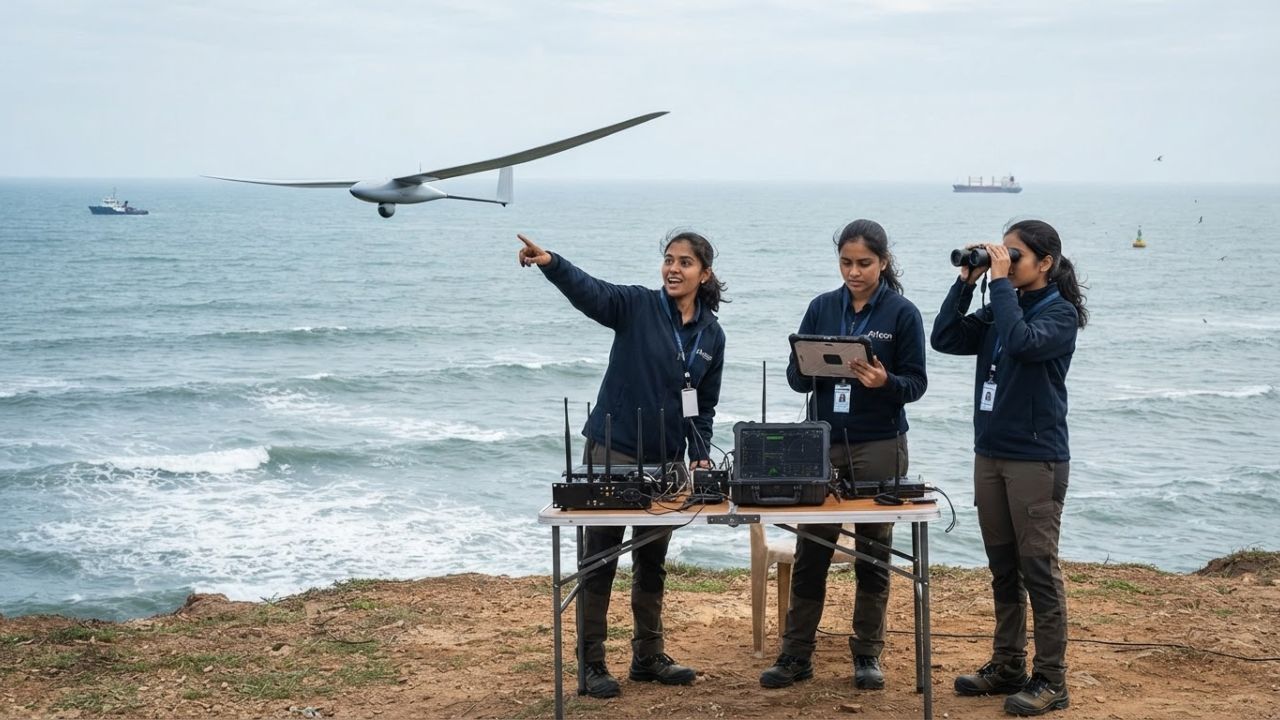
Image generated by AI
Following a milestone flight test demonstrating autonomous navigation less than one meter above open ocean swells, deep-tech aerospace venture Alteon has raised $2.5 million in pre-seed funding to build dynamic soaring aircraft capable of remaining airborne for months without chemical fuel or recharging stops.
The Local Trend: Harnessing Oceanic Wind Gradients for Perpetual Flight
For over a century, powered aviation has operated within an inescapable physical constraint: aircraft must regularly return to earth for refueling, mechanical maintenance, and pilot rest. Bengaluru-based aerospace startup Alteon is challenging this operational model by developing autonomous gliders that harvest energy directly from the atmosphere.
Drawing direct biomimetic inspiration from the wandering albatross—which navigates thousands of open ocean miles with minimal wing flapping by carving through boundary-layer wind shears—Alteon is engineering uncrewed aircraft designed for continuous multi-month and year-long endurance. In August 2026, the company validated its core flight-control system during offshore trials, where its prototype completed multiple consecutive autonomous loops skimming less than one meter above rolling sea waves.
Alteon Technology and Venture Profile
| Development Parameter | Milestone / Technical Specification | Operational Impact |
|---|---|---|
| Venture Capital Raised | $2.5 Million Pre-Seed Round | Backed by Lachy Groom & Together Fund |
| Early Institutional Backers | Emergent Ventures & 1517 | Incubated founder experimentation |
| Founder & Leadership | Samay Sanghvi (Founded 2025) | 20-member specialized engineering team |
| Headquarters Location | Bengaluru, Karnataka, India | R&D, structural design, and autonomy labs |
| Core Flight Physics | Autonomous Dynamic Soaring | Extracts kinetic energy from wind gradients |
| Validated Flight Metric | <1 Meter Altitude Over Open Sea | Automated low-altitude marine loops (Aug 2026) |
| Target Endurance Window | Months to over 1 year aloft | True perpetual, un-propelled ocean flight |
Biomimicry at the Wave Tops: The Mechanics of Dynamic Soaring
Dynamic soaring exploits differences in horizontal wind velocities across atmospheric layers. Because ocean friction slows surface winds while air a few meters higher moves significantly faster, an aircraft diving into the slower surface layer and pulling up into higher-velocity winds gains net kinetic energy.
Executing this maneuver autonomously in an unpredictable maritime environment requires millimeter-precise sensor tracking:
- Micro-Altitude Wave Skimming: Alteon’s flight algorithms continuously read wave surface topography, calculating instantaneous air vectors to execute high-G turns within centimeters of ocean water.
- Propulsion-Free Flight Architecture: The upcoming engineering program focuses on eliminating onboard propulsion systems entirely, enabling lightweight composite airframes to remain permanently aloft by dynamically harvesting energy from wind shears.
- Scalable Sky Fleets: Unlike orbital satellites that provide intermittent overhead snapshots or marine patrol vessels that move at slow displacement speeds, persistent dynamic soaring gliders function as permanent atmospheric sensors "parked in the sky."
Maritime Environmental and Scientific Value
The deployment of long-endurance autonomous gliders creates transformative capabilities across global marine science, eco-tourism protection, and coastal governance:
- Real-Time Ocean Weather and Cyclone Tracking: Operating continuously in remote oceanic zones, atmospheric gliders can measure surface barometric pressures, sea-surface temperatures, and boundary-layer humidity, providing meteorologists with vital data to predict typhoon paths and monsoonal shifts.
- Curbing Illegal, Unreported, and Unregulated (IUU) Fishing: Persistent aerial monitoring over marine protected areas (such as the Chagos Archipelago or Pacific marine sanctuaries) detects unauthorized fishing vessels, protecting endangered pelagic fish stocks and coral reef habitats.
- Coastal Security and Search-and-Rescue: Continuous maritime coverage provides real-time tracking for commercial shipping lanes, early distress signal triangulation for stranded vessels, and round-the-clock surveillance to prevent illicit maritime trafficking.
Destination Specialist Local Insider Tips
Travelers, marine conservationists, and aerospace enthusiasts monitoring the intersection of clean technology and maritime travel should keep these perspectives in mind:
- Observe True Albatross Soaring in Kaikoura, New Zealand: To witness the biological inspiration behind Alteon’s dynamic soaring, book an eco-certified pelagic birding boat tour off the Kaikoura Peninsula to see royal and wandering albatrosses effortlessly carve through ocean wave troughs.
- Support Marine Sanctuary Citizen Science in the Indian Ocean: Travelers taking liveaboard diving trips across the Lakshadweep and Maldives archipelagos can contribute geo-tagged marine wildlife sightings to regional conservation registries tracking migratory sea turtles and pelagic rays.
- Visit the Visvesvaraya Industrial & Technological Museum in Bengaluru: Explore India’s premier aerospace innovation hub by visiting Bengaluru’s aviation galleries, which showcase the country’s progression from glider experiments to cutting-edge deep-tech aerospace ventures.
- Track Open-Source Maritime AIS Portals: Use platforms like MarineTraffic or Global Fishing Watch to monitor international marine conservation corridors and see how automated vessel monitoring protects fragile atolls.
- Select Eco-Charter Catamarans in Sensitive Coastal Waters: When exploring island archipelagos, opt for wind-assisted sailing catamarans that avoid underwater acoustic pollution and protect marine mammal communication corridors.
Future Outlook
Alteon's $2.5 million funding round and successful sub-one-meter offshore trial mark a decisive shift toward zero-emission, perpetual aviation. As the Bengaluru engineering team refines autonomous dynamic soaring algorithms, fleets of uncrewed gliders are positioned to transform ocean surveillance, climate forecasting, and maritime environmental protection across the planet's vast blue expanse.
Related Travel Guides
Disclaimer
This article is for informational and educational purposes only. It does not constitute legal, financial, or professional advice. While we strive to provide accurate and up-to-date information, travel policies, regulations, and conditions change rapidly. Always verify information with official sources before making travel decisions. Nomad Lawyer makes no representations about the accuracy, reliability, completeness, or suitability of the information provided. Readers should consult qualified professionals for advice specific to their circumstances. The views expressed in this article are those of the author and do not necessarily reflect the views of Nomad Lawyer.
Preeti Gunjan
Contributor & Community Manager
A passionate traveller and community builder. Preeti helps grow the Nomad Lawyer community, fostering engagement and bringing the reader experience to life.
Learn more about our team →