
Mauritius Coastal Boom: Why Affluent Families Are Flocking to Black River and Tamarin’s ‘Boere Monaco’ Sanctuary
The coastal enclave of Black River and Tamarin in Mauritius has emerged as the 'Boere Monaco,' drawing wealthy South African families seeking safety, low taxes, and residency.

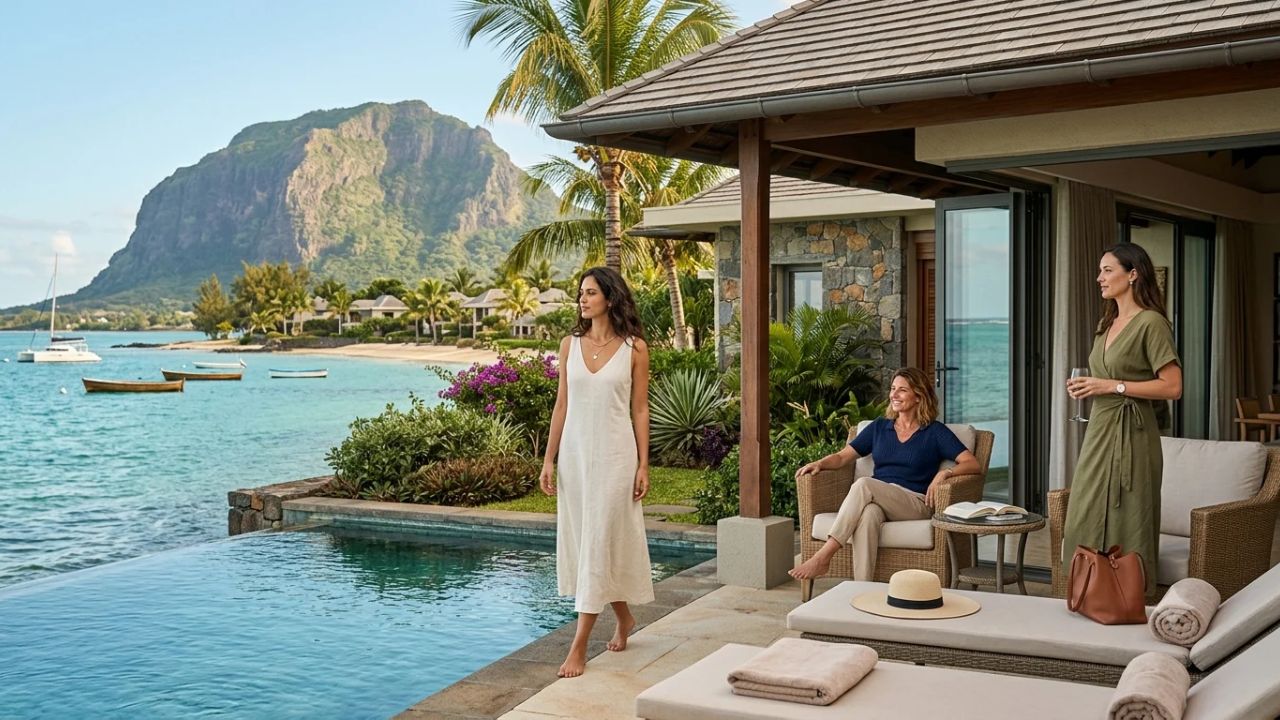
Image generated by AI
Driven by persistent socio-economic uncertainty, energy instability, and rising crime across South Africa, an unprecedented wave of high-net-worth families is relocating to the sun-drenched western coastline of Mauritius, establishing the picturesque district of Black River and its coastal enclave of Tamarin as Africa's preeminent wealth sanctuary—famously dubbed the 'Boere Monaco.' This structural demographic shift represents far more than a typical lifestyle sabbatical; it is a permanent real estate, financial, and family relocation movement reshaping Indian Ocean travel patterns, international aviation routes, and regional property development. Combining the legal safeguards of a stable parliamentary democracy with a flat 15% tax regime, automatic permanent residency thresholds, and year-round direct aviation links to Johannesburg and Cape Town, Western Mauritius has evolved from a sleepy fishing shoreline into a sophisticated, self-sustaining global financial and residential node.
According to wealth intelligence data, Black River has recorded a staggering 120% surge in dollar millionaires over the past decade, outpacing every other regional wealth hotspot on the African continent. Supported by progressive state-backed property development initiatives and the rapid expansion of international schools, championship golf courses, and deep-water marinas, this idyllic coastal corridor offers global citizens the physical security and fiscal predictability they can no longer take for granted at home.
The Rise of the 'Boere Monaco': Tamarin and Black River as Africa's Premier Wealth Haven
The informal designation of Tamarin and Black River as the 'Boere Monaco' stems from the dense concentration of affluent Afrikaans- and English-speaking South African families who have established primary roots along this sheltered lagoon. Much like its Mediterranean namesake, the region offers an ultra-exclusive maritime lifestyle set against the dramatic volcanic backdrop of the Tourelle du Tamarin and the Black River Gorges mountain range.
THE WESTERN MAURITIUS LIFESTYLE & WEALTH ECOSYSTEM
| Column 1 |
|---|
| RESIDENTIAL ENCLAVES COMMERCIAL & SOCIAL HUBS OFFSHORE FINANCIAL CONNECTIVITY |
| • Tamarin Bay • Cap Tamarin Smart City • Bank of Mauritius Private Banking |
| • La Balise Marina • Uniciti Education Hub • Global Business Companies (GBC) |
| • Black River Coastal Strip • Westcoast International School • 45+ Double Taxation Treaties (DTAs) |
| • Le Morne Foothills • Tamarina Championship Golf • 183-Day Fiscal Residency Status |
What distinguishes this coastal migration from seasonal tourism is the creation of a comprehensive, permanent social fabric. Rather than shuttering villas during the off-season, residents operate multi-jurisdictional corporations, manage digital investment portfolios, and enrol children in world-class international academies. Modern co-working campuses, private medical clinics, and upscale retail centers allow global business leaders to direct commercial enterprises across Sub-Saharan Africa, the United Kingdom, and the Middle East while enjoying a peaceful, seaside existence.
Demographic and Capital Shifts: A 120% Surge in Dollar Millionaires
The scale of capital relocation into Western Mauritius reflects widespread structural shifts in African private wealth distribution. While South Africa still retains approximately 34% of the continent’s total millionaire population (around 41,100 high-net-worth individuals), substantial portions of private liquidity are departing traditional metropolitan hubs like Sandton in Johannesburg and Constantia in Cape Town.
| Location / Jurisdiction | 10-Year HNW Growth Rate | Total Millionaires (Approx.) | Primary Relocation Driver |
|---|---|---|---|
| Black River & Tamarin (Mauritius) | +120% | Emerging Multi-Billion Hub | Safety, 15% Flat Tax, PDS Residency |
| National Mauritius Average | +63% | 5,100+ High-Net-Worth Individuals | Ease of Doing Business, Rule of Law |
| Johannesburg (South Africa) | -15% Net Outflow | 11,700 High-Net-Worth Individuals | Infrastructure Risk, Load Shedding |
| Cape Town (South Africa) | +24% (Internal Semigration) | 8,500 High-Net-Worth Individuals | Coastal Appeal, Municipal Governance |
This realignment has elevated Mauritius to the sixth wealthiest country in Africa on an aggregate held private wealth basis, with the highest per-capita wealth on the continent. The consistent influx of affluent households has insulated the local economy from seasonal downturns, creating a year-round consumer spending base that supports local luxury retail, maritime charter fleets, and bespoke hospitality services.
Legal Frameworks, Real Estate Acquisitions, and Permanent Residency Pathways
The primary catalyst facilitating this wealth influx is the clear, investor-friendly regulatory environment administered by the Economic Development Board (EDB) Mauritius. Through structured legislative frameworks, non-citizens can acquire freehold residential property in designated schemes that automatically confer permanent residency rights:
- The $375,000 USD Investment Threshold: Under the Property Development Scheme (PDS), Integrated Resort Scheme (IRS), and Real Estate Scheme (RES), any foreign national purchasing a qualifying residential unit valued at or above $375,000 USD is immediately eligible for a permanent resident permit.
- Family Inclusion Privileges: This residency authorization extends automatically to the investor’s spouse, dependent children up to age 24, and dependent parents, ensuring a complete multi-generational relocation solution without separate corporate sponsorships.
- Property Valuations and Capital Growth: Average valuations for prime single-family villas in Tamarin typically hover around MUR 39,600,000 (approximately $850,000 USD), while trophy waterfront residences along deep-water berths regularly trade above $2,500,000 USD.
- Competitive Financing Frameworks: International and domestic commercial banking institutions in Mauritius offer mortgage facilities to foreign purchasers, with competitive borrowing rates hovering between 5.8% and 6.0%, stimulating a 14% year-on-year increase in property-secured debt uptake.
For digital nomads and executives wishing to evaluate the island before committing significant real estate capital, the government’s renewable one-year Premium Visa requires proof of foreign income ($1,500 USD per month) or a minimum liquid balance of $18,000 USD, serving as an accessible stepping stone toward permanent settlement.
KEY ADVANTAGES OF THE BLACK RIVER 'BOERE MONACO'
| Column 1 |
|---|
| [✓] Zero Crime Apprehension: World-class physical safety with open outdoor play for children. |
| [✓] Permanent Residency at $375k: Direct property acquisition route covering entire immediate family. |
| [✓] Fiscal Simplicity: Flat 15% income tax, 0% capital gains, and 0% estate or inheritance duty. |
| [✓] Seamless Air Commute: Under 4.5 hours flight time from Johannesburg and Cape Town. |
| [✓] Sustainable Urban Living: Solar-integrated smart cities, dolphin sanctuaries, and mountain trails. |
Fiscal Architecture: 15% Flat Tax, Double Taxation Treaties, and Wealth Structuring
Mauritius consistently ranks first on the continent on the Ibrahim Index of African Governance and the World Bank governance metrics, underpinned by English common law principles and French civil code foundations. This judicial transparency complements a fiscal architecture tailored for international asset preservation:
- Uniform 15% Tax Ceiling: Personal income tax and corporate revenues are capped at a flat 15%. Global Business Companies (GBCs) engaged in qualifying international trade activities frequently achieve effective tax obligations as low as 3% through applied partial exemption regimes.
- Complete Exemption on Capital and Inherited Wealth: The jurisdiction levies zero tax on capital gains, corporate dividends, wealth holdings, or generational inheritance transfers.
- Comprehensive Treaty Network: With over 45 bilateral Double Taxation Avoidance Agreements (DTAs) spanning Africa, Europe, and Asia, international entrepreneurs can repatriate commercial profits without punitive cross-border withholding tariffs.
- 183-Day Physical Presence Standard: To validate official fiscal residency, high-net-worth individuals maintain physical residence on the island for a minimum of 183 days annually (or 270 days across two consecutive fiscal years), driving sustained demand for local residential infrastructure.
Aviation and Regional Connectivity: Nonstop Links from Johannesburg and Cape Town
Geographic proximity is a decisive element sustaining the Boere Monaco boom. With flight times of approximately 4 hours and 15 minutes connecting O.R. Tambo International Airport (JNB) in Johannesburg to Sir Seewoosagur Ramgoolam International Airport (MRU), commuting between Mauritius and South Africa requires less travel time than driving between many South African metropolitan centers.
Air Mauritius and South African Airways operate high-frequency direct scheduled rotations connecting Johannesburg and Cape Town with MRU. These carriers have progressively upgraded aircraft deployments and expanded business-class seat allocations to service corporate executives, relocating families, and high-frequency business commuters. Additionally, dedicated Fixed-Base Operators (FBOs) at MRU report record movements of private jet traffic transporting ultra-high-net-worth investors directly to and from Southern African and European hubs.
Lifestyle Infrastructure: Smart Cities, Private International Schools, and Marine Conservation
The rapid influx of affluent households has prompted major urban infrastructure expansions that maintain environmental integrity:
- Integrated Smart City Initiatives: Master-planned developments such as Cap Tamarin and Uniciti incorporate solar micro-grids, greywater filtration systems, and pedestrian-centric urban corridors, seamlessly merging commercial office space with residential living.
- Accredited International Schools: Institutions like Westcoast International School provide International Baccalaureate (IB) and British Cambridge curricula, with tuition rates ranging from $8,000 to $18,000 USD annually per child, ensuring effortless educational continuation for relocated children.
- Protected Marine Ecosystems: The western coast is bordered by Le Morne Brabant—a UNESCO World Heritage cultural landscape—and the coral reefs of Tamarin Bay, renowned for wild dolphin pods and world-class kite-surfing. Strict environmental bylaws enforce reef-safe diving, electric boat excursions, and eco-sensitive coastal construction.
- Flexible Hospitality and Long-Stay Rentals: The local property market features over 1,980 managed serviced apartments and luxury rental villas, achieving average gross rental yields of 4.5% to 6.2% for real estate investors while hosting prospective buyers during 30- to 90-day property conveyancing visits.
Frequently Asked Questions (FAQ)
What is the 'Boere Monaco' in Mauritius?
The 'Boere Monaco' is the informal nickname for the Black River and Tamarin coastal district in Western Mauritius, referring to the large population of wealthy South African families who have relocated there to enjoy security, tax advantages, and a luxury coastal lifestyle.
How much property investment is required for permanent residency in Mauritius?
Non-citizens who purchase residential property valued at $375,000 USD or more under government-approved schemes (PDS, IRS, or RES) automatically qualify for permanent residency, which extends to their spouse, dependent children, and dependent parents.
What are the main tax benefits of relocating to Mauritius?
Mauritius maintains a flat 15% rate for personal and corporate income tax. There is 0% tax on capital gains, corporate dividends, wealth, and inheritance, supported by an extensive network of over 45 double taxation treaties.
How long is the flight between South Africa and Mauritius?
Direct commercial flights between Johannesburg (JNB) or Cape Town (CPT) and Sir Seewoosagur Ramgoolam International Airport (MRU) take approximately 4 hours and 15 minutes, allowing convenient business commuting and family travel.
Related Travel Guides
Monaco and Andorra: Best Places to Live According to the 2026 Nomad Lifestyle Index
South Africa Tourism Gateway Trends: Cape Town and OR Tambo Border Data Analysis 2026
10 Best Neighborhoods to Live in Mauritius, According to Reddit
Disclaimer
This article is for informational and educational purposes only. It does not constitute legal, financial, or professional advice. While we strive to provide accurate and up-to-date information, travel policies, regulations, and conditions change rapidly. Always verify information with official sources before making travel decisions. Nomad Lawyer makes no representations about the accuracy, reliability, completeness, or suitability of the information provided. Readers should consult qualified professionals for advice specific to their circumstances. The views expressed in this article are those of the author and do not necessarily reflect the views of Nomad Lawyer.
Raushan Kumar
Founder & Lead Developer
Full-stack developer with 11+ years of experience and a passionate traveller. Raushan built Nomad Lawyer from the ground up with a vision to create the best travel and law experience on the web.
Learn more about our team →