
Japan Tourism Faces China Travel Slump as August Flight Cancellations Exceed 30%
Over 30% of flights from China to Japan were cancelled in August 2026, dropping Chinese visitor market share to 10.1% as outbound flows divert to Southeast Asia and Seoul.

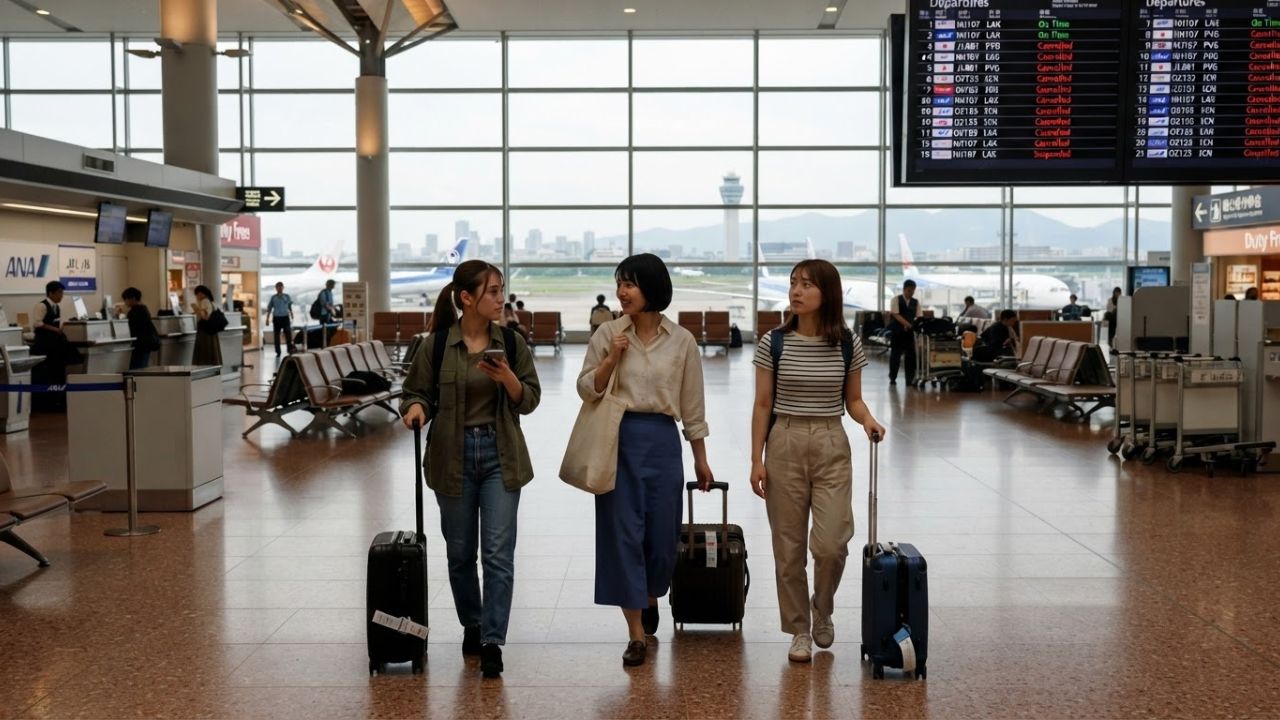
Image generated by AI
Marking the eighth consecutive month of steep contraction, over 30% of scheduled commercial flights between mainland China and Japan were cancelled in August 2026, slashing Chinese visitor share from nearly 23% down to 10.1% while redirecting millions of travelers toward Seoul, Bangkok, and Singapore.
The Local Trend: Cross-Border Aviation Retrenchment and Demand Redistribution
Japan's post-pandemic inbound tourism boom is confronting structural headwinds as travel demand from mainland China contracts significantly. During the peak summer travel window of August 2026, commercial airlines cancelled 1,120 scheduled flights between mainland China and Japan, representing an elevated cancellation rate of 30.1% and triggering the total suspension of 18 direct air corridors.
This contraction mirrors the performance recorded in July 2026, when 1,195 flights were eliminated at a 31.4% cancellation rate alongside 12 complete route suspensions. Truncated services include strategic regional connections such as Shenyang to Kansai International (KIX), Shanghai to Niigata (KIJ), and Wuhan to Tokyo Narita (NRT). Rather than indicating an overall retreat from overseas holidays, Chinese outbound travelers are actively redirecting itineraries across Asia, generating double-digit arrival booms in competing destinations.
China–Japan Aviation Contraction and Regional Flight Data (2026)
| Operating Period | Suspended Air Corridors | Cancelled Flight Total | Flight Cancellation Rate | Primary Affected Corridors |
|---|---|---|---|---|
| July 2026 | 12 Direct Routes | 1,195 Scheduled Flights | 31.4% Rate | Mainland trunk & secondary connections |
| August 2026 | 18 Direct Routes | 1,120 Scheduled Flights | 30.1% Rate | Shenyang–KIX, Shanghai–KIJ, Wuhan–NRT |
Inbound Tourism Impact: Eighth Consecutive Month of Contraction
Official immigration figures reflect a significant shift in visitor demographics across Japan:
- 56.1% Year-on-Year Drop in July 2026: Mainland Chinese arrivals to Japan fell 56.1% compared to July 2025, marking the eighth consecutive month of sustained contraction.
- 56.3% Decline for Jan–July 2026: Across the first seven months of 2026, cumulative Chinese tourist arrivals dropped 56.3% compared to the identical period in the prior year.
- Market Share Halved to 10.1%: Mainland Chinese visitors accounted for only 10.1% of all foreign arrivals to Japan between January and July 2026, down from 22.8% in 2025.
- National Inbound Contraction of 1.7%: Driven primarily by the Chinese deficit, total foreign arrivals to Japan slipped 1.7% year-on-year from January to July 2026, positioning the country for its first annual inbound visitor decline since border reopening.
- Commercial Ripple Across Retail and Hospitality: Luxury duty-free departments in Tokyo's Ginza, electronic retail chains in Akihabara, and department stores in Osaka’s Shinsaibashi district have reported softened high-end retail spending, alongside lower group hotel occupancy across Kansai and Chubu.
Mainland Chinese Travel Redistribution Across Competing Asian Hubs
As air capacity between China and Japan receded, neighboring destinations experienced substantial increases in Chinese passenger arrivals:
| Receiving Destination | Inbound Growth / Performance | Strategic Travel Driver |
|---|---|---|
| Seoul, South Korea | Over 30% Year-on-Year Surge | Proximity, streamlined K-ETA entry & beauty shopping |
| Kuala Lumpur, Malaysia | ~20% Year-on-Year Increase | Mutual visa-free access & direct budget connectivity |
| Bangkok, Thailand | ~20% Year-on-Year Increase | Permanent visa waiver & diverse hospitality pricing |
| Singapore | ~20% Year-on-Year Increase | 30-day visa-free corridor & family entertainment |
| Hong Kong | Robust Expansion | High-speed rail connections & duty-free luxury retail |
Destination Specialist Local Insider Tips
With major tourist corridors less congested by mass tour groups, travelers visiting Japan during this transitional period can enjoy unique advantages:
- Experience Kyoto's Arashiyama Bamboo Grove at Midday: With large tour bus volumes down, popular landmarks like the Arashiyama Bamboo Grove and Fushimi Inari Taisha are far more accessible outside of early morning hours.
- Secure Walk-In Dining at Premier Tokyo Soba and Ramen Counters: Famous neighborhood noodle counters in Shinjuku and Asakusa that previously required multi-hour queues now see manageable wait times of 15 to 20 minutes.
- Take Advantage of Shinkansen Seat Availability on the Tokaido Line: Securing reserved baggage space on Tokaido and Sanyo Shinkansen bullet trains connecting Tokyo, Nagoya, Kyoto, and Osaka is substantially easier, particularly for travelers with oversized luggage.
- Explore Under-the-Radar Hokuriku via the Extended Shinkansen: Instead of standard Golden Route itineraries, travel along the extended Hokuriku Shinkansen to Fukui and Kanazawa to explore preserved geisha quarters and Echizen artisan pottery workshops.
- Observe Sacred Etiquette at Regional Temples: When visiting regional shrines in Nikko or Kamakura, remember to purify hands and mouth at the temizuya pavilion, offer quiet prayers, and refrain from photography inside sacred temple halls.
Future Outlook
The 30% cancellation rate on China–Japan air routes underscores the volatility of regional tourism when reliant on a single dominant feeder market. While the Japan National Tourism Organization (JNTO) accelerates campaigns across North America, Europe, Southeast Asia, and Australia to diversify visitor arrivals, Japanese hospitality providers are recalibrating their offerings around sustainable, high-yield cultural tourism.
Related Travel Guides
Disclaimer
This article is for informational and educational purposes only. It does not constitute legal, financial, or professional advice. While we strive to provide accurate and up-to-date information, travel policies, regulations, and conditions change rapidly. Always verify information with official sources before making travel decisions. Nomad Lawyer makes no representations about the accuracy, reliability, completeness, or suitability of the information provided. Readers should consult qualified professionals for advice specific to their circumstances. The views expressed in this article are those of the author and do not necessarily reflect the views of Nomad Lawyer.
Preeti Gunjan
Contributor & Community Manager
A passionate traveller and community builder. Preeti helps grow the Nomad Lawyer community, fostering engagement and bringing the reader experience to life.
Learn more about our team →