
China Retail Tourism Surge 2026: Foreign Shoppers Flock to Shenzhen Smart Tech Hubs and Bespoke Fashion

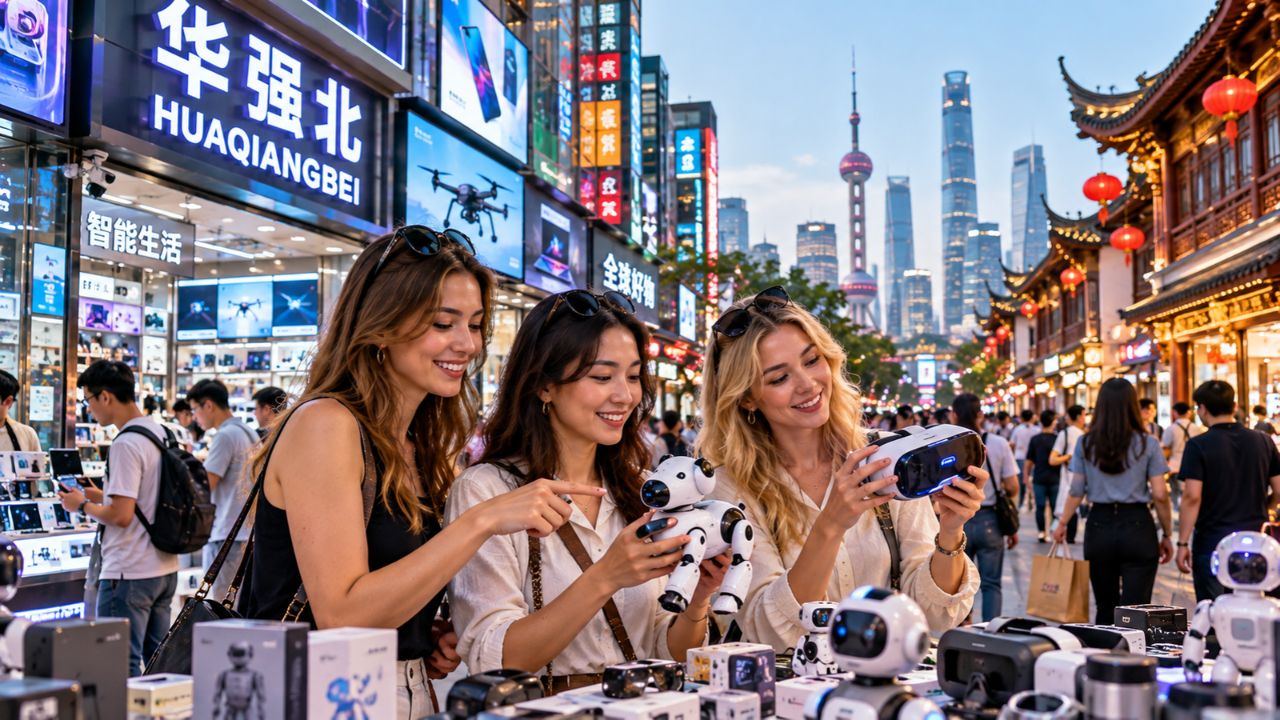
Global leisure travel across Asia is undergoing an unprecedented structural transformation in late 2026, as millions of international visitors arrive with empty suitcases to acquire cutting-edge consumer electronics, personalized fashion, and artisanal crafts across China's bustling commercial corridors. Driven by liberalized 240-hour visa-free transit frameworks, frictionless international mobile payment integrations, and nationwide instant departure tax refunds, international holidaymakers are increasingly prioritizing retail exploration over conventional sightseeing itineraries.
Key Takeaways: China's Retail Tourism Boom in 2026
- Smart Tech Sales Explosion: Sales of artificial intelligence companion robots skyrocketed by 130% year-on-year, while foreign demand for augmented reality smart glasses doubled during the early October Golden Week period.
- Policy-Driven Access: The expansion of the 240-hour visa-free transit window and mutual visa exemptions enabled 77.6% of China’s 36.66 million foreign arrivals to enter without consular visa paperwork.
- Instant Buy-and-Refund Architecture: Over 7,000 certified retail outlets nationwide now process on-the-spot value-added tax (VAT) refunds, driving a 366% surge in overseas refund claim values.
- Digital Payment Friction Removed: International credit card binding on Alipay and WeChat Pay catalyzed a 72.9% rise in total foreign spending across city malls and street stalls.
- Decentralized Travel Retail: Fourth- and fifth-tier production hubs like Jingdezhen (ceramics) and regional metropolises like Chongqing (+170% foreign arrivals) are capturing substantial international visitor revenue.
The Paradigm Shift: From Passive Sightseeing to Immersive Retail Expeditions
For decades, international travel itineraries across East Asia adhered to well-established sightseeing circuits focused on imperial palaces, UNESCO World Heritage monuments, and mist-shrouded mountain landscapes. While cultural landmarks retain enduring appeal, modern globetrotters in 2026 view commercial districts, specialty manufacturing markets, and technological flagship stores as primary holiday destinations in their own right.
Commercial reports published in October 2026 by domestic economic agencies highlight that foreign travelers are visiting with calculated procurement goals. Rather than squeezing incidental souvenir shopping between guided excursions, international visitors dedicate entire days to navigating specialized electronics bazaars, bespoke garment ateliers, and artisanal ceramics studios. Travel industry analysts observe that shopping is no longer an ancillary holiday expenditure; it has transformed into the central experiential narrative of cross-border Asian journeys.
This behavioral shift reflects a broader global consumer demand for items that combine state-of-the-art technological capability, bespoke customization, and significant price advantages. Global supply chain transparency, popularized through social media and digital travel vlogs, has demystified direct-from-source purchasing. International travelers recognize that acquiring advanced smart wearables, bespoke tailored garments, or master-crafted porcelain directly within domestic Chinese commercial ecosystems delivers unmatched value and exclusivity.
Shenzhen’s Huaqiangbei and the Viral Global Appetite for Smart Hardware
At the epicenter of this technological travel wave stands Shenzhen’s world-renowned Huaqiangbei electronics district in Guangdong Province. Once known primarily to global hardware engineers and supply-chain logistics specialists, the multi-story retail plazas along Shennan Middle Road have evolved into prime tourist attractions for international travelers, content creators, and gadget enthusiasts.
Between October 1 and October 6, 2026, consumer data revealed an extraordinary 130% year-on-year surge in overseas purchases of AI-powered companion robots and educational robotics. Concurrently, international consumer sales of next-generation smart audio glasses and real-time augmented reality translation spectacles doubled compared to the previous year. Multilingual foreign shoppers routinely pack market stalls inside SEG Electronics Market and Huaqiang Electronic World, seeking out pocket-sized neural-network voice translators, foldable drones, wearable health monitors, and bespoke mechanical keyboards.
To accommodate this sustained influx of global buyers, retail stalls across Huaqiangbei and interactive flagship stores along Shanghai’s pedestrianized Nanjing Road have undergone extensive operational upgrades. Prominent retail outlets report that foreign visitors now constitute up to 50% of peak daily foot traffic. Merchants have deployed multilingual sales teams fluent in English, Korean, Japanese, and Spanish, while offering hands-on demonstration booths equipped with real-time translation displays to ensure seamless product trials.
Artisanal Heritage Meets Haute Couture: Shanghai Boutiques and Jingdezhen Porcelain
While futuristic microelectronics dominate Guangdong's commercial corridors, international demand for lifestyle products, custom tailoring, and traditional craft traditions is expanding with equal velocity across eastern and central provinces.
In Shanghai, foreign travelers are bypassing mass-market fast-fashion chains to explore independent designer studios and bespoke tailoring houses in the Former French Concession and Jing'an District. International shoppers frequently commission made-to-measure suits, custom cashmere outerwear, and contemporary qipao-inspired gowns, utilizing high-speed digital body-scanning technology that delivers tailored garments within 48 to 72 hours. This blend of rapid garment production and bespoke craftsmanship allows transit visitors to commission wardrobe pieces upon arrival and collect them before departure.
Concurrently, historic cultural centers like Jingdezhen in Jiangxi Province—revered for over a millennium as the porcelain capital of the world—are experiencing a profound renaissance among global travelers. Foreign visitors travel via high-speed rail to explore the Taoxichuan Ceramic Art Avenue and ancient kiln complexes, purchasing handmade celadon tea sets, contemporary ceramic sculptures, and intricately glazed dinnerware directly from independent ceramicists. These direct studio purchases provide travelers with certified cultural provenance and unique aesthetic objects impossible to replicate through mass international export channels.
Regulatory Catalysts: 240-Hour Visa-Free Transit and Frictionless Mobile Payments
The meteoric rise of international retail tourism has been propelled by proactive regulatory reforms coordinated by the National Immigration Administration of China. The systematic expansion of mutual visa-waiver treaties alongside the 240-hour (10-day) visa-free transit framework across key international gateway hubs has dismantled administrative barriers for overseas travelers.
Immigration statistics indicate that foreign national arrivals reached 36.66 million, with 77.6% of travelers entering completely visa-free. Top inbound source markets driving retail foot traffic include South Korea, Thailand, Singapore, Malaysia, Japan, and Australia, alongside a remarkable 80% month-on-month increase in long-haul European transit passenger traffic through Beijing Capital (PEK), Shanghai Pudong (PVG), and Guangzhou Baiyun (CAN). The generous 10-day transit window allows travelers flying between Europe, Australasia, and Southeast Asia to schedule deliberate multi-city shopping stopovers without undergoing visa application protocols.
Complementing border liberalization is the complete elimination of historical payment barriers. In previous years, foreign travelers struggled to transact in an intensely cashless domestic economy dominated by domestic bank QR codes. In 2026, streamlined international card linking by digital wallet providers Alipay and WeChat Pay allows visitors to bind Visa, Mastercard, American Express, and JCB cards directly to smartphone interfaces. According to national financial transaction records, overseas tourist spending value through mobile digital payment networks rose by 72.9% year-on-year, while total foreign transaction counts grew by 59.2%. From luxury department stores to open-air night market fruit stalls, foreign visitors now execute contactless payments with zero foreign transaction friction.
Instant Tax Refunds and Coastal Duty-Free Expansion in Hainan
Institutional fiscal reforms overseen by the Ministry of Culture and Tourism of the People's Republic of China have further amplified foreign purchasing power. Departure tax refund transactions across primary transit hubs such as Shanghai expanded by more than 52% year-on-year, while total refund application processing volume increased 2.7-fold.
A pivotal innovation driving this fiscal surge is the nationwide rollout of immediate "buy-and-refund" (tax rebate on site) mechanisms across more than 7,000 certified department stores and luxury shopping centers. Under this program, foreign travelers presenting their passports at designated downtown counters receive their cash or digital VAT rebates immediately upon completing their retail transaction, eliminating long queues at airport customs terminals. Consequently, the total value of departure tax-refunded goods claimed by overseas tourists climbed by an extraordinary 366%.
========================================================================================
            MODERN FOREIGN RETAIL & INSTANT TAX-REFUND JOURNEY (2026)
========================================================================================

  [ International Passenger Arrival ]
               │
               ▼
  ┌────────────────────────────────────────────────────────┐
  │ 240-Hour Visa-Free Transit / Mutual Visa Waiver Entry   │
  │ • Biometric kiosk registration at PEK / PVG / SZX / CAN│
  └────────────────────────────┬───────────────────────────┘
                               │
                               ▼
  ┌────────────────────────────────────────────────────────┐
  │ Frictionless Mobile Payment Activation                 │
  │ • Foreign Visa / Mastercard bound to Alipay & WeChat   │
  │ • Real-time currency conversion with zero merchant fee │
  └────────────────────────────┬───────────────────────────┘
                               │
                               ▼
  ┌────────────────────────────────────────────────────────┐
  │ Specialized Commercial Procurement                     │
  │ • Shenzhen: Huaqiangbei AI robotics & smart wearables   │
  │ • Shanghai: Custom fashion tailoring & flagship stores │
  │ • Jingdezhen / Regional: Artisan crafts & ceramics     │
  └────────────────────────────┬───────────────────────────┘
                               │
                               ▼
  ┌────────────────────────────────────────────────────────┐
  │ Downtown "Buy-and-Refund" VAT Processing                │
  │ • In-store immediate VAT rebate at 7,000+ locations    │
  │ • Instant rebate credited to digital wallet or card    │
  └────────────────────────────┬───────────────────────────┘
                               │
                               ▼
  ┌────────────────────────────────────────────────────────┐
  │ High-Speed Rail & Departure Gateway Clearance          │
  │ • Luggage forwarding directly to airport check-in desk │
  │ • Customs barcode validation & seamless baggage loading│
  └────────────────────────────────────────────────────────┘
========================================================================================
In coastal South China, Hainan Free Trade Port has reinforced its status as a world-class duty-free retail capital, governed by strategic policies from the Hainan Provincial Department of Commerce. Hainan currently accounts for 29.82% of China's total travel retail economy, underpinned by zero-tariff product categories covering 6,637 distinct commodity lines. Overseas holidaymakers visiting coastal resort complexes in Sanya and Haikou routinely purchase luxury cosmetics, fine timepieces, premium spirits, and designer leather goods at price points between 15% and 35% below international retail benchmarks, collecting their purchases seamlessly at airport departure lounges.
Regional Decentralization and High-Speed Rail Commerce Corridors
The macroeconomic benefits of cross-border retail tourism are dispersing far beyond first-tier metropolises like Beijing, Shanghai, and Guangzhou. The relentless expansion of China's high-speed rail (HSR) network—operating trains at speeds up to 350 km/h—enables international visitors to effortlessly bridge distant manufacturing and cultural regions within hours.
Foreign travelers based in Shenzhen can conduct morning hardware procurement in Huaqiangbei, board a high-speed train, and arrive in regional cultural centers by afternoon. Furthermore, emerging downtown multi-use transit complexes, such as the UpperHills commercial hub in Shenzhen, synchronize duty-free shopping facilities with direct cross-border transit shuttles to Hong Kong International Airport (HKG) and Shenzhen Bao'an (SZX).
Data reveals that inbound tourist arrivals across fourth-tier and fifth-tier administrative divisions expanded by an average annual rate of 134%. In southwestern China, the mega-city of Chongqing recorded a striking 170% surge in overseas visitors, driven by international travelers seeking out mountain-city urban topography, local night markets, and regional textile workshops. This decentralization ensures that retail tourism expenditures directly support local artisan collectives, small merchants, and regional hospitality providers.
Inbound Retail Tourism & Policy Performance Matrix (2026)
The synchronized convergence of transport infrastructure, fiscal incentives, and advanced consumer hardware has elevated retail tourism into a primary engine of service export growth.
| Metric / Sector Parameter | 2025 Benchmark | 2026 Recorded Performance | YoY Growth / Impact | Strategic Policy Driver |
|---|---|---|---|---|
| Inbound Tourism Revenue | $94.2 Billion | $131.1 Billion | +39.2% | Visa-free transit expansion & retail-focused tours |
| Travel Services Exports | RMB 206.4 Billion | RMB 263.6 Billion | +27.7% | Fastest-growing national service export category |
| Total Inbound Foreign Arrivals | 27.50 Million | 36.66 Million | +33.3% | 240-hour transit window & bilateral visa waivers |
| Proportion of Visa-Free Entrants | 41.2% | 77.6% | +36.4 pp | Mutual exemption accords across Europe & APAC |
| AI Robotics Retail Demand | Baseline index | +130% sales index | +130.0% | Viral hardware showcases & tech flagship markets |
| Smart Glasses Foreign Sales | Baseline index | 2.0x volume multiplier | +100.0% | AR translation & audio spectacle popularity |
| Foreign Mobile Spend Value | Baseline index | +72.9% spend value | +72.9% | International credit card integration on Alipay/WeChat |
| Foreign Digital Transactions | Baseline index | +59.2% volume count | +59.2% | Elimination of domestic cash/QR-code barriers |
| Buy-and-Refund VAT Locations | 3,100 stores | 7,000+ stores nationwide | +125.8% | Immediate on-site municipal tax rebate system |
| Claimed Tax Refund Value | Baseline index | 4.66x value multiplier | +366.0% | Streamlined paperless downtown refund counters |
| Hainan Duty-Free Market Share | 24.10% | 29.82% of national travel retail | +5.72 pp | 6,637 zero-tariff items & coastal resort integration |
| Average Foreign Visitor Stay | 4.6 Days | 5.1 Days | +10.9% | Multi-city high-speed rail shopping excursions |
Essential Traveler Advisory: Navigating China’s Tech Markets and Duty-Free Ecosystem
For international travelers planning specialized shopping expeditions across China in late 2026 and 2027, strategic preparation ensures maximum efficiency and cost savings:
1. Digital Payment and Connectivity Setup
- Pre-Departure Card Linking: Download both Alipay and WeChat before departing. Link at least two primary international credit cards (Visa or Mastercard recommended). Enable passport identity verification within the apps to unlock higher single-transaction limits (up to RMB 15,000).
- International eSIM & Roaming: Ensure your mobile phone operates on an unlocked international eSIM or international roaming plan that supports continuous 5G data access, facilitating navigation, translation apps, and instant QR-code payments across transit stations.
2. Maximizing the 240-Hour Visa-Free Transit
- Qualifying Routing: Ensure your travel itinerary features a direct transit from Country A through an eligible Chinese hub to a distinct third Country/Region C (e.g., London to Shanghai to Tokyo, or Sydney to Guangzhou to Singapore). Open-jaw roundtrips directly back to your origin country do not qualify.
- Printed Onward Tickets: Carry confirmed, printed paper boarding passes or ticketing confirmations for onward flights departing within 240 hours from your scheduled port of arrival.
3. Executing Instant "Buy-and-Refund" Tax Rebates
- Minimum Spend Threshold: Look for retail stores displaying the official "Tax Free / Buy and Refund" badge. The minimum purchase threshold to qualify for VAT departure refunds is RMB 500 at a single registered establishment on the same day.
- Documentation Requirements: Retain your physical passport, the official VAT invoice (Fapiao), and the Tax Refund Application Form issued by the store. If claiming instant in-store refunds, ensure the credit card pre-authorization matches the passport holder's name.
- Airport Customs Validation: Keep your purchased goods unused and in their original packaging in your carry-on luggage. At departure airports (such as Shanghai Pudong or Shenzhen Bao'an), present the items to customs officers before checking luggage if items must be stowed in cargo hold.
4. Hardware and Electronics Procurement Tips in Shenzhen
- Voltage and Plug Compatibility: Consumer electronics in China operate on 220V / 50Hz with Type A, C, and I sockets. Confirm that purchased power bricks and chargers support universal input voltage (100V–240V, 50/60Hz).
- Firmware and Language Settings: Before finalizing purchases of smart wearables, AI companion robots, or Android-based tablets, request that retail staff demonstrate English or multi-language interface menus and ensure global Google Mobile Services (GMS) or alternate application framework compatibility.
Frequently Asked Questions
Can foreign tourists use international credit cards directly at Shenzhen electronics stalls?
Yes. Stalls across Huaqiangbei and city retail centers accept international Visa, Mastercard, and Amex cards bound directly to Alipay or WeChat Pay QR-code wallets, allowing frictionless instant payment.
How does the 240-hour visa-free transit rule work for shopping trips?
Travelers holding eligible passports transiting through designated gateway airports to a third country can stay up to 240 hours (10 days) without a visa, providing ample time for regional shopping tours.
What is the advantage of China’s "Buy-and-Refund" tax rebate policy?
The "Buy-and-Refund" policy allows foreign shoppers to receive their VAT rebate directly at downtown retail stores immediately after purchasing, avoiding lengthy paperwork lines at departure airport customs.
Can electronics purchased in China be used safely overseas?
Most smart electronics, AI translators, and smart glasses support universal 100V–240V charging and English interfaces; travelers should verify international voltage ratings and global language firmware before purchasing.
Related Travel Guides
Disclaimer
This article is for informational and educational purposes only. It does not constitute legal, financial, or professional advice. While we strive to provide accurate and up-to-date information, travel policies, regulations, and conditions change rapidly. Always verify information with official sources before making travel decisions. Nomad Lawyer makes no representations about the accuracy, reliability, completeness, or suitability of the information provided. Readers should consult qualified professionals for advice specific to their circumstances. The views expressed in this article are those of the author and do not necessarily reflect the views of Nomad Lawyer.
Raushan Kumar
Founder & Lead Developer
Full-stack developer with 11+ years of experience and a passionate traveller. Raushan built Nomad Lawyer from the ground up with a vision to create the best travel and law experience on the web.
Learn more about our team →