
ALTA Aviation Law Americas Conference 2026: Inside Miami's Pan-American Air Bridge and Latin America Travel Guide
As 480 million passengers fuel record Latin American air travel, the ALTA Aviation Law Americas Conference in Miami tackles passenger rights, open skies, and new routes.

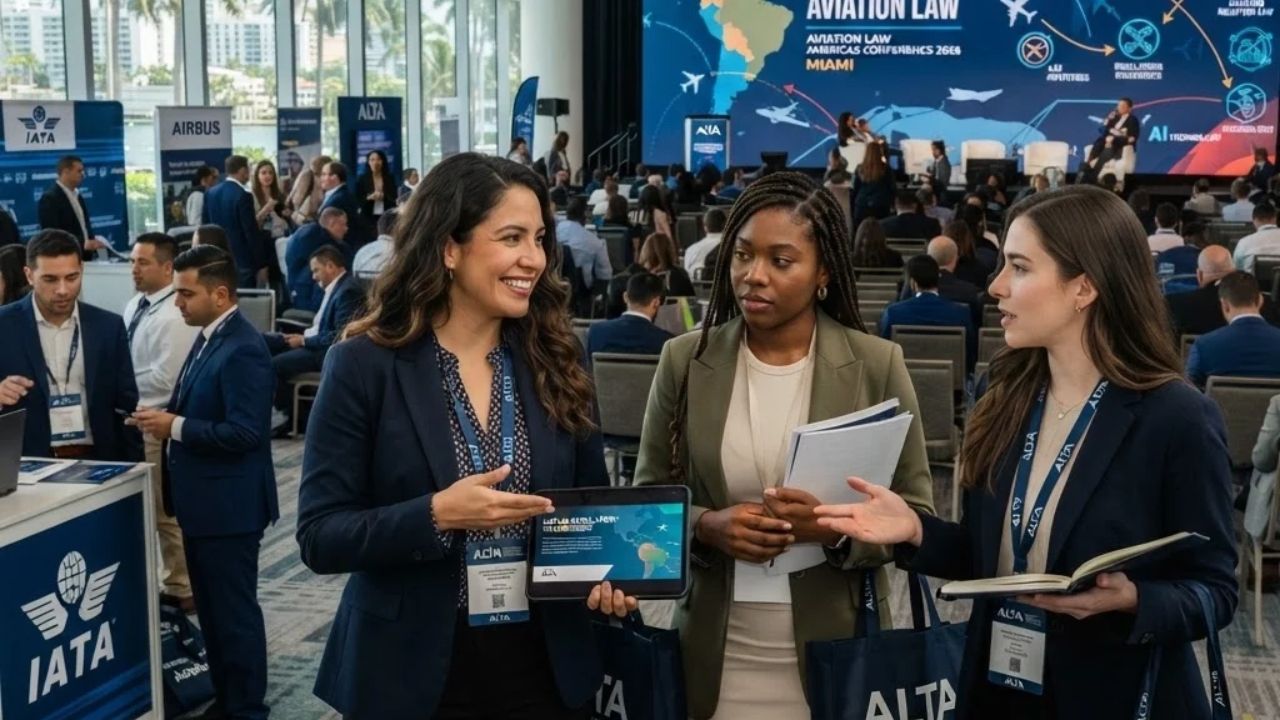
Image generated by AI
While nearly 480 million travelers traversed Latin America and the Caribbean in 2025, reaching the highest passenger volume in the region’s history, international flyers still encounter bizarre regulatory divides—where crossing an unseen border can double your ticket price through aviation fuel taxes or leave you stranded without compensation frameworks like Europe’s EU261. When aviation attorneys, ministry regulators, and airline executives gathered in Miami for the ALTA Aviation Law Americas Conference 2026, hosted by the Latin American and Caribbean Air Transport Association (ALTA), the discussions focused on far more than courtroom jurisprudence. From the reopening of commercial air corridors into Venezuela and aircraft financing through the Cape Town Convention to the divergent economic policies shaping domestic travel across Brazil and Argentina, the summit addressed the legal gears that dictate how travelers move between North and South America. For voyagers using Miami as their intercontinental springboard, understanding these shifting regulatory winds transforms how you plan routes, book connecting tickets, and experience the cultural heartbeat of the hemisphere.
Miami's Aviation Summit: Decoding the Legal Revolution Across the Americas
The selection of Miami as the permanent host for the ALTA Aviation Law Americas Conference reflects the city's undisputed position as the commercial and operational crossroads of the Western Hemisphere. The 2026 forum brought together airline chief counsels, regulatory authorities, and international financial institutions from across the Americas, the Caribbean, and Europe to confront an increasingly complex operating environment.
Highlighting the scope of this transformation, Peter Cerdá, CEO of ALTA, emphasized that regulation can either serve as an engine of economic growth or become an insurmountable obstacle. In 2025, nearly 480 million passengers traveled across Latin America and the Caribbean, illustrating the immense underlying demand for regional connectivity. Yet, as Cerdá noted, nations like Brazil and Argentina demonstrate how opposing regulatory and economic approaches influence regional competitiveness. While Argentina has embraced sweeping domestic deregulation to stimulate budget competition, Brazil's airlines continue to navigate heavy judicialization and elevated fuel taxation. The conference also examined promising new frontiers, including the gradual recovery of air links into Venezuela and multilateral regional frameworks like the ALAS agreement, designed to attract private investment and unlock fresh route pairings.
A central point of discussion for international travelers was the creeping global influence of passenger rights frameworks modeled on the European Union’s EU261 compensation rules. As passenger protection laws evolve across Latin America, airlines face growing compliance requirements regarding flight cancellations, delays, and denied boarding. Concurrently, legal specialists analyzed the Federal Aviation Administration's (FAA) regulatory roadmap for Advanced Air Mobility (AAM), electric vertical takeoff aircraft, cargo drone corridors, and the legal liabilities of artificial intelligence in customer service, establishing the legal architecture that will govern how passengers fly through 2030.
What Makes Miami and the Pan-American Corridor Different
Traveling through the Miami gateway offers a vivid demonstration of cultural synthesis. Miami is not merely another North American metropolitan center; it is culturally the northern capital of Latin America and the Caribbean. At Miami International Airport (MIA), which handles the largest volume of international air freight in the United States, Spanish and Portuguese are spoken fluently across every concourse, and the aroma of freshly pulled espresso drifts past international departure gates.
Stepping out of the terminal brings travelers directly into vibrant historical enclaves. In Little Havana along Calle Ocho, the click of domino tiles echoes from Máximo Gómez Park, while veteran torcedores hand-roll cigars beside colorful folk art murals. In Wynwood, former warehouse blocks have been transformed into one of the world's most dynamic open-air contemporary street art museums. Just across the bay, the pastel facades and nautical porthole windows of the South Beach Art Deco District preserve architectural refinement from the 1930s.
Yet Miami’s geographical position is equally shaped by wild nature. Just thirty minutes west of the city’s glittering skyline lies Everglades National Park, inscribed by the UNESCO World Heritage Centre. Spanning millions of acres of protected sawgrass prairies, mangrove estuaries, and cypress domes, this subtropical wetland sanctuary provides refuge to Florida panthers, American crocodiles, and migratory birds. Supported by tourism initiatives from Greater Miami and Miami Beach, traveling through this gateway offers an extraordinary transition from North American commerce to Latin American cultural passion.
Visitor Insider Tips
Navigating the Pan-American air corridor via Miami requires local awareness, transit timing, and understanding of regional airline policies.
- Allow Three Hours for Concourse Transfers at MIA: Miami International Airport is exceptionally expansive, with concourses stretching across millions of square feet. If connecting from a domestic US flight to an international departure heading to South America, allow at least two and a half to three hours. Security checkpoints in Concourse D and J experience heavy evening passenger waves heading to São Paulo, Buenos Aires, and Bogotá.
- Do Not Assume European-Style Delay Compensation Applies: While the ALTA conference examined EU261-style consumer frameworks, most domestic and regional flights within Latin America do not offer automatic cash payouts for flight delays. Consumer protections vary widely between nations, and weather disruptions in the Andes or Amazon can cause uncompensated schedule modifications. Always carry comprehensive travel insurance covering medical emergency evacuation, missed connections, and hotel expenses.
- The Authentic Calle Ocho Cafecito Ritual: Before boarding a redeye flight to South America, take a quick rideshare to Little Havana. Walk up to the ventanita (coffee walk-up window) at Versailles or La Carreta. Order a cafecito (sweetened whipped Cuban espresso) paired with a warm pastelito de guayaba (flaky guava and cream cheese pastry), soaking in the authentic banter of local residents.
- Beware of Weight Restrictions on Regional Island Flights: While long-haul flights from Miami to major Latin American capitals typically provide standard baggage allowances, regional airlines operating smaller turboprop aircraft across the Caribbean and Central America enforce strict weight limits. Check your luggage limits carefully before departure to avoid paying steep excess baggage fees at the boarding gate.
- Base Yourself in Walkable Coconut Grove: Skip uninspiring airport transit hotels and stay in leafy Coconut Grove. The neighborhood offers pedestrian-friendly streets shaded by historic banyan trees, independent bookstores, waterfront sailing clubs, and open-air dining, with convenient access back to Miami International Airport via the Metrorail.
Cultural and Environmental Context
The movement of 480 million travelers across Latin America and the Caribbean demonstrates how vital aviation is for economic development and community survival. In regions separated by impassable rainforests, vast mountain ranges, and island archipelagos, air travel provides the primary connection for commerce, emergency medical transport, and cultural exchange.
However, expanding air transport across ecologically sensitive regions brings profound environmental responsibilities. Latin America and the Caribbean encompass some of the most biodiverse regions on Earth, including the Amazon river basin, the Mesoamerican barrier reef, and the Andean cloud forests. The aviation industry is under increasing pressure to adopt Sustainable Aviation Fuels (SAF) derived from local agricultural waste, optimize high-altitude flight routes to minimize contrails, and retire older, fuel-inefficient regional aircraft fleets through the Cape Town Convention financing mechanisms.
Sustainable travel in this corridor means supporting initiatives that empower local communities. By choosing eco-certified lodges in rural South America, respecting marine sanctuary rules in the Caribbean, supporting indigenous artisan cooperatives, and utilizing public transit systems like the Miami Metromover and Metrorail, travelers ensure that the regional aviation boom preserves the living natural beauty of the Americas for future generations.
FAQ: Navigating Latin American Air Travel via Miami 2026
What was the central focus of the ALTA Aviation Law Americas Conference 2026?
Hosted by ALTA in Miami, the summit examined aviation legal frameworks, passenger rights evolution, aircraft financing, and regulatory cooperation across Latin America and the Caribbean.
How many passengers traveled across Latin America and the Caribbean in 2025?
Nearly 480 million passengers flew across Latin America and the Caribbean in 2025, setting a new regional traffic record and demonstrating powerful market growth.
Do European EU261 flight delay compensation rules apply to Latin American flights?
No. EU261 applies only to flights departing from European airports or on European carriers. Flights across Latin America are governed by individual national consumer protection laws.
How much layover time is recommended for international connections at Miami Airport?
Travelers should maintain at least two and a half to three hours for international connections at MIA to navigate large concourses, security screening, and international gate walks.
From the lively coffee windows of Little Havana to the soaring heights above the Andes, traveling across the Americas reminds us that open skies are built on the shared warmth of diverse cultures.
Related Travel Guides
Disclaimer
This article is for informational and educational purposes only. It does not constitute legal, financial, or professional advice. While we strive to provide accurate and up-to-date information, travel policies, regulations, and conditions change rapidly. Always verify information with official sources before making travel decisions. Nomad Lawyer makes no representations about the accuracy, reliability, completeness, or suitability of the information provided. Readers should consult qualified professionals for advice specific to their circumstances. The views expressed in this article are those of the author and do not necessarily reflect the views of Nomad Lawyer.
Kunal K Choudhary
Co-Founder & Contributor
A passionate traveller and tech enthusiast. Kunal contributes to the vision and growth of Nomad Lawyer, bringing fresh perspectives and driving the community forward.
Learn more about our team →