New York City Launches Global Five-Borough Tourism Campaign Ahead of 2026 FIFA World Cup

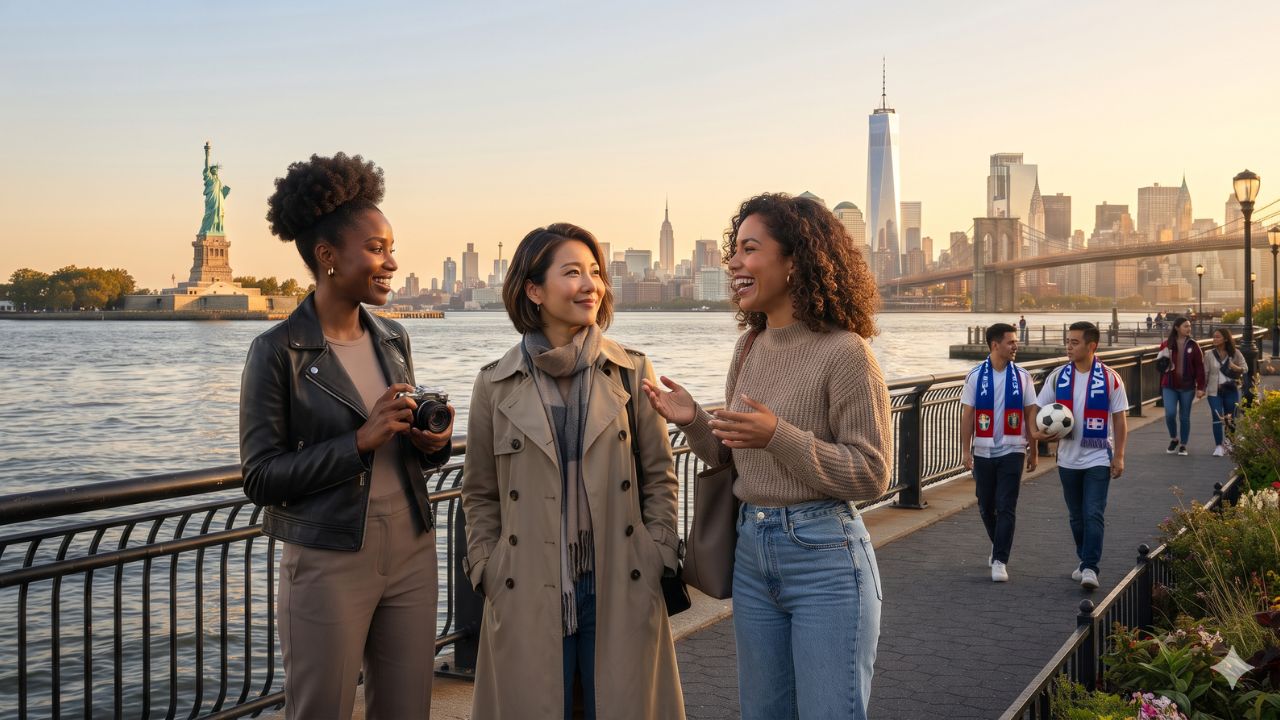
While over eighty percent of first-time international visitors to New York City never leave the island of Manhattan, the city's latest global promotional initiative is actively pushing travelers across all five boroughs ahead of the 2026 FIFA World Cup. Spearheaded by New York City Tourism + Conventions, the multi-million-dollar global campaign—titled Where the World Comes to Play—was launched in October 2025 to drive visitation throughout 2026. Initially deployed across top-tier international feeder markets including the United Kingdom, Australia, Ireland, Singapore, and New Zealand, the campaign expands across 20 distinct international territories and selected long-haul domestic corridors.
Anchored visually by the Statue of Liberty National Monument, the strategy moves deliberately beyond conventional postcard tropes of Times Square, Broadway, and Fifth Avenue. By highlighting cultural assets, community businesses, nightlife districts, and culinary traditions across Brooklyn, Queens, the Bronx, and Staten Island, municipal authorities are preparing urban infrastructure for hundreds of thousands of international soccer supporters while decentralizing the economic benefits of global tourism.
The Global Footprint: Targeting 20 Markets for 2026
The rollout of Where the World Comes to Play marks an extensive international marketing effort tailored to long-haul travelers with higher average lengths of stay. The campaign combines large-scale outdoor displays, targeted media partnerships, and multilingual digital tools, including artificial intelligence visitor assistants designed to craft customized itineraries spanning secondary neighborhoods.
The geographic focus reflects distinct source markets:
- Europe: United Kingdom, Ireland, France, Germany, Italy, Spain, and the Netherlands.
- Asia-Pacific: Australia, New Zealand, Singapore, Japan, and South Korea.
- The Americas: Canada, Brazil, Mexico, Chile, and Colombia.
- Middle East & Africa: United Arab Emirates and South Africa.
- Domestic United States: Targeted high-yield long-haul metro markets.
For British and Irish travelers taking transatlantic long-weekend breaks, promotional messaging highlights indie music venues in Brooklyn and architectural walking tours in Queens. For long-haul Australian and Singaporean travelers planning multi-week itineraries, campaigns emphasize the five-borough dining landscape, world-class parks, and cultural institutions outside the central theater district.
Comparing New York City's Five Boroughs for International Travelers
Each of New York City's five boroughs offers a distinct cultural identity, transit accessibility, and neighborhood experience:
| Borough | Core Historic & Cultural Attractions | Key Neighborhood Centers | Transit Access from Midtown | Distinct Visitor Character |
|---|---|---|---|---|
| Manhattan | Broadway, Central Park, Empire State, The Met | SoHo, Greenwich Village, Harlem, Lower East Side | Walking / Core Subway Lines (1, 2, 3, A, C, E) | Global commercial core, flagship museums, skyscraper density |
| Brooklyn | Brooklyn Bridge, Prospect Park, Brooklyn Museum | DUMBO, Williamsburg, Greenpoint, Bushwick | 10–25 minutes via A, C, F, L subway trains | Industrial waterfront parks, independent arts, boutique retail |
| Queens | MoMA PS1, Museum of the Moving Image, Flushing Meadows | Astoria, Jackson Heights, Long Island City, Flushing | 15–30 minutes via 7, N, W, E, F subway trains | Global culinary diversity, immigrant heritage, micro-neighborhoods |
| The Bronx | Yankee Stadium, Bronx Zoo, New York Botanical Garden | Arthur Avenue (Little Italy), Mott Haven, Riverdale | 25–40 minutes via 4, B, D trains or Metro-North | Historic hip-hop origins, classical Italian delis, public parks |
| Staten Island | Snug Harbor Cultural Center, Historic Richmond Town | St. George, Greenbelt trails, South Beach | 25-minute free Staten Island Ferry from Whitehall | Maritime heritage, expansive nature preserves, harbor vistas |
What Makes the Five-Borough Experience Different
Experiencing New York City as an insider requires recognizing that its cultural heartbeat resides in the ethnic enclaves framing the subway lines. Taking the 7 train through Queens reveals the world's most linguistically diverse urban landscape: stepping off at Jackson Heights exposes street vendors frying Colombian empanadas and Himalayan momos, while continuing to the end of the line in Flushing leads to sprawling Asian food markets serving authentic soup dumplings and hand-pulled Xi'an noodles.
In Brooklyn, the shift moves from the preserved industrial brick lofts of DUMBO to the Caribbean bakeries of Flatbush and the tree-shaded brownstone blocks of Bedford-Stuyvesant. Along the Brooklyn waterfront, the adaptive reuse of the Brooklyn Navy Yard and Domino Park in Williamsburg provides dramatic views of the Manhattan skyline across the East River, surrounded by independent coffee roasters, vinyl record shops, and rooftop farm cooperatives.
In the Bronx, travelers step into the cradle of hip-hop culture. Beyond watching a ballgame at Yankee Stadium, a walk down Arthur Avenue in the Belmont neighborhood immerses visitors in a traditional Italian community where fifth-generation butchers hang prosciutto and wheel parmigiano-reggiano under antique chandeliers, entirely untainted by commercial tourist kitsch. Meanwhile, crossing the Upper New York Bay aboard the free Staten Island Ferry offers unobstructed views of Lady Liberty before exploring the nineteenth-century Tuscan villas and botanical gardens at Snug Harbor.
Visitor Insider Tips for Exploring Beyond Manhattan
Navigating New York's vast urban network runs smoothest when travelers adopt practical local commuting habits:
- Master the OMNY Tap-to-Pay Fare System: Avoid standing in long lines to purchase physical MetroCards. The Metropolitan Transportation Authority (MTA) supports contactless credit cards, debit cards, and smartphones across all subways and buses. The system features an automatic weekly fare cap, ensuring that after 12 paid rides within a Monday-to-Sunday window, all subsequent rides that week are completely free.
- Time Outer Borough Museum Visits Mid-Week: Flagship institutions like the Brooklyn Museum and MoMA PS1 in Long Island City offer exceptional contemporary exhibits with a fraction of the crowds found at Manhattan's Museum of Modern Art or The Met. Visit on Thursday or Friday afternoons to wander galleries in peace.
- Ride the NYC Ferry for Scenic Water Transit: For the price of a standard subway ride plus a modest surcharge, the NYC Ferry network connects Wall Street and Midtown with waterfront landings in Astoria, DUMBO, Greenpoint, and the Rockaways. The East River and Soundview routes provide harbor views without paying for commercial sightseeing boat cruises.
- Reserve Dining in Outer Borough Enclaves: While Manhattan restaurants routinely book out 30 days in advance, Michelin-recognized trattorias in Astoria, omakase counters in Greenpoint, and seafood smokehouses in City Island (Bronx) often accept reservations closer to the date, delivering superior culinary quality at significantly lower price points.
Cultural and Environmental Context
The deliberate decentralization of tourism across the five boroughs addresses acute spatial and economic imbalances. Manhattan's core tourist corridors—particularly Midtown, SoHo, and the Financial District—have shouldered intense pedestrian congestion, leading to community friction over pedestrian traffic, waste management, and sidewalk crowding.
Distributing international traveler spend directly into community-owned bakeries, neighborhood bookstores, and cultural heritage centers in Queens and the Bronx provides a sustainable economic counterweight. However, this transition requires careful management. Neighborhood preservation groups work actively to prevent hyper-commercialization from driving up commercial rents for long-term immigrant merchants. Encouraging respectful, culturally curious exploration ensures that the everyday social rhythms that make New York's neighborhoods authentic remain protected.
FAQ: Visiting New York City Five Boroughs 2026
What is the primary goal of the "Where the World Comes to Play" campaign?
The campaign promotes New York City across 20 international markets to disperse visitors beyond Manhattan and into Brooklyn, Queens, the Bronx, and Staten Island ahead of the 2026 FIFA World Cup.
How do visitors get between the five boroughs affordably?
The MTA subway network operates 24/7 across Manhattan, Brooklyn, Queens, and the Bronx using OMNY tap-to-pay. Staten Island connects to Manhattan via the free, 24-hour Staten Island Ferry.
Which borough is best for international culinary travel?
Queens is widely celebrated as the culinary capital of NYC, offering hundreds of authentic regional cuisines, from Himalayan dumplings in Jackson Heights to authentic regional Chinese fare in Flushing.
Does the campaign introduce new entry or visa requirements?
No. The campaign is purely promotional and does not alter United States federal entry policies, ESTA authorizations, or visitor visa requirements.
Beyond the shadow of the Midtown skyscrapers lies the true heartbeat of New York—five distinct worlds, bound together by steel rails and the welcoming gaze of Lady Liberty.
Related Travel Guides
This article is for informational purposes. Flight routes, passenger regulations, visa rules, and transit advisories are subject to change by airlines and aviation authorities. Readers are advised to verify schedules and travel documentation with relevant carriers and border agencies before departure.
Related Stories
Porto Secures Direct Washington Flights as TAP Air Portugal Expands Transatlantic Routes for 2027
Mexico Child Travel Rules Explained: SAM Forms, Parental Consent, and Family Border Entry for 2026