Albany Sees Sharp Rise in Senior Shared Housing as New York Living and Retirement Travel Patterns Evolve

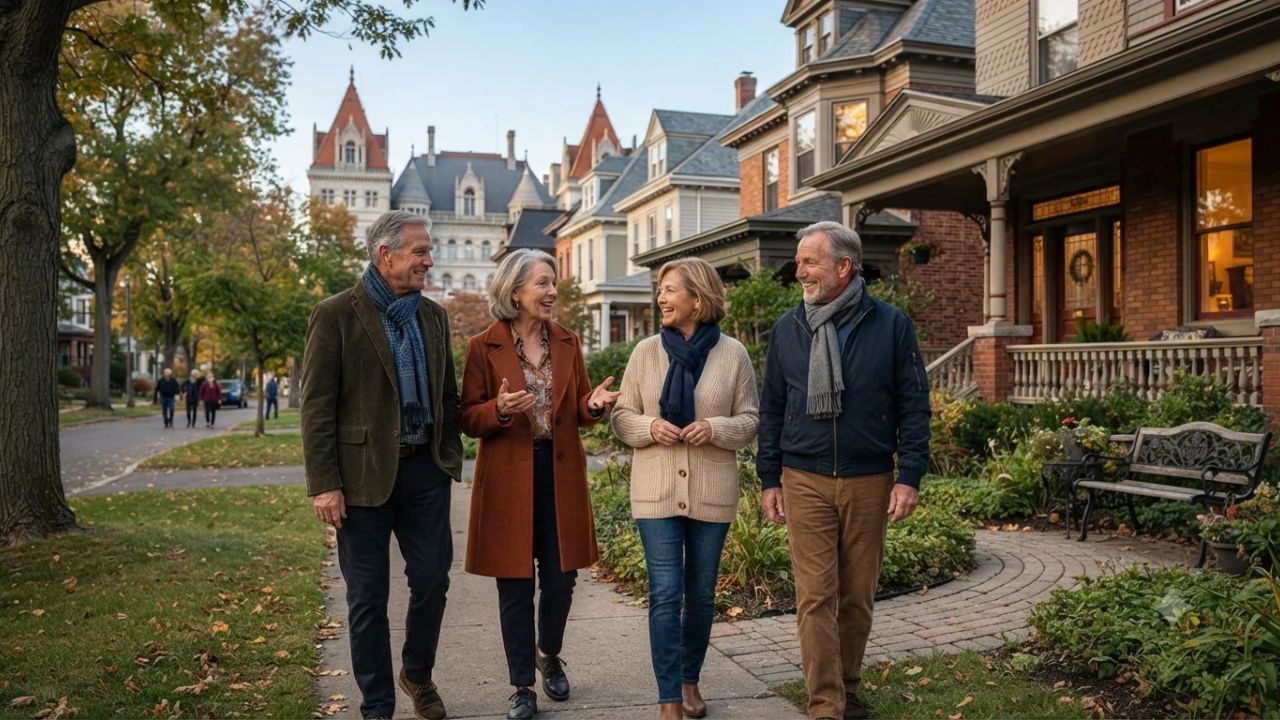
The Albany metropolitan area has witnessed an 82% surge in older adults living with nonfamily roommates over the past nine years, establishing New York’s state capital as a focal point in America’s changing senior living and retirement travel landscape. According to a comprehensive July 2026 demographic analysis by SeniorLiving.org based on US Census Bureau data, the proportion of residents aged 65 and older sharing homes with unrelated individuals in the Albany-Schenectady-Troy region climbed from 2.8% in 2015 to 5.1% in 2024. This notable 2.3 percentage-point increase reflects a fundamental transformation in how older Americans manage household expenses, combat social isolation, and preserve personal independence outside traditional institutional retirement facilities.
The rise of senior shared housing in Albany is part of a broader structural realignment across Upstate New York, where peer metros like Rochester lead the nation in both shared nonfamily households (7.2%) and unmarried senior romantic cohabitation (4.2%). Driven by persistent housing affordability pressures, rising municipal property taxes, escalating healthcare costs, and a cultural embrace of the collaborative "Golden Girls" living model, older adults are restructuring domestic life. For the hospitality, leisure travel, and retirement services industries, this demographic shift offers critical insights into an emerging demographic of active, budget-conscious, and socially connected older consumers seeking flexible travel experiences tailored to companion-based lifestyle models.
ALBANY & US METROPOLITAN SENIOR ROOMMATE PREVALENCE
| Entity / Facility | Delays | Cancellations | Details |
|---|---|---|---|
| Metropolitan Area | 2015 Baseline Rate | 2024 Actual Rate | Net Change (Percentage Points) |
| Rochester, New York | 3.7% | 7.2% | +3.5 pp (National Leader - Tied) |
| Ocala, Florida | 4.2% | 7.2% | +3.0 pp (National Leader - Tied) |
| Eugene-Springfield,OR | 3.7% | 7.1% | +3.4 pp (Western Leader) |
| Madison, Wisconsin | 2.9% | 5.6% | +2.7 pp (Midwest Leader) |
| Albany, New York | 2.8% | 5.1% | +2.3 pp (+82.1% Relative Growth) |
Dissecting Albany's Senior Roommate Surge
The demographic data compiled across 150 major metropolitan areas by SeniorLiving.org reveals that nonfamily shared housing among older adults has moved from a fringe economic coping mechanism into an established lifestyle choice. In the Albany-Schenectady-Troy metropolitan area, the senior roommate rate increased from 2.8% in 2015 to 5.1% in 2024, representing an 82.1% relative expansion.
To maintain statistical precision, the research relies on the US Census Bureau’s American Community Survey (ACS) microdata, which explicitly differentiates nonfamily roommate arrangements from unmarried romantic cohabitation. Nonfamily roommate households consist of two or more unrelated individuals living in a single housing unit as platonic housemates, friends, or home-sharing partners.
While sunbelt retirement communities like Ocala, Florida, have historically recorded high rates of non-traditional living arrangements due to transient retiree populations, Albany’s trajectory illustrates that this trend is flourishing in established northern state capitals characterized by four-season climates, robust healthcare networks, and university research corridors.
STRUCTURAL PROFILE: ALBANY-SCHENECTADY-TROY METRO
| Demographic & Regional Parameter | Verified 2024–2026 Metropolitan Metric |
|---|---|
| Core Regional Footprint | Albany, Schenectady, Rensselaer, Saratoga Counties |
| Total Senior Population (65+) | Approximately 172,000 Older Residents (Over 18% of Metro) |
| 2015 Senior Nonfamily Roommate Rate | 2.8% of Total Seniors |
| 2024 Senior Nonfamily Roommate Rate | 5.1% of Total Seniors |
| Nine-Year Net Growth | +2.3 Percentage Points (82.1% Increase) |
| Primary Regional Economic Drivers | State Government, Healthcare Networks, Universities |
| Key Transit Corridors | Amtrak Empire Service, CDTA BusPlus, Interstate 87 / 90 |
The growth in Albany is underpinned by its unique socioeconomic fabric. As the seat of New York State government, Albany possesses a large population of retired civil servants, educators, and healthcare workers who wish to remain in their communities rather than relocate to distant southern states. However, escalating property maintenance expenses, steep winter heating utility bills, and high local real estate taxes make maintaining a large suburban single-family home on a fixed pension increasingly challenging for solo retirees. Shared housing enables homeowners to monetize spare bedrooms while providing affordable lodging to fellow seniors.
The Upstate New York Dynamic: Rochester Leads National Cohabitation
Albany’s shift gains additional context when viewed alongside Upstate New York’s broader demographic landscape, particularly neighboring Rochester. The Monroe County metropolitan hub has emerged as a national leader in non-traditional senior households across multiple independent studies.
In SeniorLiving.org’s roommate study, Rochester tied with Ocala, Florida, for the highest senior roommate rate in the United States at 7.2%, recording an extraordinary 3.5 percentage-point increase over nine years. In addition, a separate July 2026 demographic investigation conducted by Envision Family Law examined unmarried romantic partnerships among older adults, utilizing Census data to evaluate adults aged 65 and older who live with an unmarried partner.
SENIOR UNMARRIED ROMANTIC COHABITATION: US METRO RANKINGS
| Entity / Route | Metrics | Operational Status |
|---|---|---|
| Metropolitan Area | Senior Cohabitation % | Estimated Cohabiting Senior Pop. |
| Rochester, New York | 4.2% (National Leader) | ~6,400 Older Adults |
| Tampa-St. Petersburg, Florida | 3.9% (Tied #2) | ~28,500 Older Adults |
| Miami-Fort Lauderdale, Florida | 3.9% (Tied #2) | ~47,800 Older Adults |
| New York-Newark-Jersey City, NY-NJ | 2.9% | ~86,000 Older Adults (Largest Volume) |
| Los Angeles-Long Beach, California | 2.5% | ~49,000 Older Adults |
| National United States Average | 2.6% | 1.55 Million Older Americans |
The Envision Family Law findings revealed that approximately 1.55 million Americans aged 65 and older lived with unmarried partners in 2024, representing 2.6% of the national senior population. Rochester led every major metropolitan area in the United States with a 4.2% cohabitation rate, outstripping famous retirement hubs like Tampa and Miami (3.9% each). In raw absolute numbers, the greater New York metropolitan area accounted for approximately 86,000 older adults living with unmarried partners, followed by Los Angeles (49,000) and Miami (47,800).
These parallel findings in Albany and Rochester prove that older New Yorkers are systematically rejecting rigid post-retirement household definitions. Whether organizing platonic home-sharing networks or entering romantic cohabitations without legal marriage—often to preserve pension benefits, survivor annuities, or distinct inheritance lines for adult children—seniors are actively pioneering flexible domestic structures.
Economic Pressures Driving Shared Living Arrangements
While companionship and social connection represent powerful motivators for home sharing, escalating economic headwinds across New York State serve as the fundamental catalyst accelerating these arrangements.
An authoritative August 2026 assessment released by the New York City Department for the Aging highlighted severe financial distress among older residents, offering valuable indicators of the economic pressures confronting retirees across the state. While the study focused on New York City's five boroughs, the underlying cost-of-living pressures—accelerating inflation, high property taxes, escalating energy tariffs, and private healthcare copays—resonate strongly across the Capital Region.
ECONOMIC HARDSHIP INDICATORS AMONG OLDER NEW YORK RESIDENTS
| Entity / Route | Metrics | Operational Status |
|---|---|---|
| Hardship Indicator | Prevalence Percentage | Primary Underlying Financial Factor |
| Regular Household Bill Distress | 40.2% of Older Adults | Inability to pay utilities, rent, med |
| Food Insecurity & Nutrition Deficit | 29.8% of Older Adults | High grocery inflation on fixed pensi |
| Housing Instability & Eviction Fear | 26.5% of Older Adults | Rising property taxes & rent escalati |
| Inadequate Retirement Savings | 34.0% of Older Adults | Depleted 401(k) / reliance on Soc Sec |
| Medical & Prescription Cost Burdens | 31.2% of Older Adults | Out-of-pocket Medicare deductibles |
According to the Department for the Aging's survey, more than 40% of older respondents reported persistent difficulty paying at least one regular household bill, such as electricity, heating gas, or property insurance. Nearly 30% faced chronic challenges securing adequate, nutritious food on fixed retirement incomes, while more than one-quarter (26.5%) reported acute housing instability, expressing active fear of losing their homes due to unaffordable rent increases or tax foreclosures.
In the Capital District, where median single-family home prices have risen and regional utility rates have surged, shared housing acts as an essential economic buffer. By sharing a three- or four-bedroom home, two or three older adults can effectively divide heating, high-speed internet, municipal water, property maintenance, and groceries. This collective model converts an unsustainable financial burden into an affordable, manageable lifestyle, keeping seniors out of municipal shelter systems and delaying the need for Medicaid-funded assisted living facilities.
The Caregiving Reality: Unmet Needs in Non-Traditional Households
As older adults increasingly turn to roommates and unmarried partners, critical public health questions emerge regarding the adequacy and legal protections of informal caregiving within non-traditional households.
A landmark clinical study published in the October 2026 issue of The Journals of Gerontology: Series B examined daily caregiving dynamics among 4,283 community-dwelling adults aged 66 and older who required assistance with basic activities of daily living (such as bathing, dressing, meal preparation, or medication management) while co-residing with an opposite-sex partner. The sample included 213 unmarried cohabiters and 4,070 married individuals.
CAREGIVING DYNAMICS: MARRIED vs UNMARRIED OLDER ADULTS
| Caregiving Metric | Married Partner Group | Unmarried Cohabiting Partner Group |
|---|---|---|
| Partner Assistance Participation | 88.4% of Partners | 86.1% of Partners (No Stat Difference |
| Monthly Care Hours Received | 97.4 Hours / Month | 69.9 Hours / Month (-28.2% Deficit) |
| Women with Adverse Care Outcomes | 27.1% of Married Women | 39.5% of Cohabiting Women (+12.4 pp) |
| Informal Legal Health Proxies | High Prevalence | Frequently Absent or Disputed |
| Hospital Visitation Disputes | Rare | Elevated in Emergency Encounters |
The Hours Deficit and Gender Disparity
The study identified vital structural distinctions between married and unmarried domestic partnerships:
- Equal Willingness, Disparate Hours: The research found no statistically significant difference in whether an unmarried partner stepped forward to help; unmarried partners were essentially as willing as married spouses to provide informal assistance (86.1% versus 88.4%). However, a substantial gap emerged in the volume of care: unmarried cohabiters reported an average of only 69.9 hours of partner help during the preceding month, compared to 97.4 hours among married spouses—a deficit of 27.5 hours per month.
- Adverse Consequences for Women: The care gap disproportionately harmed older women. Adjusted statistical models revealed that 39.5% of unmarried cohabiting women experienced adverse physical or psychological consequences—including falls, missed medications, skin ulcers, and skipped meals—due to unmet care needs, compared to 27.1% of married women.
Legal and Navigational Vulnerabilities
These clinical disparities are often compounded by legal barriers. Unlike legally recognized spouses, roommates and unmarried partners in New York do not possess automatic statutory rights to make emergency medical decisions, access intensive care units, or manage financial accounts unless rigorous legal documentation—such as Health Care Proxies, Durable Powers of Attorney, and Living Wills—has been formally executed in advance.
As senior shared housing expands across Albany and New York State, municipal social services agencies and healthcare providers like Albany Medical Center and St. Peter’s Health Partners must adapt patient intake protocols to recognize unrelated housemates and unmarried partners as primary caregivers and vital points of contact.
Tourism, Hospitality, and the Emerging "Silver Companion" Economy
The growth of senior shared housing and non-traditional domestic arrangements carries profound implications for the travel, hospitality, and retirement tourism sectors across New York and nationwide. Older Americans possess significant accumulated discretionary wealth and retirement leisure time. As their household composition shifts from traditional couples to companion duos, friend circles, and unmarried partners, their consumer preferences are transforming the travel industry.
HOW SENIOR HOUSING PATTERNS RESHAPE RETIREMENT TRAVEL
| Entity / Route | Metrics | Operational Status |
|---|---|---|
| Hospitality Sector | Traditional Married Traveler Model | Emerging Companion / Roommate Model |
| Hotel Room Layout | Single King Bed / Single Bath | Dual Master Suites / Double Queen Bds |
| Vacation Rentals | Multi-family suburban homes | Modular, private-bedroom city condos |
| Package Tour Design | Couples pricing (Single Supplement) | Paired companion rates (No Surcharge) |
| Transportation Mode | Personal automobile road trips | High-speed passenger rail (Amtrak) |
| Activity Preferences | Passive resort sightseeing | Experiential, culinary, active nature |
The Decline of the Single Supplement
Historically, the group tour and luxury cruise industries operated around married couples, penalizing solo travelers or non-couple companions with exorbitant "single supplement" fees that often doubled trip costs. The proliferation of senior roommates and platonic travel duos is forcing tour operators to reconfigure their commercial models.
Travel agencies are increasingly designing companion packages that provide twin-bed hotel accommodations, separate accounts for billing meals and excursions, and paired travel insurance coverage without single-occupancy penalties.
Hotel Architecture and Modular Hospitality
In the accommodation sector, hotel developers and serviced apartment operators in destination hubs are re-evaluating room layouts. There is a growing demand for:
- Dual-Master Suites: Hotel rooms and extended-stay apartments featuring two separate master bedrooms with en-suite private bathrooms connected by a shared kitchenette and living salon.
- Accessibility Integration: Walk-in zero-threshold showers, well-lit hallways, ergonomic seating, and step-free elevators that blend naturally into stylish boutique aesthetics rather than resembling clinical nursing facilities.
- Social Communal Hubs: Shared library lounges, communal kitchen dining tables, and landscaped garden courtyards where older companion travelers can interact with other guests.
Upstate New York as a Senior Travel Corridor
Albany occupies an advantageous position within New York’s regional travel geography. Positioned at the intersection of the Hudson Valley, the Adirondack Mountains, the Catskills, and the Finger Lakes, Albany serves as an ideal base for senior travelers exploring cultural, historical, and natural heritage.
The Amtrak Empire Corridor, which runs frequent daily passenger trains linking New York City’s Penn Station to Albany-Rensselaer, Schenectady, Utica, Syracuse, Rochester, and Niagara Falls, provides step-free, stress-free transit. For older adults living in shared arrangements who prefer not to drive long highway distances in inclement winter weather, comfortable intercity rail allows companion duos to organize weekend cultural getaways to Saratoga Springs racetracks, Cooperstown’s National Baseball Hall of Fame, or Rochester’s Memorial Art Gallery with ease.
Strategic Urban Planning: Adapting Communities for Aging in Place
The demographic realities evidenced in Albany and Rochester underscore the urgent necessity for municipal governments, urban planners, and real estate developers to modernize zoning regulations and community infrastructure.
MUNICIPAL ACTION PLAN: SUPPORTING SENIOR SHARED LIVING
| Category / Entity | Details / Impact |
|---|---|
| Policy Dimension | Recommended Municipal Reform & Infrastructure Investment |
| Single-Family Zoning | Modernize zoning codes to eliminate caps on unrelated adult cohabitation |
| Accessory Dwellings | Legalize and incentivize Accessory Dwelling Units (ADUs) and in-law suites |
| Home-Sharing Portals | Fund municipal vetting, background check, and roommate-matching services |
| Transit Accessibility | Expand on-demand low-floor microtransit shuttles in residential suburbs |
| Legal Assistance | Offer free legal clinics to draft Health Care Proxies for housemates |
Modernizing Restrictive Zoning Codes
Many suburban municipalities around Albany and across New York State enforce outdated single-family residential zoning ordinances designed in the 1950s. These codes frequently restrict the number of unrelated adults permitted to reside in a single domestic unit, defining any home with more than three or four unrelated occupants as an illegal boarding house.
To support senior shared living, municipal leaders must follow forward-thinking cities by amending zoning ordinances, eliminating artificial roommate caps for older adults, and legalizing Accessory Dwelling Units (ADUs)—such as detached backyard cottages, garage conversions, and basement suites—that allow older homeowners to create separate living quarters for companion housemates or caregivers.
Municipal Home-Sharing Matching Programs
Rather than leaving older adults to navigate online classified platforms independently, municipal agencies can establish formalized, public-benefit home-sharing programs. Modeled after successful initiatives in other progressive states, these programs conduct thorough background checks, verify financial stability, evaluate lifestyle compatibility (such as pet ownership, smoking, and sleep schedules), and provide formal mediation services to help seniors draft equitable roommate agreements.
Walkability and Universal Design
Supporting older residents requires comprehensive investments in the public realm. Albany’s ongoing urban renewal initiatives along Central Avenue, downtown corridors, and the Warehouse District must prioritize universal accessibility: heated, ice-resistant pedestrian sidewalks, audible crosswalk signals, extended crossing times, sheltered transit stops, and zero-emission electric buses equipped with kneeling low-floor ramps.
When neighborhoods are walkable and interconnected, seniors living in shared households can easily access pharmacies, grocery stores, libraries, and senior community centers without relying on personal vehicle ownership.
A New Social Model for Later-Life Independence
The rapid expansion of senior shared housing across the Albany metropolitan area is more than an interesting statistical trend; it represents a profound cultural reimagining of American retirement. As older adults live longer, remain more active, and encounter unprecedented economic challenges, traditional retirement assumptions—centered on isolated single-family homeownership or institutional retirement homes—are giving way to dynamic, collaborative, and self-directed domestic networks.
By pooling financial resources, sharing domestic responsibilities, and fostering deep social bonds, older New Yorkers in Albany, Rochester, and beyond are demonstrating that later-life independence does not mean living in isolation. Through proactive municipal planning, modern legal protections, and responsive travel and hospitality services, society can empower this growing generation of older adults to age in community with security, vitality, and shared human connection.
Frequently Asked Questions (FAQ)
What is driving the sharp rise in senior shared housing in Albany?
The surge in senior shared housing—rising from 2.8% in 2015 to 5.1% in 2024—is driven by escalating housing costs, high New York property taxes, rising utility bills, and a deliberate desire among older adults to combat social isolation and preserve independence without moving into expensive nursing homes.
How does Albany compare to other US cities for senior roommates?
Albany recorded an 82% relative increase (+2.3 percentage points) in older adults living with nonfamily roommates over nine years. Rochester, New York, and Ocala, Florida, led all major metropolitan areas in the nation at 7.2% in 2024, followed by Eugene-Springfield, Oregon, at 7.1%.
What is the difference between senior roommates and unmarried cohabitation?
Nonfamily roommate arrangements consist of two or more unrelated older adults sharing a home as platonic housemates to divide expenses and offer mutual assistance. Unmarried cohabitation involves older adults living together in romantic domestic partnerships without legal marriage.
What did research reveal about caregiving among unmarried senior partners?
A study in The Journals of Gerontology found that while unmarried partners are just as willing to provide care, they delivered significantly fewer care hours per month (69.9 hours) compared to married spouses (97.4 hours), resulting in higher rates of unmet care needs for women.
How are travel and hospitality companies adapting to senior companion households?
Hotels and tour operators are eliminating single-supplement penalties, offering dual-master-suite hotel layouts, creating group travel packages tailored for platonic friends and travel duos, and improving step-free accessibility across rail and tour buses.
What legal protections should seniors sharing a home put in place?
Because unrelated housemates and unmarried partners do not have automatic legal rights under state law, seniors should formally execute Health Care Proxies, Durable Powers of Attorney, Living Wills, and written home-sharing contracts to protect medical and financial decision-making.
Related Travel Guides
- Finland, Sweden, and Nordic Capitals Lead Christmas Travel Surge
- Saudi Arabia Travel Warnings Renew Focus on Middle East Stopover Refunds
- Morocco Unleashes Tourism Revolution with Massive Investments Ahead of FIFA World Cup 2030
- China Outbound Travel Boom Reveals Spending Paradox as 183 Million Tourists Chase Value Abroad
This article is for informational purposes. Flight routes, passenger regulations, visa rules, and transit advisories are subject to change by airlines and aviation authorities. Readers are advised to verify schedules and travel documentation with relevant carriers and border agencies before departure.
Related Stories

China’s US$280 Billion Luxury Travel Surge Challenges US Global Dominance as Wealthy Tourists Look East

Albany Christmas Festival and Pageant 2026: Essential Access and Transit Guide for Families