
Alaska Small Ship Sailing Integrates Tongass National Forest Conservation into 2026 Expedition Cruises
A conservation-led small ship sailing experience in Southeast Alaska is redefining expedition cruising by linking tourism revenue directly to the protection of the Tongass National Forest.
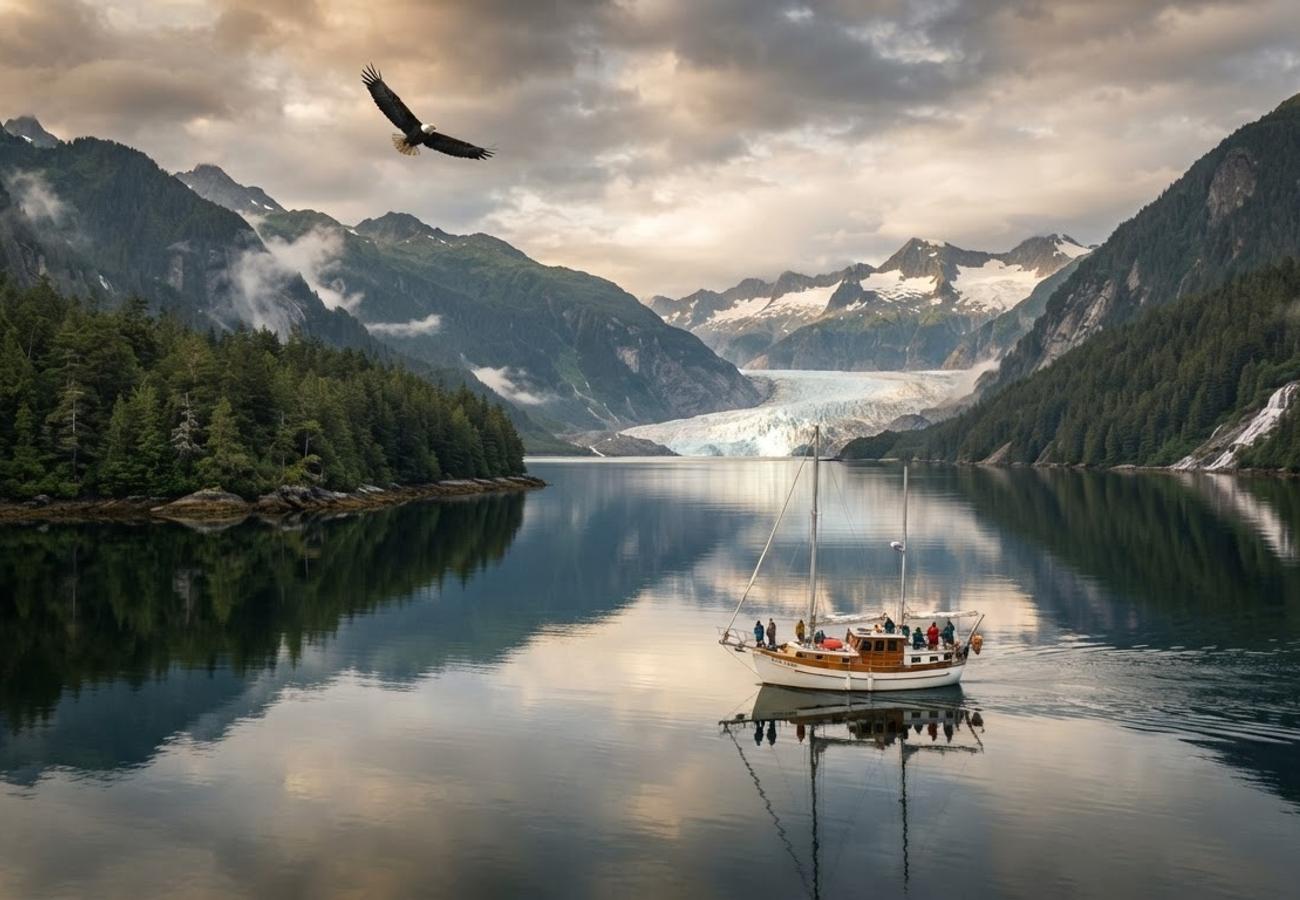
Image generated by AI
Southeast Alaska is seeing a shift in expedition cruising as a conservation-led sailing model replaces mass-market tourism with intimate, purpose-driven journeys through the Tongass National Forest. By diverting surplus revenue toward environmental stewardship, this small-ship approach offers a direct link between passenger leisure and the preservation of one of North America's most fragile ecosystems.
The traditional cruise industry in Alaska is often criticized for its environmental footprint and the congestion of major ports. In response, a specialized sailing operation is prioritizing wilderness immersion and ecological advocacy over passenger volume. This model focuses on the deep waters and secluded coves of Southeast Alaska, providing an alternative for travelers who view environmental responsibility as a primary component of their travel experience.
Conservation-Driven Business Model for the Tongass National Forest
Founded in 1979, this small-ship operation was built on a foundational commitment to the protection of the Tongass National Forest. Unlike commercial cruise lines that operate for shareholder profit, this organization integrates environmental advocacy into its core business structure.
Reports indicate that all revenue generated beyond essential operating expenses is funneled directly into conservation, stewardship, and advocacy efforts. This financial structure transforms the cruise from a simple vacation into a mechanism for environmental funding. For the traveler, this means that the act of visiting the wilderness actively contributes to its survival.
This shift aligns with a broader trend in 2026 adventure travel, where "regenerative tourism"—leaving a place better than it was found—is replacing basic sustainability. By linking the guest experience to the long-term health of the forest, the operation fosters a deeper psychological connection between the visitor and the landscape.
Navigating Remote Waterways Between Sitka and Juneau
The geography of Southeast Alaska, characterized by a complex network of forested islands and glaciers, is ideally suited for small-vessel exploration. While mega-ships are confined to deep-water ports, these smaller craft can penetrate the heart of the wilderness.
The fleet consists of two vessels with extremely limited capacities: one accommodating 10 passengers and the other 12. This scale transforms the experience from a cruise into something resembling a floating wilderness lodge. These ships operate primarily between Sitka and Juneau, though the seven-day itineraries are famously fluid.
Because the vessels are small, the crew can pivot the route based on real-time wildlife sightings or sudden changes in weather. This flexibility is a stark contrast to the rigid schedules of large-scale tourism, allowing guests to spend hours in a silent cove rather than rushing to a scheduled port of call.
Wildlife Immersion and Outdoor Activity Integration
The primary draw for visitors to Alaska remains its wildlife, but the small-ship format changes how these animals are encountered. Rather than viewing whales or bears from a balcony 10 stories high, passengers engage with the environment at eye level.
The itinerary emphasizes habitats where wildlife naturally thrives, avoiding the "guaranteed sighting" marketing of larger tours in favor of authentic encounters. Guests frequently observe humpback whales, Stellar sea lions, bald eagles, beavers, and otters.
To facilitate this immersion, the program integrates several key activities:
| Travel Feature | Small Ship Experience | Traveller Benefit |
|---|---|---|
| Passenger capacity | 10 to 12 guests | More intimate atmosphere |
| Cruise duration | Seven days | Extended wilderness immersion |
| Main destinations | Sitka and Juneau | Access to Southeast Alaska |
| Activities | Hiking, kayaking and fishing | Choice of outdoor experiences |
| Wildlife | Whales, bears, otters, eagles and sea lions | Close nature encounters |
| Itinerary | Flexible | Greater adaptability |
| Conservation | Central operating mission | Tourism linked with stewardship |
Kayaking allows for the exploration of sheltered coves that are inaccessible to any motorized vessel, while guided hiking trips lead guests through the ancient growth of the Tongass. Fishing is also available from the ships, provided local regulations allow, offering a tactile connection to the region's marine productivity.
Lodge-Style Accommodations in the Wilderness
The onboard experience is designed to be understated, avoiding the resort-style amenities of modern cruise ships. The goal is to keep the focus on the destination rather than the vessel.
Cabins are functional and cozy, featuring private showers, soft bedding, and duvets. Most rooms utilize a bunk-style configuration—a double bed on the bottom and a single berth above—which reinforces the informal, adventurous spirit of the journey.
The shared social spaces are modeled after traditional Alaskan lodges, utilizing dark wood and leather seating to create a warm, communal environment. Due to the small guest count, the dining experience is personalized, with a set daily menu that is easily adapted for specific dietary requirements.
The Impact of Flexible Itineraries on Guest Experience
One of the most significant departures from standard cruising is the absence of a fixed daily schedule. The rhythm of the trip is dictated by the environment and the interests of the passengers.
If a morning is particularly calm, the crew may prioritize kayaking; if a specific wildlife sighting is reported, the route may shift to investigate. This autonomy allows families and private groups to tailor their experience around shared interests, whether that involves intensive hiking or quiet observation.
This approach extends to the overnight experience. Rather than docking in a noisy industrial port, the ships often anchor in secluded coves. This allows passengers to wake up to the sounds of the wilderness and experience the region's unique light and silence.
Why This Matters: The Evolution of Responsible Travel
For the modern traveler, the transition from "sightseeing" to "stewardship" is a critical shift. The small-ship model in Alaska proves that high-value, low-impact tourism is not only possible but financially viable for conservation.
From a logistical standpoint, this creates a "virtuous cycle": the smaller the footprint of the vessel, the more remote the areas it can visit, which in turn increases the value of the experience for the guest. From a legal and environmental perspective, this model reduces the pressure on over-visited hubs like Juneau and Sitka, spreading the economic benefit of tourism more evenly across the region.
For those who prioritize nature over nightlife, this experience removes the "buffer" between the human and the wild. It replaces the curated, sanitized version of Alaska with a raw, educational encounter that challenges the traveler to think about the fragility of the Tongass National Forest.
The future of Alaskan tourism lies not in larger ships, but in deeper connections.
Related Travel Guides
Disclaimer
This article is for informational and educational purposes only. It does not constitute legal, financial, or professional advice. While we strive to provide accurate and up-to-date information, travel policies, regulations, and conditions change rapidly. Always verify information with official sources before making travel decisions. Nomad Lawyer makes no representations about the accuracy, reliability, completeness, or suitability of the information provided. Readers should consult qualified professionals for advice specific to their circumstances. The views expressed in this article are those of the author and do not necessarily reflect the views of Nomad Lawyer.