
Breaking Airline News: Alaska Airlines Deploys Massive World Cup 737-9 MAX Fleet, Preparing Seattle for Apocalyptic Passenger Surges and Travel Chaos
Breaking airline news: Amidst terrifying forecasts of severe capacity exhaustion, Alaska Airlines aggressively fortifies Seattle with a heavily modified Boeing 737-9 MAX, desperately preparing the hub for massive World Cup travel chaos.

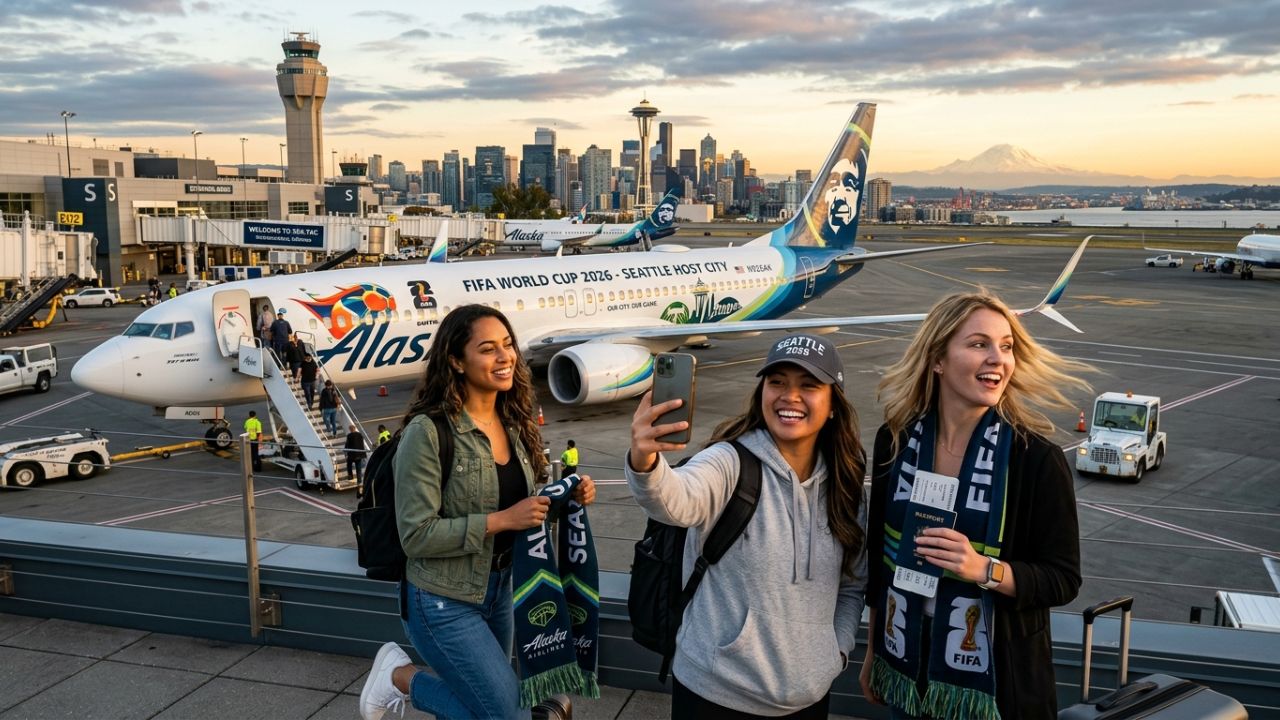
Image representing the intense strategic battle as Alaska Airlines desperately injects massive, highly visible capacity into the Pacific Northwest, combating severe transit friction to prevent a massive operational meltdown during the upcoming FIFA World Cup.
Breaking Airline News: Alaska Airlines Deploys Massive World Cup 737-9 MAX Fleet, Preparing Seattle for Apocalyptic Passenger Surges and Travel Chaos
As paralyzing terminal bottlenecks, terrifying airspace constraints, and severe operational fragility violently threaten to completely shatter passenger mobility during the upcoming global mega-event, a critical Pacific Northwest aviation powerhouse has executed a massive infrastructural defense. In a desperate bid to physically and psychologically prepare its primary hub for the terrifying threat of extreme travel chaos triggered by severe airport disruptions, Alaska Airlines has aggressively unveiled its highly specialized FIFA World Cup 2026 aircraft. By deploying a heavily modified Boeing 737-9 MAX—complete with massive tactical livery identifying Seattle as an official Host City—the airline is violently reinforcing its fleet capacity. This highly visible operational expansion represents the ultimate weapon against the severe flight cancellations expected to destroy the domestic travel experience as thousands of international fans flood the region, aggressively building an impenetrable shield against the agonizing misery defining mega-event transit.
In a harrowing display of modern aviation vulnerability, the sheer logistical nightmare of attempting to navigate essential corridors during a global sporting event has historically forced passengers into terrifying transit scenarios. For years, securing a ticket to a World Cup host city meant risking extreme physical exhaustion—navigating violently overloaded terminals, enduring brutal security queues, and staring at departure boards during rolling delays caused by massive airspace congestion. However, Alaska Airlines is aggressively fighting back against this structural paralysis. By launching the Seattle Host City Boeing 737-9 MAX, the carrier establishes a massive, highly visible extraction and deployment vector. Travelers and residents now possess the absolute assurance that the airline is physically fortifying its networks, ensuring they can navigate the Pacific Northwest perfectly insulated from the terrifying threat of infrastructure-induced stress.
Expanded Overview: The Massive Scale of the Tournament Extraction
The terrifying crisis of overwhelming passenger stress expected during the FIFA World Cup 2026 brutally exposes the severe limitations of legacy carriers attempting to force massive tourist volumes through crumbling municipal infrastructure. Recognizing that aggressively funneling global audiences into volatile zones leads directly to severe psychological friction and broken itineraries, Alaska Airlines’ massive operational preparation fundamentally rewrites the event's transit matrix. The sheer scale of this infrastructural defense is immense. As one of 16 heavily targeted Host Cities, Seattle faces the terrifying prospect of complete terminal gridlock. The new Boeing 737-9 MAX deployment proves that airlines must weaponize both their hardware and their branding to maintain order, bypass chaotic bottlenecks, and establish a dominant, highly reliable travel corridor.
Section-Wise Breakdown: The Operational Realignment
Shattering the Terminal Gridlock: The Boeing 737-9 MAX Deployment
To survive the terrifying surge in international travel demand without triggering immediate terminal meltdowns, Alaska Airlines is heavily fortifying its Seattle footprint with specialized hardware. The unveiling of the new Boeing 737-9 MAX design serves as a massive capacity and psychological bypass mechanism. The aircraft aggressively displays the Seattle Host City logo, a dynamic soccer ball in motion, and the iconic whale tail graphic. More critically, the underside of the fuselage violently projects the massive declaration “WE ARE SEATTLE”. This is not merely aesthetic; it is a highly visible tactical marker, allowing ground crews, air traffic control, and passengers to instantly identify the primary transport vector amidst the terrifying chaos of a congested tarmac, ensuring rapid turnaround times to prevent flight cancellations.
Securing the Pacific Hub: Seattle’s Infrastructural Defense
Looking beyond the aircraft paint, Seattle's designation as one of 16 official FIFA World Cup 2026 Host Cities places a terrifying strain on the local aviation ecosystem. The city must leverage this event to promote tourism without violently collapsing its own transport grid. The partnership between Alaska Airlines and local authorities is designed to amplify Seattle’s global visibility while aggressively managing the logistical threat. By heavily publicizing the city's scenic waterfront and vibrant neighborhoods, the airline is strategically attempting to disperse the massive tourist volumes away from the immediate airport vicinity, preventing catastrophic terminal congestion.
Community Fortification: The SeattleFWC26 Alliance
This massive infrastructural shift is heavily defined by its commitment to mitigating passenger stress through strategic community integration. Alaska Airlines’ creative partnership with SeattleFWC26 violently extends beyond the airport perimeter. The airline is actively supporting critical community initiatives, ranging from the inaugural Blind Soccer international tournament to public art installations highlighting nonprofit collaborations. By funding these off-site cultural events, the airline successfully decentralizes the tourist population, physically drawing massive crowds away from the highly fragile airport terminals and drastically reducing the localized threat of severe travel chaos.
The Efficiency Defense: Connecting Global Fanbases
The strategic implications of this fleet deployment extend into extreme global connectivity. Alaska Airlines is utilizing the Boeing 737-9 MAX as a massive extraction tool, connecting fans from across North America, Latin America, Asia, and Europe. By integrating its massive domestic network with international arrivals, the airline ensures that foreign passengers are rapidly absorbed into the US domestic grid, violently preventing them from bottlenecking at international arrivals halls and sparking cascading delays across the terminal.
Alaska Airlines World Cup Infrastructural Defense Matrix
To fully comprehend the massive logistical and strategic fallout of this terrifyingly efficient network preparation, corporate travel managers and affected tourists must review the exact operational metrics defining the Alaska Airlines capacity strain. The following matrix provides a granular breakdown of the specific, officially verified deployment data driving this massive disruption mitigation effort.
| Operational Defense Metric | Verified Infrastructure Data |
|---|---|
| Primary Aviation Operator | Alaska Airlines |
| Aircraft Hardware Deployed | Boeing 737-9 MAX |
| Tactical Hub / Host City | Seattle (Designated as one of 16 Host Cities) |
| Global Event Driver | FIFA World Cup 2026 |
| Official Strategic Partnership | SeattleFWC26 |
| Tactical Livery Markings | Seattle Host City logo, soccer ball in motion, whale tail graphic, "WE ARE SEATTLE" underside decal |
| Community Decentralization Initiatives | Inaugural Blind Soccer international tournament, local nonprofit public art installations |
Passenger Impact: Surviving the Tournament Crush
For the millions of global travelers attempting to navigate the rapidly collapsing transit corridors of North America during the World Cup, this massive capacity deployment represents a highly anticipated lifeline against severe delays. The brutal reality of enduring a terrifyingly sudden cancellation at a host city inflicts intense psychological stress—leaving the passenger entirely stranded and missing the critical match they paid thousands to see. By aggressively booking tickets on Alaska Airlines’ heavily fortified Seattle network, passengers drastically reduce their exposure to these terrifying logistical environments, securing a highly reliable connection that completely bypasses the domino effect of tournament travel chaos.
Survival Guide for World Cup Travelers
Travelers desperately preparing to navigate the modernized domestic network during the mega-event must immediately execute the following survival protocols:
- Violently Secure the Primary Carrier: If you are booking an extraction into Seattle for the tournament, you must aggressively filter your searches to utilize Alaska Airlines. Relying on secondary carriers that lack the massive local infrastructure and established Host City partnerships heavily exposes you to the terrifying threat of sudden gate-restriction cancellations.
- Exploit the Hub Dominance: Passengers must violently exploit Seattle's status as one of the 16 Host Cities. Major airlines will prioritize their primary hubs. If travel chaos erupts, aircraft at secondary airports will be grounded first to protect the mega-hubs.
- Anticipate the Terminal Surge: With the Boeing 737-9 MAX actively drawing massive global attention, travelers must aggressively assume the Seattle terminals will operate at absolute maximum capacity. Arrive terrifyingly early and pack survival essentials in your carry-on to survive inevitable security checkpoint bottlenecks.
Industry Analysis: The Economics of Mega-Event Fortification
From a strategic aviation perspective, the travel turmoil currently threatening host cities highlights the terrifying vulnerability of airlines that fail to prepare for massive, centralized demand spikes. Industry analysts confirm that Alaska Airlines’ massive decision to brand a Boeing 737-9 MAX and establish deep community partnerships is a highly aggressive, tactical response designed to completely dominate the Seattle sector. By deploying massive, highly visible capacity and actively managing the flow of tourists through off-site events, the airline completely avoids the massive financial bleeding associated with terminal gridlock, effectively shielding their profit margins while monopolizing elite tournament travel.
Conclusion: A Strategic Retreat to Ensure Aviation Survival
As the extremely critical FIFA World Cup 2026 approaches, the massive fleet announcements executed by Alaska Airlines represent a massive warning to competitors attempting to force passengers into unprepared host cities. The aggressive maneuvering proves that surviving mega-event transport requires terrifyingly swift and highly optimized hardware deployments, utilizing customized Boeing 737-9 MAX jets to connect fans safely while shielding them from the brutal reality of major terminal unreliability. For the modern traveler booking their tickets, utilizing this tactically superior network offers an incredibly secure, highly insulated way to execute flight discovery. By acting aggressively to secure tickets on this newly fortified fleet, travelers can successfully survive intense travel surges and completely avoid the paralyzing physical threat of global travel chaos.
Key Takeaways
- Massive Tactical Deployment: Alaska Airlines violently asserted its regional dominance by unveiling a heavily modified Boeing 737-9 MAX dedicated to the FIFA World Cup 2026.
- Crushing the Capacity Bottleneck: By heavily fortifying Seattle—one of the 16 official Host Cities—the airline is preparing to absorb massive global passenger surges without triggering flight cancellations.
- Strategic Hardware Defense: The tactical livery, featuring the whale tail and "WE ARE SEATTLE" decal, serves to rapidly identify the aircraft on chaotic tarmacs, speeding up operational turnaround times.
- Massive Regional Decentralization: Partnerships with SeattleFWC26, including the Blind Soccer tournament and art installations, violently pull massive crowds away from fragile airport terminals.
- Traveler Advisory: Global tourists must aggressively book flights into Seattle early on the primary carrier to completely bypass the extreme congestion and severe logistical failure expected during the tournament.
Related Travel Guides
Disclaimer
This article is for informational and educational purposes only. It does not constitute legal, financial, or professional advice. While we strive to provide accurate and up-to-date information, travel policies, regulations, and conditions change rapidly. Always verify information with official sources before making travel decisions. Nomad Lawyer makes no representations about the accuracy, reliability, completeness, or suitability of the information provided. Readers should consult qualified professionals for advice specific to their circumstances. The views expressed in this article are those of the author and do not necessarily reflect the views of Nomad Lawyer.
Kunal K Choudhary
Co-Founder & Contributor
A passionate traveller and tech enthusiast. Kunal contributes to the vision and growth of Nomad Lawyer, bringing fresh perspectives and driving the community forward.
Learn more about our team →