🌍 Your Global Travel News Source
AboutContactPrivacy Policy
Nomad Lawyer
airline news

F-22 Raptor vs F-35 Lightning II: How These Fifth-Generation Fighters' Radar Systems Stack Up

Breaking airline news and aviation industry updates for 2026.

Raushan Kumar
By Raushan Kumar
4 min read
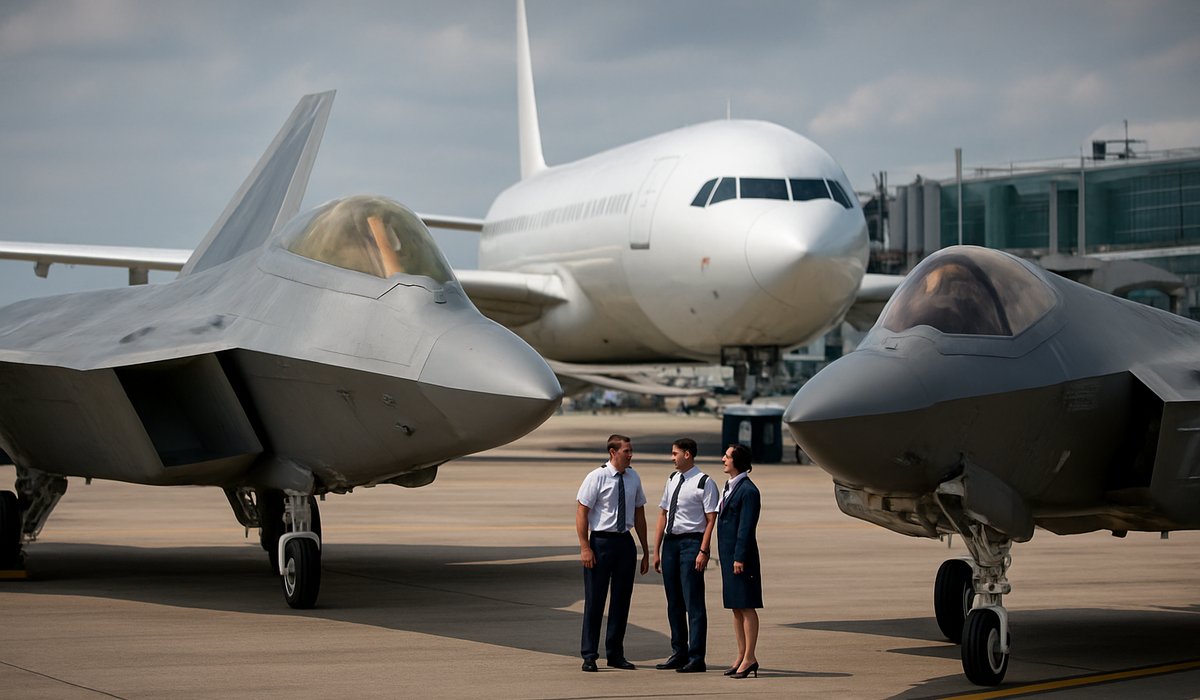
Professional aviation photography

Image generated by AI

F-22 Raptor vs F-35 Lightning II: How These Fifth-Generation Fighters' Radar Systems Stack Up

Two revolutionary military aircraft with fundamentally different combat philosophies reveal stark contrasts in their sensor technology

The Divergent Paths of Fifth-Generation Aviation

The Lockheed Martin F-22 Raptor and the F-35 Lightning II represent two competing visions for modern air warfare, and nowhere is this philosophical divide more apparent than in their radar systems. While both aircraft pioneered stealth technology in military aviation, their sensor suites reflect profoundly different operational doctrines—one optimized for singular air superiority, the other engineered as a versatile multi-mission platform for contemporary global conflicts.

The F-22, which debuted as the world's first operational fifth-generation fighter, was conceived during the Cold War's final years as an air dominance machine. Its design priorities centered on intercepting and neutralizing enemy aircraft with unparalleled speed, maneuverability, and detection capabilities. The F-35 Lightning II, by contrast, arrived two decades later as a deliberately multipurpose system intended to operate across air-to-air, air-to-ground, and reconnaissance missions simultaneously.

Radar Technology: Specialization Versus Integration

These divergent mission sets have driven fundamentally different approaches to radar architecture. The F-22's radar system emphasizes pure air combat detection and targeting, prioritizing long-range threat identification and tracking of airborne targets. Its design reflects a single-focused objective: dominating contested airspace.

The F-35, equipped with the AN/APG-81 Active Electronically Scanned Array (AESA) radar, operates within a more comprehensive sensor ecosystem. Rather than functioning as a standalone detection system, the AN/APG-81 integrates with distributed aperture systems, electronic warfare processors, and network-centric warfare capabilities. This architecture prioritizes adaptability across multiple combat scenarios—from air defense to strike operations to electronic intelligence gathering.

The Broader Implications for Modern Warfare

The technical divergence between these systems underscores a larger transition in military aviation strategy. The F-22 represents the apex of Cold War-era fighter design, built to achieve air superiority through exceptional individual aircraft performance. The F-35 embodies a post-Cold War networking philosophy, where individual platforms derive enhanced capability through real-time data sharing, sensor fusion, and coordinated multi-platform operations.

Understanding these distinctions matters not merely to defense procurement officials but to global security architecture itself. As air forces worldwide decide between specialized air superiority platforms and flexible multirole alternatives, the radar technology comparison between these two aircraft illuminates the ongoing debate about future combat aviation.


FAQ: F-22 and F-35 Radar Systems Explained

What is the primary difference between F-22 and F-35 radar technology? The F-22's radar prioritizes air-to-air detection and long-range target acquisition, while the F-35's AN/APG-81 system integrates multiple sensor types for versatile multi-mission capability across air, ground, and electronic warfare domains.

Why did the F-35 use a different radar approach than the F-22? The F-35 was designed as a multirole platform for 21st-century operations requiring flexibility across diverse mission sets, whereas the F-22 was developed as a pure air superiority interceptor optimized for singular combat roles.

How does sensor fusion enhance the F-35's capabilities? The F-35's AN/APG-81 radar works alongside distributed aperture systems and network connectivity, allowing real-time data sharing with allied platforms and enhanced situational awareness across multiple operational theaters.

Which aircraft has superior radar capabilities? Neither aircraft is objectively superior; each excels within its design parameters—the F-22 dominates air-to-air engagements, while the F-35 provides superior versatility across multiple mission types and network-enabled environments.

What does this comparison reveal about military aviation's future direction? The F-22 versus F-35 radar comparison illustrates a strategic shift from specialized platform excellence toward networked, adaptable systems capable of multiple simultaneous operational roles.

Related Travel Guides

Flight Delay Compensation Guide 2026

Understanding Airline Route Changes

Airport Security Process Updated (2026)

External Resources

Disclaimer: Airline announcements, route changes, and fleet information reflect official corporate communications as of April 2026. Schedules, aircraft specifications, and service details remain subject to airline modifications.

Tags:airline news 2026aviation industryflight updatesairline announcementstravel news
Raushan Kumar

Raushan Kumar

Founder & Lead Developer

Full-stack developer with 11+ years of experience and a passionate traveller. Raushan built Nomad Lawyer from the ground up with a vision to create the best travel and law experience on the web.

Follow:
Learn more about our team →