Alaska Airlines Awaits Boeing 737 MAX 10 Certification With 52 Aircraft Set to Join Its Fleet by 2028

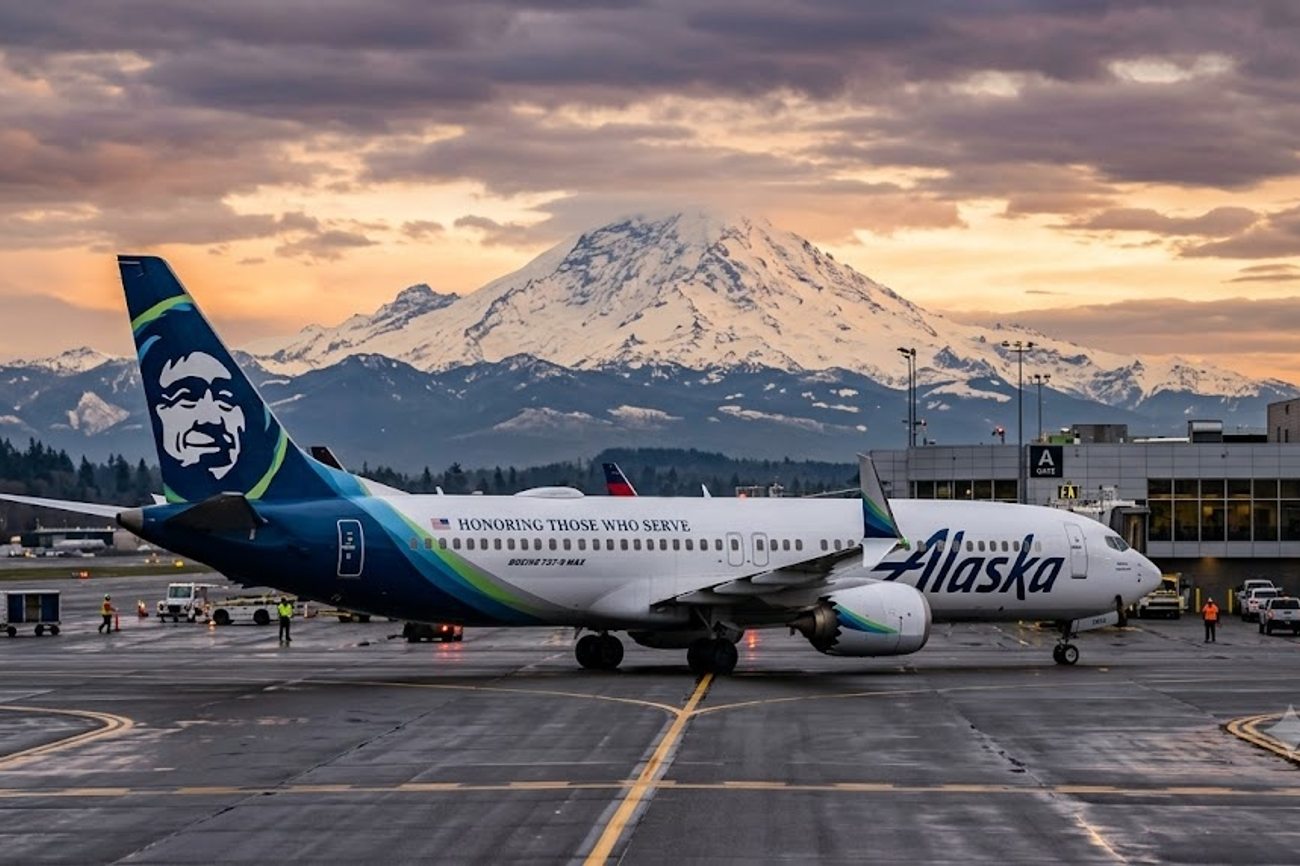
Image generated by AI
105 Boeing 737-10 aircraft represent the cornerstone of Alaska Airlines' most aggressive fleet expansion in company history. This massive commitment, paired with rights for an additional 35 units, signals a strategic pivot toward "upgauging"—increasing the size of the aircraft on existing routes rather than simply adding more flights to an already congested airspace.
The Regulatory Gauntlet of the MAX 10
The path to commercial operation for the Boeing 737-10 is currently dictated by the Federal Aviation Administration (FAA), with certification expected by the end of September 2026. This is not a mere formality; it is the culmination of a rigorous testing phase that included 976 flights and over 2,060 flight hours. While Boeing completed its final planned certification flight in July, the process now shifts from the cockpit to the boardroom, focusing on closing development assurance reviews and finalizing system safety assessments.
For Alaska Airlines, the timeline is tight. Even after the FAA grants its seal of approval, the carrier must navigate its own internal certification requirements. Specifically, Chief Operating Officer Jason Berry has highlighted the need for airline-specific work regarding the pilot head-up display. This secondary layer of certification means that while the aircraft may be legally flyable by September 2026, Alaska does not expect its first delivery until the spring of 2027, with passenger service targeting a window between April and mid-May 2027.
Capacity Expansion and Fleet Dynamics
Alaska's strategy relies on the 737-10's ability to move more people without requiring more slots at capacity-constrained airports. In hubs like Boston and New York, where takeoff and landing permissions are precious commodities, the MAX 10 allows the airline to grow its seat count organically.
The aircraft sits as the largest member of the MAX family, boasting a maximum capacity of 230 passengers. In a standard two-class layout, this typically translates to 185 to 210 seats. With a published range of 3,100 nautical miles (approximately 5,740 kilometers) and a maximum take-off weight of 89,760 kilograms, the aircraft is engineered to bridge the gap between narrowbody efficiency and widebody capacity.
| Metric | Boeing 737-10 Specifications |
|---|---|
| Max Passenger Capacity | 230 |
| Typical Two-Class Range | 185–210 seats |
| Published Range | 3,100 nm (5,740 km) |
| Max Take-Off Weight | 89,760 kg |
| 2027 Planned Deliveries | 22 aircraft |
| 2028 Planned Deliveries | 30 aircraft |
This influx of aircraft is part of a broader trajectory for the Alaska Air Group. Following the integration with Hawaiian Airlines and the achievement of a single operating certificate, the group aims for a fleet of 475 aircraft by 2030, scaling further to over 550 by 2035. To support this, the January order included not only the 105 MAX 10s but also five Boeing 787s, diversifying their long-haul capabilities.
Expert Analysis: The "Gauge" Strategy vs. Frequency
For the seasoned traveler, the introduction of the MAX 10 represents a shift in how Alaska Airlines manages its network. In aviation economics, "gauging up" refers to replacing a smaller aircraft with a larger one on the same route. The direct consequence for passengers booking high-demand city pairs is an increase in available seats, which can stabilize pricing during peak periods, but it does not necessarily mean more departure times throughout the day.
The pricing pressure created by this shift is twofold. First, by increasing the seat count per flight, Alaska reduces the unit cost per seat, potentially allowing them to remain competitive against low-cost carriers while maintaining a premium service model. Second, by avoiding the need for additional slots at constrained airports, they bypass the massive capital expenditure and regulatory hurdles associated with expanding flight frequencies.
However, there is a risk inherent in this timeline. The window between FAA certification (September 2026) and passenger launch (April/May 2027) is narrow. Any slippage in the delivery of the first aircraft in Spring 2027 could ripple through the 2027 delivery schedule of 22 aircraft and the 2028 schedule of 30. For the traveler, this means that "MAX 10" labels on flight schedules in early 2027 should be viewed with caution until the aircraft are physically on the tarmac.
Alaska Airlines is eagerly awaiting the certification of the Boeing 737 MAX 10, with plans to integrate 52 of these aircraft into its fleet by 2028. As the airline prepares for this expansion, passengers can expect improved efficiency and comfort, and can visit the Federal Aviation Administration website for updates on the certification process. This move is expected to enhance the overall travel experience for Alaska Airlines' customers.
Furthermore, the lack of confirmed lie-flat seats on the MAX 10 suggests that Alaska is prioritizing volume over a luxury cabin overhaul. While the aircraft is physically larger, the passenger experience will likely remain a refined version of the current narrowbody experience rather than a leap into widebody-style luxury.
Key Takeaways
- Certification Timeline: The Boeing 737-10 is expected to receive FAA certification by late September 2026, with Alaska Airlines targeting passenger flights for April to mid-May 2027.
- Fleet Scale: Alaska has committed to 105 firm 737-10 orders, with options for 35 more, aiming for a total group fleet of 550+ aircraft by 2035.
- Operational Strategy: The airline will use the 230-seat capacity of the MAX 10 to increase volume on dense routes (e.g., New York, Boston) without needing additional airport slots.
- Delivery Pace: Following the first delivery in Spring 2027, Alaska expects a rapid ramp-up with 22 aircraft arriving in 2027 and 30 in 2028.
- Passenger Impact: Travelers can expect more seat availability on popular routes, though not necessarily more frequent flight options or new premium cabin hardware.
FAQ: Alaska Airlines MAX 10 [2027]
When will I be able to fly on the Alaska Airlines Boeing 737-10? Passenger service is currently projected to begin between April and mid-May 2027, provided the FAA certifies the aircraft by September 2026 and Alaska completes its internal pilot display certifications.
Will the MAX 10 have better seats or lie-flat beds? Alaska has not confirmed lie-flat seats for the MAX 10. While the aircraft is larger, the focus is on increasing seat capacity (up to 230 passengers) rather than introducing a new premium cabin class.
Why is Alaska using the MAX 10 instead of just adding more flights? Many high-demand airports have limited "slots" (permitted takeoff and landing times). By using a larger aircraft like the MAX 10, Alaska can carry more passengers per flight without needing new slots.
How does the MAX 10 differ from the MAX 8 or MAX 9? The MAX 10 is the largest variant, accommodating up to 230 passengers, compared to 210 for the MAX 8 and 220 for the MAX 9. It also features reinforced landing gear to handle its 89,760 kg maximum take-off weight.
The aviation industry is betting on size to solve the slot crisis, but the clock is ticking on Boeing's regulatory promises.
Tags: Alaska Airlines, Boeing 737 MAX 10, FAA Certification 2026, Boeing 787, Alaska Air Group Fleet Expansion
Related Travel Guides
This article is for informational purposes. Flight routes, passenger regulations, visa rules, and transit advisories are subject to change by airlines and aviation authorities. Readers are advised to verify schedules and travel documentation with relevant carriers and border agencies before departure.
Related Stories

Alaska Airlines Launches Nonstop Anchorage–Tokyo Flights: Boeing 737 MAX 8 Transpacific Operations and Pacific Gateway Strategy

Delta Air Lines Flight Delays Sweep USA: Weight and Balance Automation Glitch Disrupts Pre-Thanksgiving Travel Across Major Hubs