
Airlines Add 50,000+ Sports Travel Seats: American, Southwest, and Delta Expand Fleets for World Cup and Super Bowl

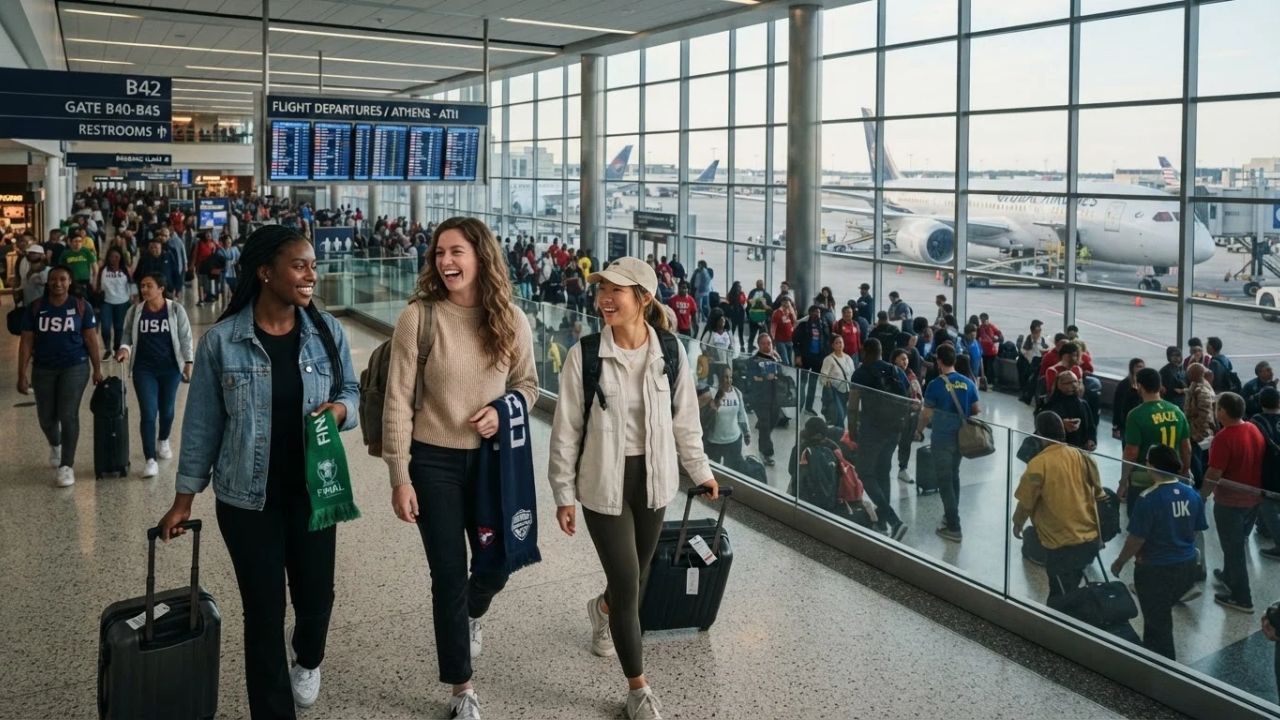
Global commercial airlines have launched an unprecedented operational pivot toward sports tourism on September 14, 2026, adding specialized flights exceeding 50,000 seats to capture concentrated fan demand surrounding marquee international tournaments and championship playoffs. Spurred by rapid booking velocity around fixed-date sporting spectacles—most notably the upcoming tri-nation FIFA World Cup 2026, the NFL Super Bowl, and major collegiate football rivalries—legacy and low-cost carriers are reshaping scheduling algorithms, deploying wide-body aircraft on domestic routes, and opening temporary pop-up corridors connecting supporter markets directly with host cities.
Leading the charge, American Airlines has confirmed the addition of 27,000 seats across 12 new and expanded routes designed specifically to interconnect FIFA World Cup 2026 host cities across the United States, Canada, and Mexico. Alongside targeted Super Bowl expansions from Southwest Airlines, football fleet upgrades from Delta Air Lines, and specialized charter programs from Qantas and Akasa Air, the commercial aviation sector is proving that passionate traveling fans have become one of the industry's most lucrative and dependable revenue engines.
The Aviation Trend: From Rigid Schedules to Agile Pop-Up Networks
Historically, commercial network airlines designed flight schedules six to twelve months in advance around steady corporate and seasonal leisure patterns. Adjusting operations for temporary two-day weekend spikes was traditionally avoided due to the operational complexities of crew scheduling, aircraft repositioning, and gate lease constraints.
Modern digital revenue management systems and flexible fleet configurations have overturned that model. Sports travel generates a unique commercial profile: highly concentrated, non-negotiable arrival windows paired with elevated willingness to pay premium fares. Supporters travel on fixed match dates, rarely cancel due to minor ticket price fluctuations, and frequently bundle flights with hotel stays, car rentals, and dining packages.
To monetize this high-yield traffic, carriers now deploy dynamic capacity injections:
- Pop-Up Route Corridors: Scheduling non-stop flights between city pairs that normally lack direct scheduled service (such as connecting college football towns or competing championship markets for a single 72-hour weekend).
- Aircraft Upgrades (Gauge Bumping): Swapping standard 150-seat narrow-body aircraft (like Airbus A320s or Boeing 737s) for 250-to-300-seat twin-aisle wide-bodies (Boeing 777s, 787s, or Airbus A350s) on high-demand championship routes.
- Turnaround Optimization: Operating late-night red-eye return flights departing host cities within hours of the final whistle, allowing traveling fans to return home without booking additional hotel nights.
The FIFA World Cup 2026: American Airlines’ 27,000-Seat Strategy
The FIFA World Cup 2026—hosted jointly across 16 cities in the United States, Canada, and Mexico—represents the largest cross-border sports logistics undertaking in aviation history. Millions of international and domestic supporters will crisscross North America between preliminary group matches and the championship final.
American Airlines is positioning itself as the premier carrier for tournament transit, rolling out a specialized operational program:
- Route Expansion: The carrier added 27,000 seats across 12 strategic routes connecting primary hub airports directly with tournament host cities.
- Premium Cabin Availability: Leveraging 1.45 million premium seats available system-wide across its mainline fleet, American is catering to high-net-worth traveling supporters, corporate hospitality delegations, and international visitors seeking elevated comfort on transcontinental journeys.
- Loyalty Integration: Utilizing its AAdvantage loyalty program, the airline is providing frequent flyers with preferential booking windows, specialized flight-and-match packages, and exclusive access to tournament amenities.
United Airlines is simultaneously optimizing its network footprint around international gateways like Newark (EWR), Chicago O'Hare (ORD), Houston (IAH), and San Francisco (SFO) to coordinate long-haul inbound fan movements with domestic connecting banks.
Super Bowl and Football Fever: Southwest and Delta Lead Domestic Surges
Within the United States, professional and collegiate football represents the benchmark for short-term aviation demand spikes:
Southwest Airlines: The New Orleans Super Bowl Playbook
For the 2025 Super Bowl in New Orleans, Southwest Airlines demonstrated the power of responsive point-to-point scheduling. Following the conference championship outcomes, the airline added 31 extra nonstop flights to Louis Armstrong New Orleans International Airport (MSY):
- Targeted City Pairs: Added 10 additional nonstop flights from Kansas City to New Orleans for Chiefs supporters, paired with heavy supplemental capacity from Philadelphia.
- Post-Game Return Capacity: Deployed rapid-turnaround Monday morning departures from New Orleans, providing seamless departures for thousands of celebratory or recovering fans.
Delta Air Lines: Pro and College Football Capacity Surges
Delta Air Lines approaches football season with a broad, dual-tier strategy covering professional leagues and collegiate traditions:
- Pro Football Program: Deployed 37 additional flights and upgraded 12 existing routes to larger aircraft on game weekends.
- College Football Fan Flights: Added more than 40 extra flights serving 25 dedicated college towns across the American South and Midwest—destinations like South Bend, State College, Tuscaloosa, and Knoxville that normally see limited scheduled jet service.
Global Expansion: Qantas, Akasa Air, and Aerolíneas Argentinas
Sports aviation has expanded far beyond North American football, establishing specialized operations across four continents:
- Qantas (NFL in Australia): The Australian flag carrier proved the logistical sophistication of intercontinental sports charters when transporting NFL teams, staff, and broadcast infrastructure across the Pacific. Operations required specialized nutritional catering, heavy equipment cargo planning, and customized athlete seating configurations on ultra-long-haul sectors.
- Akasa Air (Cricket Supporter Flights): In India, where cricket commands religious devotion, Akasa Air regularly operates dedicated supporter flights during the Indian Premier League (IPL) and international test series, moving thousands of fans between major cricket venues like Mumbai, Ahmedabad, Bengaluru, and Chennai.
- Aerolíneas Argentinas (Football Pilgrimages): The Argentine national airline regularly mobilizes supplemental flight operations around major domestic and South American club tournaments (Copa Libertadores), providing dedicated air bridges for passionate supporters traveling to away legs.
Economic Impact on Host Cities and Regional Gateways
The influx of 50,000+ specialized airline seats generates an exponential economic ripple effect across destination economies. Host cities rely on reliable airport throughput to unlock multi-million-dollar economic windfalls:
- Hospitality and Hotel Stays: Traveling sports supporters generate peak hotel occupancy, driving Average Daily Rates (ADR) and Revenue Per Available Room (RevPAR) to annual highs.
- Local Dining and Nightlife: Fans spend heavily across local culinary corridors, craft breweries, sports lounges, and street food markets before and after competitions.
- Airport and Municipal Tax Revenues: Additional flight operations boost airport passenger facility charges (PFCs), landing fees, ground transportation concessions, and municipal sales tax revenues.
- Destination Branding: International tournaments introduce hundreds of thousands of first-time visitors to host cities, converting one-off sports tourists into future leisure or business travelers.
Traveler Insider Tips for Booking Sports Flights
For sports fans planning expeditions around major tournaments, aviation specialists recommend these tactical booking strategies:
- Book Speculatively on Flexible Fares: If your team is contending for championship playoffs, monitor tournament brackets weeks in advance. Book fully refundable fares or flights using airline miles (AAdvantage, SkyMiles, or Rapid Rewards points) to prospective host cities before conference championship games conclude. Points bookings can be redeposited without penalty if your team is eliminated.
- Consider Alternate Regional Airports: Major host airports experience heavy runway congestion, surging rideshare prices, and long security lines immediately after championship games. Look at secondary regional airports within a 60-to-90-minute drive:
- For New Orleans (MSY): Consider flying into Baton Rouge Metropolitan Airport (BTR) or Gulfport-Biloxi International Airport (GPT).
- For World Cup matches at New York/New Jersey (MetLife Stadium): Compare Newark (EWR) against New York LaGuardia (LGA), JFK, or Stewart International (SWF).
- For Miami (Hard Rock Stadium): Check Fort Lauderdale-Hollywood (FLL) and Palm Beach (PBI) alongside Miami International (MIA).
- Game-Day Carry-On Packing Discipline: Stadium entry mandates across the NFL, FIFA, and collegiate athletics enforce strict clear-bag policies (typically clear plastic bags no larger than 12 x 6 x 12 inches). If traveling to a host city without a hotel room and heading directly to the stadium, arrange luggage storage at airport lockers or off-site luggage holding services (such as Bounce or Vertoe) before heading to stadium turnstiles.
- Carry-On Rules for Electronics: High-capacity portable battery power banks—essential for preserving mobile phone charge during 10-hour tailgates and digital ticket scanning—must remain in your personal carry-on bag and are strictly barred from checked luggage under FAA and international lithium battery safety rules.
- Savor Local Tailgating Specialties: Immerse yourself in authentic regional game-day gastronomy:
- Kansas City: Hickory-smoked burnt ends and barbecue brisket sandwiches drenched in sweet, tangy molasses sauce.
- New Orleans: Steaming bowls of seafood gumbo, crawfish étouffée, and overstuffed roast beef po'boys slathered with gravy.
- College Towns: Sample regional culinary traditions, from fried chicken biscuits and pimento cheese dip in the South to bratwursts simmered in craft pilsner in the Midwest.
Aviation Outlook: Sports Tourism as a Permanent Pillar
The addition of more than 50,000 sports-dedicated airline seats marks the permanent integration of sports tourism into commercial fleet strategy. What was once treated as an occasional charter sideline has evolved into a cornerstone of agile airline revenue generation.
As global sporting competitions continue to expand—spanning multi-nation World Cups, international regular-season football games, and global cricket circuits—airlines that master dynamic scheduling and fan-first customer service will capture the loyalty of the world's most passionate travelers. In the modern skies, sports tourism is no longer just about the game; it is an extraordinary travel journey that begins the moment fans step onto the aircraft.
Related Travel Guides
- South Africa Launches Digital ETA System: How Visa Modernization Across Africa Is Reshaping Safari Travel
- Spain and EU Join Luzon Economic Corridor: Infrastructure Leap to Transform Philippines Travel Across Subic, Clark, Manila, and Batangas
- Malaysia Airlines Signs Seven Asia-Pacific Tourism Pacts at MATTA Fair 2026 to Boost Regional Travel
Disclaimer
This article is for informational and educational purposes only. It does not constitute legal, financial, or professional advice. While we strive to provide accurate and up-to-date information, travel policies, regulations, and conditions change rapidly. Always verify information with official sources before making travel decisions. Nomad Lawyer makes no representations about the accuracy, reliability, completeness, or suitability of the information provided. Readers should consult qualified professionals for advice specific to their circumstances. The views expressed in this article are those of the author and do not necessarily reflect the views of Nomad Lawyer.
Raushan Kumar
Founder & Lead Developer
Full-stack developer with 11+ years of experience and a passionate traveller. Raushan built Nomad Lawyer from the ground up with a vision to create the best travel and law experience on the web.
Learn more about our team →