
Breaking Airline News: Severe Travel Chaos Averted as Air India and Thai Airways Execute Massive Codeshare Alliance to Unclog Southeast Asian Hubs
Breaking airline news: Amidst a terrifying era of massive passenger congestion, Air India and Thai Airways execute a high-stakes codeshare agreement to completely bypass severe travel chaos across the Asian continent.

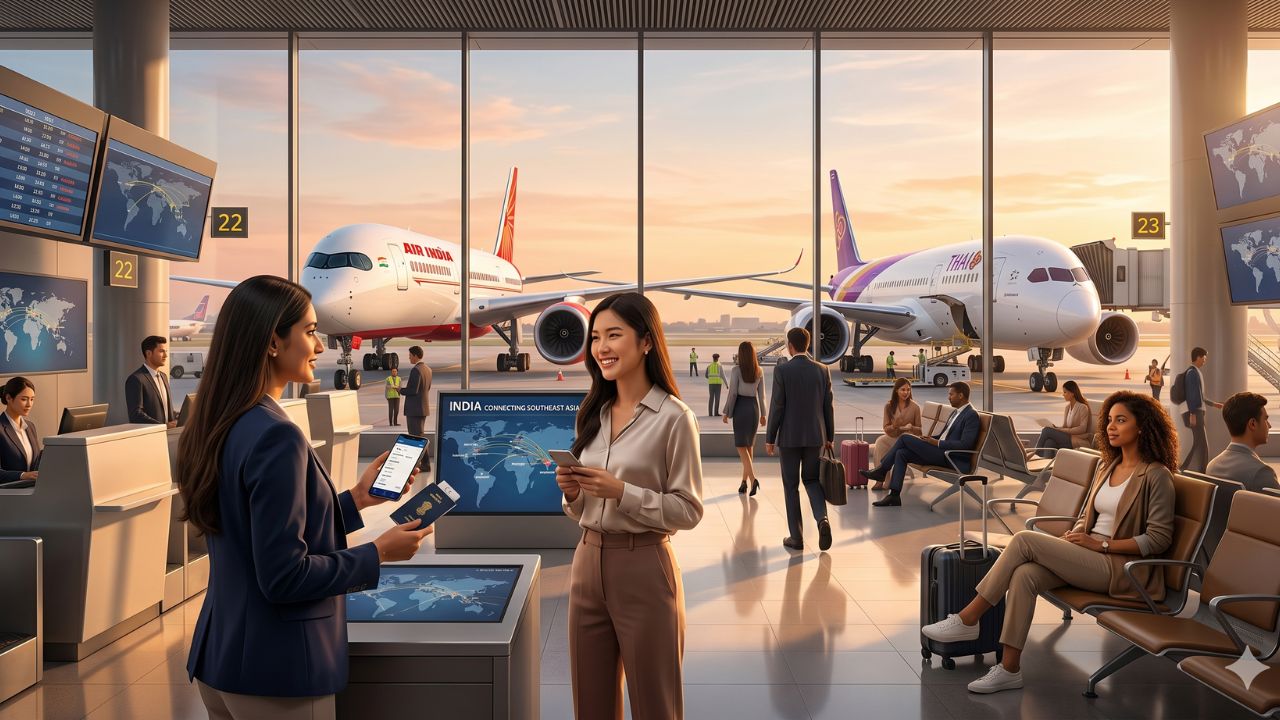
Image representing the intense strategic battle as global aviation leaders aggressively execute massive codeshare agreements to combat severe passenger congestion and bypass paralyzing international transit hubs.
Breaking Airline News: Severe Travel Chaos Averted as Air India and Thai Airways Execute Massive Codeshare Alliance to Unclog Southeast Asian Hubs
As paralyzing airport disruptions, tightly constrained operational bandwidth, and massive waves of passenger congestion violently threaten the global aviation network, two premier Asian flagship carriers are executing a highly aggressive, high-stakes operational maneuver. In a desperate bid to prevent catastrophic logistical gridlock across the heavily trafficked India-Southeast Asia corridor, Air India and Thai Airways International have officially announced a massive strategic integration. By formally signing a comprehensive Memorandum of Understanding (MoU), the two Star Alliance giants are forcefully transitioning their basic interline agreement into a fully weaponized codeshare partnership. Officially executed on June 7, 2026, at the International Air Transport Association (IATA) Annual General Meeting in Rio de Janeiro, this massive alliance ensures that millions of passengers can seamlessly navigate congested primary transit hubs, directly averting severe travel chaos and terrifyingly high missed-connection rates across the continent.
In a harrowing display of modern aviation strategy, the sheer volume of international travelers currently overwhelming standard transit routes is forcing global airline executives to completely rewrite their network structures. Historically, passengers desperately attempting to travel multi-carrier itineraries between the Indian subcontinent and Southeast Asia were violently exposed to high-risk connections, uncoordinated schedules, and the terrifying threat of lost baggage. By aggressively establishing this fully integrated codeshare, Air India and Thai Airways are forcefully eliminating the friction of international transit. This lethal strategic blow against multi-ticket travel chaos is designed to seamlessly distribute massive passenger loads across both networks, actively unclogging primary mega-hubs while heavily fortifying the rapidly expanding Asian aviation market.
Expanded Overview: The Massive Scale of the Integration
The terrifying crisis of overwhelming passenger demand currently gripping the Asian network brutally exposes the severe limitations of uncoordinated flight schedules. Recognizing that standard interline agreements are failing to protect passengers from terminal gridlock, leadership from both airlines utilized the massive global platform of the IATA AGM to lock down this tactical defense. The aggressive deployment of this codeshare system, actively slated for full realization by the absolute conclusion of 2026, will introduce an unprecedented level of commercial flexibility. However, this massive integration requires absolute regulatory precision, remaining strictly contingent upon the receipt of all necessary authorizations from highly vigilant competition watchdogs across both sovereign jurisdictions.
Section-Wise Breakdown: The Operational Realignment
The Strategic Designator Assault
The massive operational shift aggressively centers around the complete synchronization of flight manifests. To physically shield passengers from the terrifying confusion of multi-carrier bookings, the distinctive designator codes of both companies will be mutually applied across a vast spectrum of scheduled flights. Specifically, the 'AI' designator code commanded by Air India will be systematically injected into flights operated by Thai Airways International. In a synchronized counter-maneuver, the 'TG' designator code will be forcefully placed on designated Air India schedules. This mutual arming allows travelers to hold a single, unified ticket, granting seamless entry across a global grid spanning Asia, Europe, and North America without the risk of multi-airline logistical breakdowns.
The New Delhi and Bangkok Defense Mechanism
To survive the terrifying surge in intercontinental demand, the alliance heavily weaponizes the geographic positioning of both primary mega-hubs. By fully integrating New Delhi and Bangkok, the carriers can rapidly disperse inbound traffic before severe congestion takes hold. Passengers inbound from Thailand can be seamlessly shot out across dozens of Indian metropolitan areas via Air India’s domestic grid. Conversely, massive outbound flows from India can utilize Bangkok to rapidly access the depths of East Asia and the Southwest Pacific. This aggressive structural synergy optimizes passenger load factors and guarantees that travelers bypass the severe terminal friction that traditionally paralyzes uncoordinated international transfers.
Executive Strategic Directives
The broader economic deployment of this agreement is fiercely supported by the executive leadership of both corporate entities. Campbell Wilson, Chief Executive Officer of Air India, confirmed that this new framework is a deliberate alignment of network strengths designed to radically upgrade and fortify India’s global connectivity. Echoing this aggressive stance, Chai Eamsiri, Chief Executive Officer of Thai Airways International, characterized the MoU as a highly meaningful milestone built to fortify their regional footprint. Both leaders recognize that failing to execute this integration would leave their respective passengers heavily exposed to the paralyzing travel chaos defining modern global transit.
Aviation Strategy & Route Defense Matrix
To fully comprehend the massive logistical and strategic fallout of this intercontinental alliance, corporate travel managers must review the exact operational metrics currently defining the new codeshare. The following matrix provides a granular breakdown of the specific, officially verified strategic data driving this maneuver to prevent structural travel chaos.
| Strategic Operational Metric | Confirmed Verification Data |
|---|---|
| Primary Participating Carriers | Air India & Thai Airways International |
| Official Strategic Agreement Type | Memorandum of Understanding (MoU) for Full Codeshare |
| Execution Date & Location | June 7, 2026 / IATA AGM (Rio de Janeiro, Brazil) |
| Target Implementation Deadline | Conclusion of 2026 (Subject to regulatory authorizations) |
| Operational Designator Codes | Mutual application of 'AI' and 'TG' flight codes |
| Primary Mega-Hubs Integrated | New Delhi (India) & Bangkok (Thailand) |
| Global Network Affiliation | Star Alliance (Ensuring shared IT and service protocols) |
| Executive Leadership (Air India) | Campbell Wilson (Chief Executive Officer & MD) |
| Executive Leadership (Thai Airways) | Chai Eamsiri (Chief Executive Officer) |
Passenger Impact: Surviving the Intercontinental Jump
For the thousands of international tourists and corporate executives who frequently rely on the heavily congested Asian corridors, this massive capacity deployment represents a highly anticipated lifeline against severe operational delays. The brutal reality of enduring terrifyingly unstable multi-ticket layovers inflicts intense psychological stress and entirely destroys meticulously planned travel itineraries. By aggressively launching a unified ticketing and baggage transfer protocol, the Air India-Thai Airways alliance actively prevents the terrifying friction that results in severely missed international connections, stranded luggage in foreign terminals, and entirely ruined travel plans across the region.
Survival Guide for Trans-Asian Travelers
Travelers desperately preparing for this new intercontinental integration must immediately execute the following survival protocols:
- Leverage Unified Ticketing: Once the codeshare is officially activated in late 2026, passengers must aggressively ensure all segments are booked under a single ticket to legally guarantee protection and rebooking rights in the event of severe weather or operational groundings.
- Monitor IT Synchronization: As both airlines merge their global distribution systems and passenger service systems, travelers must maintain extreme vigilance by verifying all seat assignments and booking references directly with both carriers prior to departure.
- Exploit the Bangkok Bypass: Passengers traveling from India to East Asia should entirely abandon high-risk, un-allied carrier routes and exclusively utilize the secure, integrated Bangkok transfer protocol to minimize severe terminal congestion.
Industry Analysis: The Economics of the Alliance
From a strategic aviation perspective, the travel turmoil currently forcing these integrations highlights the terrifying vulnerability of independent carrier operations. Industry analysts confirm that as global travel demand continues to fluctuate wildly, maintaining siloed networks is financial suicide. By executing this massive MoU, Air India and Thai Airways are actively destabilizing rival regional carriers that cannot offer seamless, long-haul alternative routings for journeys connecting the West with the East. Furthermore, the rigorous regulatory scrutiny demanded by civil aviation authorities guarantees that this integration will permanently alter the competitive fair-practice environment across the international aviation marketplace.
Conclusion: A Strategic Retreat to Ensure Aviation Survival
As the extremely critical late-2026 implementation deadline rapidly approaches, the massive integration of the New Delhi and Bangkok hubs represents a massive warning to rival Asian carriers. The aggressive maneuvering by Air India and Thai Airways proves that capturing market dominance requires terrifyingly swift and highly integrated operational alliances. Corporate travel buyers and everyday passengers attempting to navigate this highly unstable era of airport disruptions must maintain extreme vigilance. By acting aggressively to leverage these new, heavily armored codeshare lifelines, travelers can successfully survive the intense incoming capacity wars and completely avoid the paralyzing threat of global travel chaos.
Key Takeaways
- Massive Network Integration: Air India and Thai Airways International formally signed an MoU at the IATA AGM on June 7, 2026, to transition into a full codeshare partnership.
- Target Implementation: The fully realized codeshare system is actively targeted for activation by the conclusion of 2026, pending strict regulatory approvals.
- Mutual Code Deployment: The airlines will aggressively apply the 'AI' and 'TG' designator codes across each other's schedules to ensure single-ticket security.
- Hub Synchronization: The alliance heavily weaponizes the geographic dominance of New Delhi and Bangkok to rapidly disperse massive passenger volumes.
- Traveler Advisory: Passengers must aggressively utilize the upcoming unified ticketing protocols to physically protect themselves from multi-carrier travel chaos and severe baggage transfer failures.
Related Travel Guides
Disclaimer
This article is for informational and educational purposes only. It does not constitute legal, financial, or professional advice. While we strive to provide accurate and up-to-date information, travel policies, regulations, and conditions change rapidly. Always verify information with official sources before making travel decisions. Nomad Lawyer makes no representations about the accuracy, reliability, completeness, or suitability of the information provided. Readers should consult qualified professionals for advice specific to their circumstances. The views expressed in this article are those of the author and do not necessarily reflect the views of Nomad Lawyer.
Kunal K Choudhary
Co-Founder & Contributor
A passionate traveller and tech enthusiast. Kunal contributes to the vision and growth of Nomad Lawyer, bringing fresh perspectives and driving the community forward.
Learn more about our team →