
Air India Faces Aviation Ministry Notice After Three Italians Leave Delhi Without Immigration Clearance
Air India Faces Aviation Ministry Notice After Three Italians Leave Delhi Without Immigration Clearance

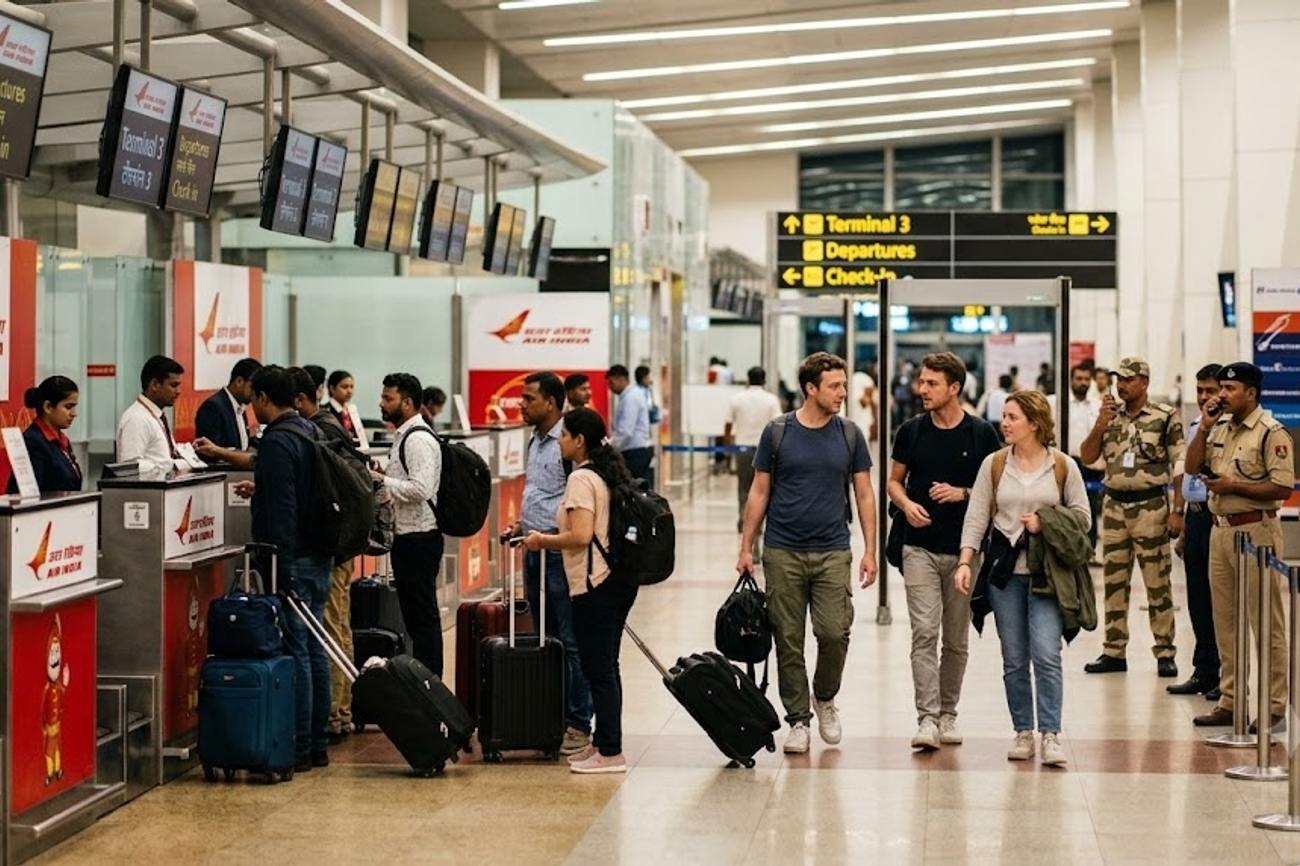
Image generated by AI
Security lapses in hub-and-spoke transfers have historically triggered immediate regulatory audits, yet the scale of the September 4, 2026, breach at Indira Gandhi International Airport (IGIA) represents a critical failure in domestic-to-international synchronization. While global aviation hubs typically maintain a near-zero tolerance for immigration bypasses, the departure of three Italian nationals from Delhi to Munich without mandatory clearance signals a systemic breakdown in the hand-off between domestic arrivals and international departures.
The Hub-and-Spoke Failure in Numbers
The incident centers on a precise window of 55 minutes on September 4, 2026, where the safeguards of India's aviation security were bypassed. The data timeline reveals a rapid transition that left no room for regulatory oversight:
- 00:50 (Sept 4): Three Italian nationals arrived at Delhi Airport via Air India flight AI-1115 from Amritsar.
- 01:45 (Sept 4): The same passengers departed Delhi for Munich on Lufthansa flight LH-763.
- September 12, 2026: The Ministry of Civil Aviation issued a formal show-cause notice to Air India.
This 55-minute interval is the focal point of the investigation. In a functioning hub-and-spoke model, this timeframe must accommodate the physical transfer of passengers from the domestic terminal to the international wing, including the mandatory stop at immigration. The fact that these passengers successfully boarded LH-763 indicates that the "spoke" (Amritsar) to "hub" (Delhi) transition failed at the most critical juncture: the legal exit point of the country.
According to data standards tracked by IATA, the integrity of the Passenger Name Record (PNR) and the boarding gate verification process are the final lines of defense. In this instance, the failure occurred across multiple touchpoints—airline routing, airport coordination, and boarding pass verification.
Comparative Context: Domestic-to-International Transfer Risks
The hub-and-spoke model is designed to maximize aircraft utilization and passenger reach, but it introduces a "transfer vulnerability" that point-to-point travel does not have. When a passenger arrives on a domestic flight, they are technically within the country's borders; when they board an international flight, they must legally exit.
The following table compares the standard operating procedure (SOP) against the alleged failure in the Air India/Lufthansa transfer:
| Process Stage | Standard Regulatory Requirement | Alleged Sept 4 Incident Outcome |
|---|---|---|
| Arrival (AI-1115) | Domestic arrival; passenger routed to International Transfer | Arrival recorded at 00:50 |
| Immigration | Mandatory passport stamp/biometric exit record | Bypassed/Not Completed |
| Routing | Secure escort or designated path to Int'l Terminal | Unauthorized movement to boarding area |
| Boarding (LH-763) | Verification of immigration clearance/boarding pass | Boarded and departed at 01:45 |
| Compliance | Ministry of Civil Aviation approval of SOPs | Show-cause notice issued Sept 12 |
Regionally, India is attempting to scale its hub capabilities to compete with Middle Eastern hubs like Dubai (DXB) or Doha (DOH). However, as noted in UNWTO reports on global mobility, the rapid expansion of transit volumes often outpaces the implementation of automated border control (ABC) systems. The gap between the arrival of AI-1115 and the departure of LH-763 highlights a lack of synchronization between Air India’s ground handling and the airport's immigration infrastructure.
What This Means for Travelers
For the individual traveler, this data point serves as a warning: do not assume that a "seamless transfer" implies a bypass of legal requirements. While the error in this case lies with the carrier and the airport, the legal repercussions of failing to clear immigration can fall on the passenger.
Actionable Booking and Travel Advice:
- Audit Your Transfer Windows: If you are booking a domestic-to-international connection in India, ensure a minimum connection time (MCT) that exceeds the airline's minimum. Given the complexity of IGIA, a window of less than 2 hours can lead to rushed processing or, in rare cases, procedural errors.
- Verify Your Exit Stamp: Always ensure your passport is stamped or your e-gate record is confirmed before boarding an international leg. If you are routed through a "sterile" transfer area and are not asked for immigration clearance, alert the airline staff immediately.
- Document Your Journey: Keep your boarding passes for both the domestic "spoke" flight and the international "hub" flight. In the event of a regulatory audit or a future visa application, you will need to prove you exited the country legally.
- Avoid "Express" Assumptions: Do not assume that because you are on a single ticket (Interline agreement), the immigration process is handled "behind the scenes." Every international departure from India requires a recorded exit.
Forward Projection: The Shift Toward Biometric Integration
The Ministry of Civil Aviation's aggressive response—issuing a show-cause notice within eight days of the incident—suggests a pivot toward stricter enforcement of hub-and-spoke SOPs. We can project three primary shifts in how India handles these transfers over the next 24 months:
First, there will likely be an acceleration of "DigiYatra" and other biometric-based movement systems. By linking the passenger's identity to their movement through the terminal, the airport can trigger an alert if a passenger reaches a boarding gate without having passed an immigration checkpoint.
Second, airlines operating hub-and-spoke models will be forced to implement more rigorous "transfer manifests." This means the departing international carrier (in this case, Lufthansa) may be required to verify a "clearance flag" in the system before allowing a domestic transfer passenger to board.
Third, the regulatory scrutiny on Air India's operational integration will increase. As the airline expands its fleet and network, the delta between its growth and its operational discipline is becoming a liability. Data from OAG indicates that as flight frequencies increase, the probability of "human error" in ground handling rises unless automated safeguards are implemented.
FAQ: Air India Immigration Lapse 2026
Will this lead to longer wait times at Delhi Airport? Yes. In the short term, expect more rigorous manual checks for domestic-to-international transfers as authorities tighten SOPs to prevent further bypasses.
Am I at risk if I missed an immigration stamp by mistake? Potentially. Failing to record a legal exit can cause issues with future visa applications or entry into other countries. Contact the nearest consulate or the Ministry of Civil Aviation to rectify records.
Which airlines are most affected by this? Primarily Air India and its codeshare partners who utilize the hub-and-spoke model at IGIA. Travelers on these routes should be extra vigilant about their clearance status.
Is the hub-and-spoke model unsafe? The model is efficient for logistics, but it creates more "handoff" points where errors can occur. It is not unsafe, but it requires higher operational precision than point-to-point travel.
The gap between a passenger's arrival and departure is measured in minutes, but the regulatory fallout of a single missed stamp is measured in months of audits.
#AirIndiaSecurity2026 #IGIAImmigrationLapse #HubAndSpokeFailure #IndiaAviationRegulatory #LufthansaLH763 #DomesticToInternationalTransfer
Related Travel Guides
- Korean Air Starlink WiFi Is Now Set to Unlock Better Global Travel With Free Access in the Sky
- Eastar Jet Expands In-Flight Meals and Onboard Shopping With New Korean Flavours for International Travellers
- Wizz Air Is Now Set To Unlock Better Winter Flights To The UAE As Affordable Middle East Flights Return
Disclaimer
This article is for informational and educational purposes only. It does not constitute legal, financial, or professional advice. While we strive to provide accurate and up-to-date information, travel policies, regulations, and conditions change rapidly. Always verify information with official sources before making travel decisions. Nomad Lawyer makes no representations about the accuracy, reliability, completeness, or suitability of the information provided. Readers should consult qualified professionals for advice specific to their circumstances. The views expressed in this article are those of the author and do not necessarily reflect the views of Nomad Lawyer.
Kunal K Choudhary
Co-Founder & Contributor
A passionate traveller and tech enthusiast. Kunal contributes to the vision and growth of Nomad Lawyer, bringing fresh perspectives and driving the community forward.
Learn more about our team →