
Wizz Air Is Now Set To Unlock Better Winter Flights To The UAE As Affordable Middle East Flights Return
Wizz Air Is Now Set To Unlock Better Winter Flights To The UAE As Affordable Middle East Flights Return. Latest travel news, updates, and expert analysis.

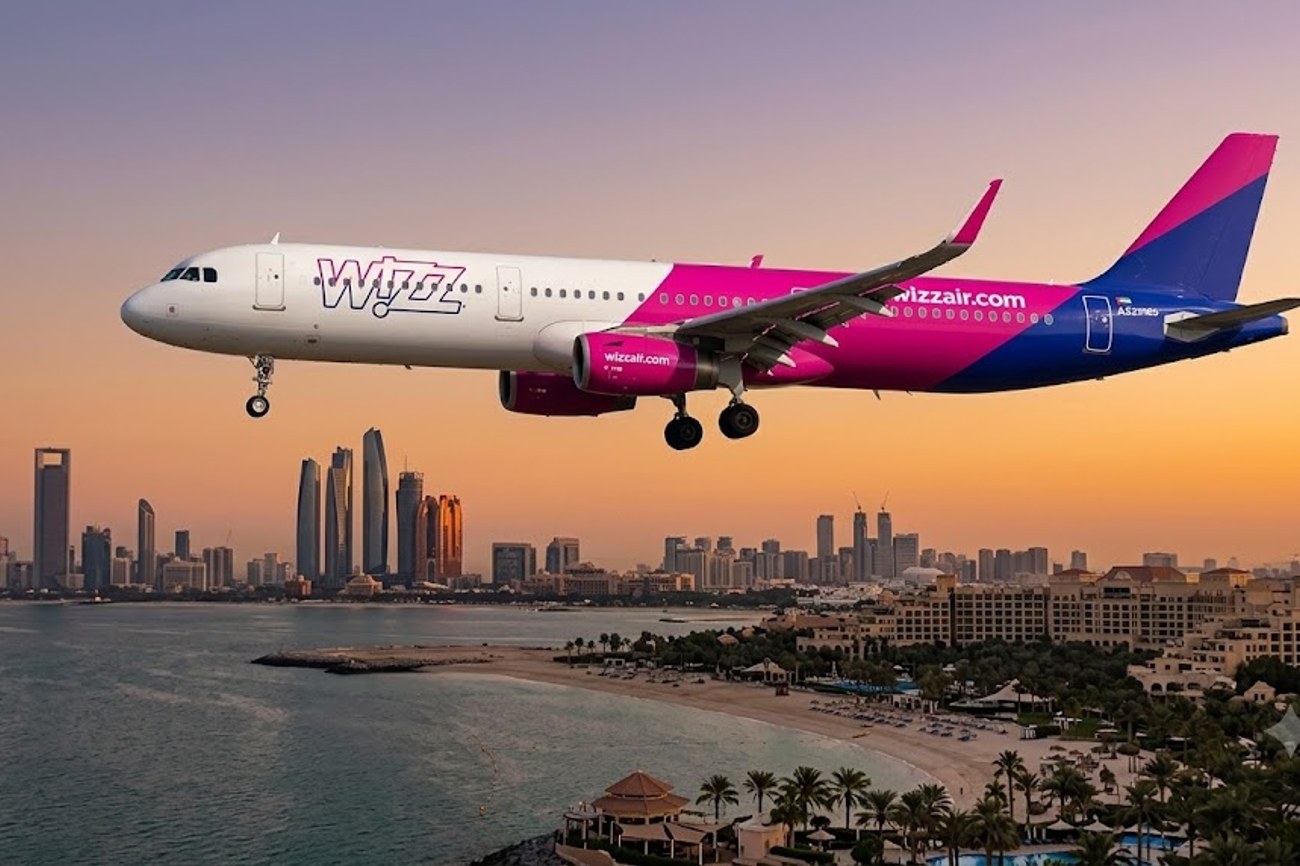
Image generated by AI
While regional conflict triggered a sharp 14% drop in Middle Eastern visitor arrivals during the opening quarter of 2026 despite worldwide travel expanding by 2%, a strategic wave of ultra-low-cost aviation is quietly reviving cross-continental journeys between Europe and the Gulf. Following an extraordinary run in 2025 where international arrivals to the Middle East grew 3% to stand 39% above pre-pandemic 2019 benchmarks, Hungarian budget carrier Wizz Air is progressively reactivating 12 routes and 49 weekly flight frequencies. This phased winter 2026–27 campaign injects approximately 470,000 airline seats between nine European cities and four primary sun-drenched regional gateways: Dubai, Abu Dhabi, Jeddah, and Amman.
Low-Cost Wings Return to the Desert: The Phased Winter 2026–27 Network Rollout
The reactivation of these low-cost routes links a diverse collection of European origin cities—Budapest, Bucharest, Sofia, Larnaca, Cluj-Napoca, Kraków, Katowice, Milan, and Rome—directly with the Arabian Peninsula and the Levant. Rather than launching all services simultaneously, the carrier has instituted a staggered timetable to monitor operational stability across regional flight corridors. The program commenced in early September 2026 with the return of Milan–Jeddah and Rome–Jeddah services, reconnecting northern and central Italy with the Red Sea coast. Direct links between Budapest and Amman resume on 22 September 2026, followed by European services touching down in Dubai on 25 October and selected Abu Dhabi arrivals on 27 October.
Frequencies across the network range from twice-weekly hops to daily rotations, with promotional one-way seat sales advertised from €24.99 before optional add-ons. However, travelers should note that this winter resumption does not mark a revival of Wizz Air Abu Dhabi, the locally based subsidiary that ended operations on 1 September 2025 amid intense geopolitical tension, airspace closures, Pratt & Whitney engine inspections, and commercial strains. The returning flights are operated directly by European parent airframes, meaning seat capacity relies strictly on international rotations rather than a permanently stationed Gulf fleet.
For independent travelers, this influx of nearly half a million seats across the colder months provides an economical escape route from freezing European centers like Kraków or Cluj-Napoca into balmy 25°C desert sunshine. Whether seeking leisure along Arabian beaches, conducting regional business, reuniting with diaspora families, or embarking on eligible pilgrimage journeys, the direct point-to-point connections bypass costly multi-stop layovers in traditional continental hubs.
What Makes These Four Middle Eastern Gateways Irreplaceable for Travelers
Each of the four destinations anchoring this winter flight expansion offers an entirely distinct cultural and geographic encounter, far removed from standard travel stereotypes.
In Saudi Arabia, landing in Jeddah places voyagers at the historical gateway to Islam's two holiest cities. Beyond religious journeys, modern Jeddah is defined by the historic Al-Balad district, recognized by the UNESCO World Heritage Centre for its towering multi-story houses crafted from Red Sea coral limestone and adorned with intricate teak rawashin window lattices. Walking through Al-Balad at dusk fills the senses with the aroma of roasted cardamom, clove-infused tea, and frankincense wafting from centuries-old spice merchants.
To the north, Amman serves as the historic, white-limestone heart of Jordan. Sprawled across seven historical hills (jabals), the Jordanian capital blends Roman ruins—such as the massive 6,000-seat 2nd-century Roman Theatre and the Temple of Hercules atop the Citadel—with contemporary art cafes along Rainbow Street. Amman acts as the springboard for overland journeys into the rose-red sandstone canyons of Petra and the sweeping crimson dunes of Wadi Rum.
Across the Gulf, the United Arab Emirates presents two complementary visions of Arabian hospitality. Dubai remains the glittering global metropolis of world records, architectural audacity, and energetic beachside winter festivals. Yet travelers can still board a traditional wooden abra ferry for a single dirham to cross Dubai Creek, wandering through heritage textile souks that predate the glass skyscrapers. In contrast, Abu Dhabi offers a more deliberate, culture-first rhythm centered around Saadiyat Island's cultural district, the Louvre Abu Dhabi, and the vast natural mangrove forests that fringe the emirate's coastline.
Visitor Insider Tips: Navigating Visas, Terminals, and Local Customs
- Saudi Visa Rules and Umrah Access: Italian and other eligible European passport holders can secure a one-year, multiple-entry tourist eVisa through the official portal of Visit Saudi. The permit allows cumulative stays of up to 90 days for leisure, business events, family visits, and independent Umrah pilgrimages. However, it strictly excludes the annual Hajj pilgrimage, study, or local employment. Passports must maintain at least six months of validity from the date of arrival.
- Jordanian Entry and the Jordan Pass: Travelers arriving on the Budapest–Amman flight at Queen Alia International Airport (AMM) can obtain a visa on arrival if holding non-restricted passports. To save money, purchase an official Jordan Pass online before flying; if you stay in Jordan for a minimum of three consecutive nights, the pass completely waives the 40 JOD visa fee while granting prepaid entry to more than 40 cultural attractions, including Petra.
- Inter-Emirate Airport Transfers: When booking flights into Abu Dhabi (landing at the modern Zayed International Airport) with final lodging in Dubai, factor in ground transport. Budget travelers can utilize the direct, air-conditioned airport express coach service connecting Zayed International directly to Dubai's Ibn Battuta Bus Station for approximately 35 AED (around $9.50 USD), avoiding pricey private taxis while completing the 75-minute transit smoothly.
- Budget Carrier Baggage Realities: The advertised €24.99 promotional fare covers only a single small personal bag (40 x 30 x 20 cm) stowed beneath the seat in front of you. Overhead cabin luggage and checked suitcases incur significant surcharges. Always purchase baggage allowances during initial web booking; fees at airport check-in counters can exceed the cost of the base flight itself.
- Local Etiquette and Food Traditions: Modest dress is appreciated across traditional neighborhoods; cover shoulders and knees when visiting historic markets and public institutions. Indulge in local culinary icons: savor savory Hijazi saleeg (slow-cooked creamy broth rice with tender roasted chicken) in Jeddah, feast on fresh mansaf (lamb braised in fermented dried yogurt) in Amman, and sample Emirati saffron-spiced machboos at historic waterfront cafes along Dubai Creek.
Cultural and Environmental Context: Sustainable Tourism Across Fragile Terrain
The return of extensive budget air networks brings vital economic stimulus to local hospitality providers, yet it also intersects with pressing environmental and heritage considerations. In Jordan, tourism revenue is indispensable for protecting archaeological treasures, yet fragile sites like Petra face long-term physical erosion from heavy footfall and climate-driven flash flooding. Community-based tourism initiatives across Dana Biosphere Reserve and Feynan are pioneering solar-powered eco-lodges that channel traveler spending directly into local Bedouin families rather than distant corporate operators.
In the Arabian Gulf, balancing rapid aviation throughput with ecological sustainability is an urgent priority. The United Arab Emirates has initiated extensive coastal mangrove restoration projects, which act as critical blue-carbon sinks sequestering regional emissions. Furthermore, airports like Zayed International in Abu Dhabi and Dubai International are expanding single-engine taxiing procedures and investing in sustainable aviation fuel (SAF) infrastructure. For international visitors exploring the region through resources from Visit Dubai, adopting respectful, low-waste travel habits helps ensure that both delicate marine habitats and historic mudbrick quarters endure.
FAQ: Visiting the UAE and Middle East Winter 2026-2027
Can I perform Umrah on a standard Saudi tourist eVisa? Yes. Eligible European travelers can perform Umrah on the standard 1-year multiple-entry tourist eVisa outside the official Hajj pilgrimage season. Booking an Umrah permit through the official Nusuk application is required before visiting the holy sites in Makkah.
How do I travel between Abu Dhabi airport and central Dubai? You can take the direct 24-hour airport express bus running between Zayed International Airport (AUH) and Dubai's Ibn Battuta Bus Station. The ride takes roughly 75 to 90 minutes and costs 35 AED. Metered taxis cost approximately 250–300 AED.
Do I need a visa in advance for winter flights to Jordan? Citizens of non-restricted countries can obtain a visa upon landing at Queen Alia International Airport in Amman. Purchasing an official Jordan Pass before arrival waives the entrance fee if you stay for at least three nights and includes admission to Petra.
What is the best winter month for travel across the Gulf? November through February offers peak comfort across the UAE and Saudi Arabia, with daytime temperatures hovering pleasantly between 22°C and 27°C. Evenings can turn brisk in desert areas like Amman and Riyadh, requiring light jackets or wraps.
As low-cost flight links bridge Europe and the Arabian sands once more, the real luxury is discovering ancient desert heritage without paying traditional long-haul airfares.
Related Travel Guides
- Air China and China Southern Raise the Stakes as China Flight Overbooking Rules Bring Tougher Protections
- Thai Airways Nagoya Bangkok Flights Return in 2027 As Overnight Service Boosts Japan Thailand Travel Connectivity
- Turkish Airlines Flight Turnback Signals Heightened Wildlife Safety Protocols at Istanbul Airport
Disclaimer
This article is for informational and educational purposes only. It does not constitute legal, financial, or professional advice. While we strive to provide accurate and up-to-date information, travel policies, regulations, and conditions change rapidly. Always verify information with official sources before making travel decisions. Nomad Lawyer makes no representations about the accuracy, reliability, completeness, or suitability of the information provided. Readers should consult qualified professionals for advice specific to their circumstances. The views expressed in this article are those of the author and do not necessarily reflect the views of Nomad Lawyer.
Raushan Kumar
Founder & Lead Developer
Full-stack developer with 11+ years of experience and a passionate traveller. Raushan built Nomad Lawyer from the ground up with a vision to create the best travel and law experience on the web.
Learn more about our team →