Air India Bengaluru to Vijayawada Flight Faces Major Delays at Kempegowda International Airport 2026

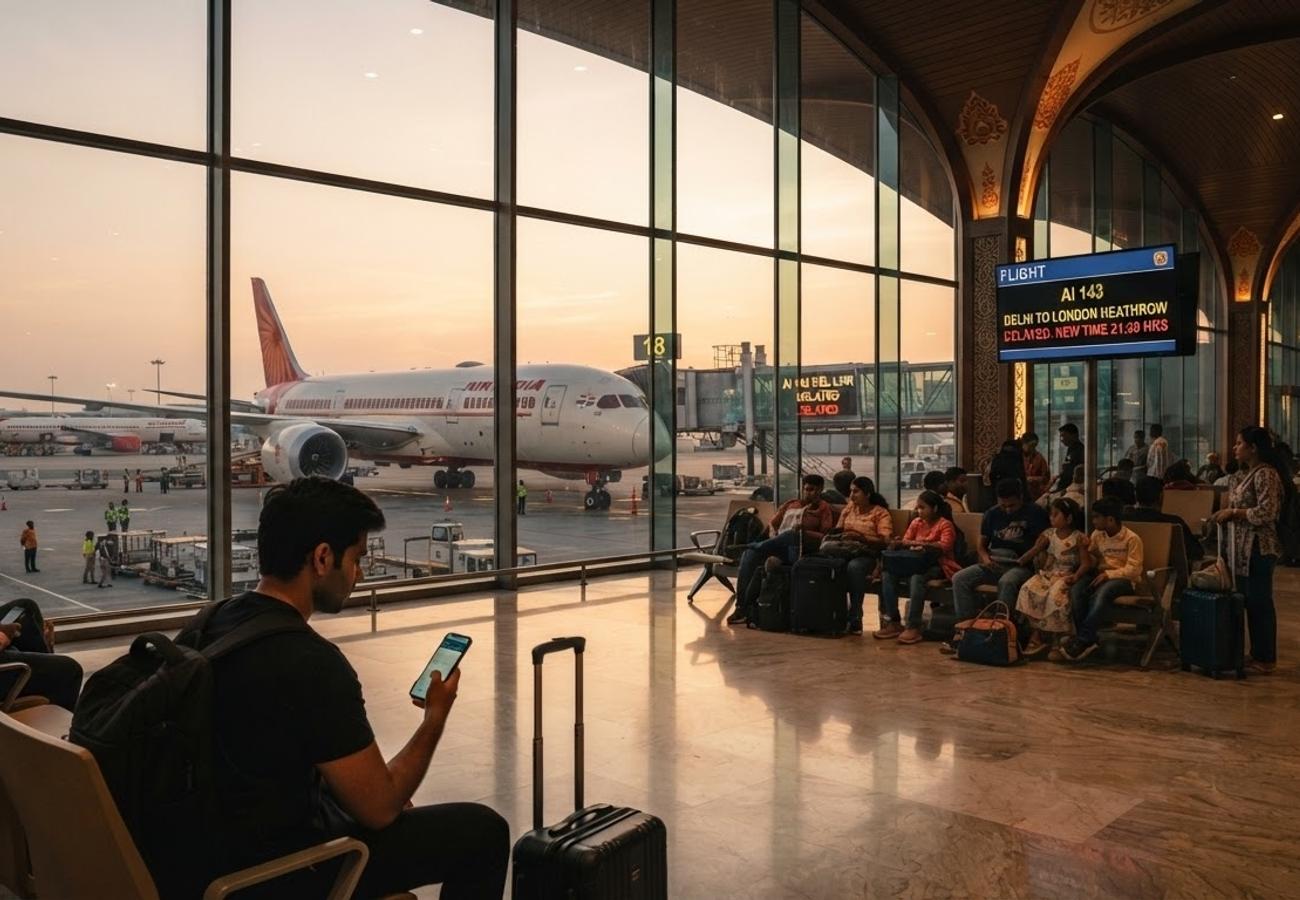
Image generated by AI
A high-demand domestic corridor linking Karnataka’s tech hub to Andhra Pradesh’s commercial center recently saw significant disruptions, with Air India passengers facing prolonged ground waits at Kempegowda International Airport.
The Operational Strain on the BLR–VGA Corridor
The route between Bengaluru (BLR) and Vijayawada (VGA) is a critical artery for business and family travel, typically requiring under two hours of flying time. Air India and Air India Express maintain a heavy presence here, but the efficiency of these short hops is often compromised by the nature of aircraft rotations. Because these flights are frequently the final leg of a longer daily schedule, a single delay in an earlier city creates a cascading effect that hits the Bengaluru–Vijayawada sector hardest.
Recent data from flight-tracking platforms reveals a concerning trend: while most flights on this route remain punctual, those that are disrupted often see average delays exceeding one hour. On the most recent occasion, passengers reported a total breakdown in communication, with departure boards showing delays but staff providing little clarity on revised timings or the impact on onward connections.
Infrastructure Pressures at Kempegowda International Airport
The shift of Air India and Air India Express operations to the new Terminal 2 (T2) was intended to streamline the passenger experience. However, the sheer scale of operations—which can exceed 1,000 movements daily during peak seasons—means the system has very little margin for error.
For the traveler, the reality is that T2’s efficiency is highly sensitive to external shocks. According to the Airports Authority of India, early-morning fog or technical glitches at other major Indian hubs frequently ripple into Bengaluru's schedule. Once an aircraft misses its assigned departure slot, the resulting congestion on the apron and in the departure queue amplifies the wait time, often leaving passengers stranded at the gate for hours.
The Experience Gap: Digital Tools vs. Ground Reality
There is a documented lag between Air India’s digital status trackers and the physical departure boards at Kempegowda Airport. Passengers frequently report that third-party tracking apps provide more accurate real-time data than the airline's own mobile platforms. This discrepancy creates significant friction for those needing to coordinate ground transport in Vijayawada or notify business associates of their late arrival.
From a consumer rights perspective, this gap underscores the importance of documentation. Travelers are advised to maintain a digital trail—screenshots of departure boards and saved copies of airline communications—to support potential claims for refunds or compensation under the carrier's customer service policies.
Regional Connectivity and Economic Impact
The Air India group remains a dominant player on this 500-kilometer stretch. With economy one-way fares often starting around mid-INR 4,000 during promotional windows, the route is accessible and high-volume. While some aggregators suggest that 90% of Air India's flights at the hub arrive within 15 minutes of their schedule, the remaining 10% represent hundreds of disrupted passengers daily.
As airlines push for higher aircraft utilization to maximize profit, the "buffer" time between flights is shrinking. This means that a minor technical issue is no longer a localized problem but a systemic one that can paralyze regional connectivity.
Visitor Insider Tips for Bengaluru & Vijayawada
Navigating the BLR–VGA corridor requires more than just a ticket; it requires a strategy to handle the volatility of Indian domestic aviation.
- The T2 Transition: If you are flying Air India, ensure you head directly to Terminal 2. The distance between terminals is significant, and miscalculating your arrival time can lead to missed flights.
- Real-Time Tracking: Do not rely solely on SMS alerts. Use apps like FlightRadar24 or FlightAware to see where your incoming aircraft actually is. If the plane hasn't left its previous destination, the "scheduled" departure time on the board is likely optimistic.
- Dining at BLR: While waiting out a delay in T2, avoid the main food courts during peak hours. Seek out the smaller, specialized kiosks that highlight Karnataka's local flavors, such as Bisi Bele Bath, for a more authentic experience than the global chains.
- Vijayawada Arrival: If arriving late at night due to a delay, pre-book a reputable app-based cab. Local transit options diminish significantly after 11 PM, and negotiating with airport taxis during a delay-induced rush can be stressful.
- Cultural Etiquette: When dealing with ground staff during delays, patience is key. The operational pressure on airport personnel during "cascading delays" is immense; clear, polite communication typically yields better information than aggression.
Tourism Outlook
The long-term viability of the Bengaluru–Vijayawada route depends on the ability of Kempegowda International Airport to manage peak-load volatility. While T2 provides the physical space for growth, the operational software—specifically communication and slot management—must evolve. For the region, the goal is to move toward a "resilient hub" model where a single delayed rotation does not compromise the entire regional grid.
Safe travels are built on a foundation of predictability and transparency.
Related Travel Guides
This article is for informational purposes. Flight routes, passenger regulations, visa rules, and transit advisories are subject to change by airlines and aviation authorities. Readers are advised to verify schedules and travel documentation with relevant carriers and border agencies before departure.
Related Stories
Air India Restores Nonstop US Flights via Iraq: Travel Guide 2026

South Africa's Addo Elephant National Park Welcomes Woman-Owned Epitome Spa to Boost Inclusive Tourism 2026