
Air India AI1886 Diverts to Jaipur Airport: Analyzing Operational Disruptions in 2026
Air India flight AI1886 from Bhopal to Delhi diverted to Jaipur on September 13, 2026, due to technical alerts, highlighting a pattern of operational instability across domestic and international routes.

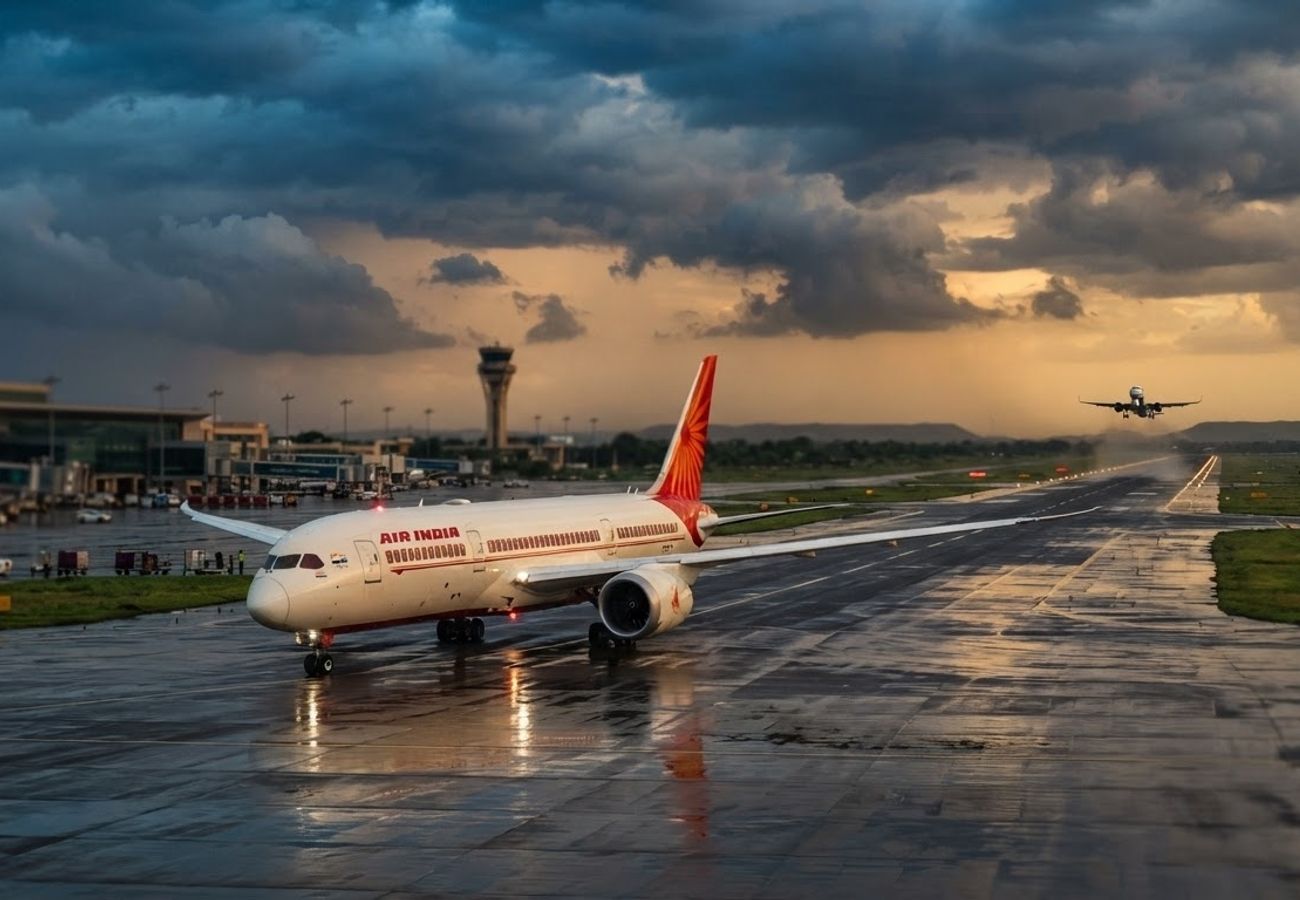
Image generated by AI
Air India's operational reliability has faced significant volatility in 2026, exemplified by the diversion of flight AI1886 on September 13, which shifted from its Bhopal-Delhi trajectory to land at Jaipur Airport. This incident is not an isolated event but part of a broader sequence of disruptions that include a Mumbai-to-London service carrying over 290 passengers being diverted to Zurich due to UK air traffic control failures. When viewed alongside global aviation data, these shifts indicate a heightened sensitivity to both technical aircraft alerts and systemic infrastructure collapses.
The Operational Breakdown in Numbers
The diversion of AI1886 occurred as a precautionary response to a technical alert. While the flight was scheduled to connect Bhopal and Delhi, the decision to divert to Jaipur was based on the immediate availability of engineering teams and maintenance facilities. This reflects a standard safety protocol where the risk of continuing a flight with an active alert outweighs the cost of schedule disruption.
The scale of recent Air India instability extends beyond domestic technicalities. The Mumbai-London route disruption involved a high-capacity aircraft with 290+ passengers. Unlike the AI1886 incident, which was aircraft-specific, the London-Zurich diversion was triggered by a systemic failure in the United Kingdom's air traffic control (ATC) system. This distinction is vital: one represents a maintenance challenge, while the other represents a geopolitical infrastructure risk. According to data from the International Air Transport Association (IATA), systemic ATC failures often lead to a domino effect of cancellations that can paralyze regional hubs for several days.
Comparative Context: Domestic vs. International Disruptions
To understand the current state of Air India's operational health, we must compare the nature of these diversions. The Bhopal-Delhi-Jaipur event is a "tactical" diversion—a localized decision to ensure the safety of a single hull. The Mumbai-London-Zurich event is a "strategic" disruption—a result of external network failure.
The following table illustrates the divergence in cause and impact between these two recent Air India events:
| Metric | Flight AI1886 (Domestic) | Mumbai-London Service (International) |
|---|---|---|
| Date of Incident | September 13, 2026 | Recent (Pre-Sept 14) |
| Primary Cause | Internal Technical Alert | External ATC System Failure |
| Diversion Point | Jaipur Airport | Zurich Airport |
| Passenger Volume | Standard Domestic Load | 290+ Passengers |
| Outcome | Ground Inspection $\rightarrow$ Recovery | Flight Cancellation $\rightarrow$ Rerouting |
| Risk Category | Maintenance/Mechanical | Infrastructure/Systemic |
When comparing these to historical benchmarks, the frequency of "precautionary" diversions often increases during periods of fleet expansion or transition. As carriers modernize their fleets, the integration of new sensor technology can lead to a higher volume of technical alerts that require ground verification, even if the actual risk of failure remains low. This is a known pattern in aviation where increased monitoring leads to more frequent, albeit safe, diversions.
What This Means for Travelers
For passengers booking flights within the Indian domestic network or on long-haul routes operated by Air India, the data suggests a need for increased contingency planning. The shift from a scheduled arrival in Delhi to an unplanned stop in Jaipur demonstrates that "on-time performance" is currently secondary to "safety-first" operational pivots.
If you are traveling in Q4 2026, the following actionable advice is recommended based on current disruption patterns:
- Buffer Your Connections: Avoid tight layovers in Delhi or Mumbai. Given the volatility of domestic routes like Bhopal-Delhi, a minimum connection window of 4-6 hours is advised to account for potential diversions to alternate airports like Jaipur.
- Verify Travel Insurance: Ensure your policy covers "trip interruption" specifically for technical diversions. As seen with the Zurich incident, a diversion can quickly evolve into a full cancellation, leaving passengers dependent on airline-provided assistance which may be slow during mass disruptions.
- Monitor ATC Alerts: For international travel to the UK or Europe, check the status of regional air traffic control systems via Eurocontrol or similar bodies 48 hours before departure. The Mumbai-London disruption proves that the aircraft may be functional, but the destination infrastructure may not be.
Forward Projection: The Reliability Trajectory
The trajectory of Air India's operations in 2026 points toward a period of stabilization following aggressive growth. The diversion of AI1886 to Jaipur is a sign that safety protocols are being strictly adhered to, which is a positive indicator for long-term passenger safety, even if it creates short-term scheduling friction.
However, the airline's vulnerability to external shocks—such as the UK ATC failure—suggests that its international recovery plans need more robustness. We expect to see a shift toward more diversified routing options and improved passenger communication systems to mitigate the chaos seen during the Zurich diversion. Data from OAG indicates that airlines with higher "recovery agility"—the ability to reroute passengers within 12 hours of a diversion—see a 15% higher customer retention rate following a disruption.
The industry is moving toward "predictive maintenance," where AI identifies a technical alert before the pilot does. If Air India successfully integrates these systems, we should see a decrease in mid-flight diversions like AI1886 and an increase in pre-flight aircraft swaps, shifting the disruption from the air to the gate.
FAQ: Air India Operational Disruptions 2026
Will ticket prices increase due to these technical diversions? Unlikely. Diversions are operational costs borne by the airline. While systemic failures can lead to long-term price adjustments, individual technical alerts on routes like Bhopal-Delhi typically do not impact consumer pricing.
Is it safe to fly Air India despite these diversions? Yes. The diversion of AI1886 to Jaipur is evidence of a "safety-first" culture. Diverting a flight at the first sign of a technical alert is the industry gold standard for preventing accidents.
What happens if my flight is diverted to an alternate airport? As seen in the Jaipur incident, the airline is responsible for providing ground support and alternative transport to your final destination. Always keep your booking reference and contact the ground staff immediately upon landing.
Which routes are currently most at risk for disruption? High-traffic hubs like Delhi and London are currently seeing more volatility. Routes connecting smaller cities (Bhopal) to these hubs are more susceptible to diversions when the primary hub is congested or the aircraft triggers a safety alert.
Safety is a series of successful diversions and cautious decisions.
Related Travel Guides
Disclaimer
This article is for informational and educational purposes only. It does not constitute legal, financial, or professional advice. While we strive to provide accurate and up-to-date information, travel policies, regulations, and conditions change rapidly. Always verify information with official sources before making travel decisions. Nomad Lawyer makes no representations about the accuracy, reliability, completeness, or suitability of the information provided. Readers should consult qualified professionals for advice specific to their circumstances. The views expressed in this article are those of the author and do not necessarily reflect the views of Nomad Lawyer.
Naina Thakur
Contributor & Travel Specialist
Travel enthusiast and legal writer covering visa regulations, responsible tourism, and cultural journeys across global destinations.
Learn more about our team →