
Africa’s Forest Tourism Enters a New Era as Rwanda, Uganda and DRC Strengthen Wildlife Conservation
Africa’s Forest Tourism Enters a New Era as Rwanda, Uganda and DRC Strengthen Wildlife Conservation

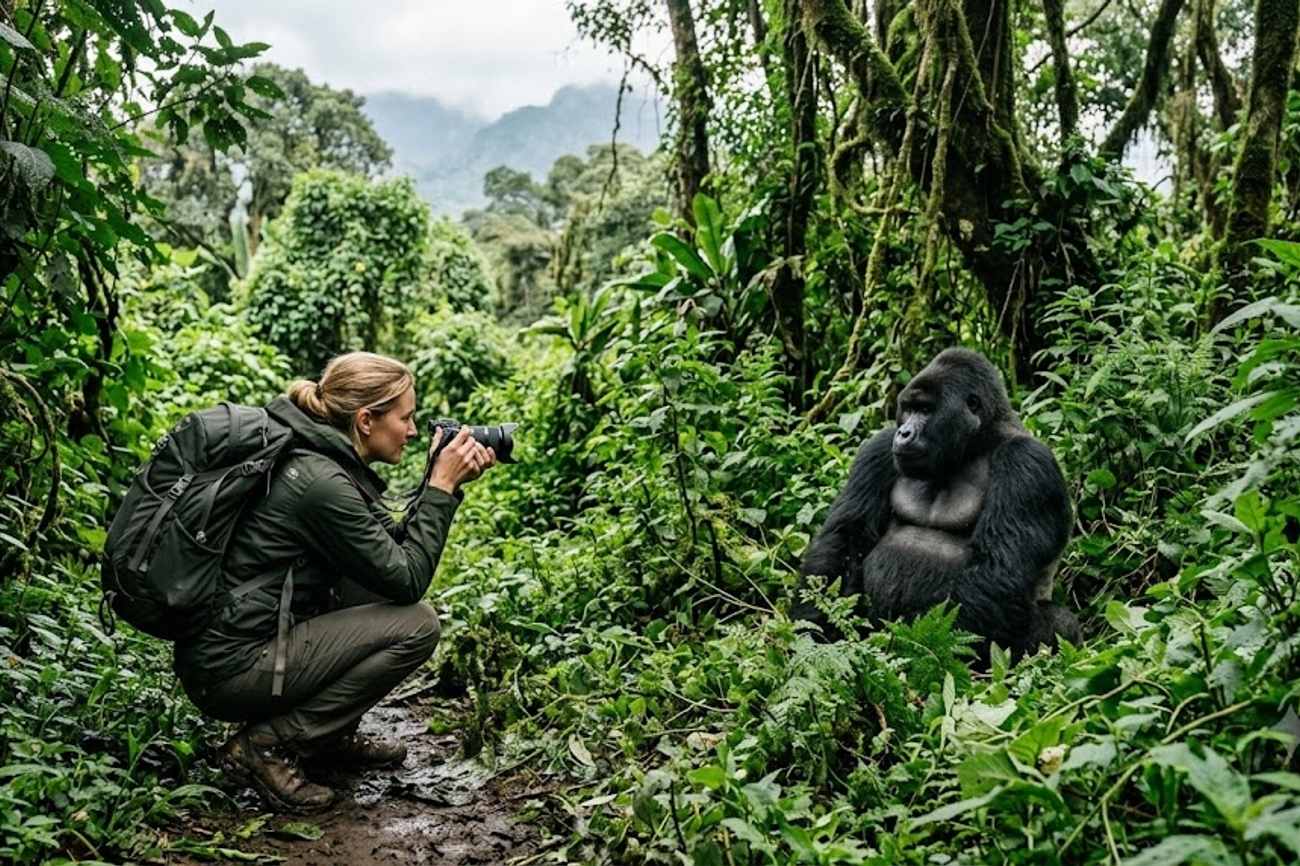
Image generated by AI
Mountain gorilla populations in the DRC's Virunga National Park have surged from 286 individuals during the 2015/16 census to an estimated 380 today—a growth rate of 32.8% that underscores the efficacy of high-intervention conservation models. This trajectory signals a pivotal shift in the Great Lakes region, where wildlife tourism is transitioning from a "bucket-list" commodity to a structured, high-yield conservation engine. As World Gorilla Day 2026 approaches on 24 September, the data suggests that the Virunga Massif—spanning Rwanda, Uganda, and the Democratic Republic of Congo (DRC)—is no longer just managing a species, but scaling a complex socio-economic ecosystem.
The Conservation Economy in Numbers
The financial architecture of gorilla tourism in East Africa is designed for high-margin, low-volume impact. In Rwanda, the entry price for a gorilla trekking permit is set at US$1,500 per person. This premium pricing strategy is not merely a reflection of exclusivity but a funding mechanism for habitat expansion and community incentives. A critical data point in this strategy is Rwanda's recent commitment to increase the size of Volcanoes National Park by 23%, a move directly tied to the rising population of mountain gorillas and the need for expanded territorial range.
In Uganda, the management model focuses on strict capacity caps to prevent habituation stress. Mgahinga Gorilla National Park, for example, limits issuance to approximately 8 permits per day. Across the region, the "one-hour rule"—the maximum time allowed with a habituated group—remains the global benchmark for primate tourism to minimize cortisol spikes in the animals.
The demographic data for these treks also reveals a strict age floor; the minimum age for participation is 15. This restriction serves a dual purpose: ensuring the physical capability of the trekker in steep, muddy terrain and reducing the risk of respiratory disease transmission from younger, more susceptible human populations to the gorillas.
Regional Market Benchmarks and Capacity
The Virunga Massif represents a fragmented but interconnected market. While Rwanda positions itself as the luxury, high-cost leader, Uganda offers a more diverse geographical spread through Bwindi Impenetrable National Park—divided into the Buhoma, Ruhija, Rushaga, and Nkuringo sectors—and Mgahinga.
The following table compares the operational frameworks across the three primary jurisdictions:
| Metric | Rwanda (Volcanoes NP) | Uganda (Bwindi/Mgahinga) | DRC (Virunga NP) |
|---|---|---|---|
| Permit Cost | US$1,500 | Variable/Lower than Rwanda | Variable/Conservation-led |
| Daily Cap (Mgahinga) | N/A | ~8 permits per day | Managed by Park Teams |
| Population Trend | Growing (Expanding NP by 23%) | Stable/Growing | 286 (2015/16) $\rightarrow$ 380 (Current) |
| Max Visit Duration | 1 Hour | 1 Hour | Managed by Park Teams |
| Min. Distance | Strict Regulations | 10 Metres | Strict Regulations |
| Trek Duration | Variable (Kinigi start) | 2 to 7 Hours | Variable |
This regional disparity in pricing and access creates a tiered market. According to data patterns often tracked by the World Travel & Tourism Council (WTTC), such pricing stratification allows destinations to target different traveler segments while maintaining a collective conservation goal across borders.
Practical Traveler Advisory and Strategic Insights
The shift toward "responsible tourism" is now a measurable operational requirement rather than a marketing slogan. For those planning a visit in 2026, the data dictates a specific booking and preparation strategy.
First, the physical demand is non-negotiable. In Bwindi, trek durations range from 2 to 7 hours over steep, dense vegetation. Travelers must treat this as a high-intensity expedition. Second, the health protocols are absolute. Because gorillas are susceptible to human respiratory infections, any traveler presenting with a cold or infectious illness will be denied entry. This creates a "health-contingent" travel risk that does not exist in standard safari tourism.
Travelers visiting the region's primate sanctuaries can streamline their entry via the East Africa Tourist Visa, which allows seamless movement between Rwanda, Uganda, and Kenya. Detailed application requirements and eligibility criteria are managed by the Rwanda Development Board, the primary authority for tourism and conservation investments in the country.
Booking advice for Q3 and Q4 2026:
- Permit Lead Times: Given the strict caps (such as the 8-permit limit in Mgahinga), permits should be secured 6-12 months in advance.
- Budgeting: Beyond the US$1,500 permit in Rwanda, travelers must factor in "hidden" operational costs: porters (essential for the 23% steeper terrain in expanded zones), specialized guides, and regional transport.
- Timing: The Kwita Izina ceremony in September is a peak demand period. With 22 baby gorillas named in the 2026 cycle, accommodation occupancy in the Kinigi area will reach maximum capacity.
Projections for the Virunga Massif 2027-2030
Based on the current growth rate of the mountain gorilla population—particularly the 32.8% increase seen in the DRC—the region is heading toward a "capacity crisis." As populations grow, the demand for habitat expansion will likely lead to further increases in park boundaries, similar to Rwanda's 23% expansion.
We can project a shift toward "community-led conservation" where a higher percentage of the US$1,500 permit fee is diverted directly to border villages to prevent poaching. As the International Union for Conservation of Nature (IUCN) often highlights, the survival of endangered species is inextricably linked to the economic stability of the human populations living adjacent to them.
Furthermore, expect a tightening of "behavioral data" monitoring. The current 10-meter distance rule in Uganda is likely to be augmented with more rigorous monitoring to ensure that the increase in tourist numbers does not lead to "habituation fatigue," where gorillas become too comfortable with humans, increasing their vulnerability to disease or conflict.
FAQ: Gorilla Tourism Trends 2026
Will permit prices increase further in 2026? Likely. As Rwanda expands its park by 23% and the DRC sees population growth, the cost of habitat management rises. Expect prices to remain at a premium to limit visitor volume while maximizing conservation revenue.
Is it better to visit Bwindi or Volcanoes National Park? It depends on your priority. Volcanoes NP offers a more streamlined, luxury-integrated experience. Bwindi provides a more rugged, "expedition-style" trek with durations up to 7 hours across four distinct sectors.
Which country has the most successful conservation growth? The DRC's Virunga National Park shows a striking upward trend, moving from 286 gorillas in the 2015/16 census to over 380 currently, demonstrating a successful recovery model despite regional instability.
Are there alternatives to gorilla trekking in these parks? Yes. Data shows a rise in "diversified wildlife" itineraries. Volcanoes National Park now actively promotes golden monkey tracking and avian biodiversity to spread the human footprint across the forest.
The transition from wildlife sightseeing to biological stewardship is no longer optional; it is the only sustainable currency for the future of the Virunga Massif.
Related Travel Guides
Disclaimer
This article is for informational and educational purposes only. It does not constitute legal, financial, or professional advice. While we strive to provide accurate and up-to-date information, travel policies, regulations, and conditions change rapidly. Always verify information with official sources before making travel decisions. Nomad Lawyer makes no representations about the accuracy, reliability, completeness, or suitability of the information provided. Readers should consult qualified professionals for advice specific to their circumstances. The views expressed in this article are those of the author and do not necessarily reflect the views of Nomad Lawyer.
Kunal K Choudhary
Co-Founder & Contributor
A passionate traveller and tech enthusiast. Kunal contributes to the vision and growth of Nomad Lawyer, bringing fresh perspectives and driving the community forward.
Learn more about our team →