
South Korea Teams Up With Taiwan and Eight More Countries to Fuel Japan Tourism Growth Despite a Nearly 60% Drop in Chinese Tourists in 2026
South Korea Teams Up With Taiwan and Eight More Countries to Fuel Japan Tourism Growth Despite a Nearly 60% Drop in Chinese Tourists in 2026

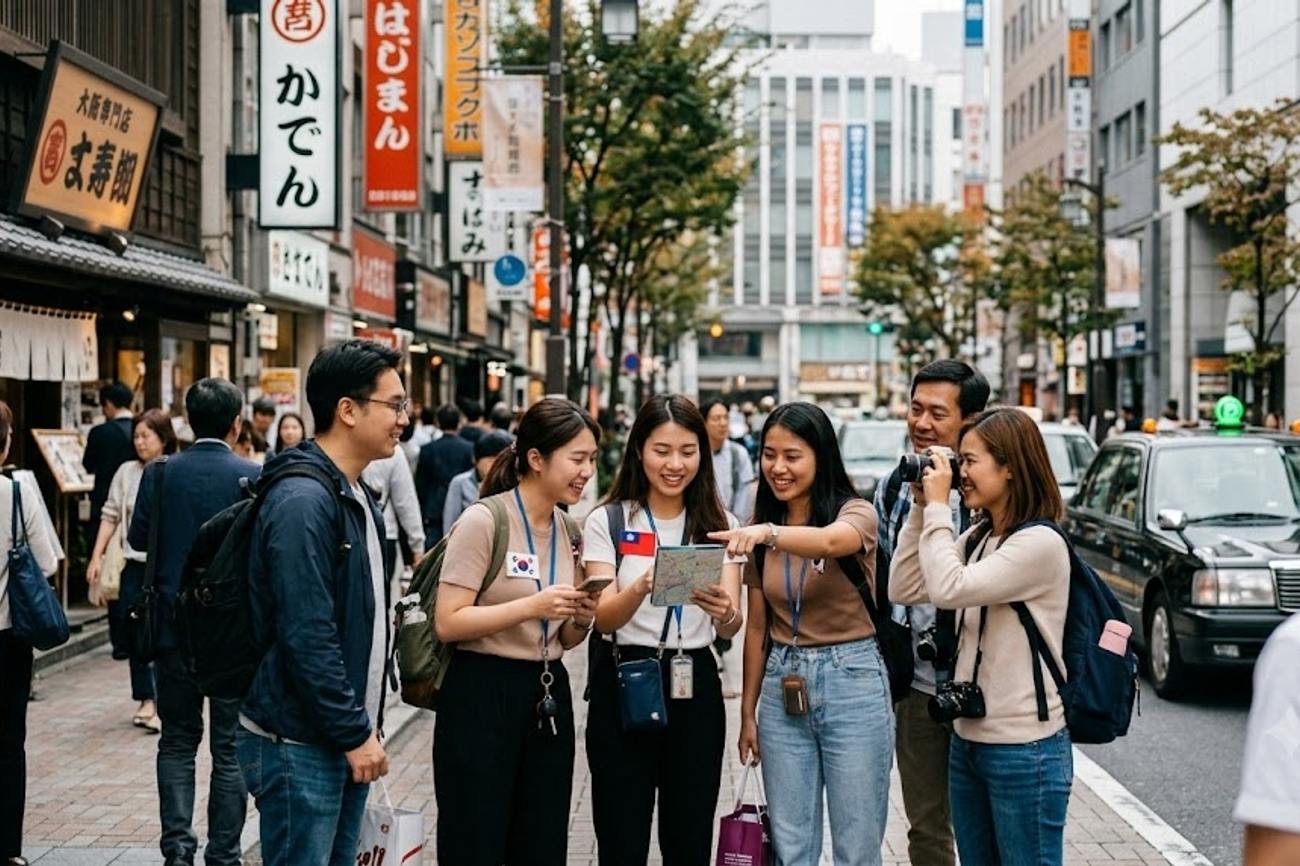
Image generated by AI
A 56.3% collapse in Chinese visitor arrivals through August 2026 has forced a radical pivot in Japan's inbound tourism strategy, shifting the burden of growth toward a diversified coalition of Asian neighbors. While the loss of the Chinese market—which saw arrivals plummet to 2.49 million—creates a significant void, Japan is successfully offsetting this decline through an aggressive expansion of its reach into South Korea, Taiwan, and emerging Southeast Asian hubs. This transition represents more than a simple change in passenger demographics; it is a strategic decoupling from a single-market dependency that has historically left the Japanese tourism economy vulnerable to geopolitical volatility.
The Great Asian Pivot: Diversification as Risk Mitigation
The current volatility in Chinese outbound travel has accelerated a trend that the Japan National Tourism Organization (JNTO) has long sought: the distribution of visitor sources across a broader geographic spectrum. For years, the "Golden Week" surges from China provided a massive, albeit unpredictable, injection of capital into the Japanese economy. The 2026 data reveals a structural shift where Japan is no longer relying on a single hegemon but is instead building a multi-polar tourism base.
By August 2026, ten key Asian markets collectively delivered 16,055,100 visitors. This collective volume suggests that while the "China gap" is stark, the aggregate growth from South Korea, Taiwan, and Southeast Asia is providing a necessary safety net. This is not merely a numbers game; it is a shift in the type of traveler. The growth in markets like Singapore and Malaysia often correlates with higher repeat-visit rates and a greater willingness to explore regional prefectures beyond the saturated "Golden Route" of Tokyo, Kyoto, and Osaka.
Market Breakdown: The New Drivers of Demand
The data from the first eight months of 2026 highlights a clear hierarchy of influence. South Korea and Taiwan have emerged as the primary engines of growth, while Southeast Asian markets are providing the steady, incremental expansion needed for long-term stability.
| Source Market | YTD Visitors | Market Share | YTD Growth |
|---|---|---|---|
| South Korea | 6,569,800 | 26.8% | +20.3% |
| Taiwan | 4,736,000 | 19.3% | +21.8% |
| Hong Kong | 1,571,000 | 6.4% | +8.6% |
| Thailand | 758,300 | 3.1% | +4.0% |
| Philippines | 519,500 | 2.1% | +4.8% |
| Vietnam | 448,700 | 1.8% | +7.3% |
| Indonesia | 418,700 | 1.7% | +12.1% |
| Singapore | 407,400 | 1.7% | +10.3% |
| Malaysia | 395,100 | 1.6% | +15.5% |
| India | 230,600 | 0.9% | +21.7% |
| Combined | 16,055,100 | — | — |
The scale of the South Korean market is now dominant, accounting for over a quarter of the Asian visitor base. With 6,569,800 arrivals, South Korea's 20.3% growth is underpinned by extreme short-haul connectivity and a cultural synergy that encourages frequent, short-duration trips. Similarly, Taiwan has reached a critical mass, surpassing 4.73 million visitors and hitting a historic milestone in July 2026 by crossing the 700,000 monthly visitor mark for the first time.
Expert Analysis: The Economic Implications of Market Shifting
For the travel industry and the average nomad, the shift from Chinese dominance to a diversified Asian base creates three distinct economic pressures.
First, the "Spending Profile" is changing. Chinese tourism was historically characterized by high-volume luxury shopping in urban centers. In contrast, the surge in South Korean and Taiwanese travelers—who are often repeat visitors—tends to favor "experience-based" spending. This means more revenue flowing into regional ryokans, local eateries, and niche cultural experiences in rural prefectures. For the Japanese government, this is a win; it solves the problem of "overtourism" in Kyoto while stimulating dormant local economies.
Second, airline capacity is being redistributed. We are seeing a shift in slot allocations at major hubs like Narita and Haneda. As demand from India (+21.7% growth) and Malaysia (+15.5% growth) climbs, carriers are likely to increase frequencies from these regions. Travelers booking from these emerging markets can expect more competitive pricing and direct routing options as airlines chase these high-growth percentages.
To mitigate the decline in Chinese arrivals, Japan is diversifying its visitor base by expanding flight connectivity and promotional partnerships with South Korea and Taiwan. Travelers can find updated flight schedules and transit requirements through the Japan National Tourism Organization, which coordinates strategic growth initiatives to stabilize the tourism sector.
Third, the reliance on the International Air Transport Association (IATA) standards for regional connectivity is becoming more vital. The ability of Japan to maintain 3.10 million international visitors in August 2026—despite a 9.6% overall year-on-year decline—proves that the "diversification hedge" is working. The fact that 14 different markets achieved record-breaking August numbers indicates that Japan is successfully insulating itself against the volatility of any single political relationship.
Key Takeaways
- China's Decline: A massive 56.3% drop in Chinese visitors (down to 2.49 million) has created a vacuum in the inbound market.
- The New Powerhouses: South Korea (6.57M visitors) and Taiwan (4.73M visitors) now dictate the volume of Asian arrivals, with growth rates of 20.3% and 21.8% respectively.
- Southeast Asian Surge: Double-digit growth in Indonesia (+12.1%), Singapore (+10.3%), and Malaysia (+15.5%) is providing a critical secondary layer of stability.
- Regional Redistribution: Japan is actively using this shift to push tourists away from the Tokyo-Kyoto-Osaka axis and into regional areas to combat urban congestion.
- Resilience Metrics: Despite a 9.6% overall dip in August arrivals, 14 markets hit all-time August highs, signaling a healthier, more balanced visitor ecosystem.
FAQ: Japan Tourism 2026
Why are Chinese tourist numbers dropping so sharply in 2026? While the source data does not specify the exact cause, such declines are typically driven by a combination of economic headwinds in China, shifting outbound travel preferences, and geopolitical tensions affecting visa processing or travel sentiment.
Which Asian countries are seeing the fastest growth in travel to Japan? Taiwan and India are leading the growth surge, with year-to-date increases of 21.8% and 21.7% respectively, reflecting a strong new appetite for Japanese travel in these markets.
Is it getting harder to visit Japan due to the increase in other Asian tourists? While overall numbers are diversifying, the Japanese government is actively promoting regional destinations to prevent overcrowding in major cities, meaning travelers who venture outside Tokyo and Kyoto may find a more relaxed experience.
Are there more flights available from Southeast Asia to Japan now? Yes. With double-digit growth from Malaysia, Indonesia, and Singapore, airlines are expanding capacity and connectivity to capture this rising demand, leading to more frequent flight options.
The era of the single-market dependency is over; Japan has traded the volatility of the Chinese giant for the stability of a diversified Asian alliance.
Tags: JNTO 2026, South Korea-Japan Tourism, Taiwan-Japan Travel, Southeast Asia Inbound Japan, Japan Tourism Diversification, Asian Travel Trends 2026
Related Travel Guides
Disclaimer
This article is for informational and educational purposes only. It does not constitute legal, financial, or professional advice. While we strive to provide accurate and up-to-date information, travel policies, regulations, and conditions change rapidly. Always verify information with official sources before making travel decisions. Nomad Lawyer makes no representations about the accuracy, reliability, completeness, or suitability of the information provided. Readers should consult qualified professionals for advice specific to their circumstances. The views expressed in this article are those of the author and do not necessarily reflect the views of Nomad Lawyer.
Kunal K Choudhary
Co-Founder & Contributor
A passionate traveller and tech enthusiast. Kunal contributes to the vision and growth of Nomad Lawyer, bringing fresh perspectives and driving the community forward.
Learn more about our team →