
African Travel Is Now at a Crossroads as the Continent Must Unlock Better Air Links and More Direct Journeys
African Travel Is Now at a Crossroads as the Continent Must Unlock Better Air Links and More Direct Journeys

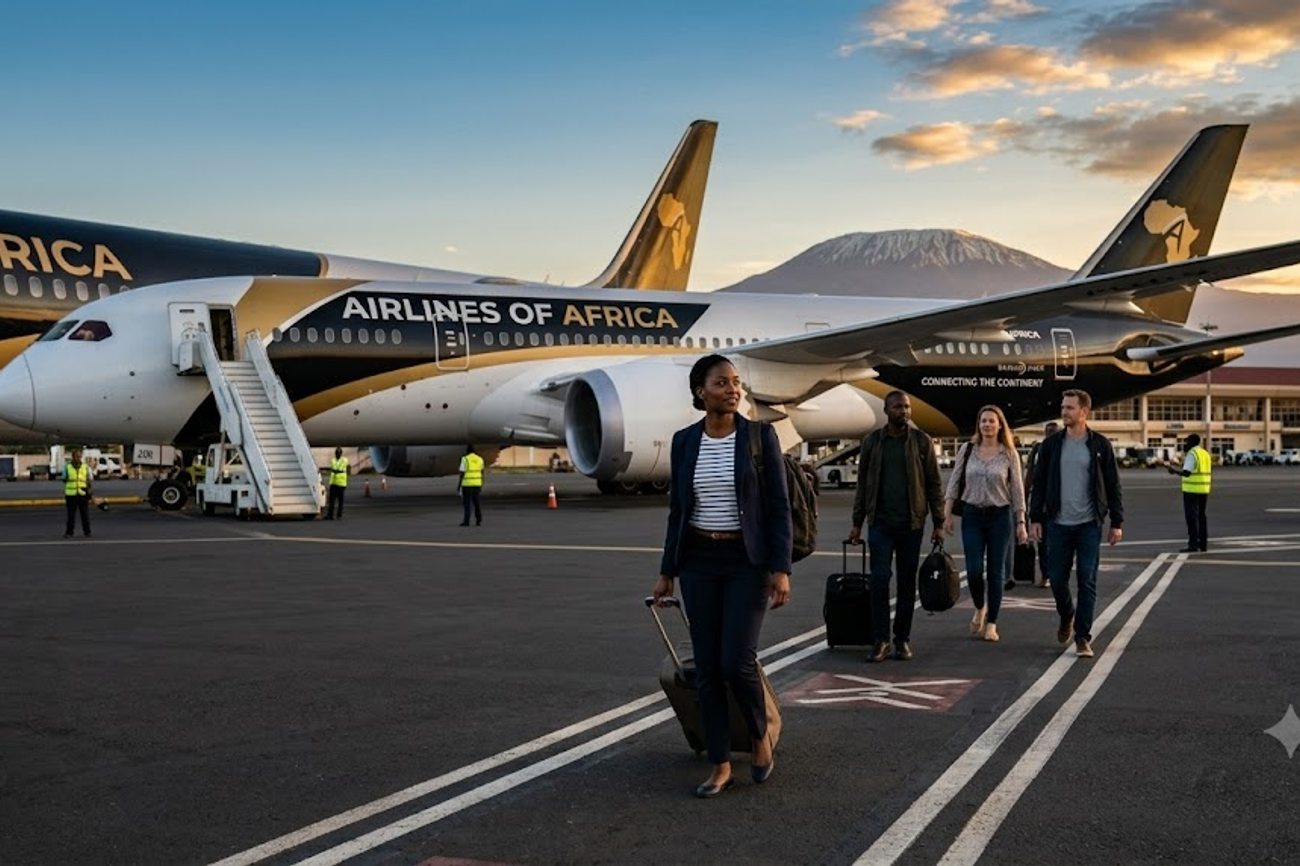
Image generated by AI
It is a staggering reality that 85% of Africa’s trade flows outside the continent, a statistic that mirrors the fragmented nature of its skies. For decades, travelers moving between African capitals have often found themselves flying thousands of miles out of their way—connecting in Dubai, Doha, or Paris—simply to reach a neighboring country. This structural inefficiency is not a coincidence but the result of a complex web of national interests and outdated bilateral agreements that have long dictated who flies where, and how often.
The Struggle for a Single African Sky
Right now, the continent is locked in a high-stakes transition toward a unified air market. While the vision for a liberalized aviation sector was first sketched out by ministers in 1988 and formally adopted by heads of state in July 2000, the reality on the tarmac remains uneven. The goal is simple: remove the restrictions on traffic rights, capacity, and frequency between city pairs to allow for direct, efficient travel.
The Single African Air Transport Market (SAATM), launched in 2018, was designed to be the catalyst for this change. However, as of late 2026, the implementation is a patchwork. Some nations have embraced the open-skies approach, while others maintain rigid protections over their national carriers. This friction creates a paradoxical environment where international passenger demand is surging—rising 9.4% in 2025—but the capacity to move people directly between African cities only grew by 8.3% in that same period.
The gap is not just political; it is physical. To bridge these divides, an official gap analysis reveals a staggering financial requirement: US$25–30 billion is needed over the next ten years to modernize aviation infrastructure. Of this, US$10 billion is earmarked specifically for airports and aerodromes, while US$8 billion is required for the critical "invisible" infrastructure—communications, navigation, and meteorological systems. Without these upgrades, the dream of a seamless continental network remains a policy objective rather than a traveler's reality.
What Makes Intra-African Travel Different
Traveling within Africa is an exercise in patience and meticulous planning, fundamentally different from the seamless Schengen-style movement found in Europe. The primary differentiator is the "hub-and-spoke" dependency on non-African cities. Because many direct routes are restricted or nonexistent, a journey that should take three hours can easily become a twenty-hour odyssey involving two different airlines and a transit through a different continent.
Despite these hurdles, the data points to a massive untapped opportunity. In 2024, the continent handled 160 million passengers, a number projected to skyrocket toward 500 million by 2050. The current load factor—the percentage of available seats actually filled—stands at 75.3%. This indicates that while the planes are filling up, the network itself is not yet optimized for the passenger's convenience.
The experience is also shaped by a unique intersection of trade and travel. Currently, manufactured goods make up over 60% of intra-African trade, yet the transport systems to move the people managing that trade are lagging. This creates a high-demand, low-supply environment for business travel, often driving up fares on the few direct routes that do exist.
Visitor Insider Tips
Navigating the current state of African aviation requires a strategy that goes beyond a simple booking site. Because the network is fragmented, you cannot rely on "standard" connection times.
The Transit Trap: Never assume a transit through a third country is "automatic." Even if you remain airside, some jurisdictions have strict transit visa requirements. Always verify the rules for every connecting point via the International Air Transport Association (IATA) or the specific embassy of the transit country.
The Hub Strategy: If a direct flight between two African capitals is unavailable or prohibitively expensive, look for regional hubs. While the "big" hubs are outside Africa, certain cities like Addis Ababa or Nairobi act as primary gateways. Base yourself in these cities for a few days to break up long journeys and explore the local culture.
Booking Buffer Zones: Due to the reliance on aging navigation systems in some regions, delays are more common than in the West. When booking multi-city itineraries, allow a minimum of 24 hours between flights if you are changing airlines. This protects you from the domino effect of a single delay ruining a three-country trip.
Visa Vigilance: There is currently no continent-wide visa or passport. Each border remains a sovereign gate. Use the African Union resources to track the progress of the African Continental Free Trade Area, but for actual entry, check the official immigration portal of each specific destination.
Cultural and Environmental Context
The push for air connectivity is not merely about convenience; it is a matter of economic survival and cultural integration. For too long, the "colonial corridors" have dictated travel patterns, with flights designed to move people from the interior to the coast and then to Europe. Breaking these patterns is a psychological and political act of reclaiming continental autonomy.
The Single African Air Transport Market (SAATM) initiative aims to liberalize aviation by reducing protectionist barriers and increasing direct connectivity between member states. This strategic framework is overseen by the African Union, which seeks to lower ticket costs and stimulate intra-continental trade and tourism.
However, this growth brings significant environmental and social challenges. The drive to build new airports and expand fleets clashes with global pressures to reduce carbon emissions. Furthermore, the massive investment needed—US$20 billion of which is expected from private and institutional sources—raises questions about debt sustainability and who truly benefits from these infrastructure projects.
There is also a tension between the "elite" nature of air travel and the needs of the general population. While the 2050 projection of 500 million passengers is ambitious, the challenge for policymakers is to ensure that aviation supports broad economic integration rather than just serving a small class of business travelers and wealthy tourists. The goal is to transform the sky from a barrier into a bridge that connects the diverse cultures of the 54 African nations.
FAQ: Visiting Africa 2026
What is the best time to visit? This depends entirely on the region. For East Africa, June to October is ideal for wildlife. For West Africa, the dry season from November to February is best. Always check local weather patterns as they heavily influence flight reliability.
Do I need a visa for every country? Yes. While some countries offer visas on arrival or e-visas, there is no single "Africa Visa." You must check the specific requirements for every single country on your itinerary, including transit stops.
How do I handle long connections? Book a hotel near the airport or use an official airport lounge. Given the fragmented network, long layovers are common. Ensure your luggage is checked through to the final destination to avoid clearing customs in a transit city.
Is it safe for solo travelers? Generally, yes, provided you do your research. Use registered transport from airports to hotels and stay updated on government travel advisories. The growth in connectivity is making remote areas more accessible and safer.
The map of Africa is being redrawn, not with borders on the ground, but with flight paths in the clouds.
Tags: African Aviation 2026, SAATM, Intra-African Travel, African Union Infrastructure, African Air Connectivity
Related Travel Guides
Disclaimer
This article is for informational and educational purposes only. It does not constitute legal, financial, or professional advice. While we strive to provide accurate and up-to-date information, travel policies, regulations, and conditions change rapidly. Always verify information with official sources before making travel decisions. Nomad Lawyer makes no representations about the accuracy, reliability, completeness, or suitability of the information provided. Readers should consult qualified professionals for advice specific to their circumstances. The views expressed in this article are those of the author and do not necessarily reflect the views of Nomad Lawyer.
Preeti Gunjan
Contributor & Community Manager
A passionate traveller and community builder. Preeti helps grow the Nomad Lawyer community, fostering engagement and bringing the reader experience to life.
Learn more about our team →