
Africa Reshapes Tourism Corridors as Kigali and More Cities Unlock Secondary Heritage Hubs
In Africa, a definitive structural change is taking place in relation to the formulation of national tourism strategies in th

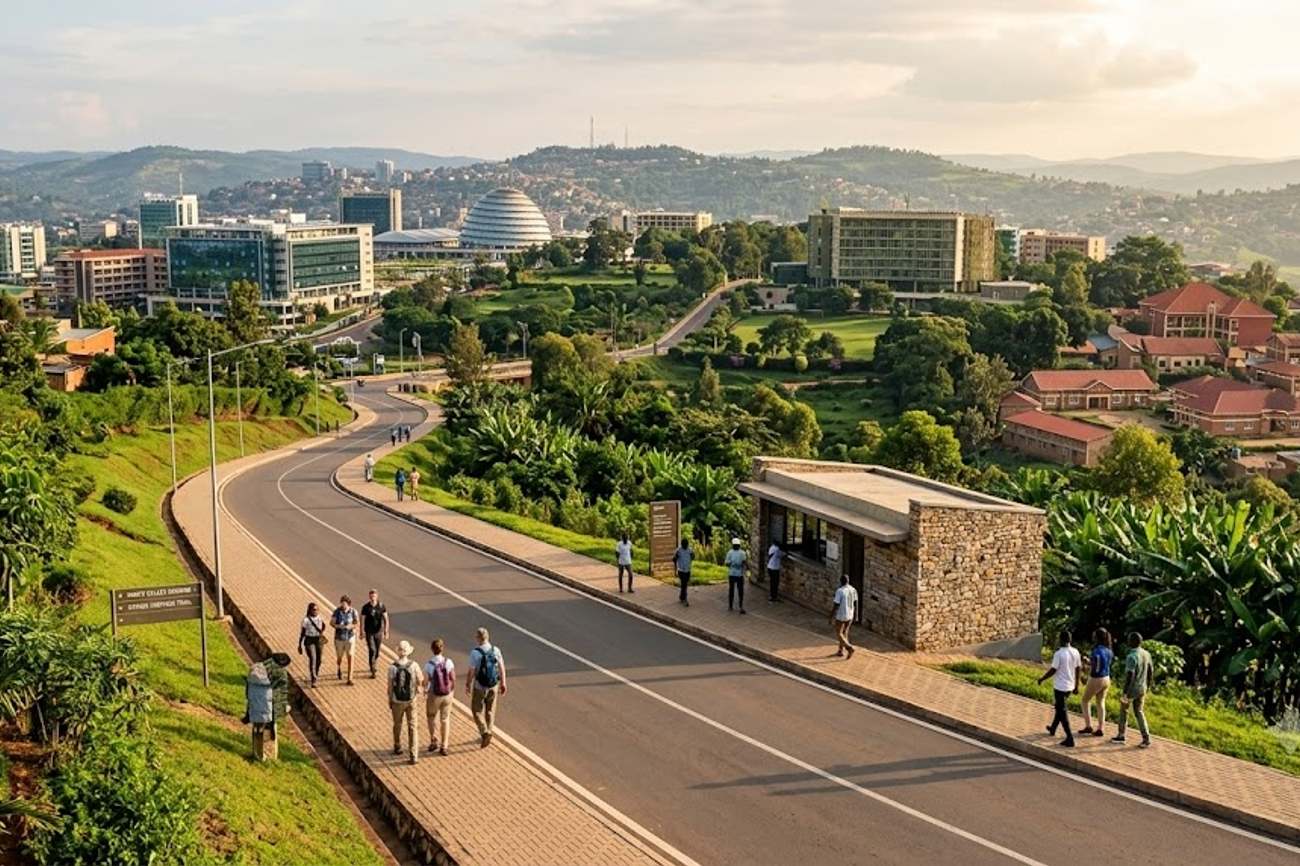
Image generated by AI
In Africa, a definitive structural change is taking place in relation to the formulation of national tourism strategies in that governments have decided to look beyond overcrowded capitals and concentrate efforts on the heartland provinces. In the past, foreigners who came to the country were mostly confined to the entry points such as Kigali, Dar es Salaam, Accra, Dakar, and Lagos, while remote areas were economically marginalized. Now, through visionary government initiatives and intermodal transportation routes, the government has taken steps to convert tourism destinations into centers of culture and slow tourism. Through this approach, the economy of the local communities will be positively impacted.
The Rise of Secondary Tourism Hubs Across Africa
For decades, international leisure travel across the African continent has been characterised by severe geographical concentration. Primary entry hubs—typically national political capitals or dominant commercial metropolises—have functioned as logistical funnels, capturing the vast majority of international visitor spending while provincial territories remained underdeveloped. Metropolises such as Kigali in Rwanda, Dar es Salaam in Tanzania, Accra in Ghana, Dakar in Senegal, and Lagos in Nigeria historically processed arriving passenger volumes, yet rapid departures toward isolated, self-contained safari lodges or coastal resorts frequently bypassed the intermediate towns and cultural landscapes that form the bedrock of indigenous heritage.
This spatial disparity produced acute structural inefficiencies. Primary gateway cities experienced infrastructure bottlenecks, urban congestion, and escalating living costs, while provincial heritage landmarks struggled with underinvestment, depopulation, and heritage decay. In response, national ministries of tourism, transport authorities, and international development institutions have orchestrated a fundamental pivot in continental destination management. Rather than treating national territories as single-node destinations, public policy frameworks increasingly treat gateway capitals as launching points designed to feed curated flows of high-spending, culturally conscious travellers into regional secondary hubs.
The theoretical underpinning of this transition is rooted in the principles of slow travel and territorial decentralisation. Slow travel prioritises extended length of stay, low-carbon regional overland transit, and authentic engagement with local history, gastronomy, and traditional knowledge systems. By converting secondary settlements into dedicated secondary tourism hubs, national authorities are achieving two distinct developmental objectives: relieving urban pressure on overstretched metropolitan utilities and establishing direct, non-extractive economic engines in rural and peri-urban regions.
The city of Kigali is emerging as a key player in Africa's tourism industry, with the Rwanda Development Board investing heavily in infrastructure development to support the growth of secondary heritage hubs. This move is expected to unlock new opportunities for tourists to experience the country's rich cultural heritage. As a result, Rwanda is poised to become a major destination for travelers seeking unique and authentic experiences.
Through targeted national transformation plans, governments have begun packaging regional infrastructure upgrades—such as standard gauge rail spurs, inland waterway ferries, trunk road rehabilitations, and regional aerodrome modernisation programmes—directly with cultural preservation initiatives. As intermodal transport corridors expand, secondary cities are shifting from basic transit stops into self-sustaining nodes of heritage interpretation and ecological conservation.
Rwanda: Linking Kigali to Musanze Ecotourism and Huye Heritage
Rwanda’s national tourism strategy demonstrates the power of centralized coordination and performance-driven execution. Guided by Vision 2050 and the Second National Strategy for Transformation (NST2), the Government of Rwanda and the Rwanda Development Board (RDB) have developed an infrastructure network that distributes international visitors landing at Kigali International Airport across designated regional economic corridors. In 2024, Rwanda’s tourism sector generated USD 647 million in revenue, supported by 1.36 million international arrivals and a 27% increase in gorilla tourism receipts. This upward trajectory continued into 2025, when national tourism receipts climbed to USD 685 million on 1.49 million international visitor arrivals, keeping the country on track toward its statutory target of USD 1.1 billion in annual tourism earnings by 2029.
Passenger logistics are also being revamped in other African cities, with airports such as the Johannesburg OR Tambo International Airport undergoing significant upgrades to improve the travel experience. These upgrades include the introduction of new baggage handling systems and the expansion of terminal facilities. By enhancing passenger logistics, African cities are aiming to increase their competitiveness in the global tourism market.
Musanze: High-Value Primate Conservation and Community Dividends
Musanze, positioned in Rwanda’s Northern Province at the foothills of the Virunga volcanic mountain range, represents the primary operational base for Volcanoes National Park. Long regarded as a brief staging post for high-tariff mountain gorilla tracking excursions, Musanze is undergoing an urban and ecological transformation designed to extend visitor dwell times and anchor the regional economy. Central to this master plan is the development of the 15-hectare Volcanoes National Park Experiential Centre, an integrated complex encompassing the permanent Kwita Izina Amphitheatre, specialized conservation research laboratories, veterinary clinical facilities, and interactive cultural museums.
The economic sustainability of the Musanze hub relies on the Rwanda Tourism Revenue Sharing Programme. Under this statutory framework, 10% of all gross revenues collected from national park admissions are channelled directly into bordering rural communities. In 2024 alone, this mechanism distributed over RWF 3.27 billion to finance 105 community-selected socio-economic interventions, spanning agricultural cooperatives, school construction, road paving, and healthcare facilities. Groundbreaking projects such as the Smart Green Village around Volcanoes National Park demonstrate how tourism proceeds replace illegal bushmeat hunting and agricultural encroachment with community-led biodiversity stewardship. Supported by the smooth dual-carriageway RN4 expressway linking Kigali to Musanze in under two hours, the regional hub has successfully converted world-class primate conservation into regional wealth creation.
According to the African Tourism Board, the continent's tourism industry is expected to experience significant growth in the coming years, driven by the development of secondary heritage hubs and improved passenger logistics. Tourism insights suggest that travelers are increasingly seeking out unique and immersive experiences, and African cities are well-placed to meet this demand. By investing in tourism infrastructure and promoting their cultural heritage, African cities can unlock new revenue streams and create jobs for local communities.
Huye: The Intellectual Cradle and Southern Cultural Circuit
South of Kigali along the paved RN1 transport corridor lies Huye, formerly Butare, the historic intellectual and royal center of southern Rwanda. In contrast to the primate-focused ecotourism of the north, Huye anchors the southern cultural route. The municipality houses the Ethnographic Museum of Rwanda, a cultural repository gifted by the Belgian government that contains comprehensive ethnographic, archaeological, and traditional agricultural collections.
Under the RDB’s integrated circuit management framework, Huye is positioned as a mandatory slow-travel stopover along the broader Southern Tourism Circuit that connects the royal palaces of Nyanza to the montane rainforests of Nyungwe National Park—a designated UNESCO World Heritage site. By integrating cultural interpretation in Huye with canopy walkways and chimpanzee tracking in Nyungwe, the RDB encourages travelers to spend several days traversing the southern provinces. This overland flow supports boutique hotels, artisanal cooperatives, and municipal craft markets, proving that secondary educational hubs can capture high-value tourism expenditure outside traditional wildlife enclaves.
Tanzania: Dar es Salaam as a Springboard for Iringa and Lindi
Tanzania represents one of the world’s most biodiversity-rich destinations, with its tourism sector reaching a record USD 3,948.2 million in international receipts in 2025 based on 2.29 million arrivals. This performance accounts for 17.2% of national gross domestic product and 25% of foreign exchange earnings. Historically, tourism spending remained heavily concentrated in the Northern Safari Circuit—comprising Serengeti National Park, Ngorongoro Crater, and Mount Kilimanjaro—and the Zanzibar archipelago. To alleviate ecological pressures on northern ecosystems and spread economic growth, the Ministry of
FAQ: Africa Reshapes Tourism Corridors as Kig 2026
What are secondary heritage hubs? Unique cultural and historical sites beyond main attractions.
How do I get to Kigali? Fly into Kigali International Airport, served by major airlines.
What safety precautions should I take? Research local conditions, stay informed, and follow local guidance.
Can I travel solo in Africa? Yes, with proper planning, research, and precautions, solo travel is possible.
Related Travel Guides
Disclaimer
This article is for informational and educational purposes only. It does not constitute legal, financial, or professional advice. While we strive to provide accurate and up-to-date information, travel policies, regulations, and conditions change rapidly. Always verify information with official sources before making travel decisions. Nomad Lawyer makes no representations about the accuracy, reliability, completeness, or suitability of the information provided. Readers should consult qualified professionals for advice specific to their circumstances. The views expressed in this article are those of the author and do not necessarily reflect the views of Nomad Lawyer.
Naina Thakur
Contributor & Travel Specialist
Travel enthusiast and legal writer covering visa regulations, responsible tourism, and cultural journeys across global destinations.
Learn more about our team →