Aer Lingus Flight EI402 Diverts to French Air Base as Coordinated Bomb Threats Target 15 European Flights

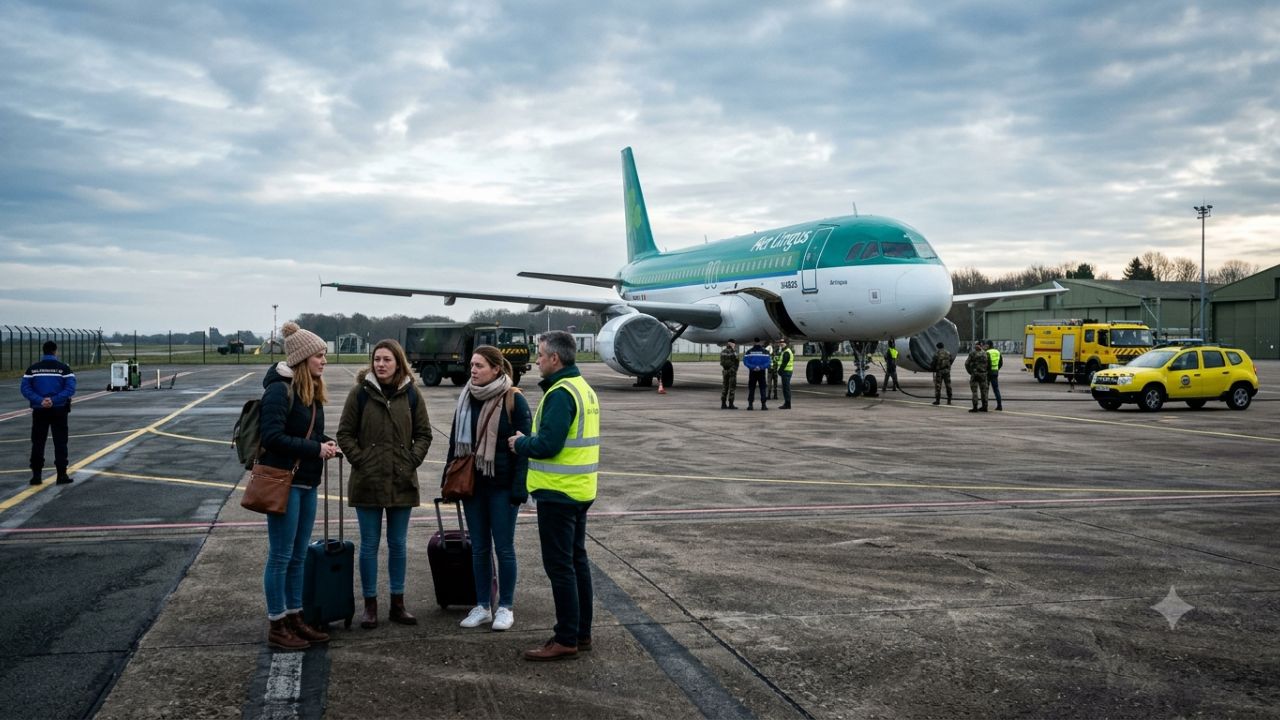
ÉVREUX / DUBLIN — Commercial aviation across Western and Southern Europe was placed on elevated security alert on the morning of Thursday, 5 November 2026, after Aer Lingus Flight EI402 from Dublin to Rome declared an airborne emergency over northern France and was diverted under French military fighter escort to Évreux-Fauville Air Base 105 following an anonymous bomb alert.
The high-altitude interception of the Irish flag carrier’s Airbus A320 was the centerpiece of a coordinated wave of digital disruption that impacted at least 15 commercial passenger aircraft across more than ten European nations within a single morning. Operating across multiple sovereign airspaces, flights belonging to Ryanair, Wizz Air, LOT Polish Airlines, Finnair, and Aegean Airlines were subjected to emergency diversions, armed military escorts, or ground security quarantines following a coordinated barrage of anonymous electronic threats.
While multi-agency explosive sweeps confirmed that no explosive devices were aboard EI402 or any of the other targeted airliners, the coordinated assault has exposed the vulnerability of European civil aviation to digital disruption. With over 3,500 travelers directly affected, military quick reaction alert (QRA) squadrons scrambled from multiple NATO air bases, and civilian airline schedules severely disrupted, European counter-terrorism agencies have launched a transnational investigation to determine whether the incidents represent coordinated cyber-hoaxes or an orchestrated probe of Western airspace defenses.
       AER LINGUS FLIGHT EI402 OPERATIONAL PROFILE: 5 NOVEMBER 2026

  Aircraft Type:          Airbus A320-200 (Irish Civil Registry)
  Scheduled Route:        Dublin Airport (DUB) to Rome Fiumicino (FCO)
  Passenger Complement:   151 Passengers | 6 Flight & Cabin Crew (157 Total)
  Departure Time:         06:40 Local Time (Dublin)
  Squawk 7700 Declared:   08:45 UK / 09:45 CET (Cruising over Northern France)
  Diverted Landing:       09:04 UK / 10:04 CET (Évreux-Fauville Air Base 105)
  Escort Deployment:      French Air & Space Force Rafale Interceptors
  Incident Outcome:       Cabin & Cargo Swept by Pyrotechnic Units; No Device Found
The In-Flight Crisis: Interception and Descent into Normandy
Aer Lingus Flight EI402 departed Dublin Airport at 06:40 local time on Thursday morning on a scheduled continental service to Rome’s Leonardo da Vinci–Fiumicino Airport. Cruising at 35,000 feet over the Normandy region of northern France, flight operations proceeded routinely until 08:45 UK time, when the flight crew received notification through airline operational channels of a specific, non-verified bomb threat directed against the aircraft.
Exercising established international civil aviation security protocols, the flight captain immediately broadcasted the emergency transponder code "Squawk 7700," signaling to civil air traffic control and military air defense networks that the aircraft was confronting an urgent, in-flight emergency.
Radar telemetry recorded by European flight tracking networks showed the Airbus A320 executing an immediate descending loop over the Eure department, turning westward away from populated Paris air corridors toward the secured perimeter of Évreux-Fauville Air Base 105 (Base Aérienne 105 "Commandant Viot").
                  FLIGHT EI402 EMERGENCY DESCENT ARCHITECTURE

  [ Cruising at 35,000 ft over Normandy ]
                    |
      [ Anonymous Security Threat Alert ]
                    |
     [ Broadcast Squawk 7700 Transponder ]
                    |
  [ French Air Force Rafale Scramble / QRA Escort ]
                    |
       [ Sharp Tactical Turn Over Eure ]
                    |
  [ Emergency Landing at Évreux Air Base 105 (09:04 UK) ]
                    |
  [ Isolated Stand Quarantine & Explosive Detection Sweeps ]
As the airliner initiated its emergency descent, the French Air and Space Force (Armée de l'Air et de l'Espace) scrambled Dassault Rafale multi-role fighter jets from regional Quick Reaction Alert squadrons. The interceptors matched airspeed alongside the passenger jet, escorting it directly toward the military runway to ensure absolute visual surveillance and clear surrounding airspace of conflicting commercial traffic.
Touchdown occurred safely at 09:04 UK time. Sovereign control of the operation was assumed by the French Prime Minister’s Office (Hôtel de Matignon) in coordination with the Ministry of the Armed Forces and the Ministry of the Interior.
The Airbus A320 was guided to an isolated taxiway stand located at the furthest perimeter of the airfield, away from active military hangars and munitions storage facilities. A heavy security deployment—comprising armed French gendarmerie, specialized military counter-terrorism units, and trained pyrotechnic sniffer-dog teams—surrounded the aircraft.
The 151 passengers and six crew members were evacuated directly onto the military tarmac and transferred to temporary secure holding facilities within the base. Luggage containers were offloaded and subjected to individual X-ray analysis, vapor detection sweeps, and physical searches.
Aer Lingus confirmed that all passengers and crew members were safe and uninjured, with the airline mobilizing ground teams and replacement aircraft logistics to transport the travelers onward to Rome once military security clearance was formally granted.
| Flight Event Parameter | Recorded Incident Detail |
|---|---|
| Origin & Scheduled Destination | Dublin Airport (DUB) to Rome Fiumicino (FCO) |
| Operating Carrier & Aircraft | Aer Lingus (Airbus A320-200) |
| Airborne Emergency Declaration | Squawk 7700 broadcast at 08:45 UK time |
| Diversion Airfield | Base Aérienne 105 (Évreux-Fauville, Normandy, France) |
| Military Assets Deployed | French Air Force Rafale fighters; Military Bomb Disposal Units |
| Passengers & Crew Onboard | 151 Passengers, 6 Crew members (All evacuated safely) |
| Security Sweep Result | Negative for explosives; aircraft and cargo fully cleared |
Inside Évreux-Fauville: Why Military Airfields Are Selected
The diversion of a commercial civilian airliner to an active military base is an exceptional operational measure reserved for severe threats. Understanding why French air traffic authorities selected Évreux-Fauville Air Base 105 illustrates the tactical priorities governing airborne security.
Located approximately 100 kilometers west of Paris, Évreux-Fauville is an operational transport and tactical logistics hub for the French military, hosting transport squadrons operating Lockheed Martin C-130J Super Hercules and CASA CN-235 aircraft.
Unlike major commercial hubs like Paris Charles de Gaulle (CDG) or Paris Orly (ORY), which handle dozens of aircraft movements every minute, Évreux possesses:
- Isolated Blast Buffers: Expansive open runway space surrounded by agricultural buffer zones, allowing an airliner suspected of carrying an explosive device to be isolated thousands of meters away from passenger terminals or commercial fuel depots.
- On-Site Explosive Disposal Infrastructure: Immediate access to specialized military ordnance disposal units equipped with mobile bomb containment vessels, robotic inspection crawlers, and high-energy radiological scanners.
- Preservation of Civil Air Networks: Diverting a high-threat flight to CDG or Orly would require shutting down surrounding airspace, halting departures, putting dozens of incoming airliners into holding patterns, and inflicting tens of millions of euros in cascading flight delays across Europe.
- Armed Base Perimeter: The installation maintains controlled, militarized security checkpoints that prevent unauthorized access, ensuring that passengers and crew remain protected while intelligence officers verify passenger manifests.
       MILITARY BASE VS. CIVILIAN AIRPORT DIVERSION COMPARISON

  Operational Dimension   Military Airfield (e.g., Évreux)   Civilian Hub (e.g., Paris CDG)
  -----------------------------------------------------------------------------
  Airspace Interruption   Zero civil disruption              Massive delays & holding stacks
  Blast Isolation Stand   Extensive, isolated tarmac         Limited distance from terminals
  Bomb Disposal Response  Immediate on-base military units   Requires civilian police transit
  Passenger Processing    Manual military screening          Automated border control gates
  Terminal Amenities      Basic military shelters            Lounges, restaurants, hotels
  Aircraft Repositioning  Complex logistics & clearance      Immediate turn-around capability
The Pan-European Wave: Fifteen Commercial Flights Targeted
The emergency landing at Évreux was not an isolated occurrence. Throughout the morning of 5 November, air navigation service providers and national police forces across Europe were inundated by a coordinated wave of anonymous security warnings targeting passenger flights.
At least 15 commercial passenger aircraft encountered emergency interventions, diversions, or armed ground inspections:
        EUROPEAN FLIGHT SECURITY INTERCEPTIONS: 5 NOVEMBER 2026

  Airline & Flight Route         Intervention Executed      Operational Outcome
  -----------------------------------------------------------------------------
  Aer Lingus (Dublin - Rome)     Fighter escort to Évreux   Landed Évreux; swept clear
  Ryanair (London - Sofia)       Diverted to Plovdiv        Landed Plovdiv under guard
  Ryanair (Porto - Milan)        Scrambled intercept        Landed Milan Bergamo; inspected
  Ryanair (Dublin - Sofia)       Armed gate quarantine      Landed Sofia; search negative
  Ryanair (Madrid - Sofia)       Armed gate quarantine      Landed Sofia; search negative
  Wizz Air (Milan - Warsaw)      Diverted to Vienna         Landed Vienna; passengers swept
  Wizz Air (Flight W43064)       Emergency ground check     Landed Bucharest; cleared
  Finnair (Helsinki - Rome)      Italian Typhoon escort     Landed Fiumicino; searched
  Finnair (Helsinki - Vienna)    Runway isolation check     Landed Vienna; search negative
  LOT Polish (Warsaw - Brussels) Quarantined at stand       Landed Brussels; cargo swept
  Aegean (Thessaloniki - Milan)  Tarmac isolation check     Landed Malpensa; cleared
  Prague Inbound (4 Flights)     Police inspection gate     Landed Prague; cleared
In Bulgaria, authorities at Sofia Airport (SOF) received warnings regarding multiple incoming flights, including Ryanair and Wizz Air services originating from Madrid, Copenhagen, and Bergamo. While several flights landed safely in Sofia under armed military police escort, a Ryanair flight from London Stansted was forced to divert to Plovdiv Airport in southern Bulgaria.
In Italy, the Italian Air Force (Aeronautica Militare) scrambled Eurofighter Typhoon interceptors from quick reaction bases to intercept a Finnair flight inbound from Helsinki to Rome Fiumicino, escorting the passenger aircraft until it touched down safely on an isolated runway for specialized canine inspections.
Simultaneously, Austrian authorities diverted a Wizz Air flight operating from Milan to Warsaw into Vienna International Airport (VIE), where passengers were disembarked onto the tarmac for baggage searches, while Czech Republic national police subjected four incoming international flights to security checks at Prague’s Václav Havel Airport.
This coordinated barrage follows a similar wave of malicious hoax threats recorded earlier in the week, when at least seven commercial flights operated by SAS, LOT, and Wizz Air were disrupted. In aggregate, more than 3,500 airline passengers across ten European nations experienced substantial travel disruption within a 48-hour window.
Technical Protocols: Squawk 7700 and Quick Reaction Intercepts
The technical execution of the airborne response to Flight EI402 reflects decades of refinement in global aviation emergency doctrine. When an aircraft's transponder is set to the four-digit code 7700, an automated sequence of civil and military responses is triggered instantly.
An aircraft’s transponder communicates continuously with secondary surveillance radar (SSR) stations on the ground. Broadcasting 7700 overrides standard altitude and routing tags on air traffic control displays, causing the flight’s radar track to flash in bright red across civil sector consoles and military command centers alike.
AIRBORNE EMERGENCY PROTOCOL ENGINE: SQUAWK 7700
| Column 1 |
|---|
| PHASE 1: COCKPIT SQUAWK BROADCAST |
| - Transponder set to 7700; Mode S / ADS-B sends automated distress telemetry |
| - Real-time notification routed to Eurocontrol NMOC in Brussels |
| PHASE 2: AIR TRAFFIC CONTROL CLEARANCE & SEPARATION |
| - Civil ATC clears altitude bands; all conflicting airliners rerouted |
| - Direct vectoring toward designated emergency diversion coordinates |
| PHASE 3: MILITARY AIR DEFENSE INTEGRATION & ESCORT |
| - Combined Air Operations Centre (CAOC) scrambles Quick Reaction Alert jets |
| - Fighter interceptors establish visual contact & secure flight corridor |
| - Host nation command (Prime Minister / Defense) authorizes base landing |
Behind the cockpit door, pilots must rapidly evaluate threat credibility according to a standardized threat matrix developed by the International Civil Aviation Organization (ICAO). Threats are categorized as:
- Non-Specific / Low Credibility: Generalized statements lacking specific flight numbers, timings, or technical bomb compositions. These flights typically proceed to their destination under heightened monitoring.
- Specific / High Credibility: Warnings that name the precise flight number, aircraft registration, departure time, or claim a device is hidden in a specific cabin location.
When a threat is categorized as specific—or when multiple threats strike an airline network simultaneously—command doctrine mandates immediate diversion to the nearest certified diversion airfield.
Air traffic controllers immediately clear all conflicting aircraft from the descent corridor, vectoring the affected plane on a direct heading while military interceptors assume station off the airliner’s wingtips. Fighter pilots verify that the cockpit crew retains control, monitor the aircraft for unusual maneuvers, and remain prepared to intervene if the aircraft poses a hazard to metropolitan populations.
Legal Realities and Passenger Rights: The Extraordinary Circumstances Barrier
For the 151 passengers aboard Aer Lingus Flight EI402 and the thousands of other travelers caught in Thursday’s disruption, the diversion creates complicated legal and bureaucratic questions regarding compensation and passenger rights.
       PASSENGER ENTITLEMENTS UNDER EC 261/2004 & UK 261

  Statutory Category         Legal Entitlement Status    Operational Condition
  -----------------------------------------------------------------------------
  Fixed Cash Compensation    EXEMPT (Zero Liability)     Classified as Extraordinary
  (€250 to €600 per person)                              Security Event / Force Majeure

  Duty of Care Support       MANDATORY (Airline Pays)    Free meals, refreshments &
  (Article 9 Compliance)                                 hotel stays during delay

  Rerouting or Full Refund   MANDATORY (Airline Pays)    Alternative flight to final
  (Article 8 Compliance)                                 destination at earliest date

  Tarmac Waiting Support     MANDATORY                   Water, medical assistance &
                                                         safe temperature controls
Under European Union Regulation (EC) No 261/2004 and parallel post-Brexit UK 261 statutory rules, passengers facing flight cancellations or delays exceeding three hours are generally entitled to statutory cash compensation ranging from €250 to €600.
However, Article 5, Paragraph 3 of EC 261 provides an explicit exemption when disruptions are caused by "extraordinary circumstances which could not have been avoided even if all reasonable measures had been taken."
European legal precedents and court rulings establish that bomb threats, military airspace closures, and governmental security diversions fall squarely within the definition of extraordinary circumstances. Consequently, Aer Lingus, Ryanair, and Wizz Air are legally exempt from paying cash compensation to travelers affected by Thursday's threats.
The Mandatory Duty of Care
Equally important, the extraordinary circumstances defense does not relieve airlines of their statutory Duty of Care under Article 9 of the regulation. Regardless of the underlying cause of a diversion, airlines are legally obligated to provide passengers with:
- Reasonable quantities of food and drinking water commensurate with the waiting time.
- Secure hotel accommodation if an overnight stay becomes necessary.
- Transportation between the airfield and the place of accommodation.
- Two complimentary telephone calls, telex, fax messages, or emails.
- Rerouting to their final ticketed destination at the earliest possible opportunity, or a complete refund of the ticket price if the traveler elects to abandon the journey.
Sovereign Border Complexities at Military Installations
When an international commercial airliner diverts to an operational military air base like Évreux, standard immigration procedures cannot function. Military bases do not possess civilian international transit areas, customs halls, or automated border control e-gates.
To prevent violations of the Schengen Borders Code, the French Ministry of the Interior dispatched mobile units of the French Border Police (Police aux Frontières - PAF) directly onto the tarmac at Évreux. Officers established improvised passport inspection desks inside aircraft hangars, scanning travel documents manually.
For non-European Union citizens—such as British or American tourists holding strict 90-day Schengen tourist visas—landing at a military base does not constitute an unlawful entry. Under international maritime and aviation law, sudden diversions triggered by life-safety emergencies operate under the legal doctrine of force majeure.
Sovereign authorities issue temporary entry permits that allow passengers to transit to civilian hotels or commercial airports without penalizing their passport records or visa allocations.
       OPERATIONAL BOTTLENECK ANALYSIS: MILITARY VS. CIVIL DIVERSION

  Operational Dimension   Military Diversion (Évreux)      Civil Diversion (Paris CDG)
  -----------------------------------------------------------------------------
  Baggage Inspection      Manual military explosive scan   Automated baggage EDS belts
  Border Clearance        Improvised mobile police desks   High-speed automated e-gates
  Passenger Comfort       Basic base logistics shelters    Terminal lounges & hotels
  Rerouting Speed         Requires external bus dispatch   Immediate spare aircraft gate
The Cyber Threat Trail: Hybrid Warfare and Infrastructure Probing
As bomb disposal squads completed sweeps across Évreux, Vienna, Sofia, and Prague, counter-terrorism investigators pivoted to analyze the electronic origins of the warnings.
Early findings from the French General Directorate for Internal Security (Direction Générale de la Sécurité Intérieure - DGSI), working in coordination with the Irish Garda Síochána and Europol's European Cybercrime Centre (EC3), indicate that the threats were transmitted via encrypted web-based communication channels.
Perpetrators utilized disposable email accounts, automated online contact forms, and encrypted virtual private network (VPN) relays configured across multiple jurisdictions outside the European Union to obscure their digital signatures.
TRANSNATIONAL CYBER INVESTIGATION ARCHITECTURE
| Column 1 |
|---|
| DISSEMINATION METHODS: |
| - Disposable encrypted email services routed through non-extradition servers |
| - Automated submission to airline customer feedback & live-chat portals |
| - Anonymised emergency dispatch spoofing via offshore VoIP relays |
| INVESTIGATIVE WORKING GROUP: |
| - DGSI (French Domestic Intelligence) & Gendarmerie Cyber Command |
| - Garda Special Detective Unit & National Cyber Crime Bureau (Ireland) |
| - Europol EC3 & NATO Cooperative Cyber Defence Centre of Excellence |
| PRIMARY THREAT HYPOTHESES: |
| - State-Sponsored Hybrid Probing: Testing NATO QRA response times & costs |
| - Coordinated Swarm Hoaxing: Cyber activist network causing economic friction |
| - Financial Extortion Vector: Ransomware syndicates demanding crypto payouts |
Security analysts are evaluating two primary working hypotheses:
- State-Sponsored Hybrid Probing: Security specialists note that widespread, low-credibility threats targeting critical infrastructure align with hybrid warfare doctrines. By forcing dozens of commercial diversions and fighter jet scrambles, adversaries can test military reaction times, examine air defense coordination between NATO member states, and impose financial costs on Western transport economies.
- Coordinated Swarm Hoaxing: Cyber syndicates or decentralized digital activists utilize automated scripting tools to send hundreds of identical threat templates to commercial airlines simultaneously, exploiting mandatory safety regulations to trigger widespread travel chaos.
Investigating these virtual threats presents immense technical challenges. When perpetrators route traffic through encrypted servers hosted in non-cooperative foreign jurisdictions, tracking IP addresses requires multi-nation diplomatic subpoenas that take months to execute.
Consequently, intelligence agencies are calling for modernized international frameworks that allow real-time metadata sharing between commercial telecommunications providers and aviation security authorities.
Economic Costs and Operational Fallout for the Travel Trade
While hoaxes inflict zero physical structural damage, their financial and operational repercussions on airlines and airport systems are immense. Industry analysts estimate that a single emergency diversion of an Airbus A320 to a military base costs an airline between £50,000 and £120,000.
These expenses encompass:
- Fuel Dumping and Excess Consumption: Diverting at high speed and low altitude burns tons of additional aviation fuel.
- Military Airfield Service Tariffs: Handling fees, ground equipment transport, and emergency services deployed by host governments.
- Crew Duty-Time Expirations: Pilots and flight attendants are subject to strict European Union Aviation Safety Agency (EASA) Flight Time Limitations (FTL). When a flight is delayed by several hours during a military investigation, the operating crew frequently "times out," rendering them legally unable to operate the onward flight.
- Passenger Care and Logistics: Hotel accommodations, meal vouchers, and chartering private motorcoaches to transport 150 passengers across hundreds of kilometers to commercial hub airports.
- Network Knock-On Delays: The diverted aircraft is absent from its scheduled afternoon rotations, creating cascading delays and cancellations across half a dozen subsequent flights.
       ESTIMATED FINANCIAL EXPOSURE PER MILITARY DIVERSION EVENT

  Direct Operational Cost Category         Estimated Expenditure (Per Flight)
  -----------------------------------------------------------------------------
  Aviation Fuel Burn & Reserve Rerouting   £8,000 – £15,000
  Military Base Handling & Support Tariffs £12,000 – £25,000
  Passenger Care (Hotels, Meals, Coaches)  £20,000 – £45,000
  Crew Out-of-Base Rest & Reassignment    £6,000 – £12,000
  Subsequent Route Cancellations (Loss)    £25,000 – £50,000
  -----------------------------------------------------------------------------
  Total Estimated Economic Fallout:        £71,000 – £147,000 per Incident
Essential Passenger Guidance: Navigating In-Flight Security Alerts
For international travelers navigating European skies during periods of heightened security alerts, knowing how to respond during an unexpected diversion can reduce anxiety and protect legal rights:
       PASSENGER EMERGENCY PLAYBOOK: AIRBORNE DIVERSIONS

  [ Pre-Flight Preparedness ]
  * Keep essential daily medications, passports & valuables in cabin bags
  * Download the operating airline's mobile application with push notifications
  * Carry a high-capacity portable power bank to maintain phone connectivity

  [ In-Cabin Emergency Phase ]
  * Obey all flight crew instructions immediately; do not attempt to stand
  * Secure loose items and prepare for a rapid, high-angle descent
  * Review safety briefing cards and locate the nearest emergency exit

  [ Military Tarmac Protocol ]
  * Remain seated after touchdown until armed security units give instructions
  * Expect strict prohibition of photography or video filming on military bases
  * Prepare for manual passport checks and extensive luggage inspection

  [ Post-Deplaning Recovery ]
  * Request written confirmation of the diversion cause from airline personnel
  * Retain all receipts for food, water, and transport incurred during the delay
  * Contact travel insurance providers to open an active disruption claim
The diversion of Aer Lingus Flight EI402 to Évreux-Fauville Air Base underscores that aviation safety remains an active, round-the-clock priority.
Even when confronted with anonymous, unverified digital threats, European civil aviation authorities, national military commands, and commercial airlines will always err on the side of absolute caution, prioritizing human life above commercial convenience.
As digital forensics specialists work across borders to unmask the perpetrators behind Thursday’s barrage, international passengers can take reassurance in the disciplined, multi-layered security net that brought 151 travelers safely to earth in Normandy.
Related Travel Guides
- South Asia Mountain Travel Alert: Nepal, Bhutan, India, and Sri Lanka Disclose Distinct Flood and Landslide Risks
- Canada Ranked World's Safest Country for 2027 as US Travelers Prioritize Provincial Parks and Worry-Free Trails
- France and ASEAN Forge Landmark Partnership in Jakarta to Advance Sustainable Tourism
- Austria and Slovenia Alert Motorists to Heavy Karawankentunnel A11 Congestion Amid Dual-Tube Construction
This article is for informational purposes. Flight routes, passenger regulations, visa rules, and transit advisories are subject to change by airlines and aviation authorities. Readers are advised to verify schedules and travel documentation with relevant carriers and border agencies before departure.
Related Stories
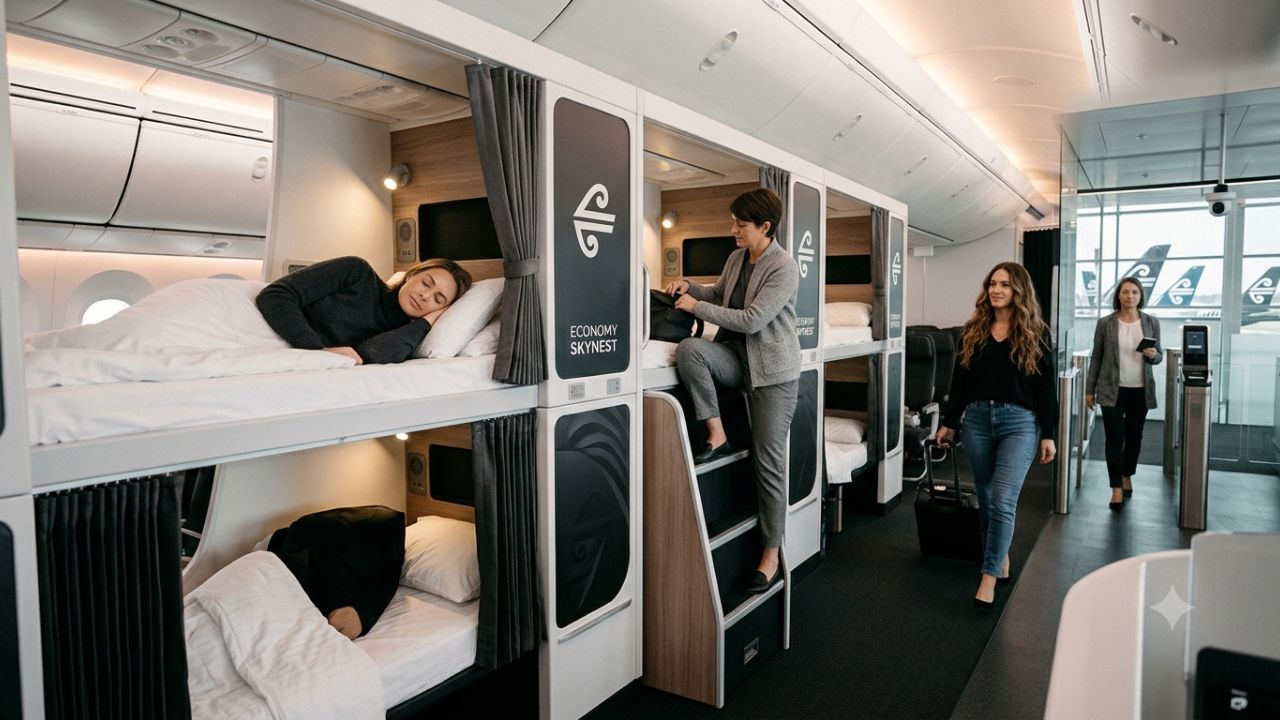
Auckland and Regional Aviation Hubs Advance New Zealand's Long-Haul Travel with Economy Skynest Sleep Cabins and Biometric Borders
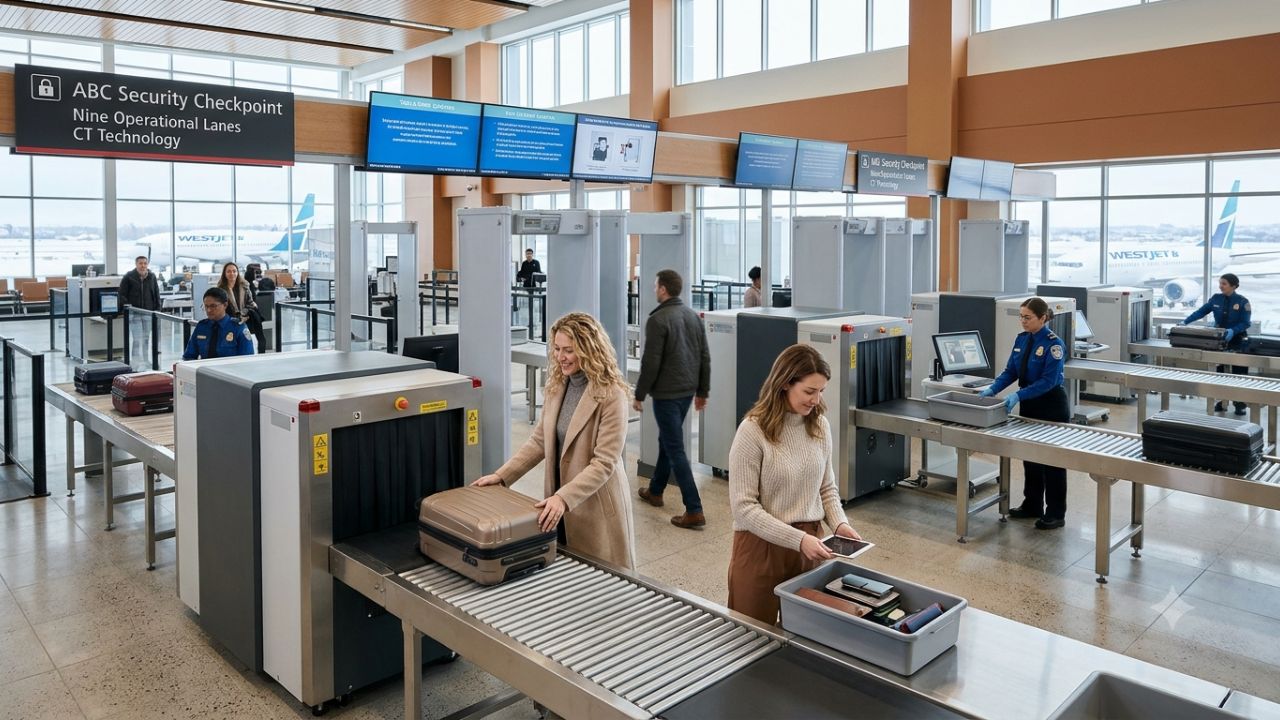
Calgary International Airport Transforms Domestic Travel with Nine Security Lanes and Advanced CATSA CT Technology