
Adora Magic City Launches Shanghai Weekend Cruises Without Port Calls, Redefining Maritime Tourism 2026
China's Adora Magic City debuts cruise-to-nowhere weekend voyages from Shanghai, eliminating international ports and positioning floating entertainment as the primary travel experience.

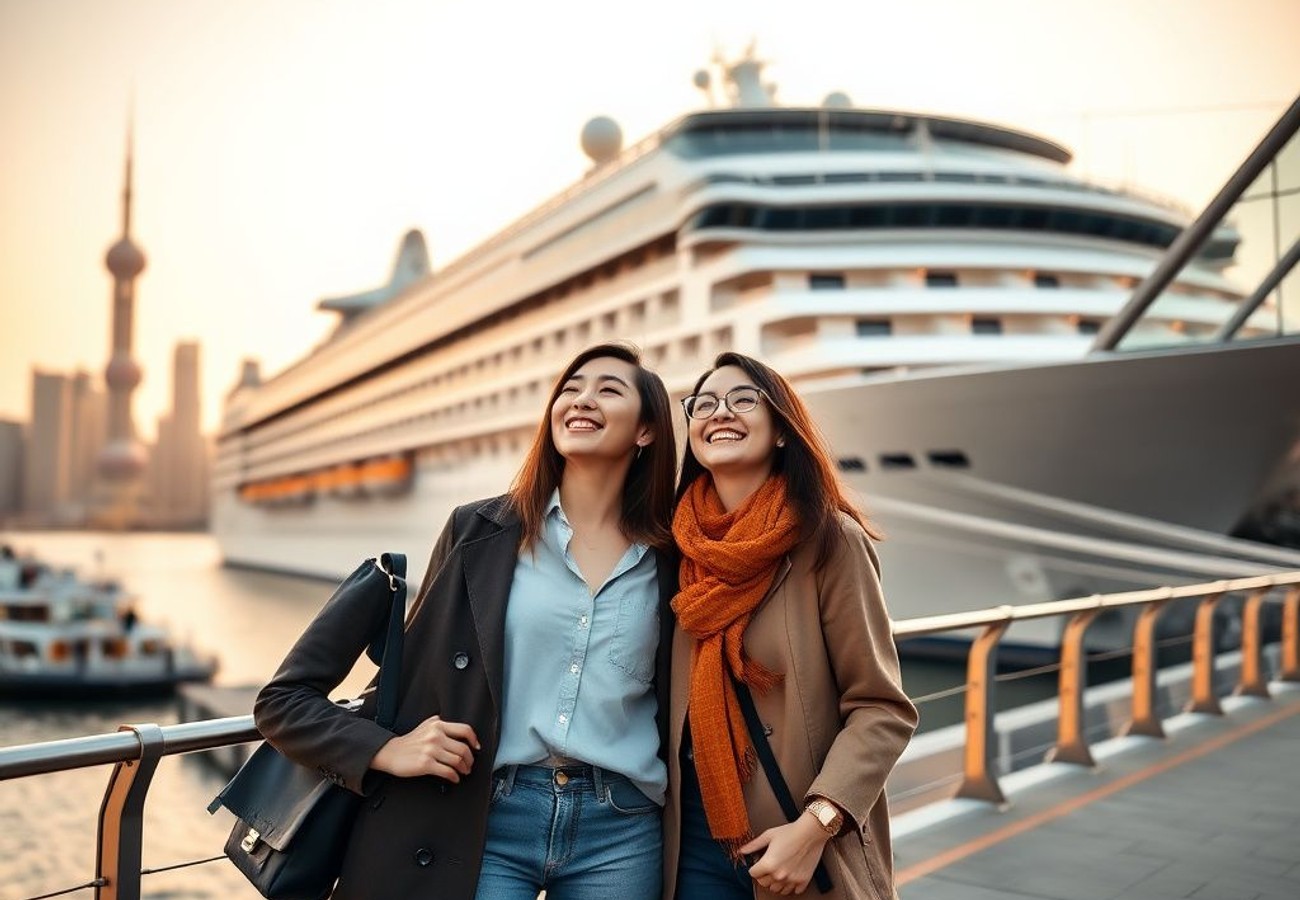
Image generated by AI
The New Frontier of Floating Leisure: Shanghai's Cruise Revolution
China has quietly reimagined what a cruise actually is. On June 22, 2026, the nine-deck Adora Magic City officially launched weekend voyage operations from Shanghai—but with a radical twist: the ship never visits a single international port.
Instead, the vessel sails into international waters, loops around, and returns directly to Shanghai. No border procedures. No destination-based itineraries. No traditional cruise stops. What emerges is something the maritime industry is calling the "cruise to nowhere" model—and it's already reshaping how travelers think about short-haul leisure at sea.
Reddit: "This is genius for people who just want to party at sea without the visa hassle." — r/cruise
The Closed-Loop Revolution: Simplifying Cruise Operations
The operational logic is deceptively elegant. By removing international port calls, Adora Magic City eliminates complex border procedures, immigration delays, and the logistical headaches that plague traditional cruise operations. The ship simply departs Shanghai early Friday evening and returns early Monday morning—a compressed weekend escape designed for working professionals.
This isn't a limitation. It's a feature.
The closed-loop system transforms the voyage itself into the primary product. Rather than treating the ship as transportation between destinations, this model positions the vessel as the destination. Every onboard experience—dining, entertainment, gaming, relaxation—becomes concentrated into a streamlined 72-hour cycle.
The result: reduced operational complexity, faster port turnover, and a fundamentally different cruise experience.
Experience-Driven Tourism Replaces Destination-Based Cruising
Traditional cruises have long operated on a destination model. You book passage to visit ports: Balvenie, Santorini, Cozumel, Nassau. The ship is merely the vehicle between experiences.
Adora Magic City inverts this entirely. The ship is the experience. Onboard entertainment, continuous dining, themed parties, and live performances form the entire value proposition. Passengers are encouraged to remain within the floating ecosystem for the entire voyage—not viewing ports, but immersing in curated leisure.
This shift reflects a broader evolution in modern travel preferences, where younger demographics increasingly prioritize flexible, compact experiences over extended international travel. A weekend escape from Shanghai now requires no passport logistics, no visa considerations—just arrival at port and immediate boarding.
The Entertainment Machine: 24/7 Floating Leisure
The nine-deck configuration has been reimagined as a continuous entertainment ecosystem. Stand-up comedy shows rotate throughout the voyage. Magic performances target family audiences across multiple deck levels. Themed parties create dynamic social atmospheres—deck-by-deck themed nights ensuring high engagement.
But the real innovation lies in the hospitality infrastructure: restaurants and dining venues operate around the clock. Passengers enjoy unrestricted access to food service at any hour—a crucial feature for weekend travelers accustomed to urban living schedules.
Gaming facilities, spa services, swimming pools, and lounges operate continuously. The vessel effectively functions as a floating resort rather than transportation—a distinction that fundamentally alters the cruise experience.
Occupancy Control Strategy: Premium Comfort at 80%
Adora Magic City maintains occupancy levels at approximately 80 percent of total capacity. This operational decision directly enhances passenger experience: reduced crowding in entertainment zones, more spacious dining facilities, and improved movement across public areas.
This capacity-control strategy is deliberate. By leaving 20 percent capacity unutilized, the operator prioritizes service quality and comfort over maximum revenue extraction. Passengers enjoy premium-tier experiences despite the compact weekend timeframe—a competitive positioning that distinguishes this format from crowded resort-style cruising.
Demographic Shift: Younger, More Diverse Cruise Audiences
The data reveals a significant market realignment. Average passenger age on Adora Magic City weekend voyages registers approximately 47 years—substantially younger than the conventional cruise demographic averaging around 55 years.
This seven-year age differential indicates strong participation from working-age professionals, young families, and first-time cruise travelers. The weekend format effectively serves as an entry-level cruise experience, broadening accessibility beyond traditional cruise audiences.
Younger passengers demonstrate different behavioral patterns: they prioritize flexibility over extended travel, value onboard entertainment over port exploration, and appreciate affordable pricing structures that enable spontaneous weekend escapes.
Pricing Accessibility: Democratizing Cruise Travel
Standard cabin pricing ranges between $136 and $150 depending on accommodation type and onboard facility access. This accessibility tier positions weekend cruises as attainable luxury for middle-income travelers, young professionals, and first-time cruise participants.
The pricing model directly supports the younger demographic shift. Weekend cruises function as entry-level experiences—lower financial commitment, compressed timeframe, zero visa complications. Subsequent sailing is scheduled for December 11, 2026, indicating sustained operational demand and market validation for this cruise category.
Target Audiences: Multiple Travel Behavior Segments
Four distinct traveler groups emerge as primary participants:
Gaming-Oriented Travelers leverage onboard casino facilities, sports betting, and gaming entertainment—services that Shanghai's regulatory environment permits within international waters.
Stress-Relief Seekers view the weekend voyage as temporary escape from urban pressure. The compressed timeframe enables quick psychological reset without requiring extended time away from work or family obligations.
Sea-Experience Enthusiasts simply enjoy maritime leisure without requiring international destinations. The voyage satisfies the desire for ocean travel without logistical complications of multi-port itineraries.
Social and Entertainment-Focused Groups prioritize the party atmosphere, themed events, and continuous entertainment programming—positioning the cruise as weekend social destination rather than traditional travel experience.
This segmentation reflects the fundamental shift from destination-driven tourism toward experience-driven leisure markets, where the journey itself becomes the primary attraction.
The Broader Maritime Industry Transformation
Adora Magic City's launch exemplifies a systemic shift within maritime tourism. The cruise industry faces evolving consumer demand: shorter travel windows, reduced international travel enthusiasm, preference for all-inclusive leisure experiences.
Traditional destination-based cruising requires passengers to embrace extended international travel—weeks away from home, multiple ports, visa complexities. The cruise-to-nowhere model requires only a weekend, zero visa procedures, and guarantees continuous entertainment.
By eliminating port calls, operators redirect operational focus toward onboard service excellence, entertainment quality, and passenger comfort. This restructuring creates entirely new cruise categories aligned with 21st-century short-break travel demand—particularly among urban professionals in Asia-Pacific markets.
The model suggests that maritime tourism will increasingly segment: extended destination cruises serving traditional demographics, and compact floating-resort experiences serving younger, time-constrained travelers seeking concentrated leisure experiences.
Market Implications and Future Expansion
The success of Adora Magic City's weekend format signals potential market expansion throughout Asia-Pacific. Coastal cities—Shanghai, Singapore, Hong Kong, Sydney—possess the infrastructure and demand demographics to support cruise-to-nowhere operations.
This model addresses multiple industry challenges simultaneously: overcrowding on traditional cruises, regulatory complexity of international ports, and evolving traveler preferences for flexible, compact experiences. The combination proves operationally efficient and commercially viable.
The December 2026 sailing confirms sustained demand. Future vessels may adopt similar configurations, fundamentally reshaping how the maritime industry conceptualizes cruise products. The ship is no longer simply transportation between destinations—it's a destination itself, designed for travelers seeking concentrated leisure experiences without international travel complications.
Shanghai just proved that the future of cruising doesn't require leaving home—it just requires leaving land.
Related Travel Guides
Disclaimer
This article is for informational and educational purposes only. It does not constitute legal, financial, or professional advice. While we strive to provide accurate and up-to-date information, travel policies, regulations, and conditions change rapidly. Always verify information with official sources before making travel decisions. Nomad Lawyer makes no representations about the accuracy, reliability, completeness, or suitability of the information provided. Readers should consult qualified professionals for advice specific to their circumstances. The views expressed in this article are those of the author and do not necessarily reflect the views of Nomad Lawyer.
Kunal K Choudhary
Co-Founder & Contributor
A passionate traveller and tech enthusiast. Kunal contributes to the vision and growth of Nomad Lawyer, bringing fresh perspectives and driving the community forward.
Learn more about our team →