
Port of Santos Schedules 164 Cruise Calls and 785,000 Travellers Across 10 Ships for Brazil’s 2026–2027 Summer Sailing Season
The Port of Santos prepares for a landmark 2026–2027 Brazil cruise season with 164 ship calls, 10 vessels, 785,000 travellers, and an estimated R$1.5 billion regional economic impact.

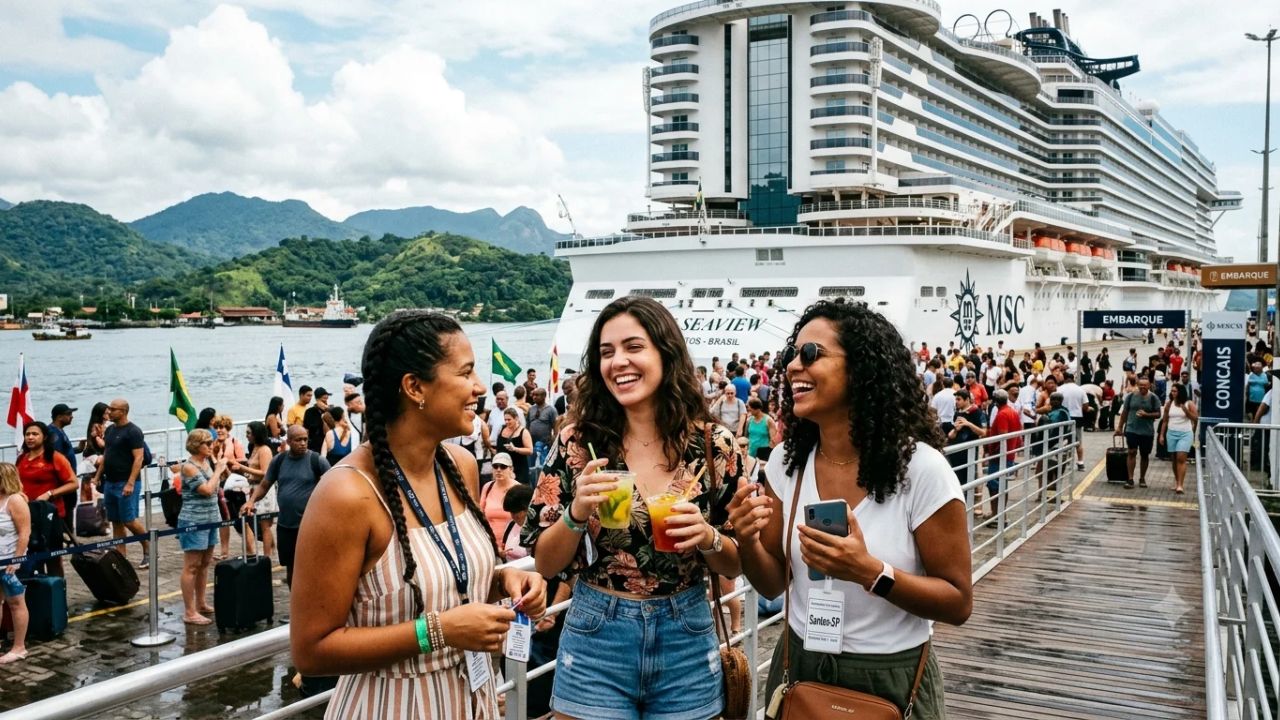
SANTOS, Brazil — The Port of Santos is preparing to handle 164 scheduled cruise calls, 10 passenger ships, and an estimated 785,000 passengers and crew members during the 2026–2027 South American cruise season, reinforcing its status as Brazil’s preeminent maritime gateway.
Operating across 103 active days from October 2026 through 4 April 2027, the maritime hub will serve as the primary operational anchor for Brazil's seaborne leisure economy. Municipal authorities in Santos confirmed the finalized itinerary schedule, which reflects an upward operational adjustment compared to initial federal forecasts issued earlier in the year.
The upcoming operational cycle positions the Concais Passenger Terminal (Terminal Marítimo de Passageiros — Concais) as the central transfer point for domestic coastal itineraries and international long-haul voyages. With seven cruise lines deploying tonnage to the port, maritime traffic will connect São Paulo state directly with Rio de Janeiro, Santa Catarina, Bahia, and regional Atlantic ports in Argentina.
       PORT OF SANTOS CRUISE OPERATIONS & MARITIME CORRIDOR (2026–2027)
       =================================================================

                       [ PORT OF SANTOS (CONCAIS) ]
                       • 164 Calls | 10 Ships | 7 Lines
                       • ~785,000 Passengers & Crew
                       • R$1.5 Billion Regional Impact
                                     │
            ┌────────────────────────┼────────────────────────┐
            │                        │                        │
            ▼                        ▼                        ▼
  [ DOMESTIC CABOTAGE ]    [ PEAK TRAFFIC CYCLE ]   [ INTERNATIONAL VOYAGES ]
  • MSC Divina             • December 2026          • Zaandam
  • Costa Diadema          • 40 Ship Calls          • Queen Anne
  • Buenavista (100 calls) • 214,000 Movements      • Azamara Journey
  • MSC Virtuosa           • 27% Season Volume      • Insignia
  • MSC Musica                       │                        │
  • MSC Seaview                      │                        │
            │                        │                        │
            └────────────────────────┼────────────────────────┘
                                     │
                                     ▼
                [ REGIONAL CONNECTIONS & ROTATIONS ]
                • Búzios (47 Arr / 49 Dep)
                • Rio de Janeiro (32 Dep)
                • Itajaí (26 Arr)
                • Buenos Aires, Argentina (13 Arr / 13 Dep)
                • Angra dos Reis & Balneário Camboriú
Official Revisions Boost Port of Santos Schedule to 164 Ship Calls
The operational projection for the 2026–2027 season underwent multiple upward revisions by maritime and tourism authorities before settling at the current 164-call benchmark. On 15 September 2026, the Federal Ministry of Ports and Airports released an initial projection listing 146 calls for Santos. The São Paulo Tourism Secretariat updated that estimate to 161 calls on 7 October 2026. A subsequent municipal review conducted on 19 October 2026 finalized the operational schedule at 164 calls.
Discrepancies remain between municipal and state forecasts regarding overall passenger and crew throughput. The Municipality of Santos projects approximately 785,000 total passenger and crew movements across the season's 103 operating days. In contrast, the São Paulo state tourism authority projects throughput reaching approximately 832,000 movements. Both estimates highlight strong terminal asset utilization throughout the six-month sailing window.
Key Operational Metrics for the 2026–2027 Brazil Cruise Programme
The following baseline data reflects the operational and economic projections compiled from the Municipality of Santos and the São Paulo Tourism Secretariat.
| Detail | Latest Official Information |
|---|---|
| Cruise season | 2026–2027 |
| Location | Port of Santos, São Paulo, Brazil |
| Season period | October 2026 to 4 April 2027 |
| Latest projected cruise calls | 164 |
| Expected passengers and crew | Around 785,000 |
| Number of ships | 10 |
| Number of cruise companies | 7 |
| Operating days | 103 |
| Main passenger terminal | Terminal Marítimo de Passageiros — Concais |
| Estimated regional economic impact | R$1.5 billion |
| Busiest projected month | December 2026 |
| December projected calls | 40 |
| December projected passenger and crew movement | Around 214,000 |
| December share of total movement | Around 27% |
Fleet Deployment Breakdown: Cabotage and Long-Haul Vessels
The operational registry for Santos lists 10 individual passenger ships scheduled to dock at Concais during the 2026–2027 cycle. The fleet is divided between six vessels assigned to domestic coastal cabotage operations and four vessels operating international long-haul itineraries.
| Ship | Type in Official Programme |
|---|---|
| MSC Divina | Cabotage |
| Costa Diadema | Cabotage |
| Buenavista | Cabotage |
| MSC Virtuosa | Cabotage |
| MSC Musica | Cabotage |
| MSC Seaview | Cabotage |
| Zaandam | Long-haul |
| Queen Anne | Long-haul |
| Azamara Journey | Long-haul |
| Insignia | Long-haul |
Cabotage vessels represent the bulk of berth capacity and repeated rotations. MSC Cruises maintains a heavy presence with four deployed ships—MSC Divina, MSC Virtuosa, MSC Musica, and MSC Seaview—while Costa Cruises assigns the Costa Diadema to round-trip itineraries. Long-haul callers include Holland America Line's Zaandam, Cunard's Queen Anne, Azamara's Azamara Journey, and Oceania Cruises' Insignia, catering to international transpacific, transatlantic, and South American circumnavigation routes.
Corazul Cruzeiros' Buenavista Anchors Season With 100 Port Calls
The single most active vessel in the 2026–2027 schedule is the Buenavista, operated by Corazul Cruzeiros. The ship arrived in Santos on 20 October 2026 to undergo pre-season preparations, with its initial commercial departure scheduled for 30 October 2026.
With a guest capacity of approximately 2,000 passengers, the Buenavista is scheduled to complete 100 individual calls in Santos throughout the season. The vessel's operational pattern relies on short- and mid-duration itineraries ranging between three and seven nights. By utilizing dual embarkation homeports in Santos and Rio de Janeiro, the ship maintains continuous passenger turnover, accounting for more than 60 percent of total planned ship calls at the terminal.
December Traffic Peak to Generate 27 Percent of Total Seasonal Movements
Berth allocations indicate that December 2026 will be the most operationally demanding month of the calendar. Port authorities project 40 cruise calls during the 31-day period, handling approximately 214,000 passenger and crew transits through Concais.
This volume represents approximately 27 percent of the entire season's projected foot traffic. The heavy concentration of ship calls coincides with the Southern Hemisphere summer holidays and end-of-year festive departures. Terminal operators and municipal transport authorities are coordinating traffic staging along the port access avenues to manage disembarking crowds, baggage handling, and provisioning truck logistics during multi-ship turnaround days.
Regional Economic Injection Reaches R$1.5 Billion Across Baixada Santista
The economic footprint of the cruise sector extends well beyond terminal boundaries. Projections published by the São Paulo Tourism Secretariat estimate that the 2026–2027 cruise season will generate R$1.5 billion in direct and indirect revenue across the Baixada Santista metropolitan area.
Official tourism research calculates an average expenditure of R$962.55 per cruise passenger in embarkation and disembarkation ports. This expenditure circulates through local service sectors, including independent hotel bookings prior to sailing, ground transport providers, restaurants, historic center walking tours, and port provisioning services.
Passenger Demographics and High-Yield Shore Excursion Patterns
Official passenger profile surveys published by regional tourism bodies identify key consumer spending habits and demographic divisions across the Brazilian cruise market:
- Activity Distribution: 71.6 percent of cruise passengers take organized sightseeing tours during port calls, while 55.6 percent spend money in local retail establishments.
- Age Demographics: The average passenger age is 45 years. Approximately 74 percent of travellers fall within the 26-to-55 age bracket.
- Gender and Group Dynamics: Women represent 54.6 percent of total passengers, while 85.8 percent travel accompanied by family members, partners, or companions.
- Market Inflow: First-time cruisers comprise 73.3 percent of the passenger volume, showing that the domestic market continues to recruit new consumer segments.
- Satisfaction Metrics: Operational surveys report that 98.5 percent of passengers indicated their cruise experience met or exceeded expectations, and 91.7 percent expressed a clear intent to take another cruise holiday.
Maritime Routing Connects Brazilian Coastline with Buenos Aires
The Port of Santos operates as a nexus within a broader South American coastal route network. Vessel tracking schedules show that incoming ships arrive primarily from established resort enclaves in the Southeast and Northeast of Brazil, as well as the Río de la Plata.
| Ships Arriving in Santos From | Occurrences |
|---|---|
| Búzios | 47 |
| Itajaí | 26 |
| Maceió | 16 |
| Buenos Aires | 13 |
| Ilhabela | 12 |
| Balneário Camboriú | 9 |
Outbound sailings display a similar distribution pattern, with Rio de Janeiro and Búzios capturing the majority of departures from Santos.
| Ships Departing Santos Towards | Occurrences |
|---|---|
| Búzios | 49 |
| Rio de Janeiro | 32 |
| Angra dos Reis | 14 |
| Balneário Camboriú | 14 |
| Buenos Aires | 13 |
The schedules indicate that 13 inbound voyages arrive directly from Buenos Aires and 13 outbound itineraries sail toward the Argentine capital, underscoring the commercial importance of international Mercosur maritime itineraries.
National Berth Capacity Expands 24 Percent Across Brazilian Ports
The operational volume in Santos mirrors broad expansion across Brazil's maritime tourism industry. Initial nationwide projections for the 2026–2027 Brazilian cruise season outlined a deployment of eight dedicated homeport ships, 187 unique itineraries, 675 total calls, and over 831,000 available passenger berths.
This nationwide schedule represents a 24 percent expansion in passenger berth supply compared to the preceding 2025–2026 season. Santos captures the largest share of this national berth allocation due to its deep-water access, proximity to the Greater São Paulo metropolitan population of over 20 million residents, and the processing scale of the Concais terminal.
Why This Matters (Information Gain)
The upward revision to 164 calls at Santos signals that South America’s primary cruise market has shifted from post-pandemic recovery into structural growth. What separates the 2026–2027 season from previous cycles is the concentration of operational risk and financial yield within a single dedicated operator. By deploying the Buenavista for 100 dedicated calls, Corazul Cruzeiros is testing the market's capacity for high-frequency, short-turnaround domestic cabotage. If successful, this feeder model proves that regional lines can operate alongside international giants like MSC and Costa by targeting three- to seven-night domestic getaways.
From a port logistics standpoint, handling 27 percent of annual volume within December alone exposes operational bottlenecks. When 214,000 passengers move through Concais across 40 calls in a single month, local infrastructure absorbs significant pressure. Port authorities, municipal transport agencies, and private operators are forced to synchronize highway toll gates, baggage intake, and customs clearance to prevent delays on the Anchieta-Imigrantes highway system connecting São Paulo to the coast.
Economically, the projected R$1.5 billion regional impact depends on whether passengers spend beyond terminal perimeters. Because 73.3 percent of passengers are first-time cruisers, their average spend of R$962.55 per turnaround day serves as a test for local retailers and excursion providers. If municipal infrastructure fails to disperse visitors into historic districts like the Centro Histórico de Santos or the coffee museum district, the financial gains will remain concentrated within terminal concessionaires rather than benefiting the wider municipal tax base.
Frequently Asked Questions
How many cruise calls are scheduled for the Port of Santos in 2026–2027?
The Port of Santos has 164 scheduled cruise calls for the 2026–2027 season, running from October 2026 through 4 April 2027 across 103 operating days.
Which cruise ship will make the most calls in Santos this season?
The Buenavista, operated by Corazul Cruzeiros, will make 100 calls in Santos with a capacity of 2,000 passengers, offering short itineraries of three to seven nights.
What is the projected economic impact of the cruise season on Santos?
The São Paulo Tourism Secretariat projects an economic contribution of R$1.5 billion across the Baixada Santista region, with average passenger spending of R$962.55 in port cities.
Which month will see the highest cruise passenger traffic in Santos?
December 2026 is projected as the busiest month, with 40 cruise calls, around 214,000 passenger and crew movements, representing approximately 27% of total seasonal volume.
Related Travel Guides
- Europe’s Underrated Autumn Foliage Destinations: Ambroz Valley, Gauja National Park, and Hidden Fall Escapes
- WTTC Economic Impact Report: US Leads $2.63T Global Tourism Economy as Spain, India, and Malta Surge
- Vietnam Surges as Australia’s Fastest-Growing Holiday Destination: Phu Quoc and Hoi An Lead Travel Boom
Disclaimer
This article is for informational and educational purposes only. It does not constitute legal, financial, or professional advice. While we strive to provide accurate and up-to-date information, travel policies, regulations, and conditions change rapidly. Always verify information with official sources before making travel decisions. Nomad Lawyer makes no representations about the accuracy, reliability, completeness, or suitability of the information provided. Readers should consult qualified professionals for advice specific to their circumstances. The views expressed in this article are those of the author and do not necessarily reflect the views of Nomad Lawyer.
Raushan Kumar
Founder & Lead Developer
Full-stack developer with 11+ years of experience and a passionate traveller. Raushan built Nomad Lawyer from the ground up with a vision to create the best travel and law experience on the web.
Learn more about our team →