
Adirondacks Unites with Lake Placid and More US Destinations Earn Over 189 Billion USD from Tourism But Canadian Visitors are Ditching
Adirondacks Unites with Lake Placid and More US Destinations Earn Over 189 Billion USD from Tourism But Canadian Visitors are Ditching

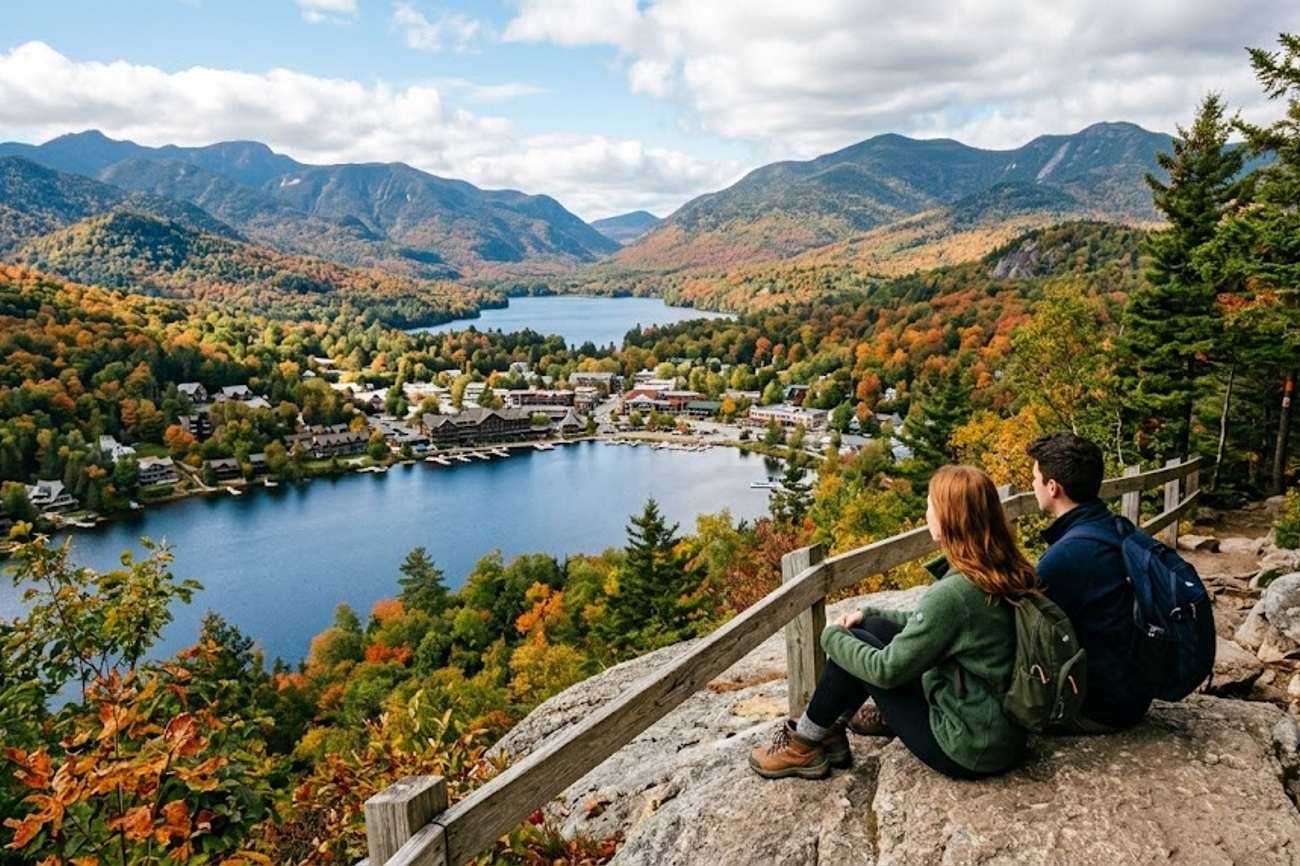
Image generated by AI
$189 billion in reported tourism spending and economic impact across key US destinations highlights a paradoxical era of American travel, where record-breaking domestic resilience is masking a precipitous collapse in Canadian cross-border visitation. While the overarching financial figures suggest a booming industry, a granular analysis reveals a volatile shift in visitor demographics that is forcing border-dependent economies to pivot their entire marketing strategies.
The Canadian Exodus and the Border Vacuum
The most alarming data point in the current travel cycle is the sharp retreat of Canadian residents from the US market. According to data from Statistics Canada, trips from Canadian residents to the United States plummeted by 23.5% in 2025, falling to 23.1 million visits. This is not merely a dip in foot traffic; it is a financial hemorrhage. Total Canadian expenditure on US travel dropped 15.1% to US$18.8 billion during the same period.
The decline is most pronounced in the leisure sector, which saw a 21.5% contraction. For decades, the "border-hop" was a reliable economic engine for Northern US states. The current trend suggests a structural shift—whether driven by currency fluctuations, changing consumer preferences, or geopolitical friction—that has left a void in the leisure spending of border communities. However, the broader US tourism apparatus is not collapsing; it is diversifying. The shock is being absorbed by a surge in domestic travelers and a strategic pivot toward non-North American international markets.
Regional Resilience: A Data Breakdown
Despite the loss of Canadian capital, several key US regions have reported growth, proving that destination-wide revenue can decouple from specific source-market declines.
| Destination | 2025 Economic Metric | Year-over-Year Change | Primary Driver |
|---|---|---|---|
| California | US$158.9 Billion (Spending) | +1.7% | Global Diversification (India, Italy, Japan) |
| Wisconsin | US$27 Billion (Total Impact) | +4.6% | Domestic Surge (117.9M visits) |
| Adirondacks | US$2.6 Billion (Spending) | +2.8% | Domestic Outdoor Recreation |
| Warren County | US$956.6 Million (Spending) | +3.1% | Lake George Domestic Appeal |
| Florida | 143.3 Million (Visitors) | +0.2% | Domestic Base (130.9M trips) |
In the Adirondacks, the six-county region managed to grow spending to US$2.6 billion despite the Canadian slump. Similarly, Warren County—the hub for Lake George—generated US$60.1 million in local tax revenue and US$57.1 million in state tax revenue, signaling that the Lake George market is successfully replacing Canadian leisure spend with American domestic demand.
Florida presents the most stark example of market insulation. While Canadian visits to the Sunshine State fell 6.8% to 3.2 million people, they now represent a mere 2.2% of Florida's total visitor volume. By relying on a massive domestic foundation of 130.9 million trips and a 4% increase in overseas arrivals, Florida has effectively neutralized the Canadian exit.
Expert Analysis: The Decoupling of Volume and Value
For the seasoned traveler and the industry analyst, the current data reveals a critical phenomenon: the decoupling of visitor origin from tourism revenue. Historically, border towns viewed Canadian arrivals as a primary KPI for success. The 2025-2026 data proves this is a dangerous dependency.
The direct consequence for travelers booking these routes is a shift in the "experience economy." As destinations like Lake Placid and the Adirondacks pivot toward domestic American travelers, we can expect a change in pricing structures and seasonal offerings. When a destination relies on a single international market, it is vulnerable to currency swings; when it diversifies, it gains pricing power.
The pricing pressure created by the decline in Canadian leisure travel (down 21.5%) means that border-dependent motels and small-scale attractions may face a short-term liquidity crisis. However, the larger players—such as those in California and Florida—are leveraging their scale to attract high-spending visitors from India, Japan, and Italy. This is a strategic migration of the "high-value traveler."
Furthermore, the resilience of Lake Placid underscores the value of "year-round diversification." By leveraging Olympic heritage and consistent winter snowfall, Lake Placid has reduced its reliance on the summer-only Canadian cross-border surge. For the travel industry, the lesson is clear: seasonal and demographic diversification is the only hedge against geopolitical or economic volatility in a specific source market. This trend is being monitored closely by the International Air Transport Association (IATA), as flight patterns shift from short-haul border hops to long-haul international arrivals.
Key Takeaways
- Canadian Market Collapse: Canadian trips to the US dropped 23.5% to 23.1 million in 2025, with leisure travel seeing the steepest decline at 21.5%.
- Domestic Buffer: US destinations are offsetting international losses through massive domestic growth, exemplified by Florida's 130.9 million domestic trips.
- Financial Insulation: Large-scale economies like California (US$158.9 billion spending) are less affected by single-market drops due to diversified global reach (Mexico, India, Italy).
- Regional Pivot: Border regions like the Adirondacks and Warren County are seeing spending growth (2.8% and 3.1% respectively) by attracting more US-based tourists.
- Tax Impact: Tourism remains a vital fiscal driver, with Warren County alone generating over US$117 million in combined state and local taxes.
FAQ: US Tourism Trends 2026
Why are Canadian visitors traveling to the US less in 2025-2026? While the source data focuses on the numbers, the 23.5% drop suggests a combination of economic pressures and a shift in leisure preferences. The 21.5% plunge in leisure travel indicates that Canadians are opting for domestic vacations or alternative international destinations.
Is the US tourism industry in a decline? No. While specific corridors (US-Canada border) are struggling, overall spending is rising. Destinations like Wisconsin reached a record US$27 billion economic impact, and California's spending grew by 1.7%, showing a redistribution of travel rather than a decline.
Which US states are most resilient to international travel shifts? Florida and California are the most resilient. Florida's massive domestic base (130.9 million trips) makes Canadian declines (only 2.2% of total volume) statistically insignificant to their overall economic health.
How has the Adirondack region maintained growth? By diversifying its revenue base across accommodation, dining, and outdoor recreation, the region attracted enough domestic American travelers to grow spending by 2.8% to US$2.6 billion, despite fewer Canadians.
The border is no longer the primary gateway to growth; the domestic heartland is.
Tags: Adirondacks Tourism 2025, Lake Placid Economy, Canada-US Travel Trends, Florida Visitor Statistics, California Tourism Revenue, Warren County Economic Impact
Related Travel Guides
- South America’s Boldest Travel Shift, How Smart Air Corridors And Data Frameworks Supercharge International Tourism Across Brazil
- Albania Follows Montenegro and More as Underrated European Holidays Tempt Tourists to Choose Hidden Gems Over Crowded Spanish Destinations
- New Zealand Unveils Short-Term Graduate Work Visa Opening November 16, 2026
Disclaimer
This article is for informational and educational purposes only. It does not constitute legal, financial, or professional advice. While we strive to provide accurate and up-to-date information, travel policies, regulations, and conditions change rapidly. Always verify information with official sources before making travel decisions. Nomad Lawyer makes no representations about the accuracy, reliability, completeness, or suitability of the information provided. Readers should consult qualified professionals for advice specific to their circumstances. The views expressed in this article are those of the author and do not necessarily reflect the views of Nomad Lawyer.
Raushan Kumar
Founder & Lead Developer
Full-stack developer with 11+ years of experience and a passionate traveller. Raushan built Nomad Lawyer from the ground up with a vision to create the best travel and law experience on the web.
Learn more about our team →