
Watson Lake Expands Yukon Alaska Highway Tourism with Sign Post Forest Preservation and 65 Kilometers of Wilderness Trails
Watson Lake welcomes Yukon visitors along the Alaska Highway with nearly 100,000 signs in its historic Sign Post Forest, 65 km of trails, and aurora displays.

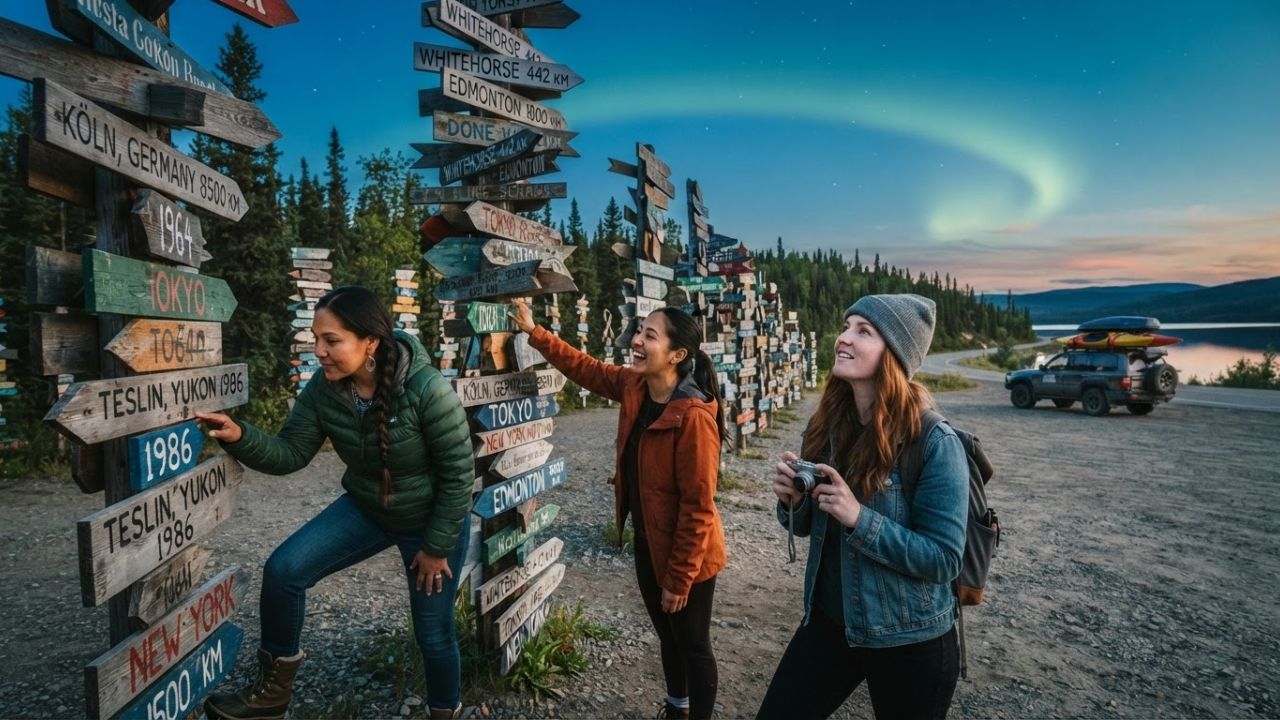
Image generated by AI
The gateway municipality of Watson Lake, Yukon, is expanding visitor services along the historic Alaska Highway, preserving its world-famous Sign Post Forest of nearly 100,000 signs alongside 65 kilometers of multi-use wilderness trails.
WATSON LAKE, Yukon — Positioned on the ancestral territory of the Kaska Dena First Nation near the British Columbia border, Travel Yukon and the Town of Watson Lake are promoting the municipality as a major cultural and outdoor recreation destination. Located at Mile 635 of Alaska Highway 1, Watson Lake serves as the primary southern entrance for road travelers entering the Yukon Territory.
Originally established during the construction of the Alaska Highway in World War II, Watson Lake has grown from a wartime staging post into a key regional service hub. Today, the town features historic aviation sites, the planetarium-equipped Northern Lights Centre, and recreational access to Wye Lake and Liard River Hot Springs.
Landmark Specifications: Watson Lake Heritage & Recreation Overview
The town’s attractions highlight the intersection of 20th-century transport engineering and subarctic nature.
| Attraction / Facility | Historical Origin / Technical Scope | Visitor Utility & Operational Focus |
|---|---|---|
| Sign Post Forest | Founded in 1942 by US Army Pvt. Carl K. Lindley | Holds nearly 100,000 international community signs |
| Northern Lights Centre | Purpose-built dome planetarium theater | Aurora science displays & local Visitor Information Centre |
| Watson Lake Airport (YQH) | Built in 1942 for Northwest Staging Route | Preserved WWII terminal building & aviation exhibit |
| Multi-Use Trail System | 65+ kilometers of maintained trails | Hiking, mountain biking, & winter cross-country skiing |
| Wye Lake Park | Central urban wetland sanctuary | Boardwalk trail, birdwatching, & family picnic areas |
| Mount Maichen Ski Hill | Community volunteer-operated ski facility | T-bar lift, groomed alpine runs, & night skiing |
| Liard River Hot Springs | Nearby Provincial Park (Northern BC) | Geothermal hot pools 210 km south along Alaska Highway |
Historical Evolution: From WWII Staging Post to Global Roadside Icon
The origins of Watson Lake's primary tourist attraction date to 1942 during the construction of the Alaska Highway. While recovering from an injury, Private Carl K. Lindley of the United States Army Corps of Engineers was instructed to repair a damaged directional signpost. He added a hand-painted wooden sign pointing toward his home town of Danville, Illinois—initiating a tradition that has expanded over eight decades.
- Sign Post Forest Expansion: Travelers from across North America and Europe contribute custom license plates, carved boards, and street signs. The collection now approaches 100,000 individual markers. Visitors can craft personalized signs at the adjacent Visitor Information Centre.
- Northwest Staging Route Aviation: The historic 1942 Watson Lake Airport served as a critical refueling airfield for Allied aircraft ferrying supplies to Alaska and Soviet territories under the Lend-Lease program. The preserved wooden terminal stands as a designated Canadian heritage structure.
Traveler Logistics Guide: Driving the Alaska Highway to Watson Lake
For road travelers, RV owners, and wilderness tourists driving the Alaska Highway across northern British Columbia and into the Yukon, Watson Lake offers critical refueling and repair infrastructure.
1. Highway Driving Buffers and Fuel Logistics
- Fort Nelson to Watson Lake Corridor: The 515-kilometer (320-mile) stretch of the Alaska Highway between Fort Nelson, BC, and Watson Lake features long distances between commercial service stations. Maintain a minimum half-tank fuel reserve and confirm open gas stations in advance during shoulder seasons (May and September).
- Monitoring Road Conditions: Check the official 511 Yukon Road Conditions portal prior to departure. Summer roadworks frequently involve gravel pilot-car escorts, while winter driving requires studded snow tires and emergency cold-weather supplies.
2. RV Services and Camping Logistics
- Campground Facilities: Watson Lake operates municipal and territorial RV parks featuring full hookups, sani-dump stations, and potable water fill stations. Advance reservations are recommended during peak summer months (June through August).
3. Aurora Borealis Viewing Windows
- Seasonal Sky Conditions: While the Northern Lights Centre dome theater screens aurora displays year-round, live sky viewing requires dark night skies. The optimal live aurora viewing window opens from late August through April, as mid-summer Yukon nights experience continuous daylight ("Midnight Sun").
Infrastructure Impact Assessment: Subarctic Economic & Cultural Tourism
Developing heritage infrastructure in remote northern communities delivers localized economic stability:
- Alaska Highway Driver Retention: Expanding visitor amenities at Sign Post Forest encourages drivers to extend overnight stays in Watson Lake hotels, lodges, and campgrounds rather than passing through to Whitehorse.
- Kaska Dena Cultural Tourism Integration: Collaborating with Kaska Dena First Nation artisans and guides incorporates Indigenous land stewardship stories into regional interpretive trails along the Liard River basin.
- Decarbonizing Remote Facilities: Upgrading public structures with modern thermal insulation cuts diesel heating requirements during subarctic winter operations.
FAQ: Watson Lake Yukon Travel 2026
Where is Watson Lake located?
Watson Lake is located in the southeastern Yukon Territory, Canada, near the British Columbia border at Mile 635 of the Alaska Highway (Highway 1).
How many signs are in the Watson Lake Sign Post Forest?
The Sign Post Forest contains nearly 100,000 international street, city, and custom signs posted by travelers since 1942.
Can visitors bring and mount their own sign at Sign Post Forest?
Yes. Visitors can bring a sign from home or craft one at the Watson Lake Visitor Information Centre to add to the forest posts.
When can you see the Northern Lights in Watson Lake?
Live aurora borealis viewing occurs between late August and April when night skies are dark. The Northern Lights Centre dome theater provides educational aurora shows year-round.
Related Travel Guides
10 Best Scenic Driving Routes on the Alaska Highway, According to Reddit
Disclaimer
This article is for informational and educational purposes only. It does not constitute legal, financial, or professional advice. While we strive to provide accurate and up-to-date information, travel policies, regulations, and conditions change rapidly. Always verify information with official sources before making travel decisions. Nomad Lawyer makes no representations about the accuracy, reliability, completeness, or suitability of the information provided. Readers should consult qualified professionals for advice specific to their circumstances. The views expressed in this article are those of the author and do not necessarily reflect the views of Nomad Lawyer.
Raushan Kumar
Founder & Lead Developer
Full-stack developer with 11+ years of experience and a passionate traveller. Raushan built Nomad Lawyer from the ground up with a vision to create the best travel and law experience on the web.
Learn more about our team →