
World's Most Beautiful Cruise Routes 2026: Arctic Fjords, Galápagos and Mediterranean Heritage
Cruise operators are redefining scenic travel for 2026, shifting toward slow-coastal voyages in Norway, expedition-led Galápagos immersions, and extended heritage stays across the Mediterranean.

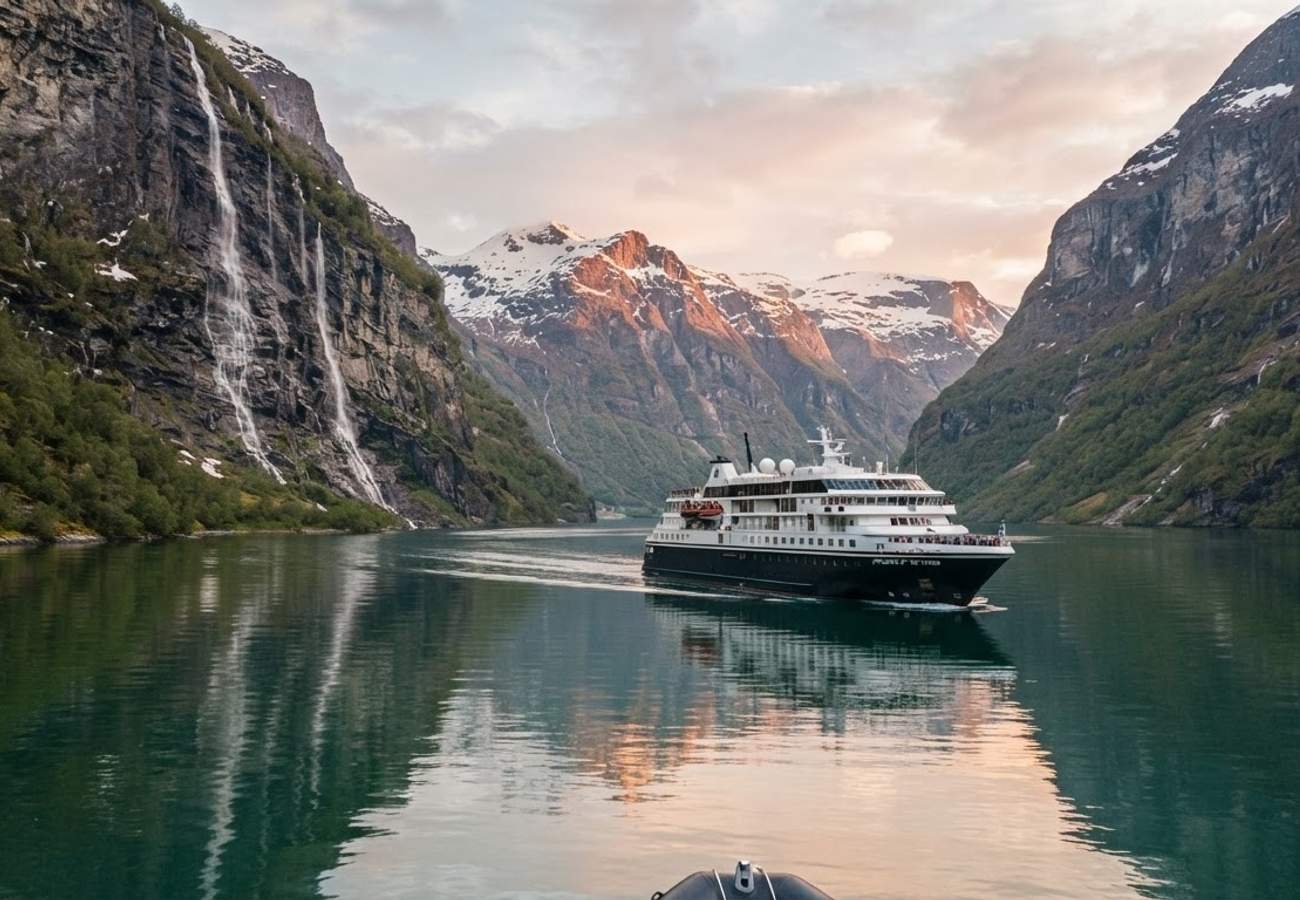
Image generated by AI
The 2026 cruise season marks a decisive shift from rapid port-hopping to "slow cruising," with operators prioritizing extended stays in historic harbors and deep-nature immersion over checklist tourism.
The Local Trend Revealed: From Transit to Immersion
The cruise industry is undergoing a structural pivot. For 2026, the focus has moved beyond the ship as a hotel to the ship as a curated viewing platform. This is most evident in Northern Europe, where itineraries are now threading through narrow waterways like Geirangerfjord, Sognefjord, and Innvikfjorden. Rather than brief stops, new schedules emphasize calls at compact ports such as Olden, Ålesund, and Haugesund, allowing passengers to experience the scale of steep cliffs and waterfalls without the rush.
In the high latitudes, the trend is pushing further north. 2026 brochures reveal a surge in voyages extending beyond the western fjords toward the North Cape and Lofoten Islands. These routes maximize the extended daylight of the Arctic Circle, blending panoramic sailing with time in fishing villages characterized by traditional wooden waterfronts.
Similarly, in Alaska, the "Inside Passage" remains a staple, but the 2026 approach integrates more "land-sea hybrids." Travelers are increasingly pairing glacier viewing in Glacier Bay National Park, College Fjord, or Hubbard Glacier with rail and coach extensions into Denali and the Yukon. This creates a seamless transition from coastal ice fronts to interior tundra.
Cultural & Environmental Value: The Rise of the Expedition
For the visitor, the real impact of the 2026 shift is the move toward low-impact, high-education travel. This is most prominent in the Galápagos Islands. The trend here is the deployment of small-ship expedition vessels carrying only a few dozen guests. These 10 to 16-day itineraries are designed around daily Zodiac excursions and snorkeling sessions to observe marine iguanas, giant tortoises, and sea lions.
These vessels are no longer just transport; they are floating research stations equipped with briefing lounges and photography support. By partnering with conservation-focused organizations, these cruises integrate biodiversity and marine protection programs into the journey, ensuring that tourism supports the preservation of the archipelago.
In the Mediterranean and Aegean, the value shift is cultural. The 2026 season is seeing a rise in overnight calls in hubs like Istanbul and various Venice-region ports. This allows travelers to move past the "day-tripper" experience, supporting local evening economies—restaurants, theaters, and late-night boutiques—rather than just midday souvenir shops.
Visitor Insider Tips
To maximize these scenic routes, travelers should consider the following local nuances:
- Norway's Window: For those seeking the midnight sun, aim for June and July. To avoid the heaviest crowds in Geirangerfjord, look for "shoulder season" sailings in late May or early September when the waterfalls are still powerful but the ports are quieter.
- Alaska Gear: When visiting Juneau or Ketchikan, prioritize waterproof shells over heavy coats. The "Inside Passage" is damp; layering is the only way to remain comfortable during glacier viewing.
- Galápagos Etiquette: Stick strictly to the marked trails. The Galápagos National Park Directorate enforces rigid rules to protect nesting seabirds. Always follow your naturalist guide's lead to avoid fines or disruptions to wildlife.
- Aegean Timing: In Santorini and Mykonos, the most iconic views are often crowded by noon. Use the "overnight stay" itineraries to explore the caldera's cliffside towns at dawn or dusk for a more authentic experience.
Tourism Outlook
The long-term trajectory for scenic cruising is moving toward "regenerative travel." By reducing the number of passengers per port (via smaller expedition ships) and increasing the duration of stays (via overnight calls), the industry is attempting to mitigate the "overtourism" that has plagued the Mediterranean and the Arctic.
The integration of land-sea packages suggests a future where the cruise is merely one component of a broader regional exploration. As travelers demand more meaningful connections to the environment, we expect to see more partnerships between cruise lines and regional conservation bodies to ensure that the "most beautiful routes" remain beautiful for decades to come.
The horizon of luxury travel is no longer about the gold leaf on the ship, but the untouched ice of the glacier and the quiet of a midnight sun.
Related Travel Guides
Disclaimer
This article is for informational and educational purposes only. It does not constitute legal, financial, or professional advice. While we strive to provide accurate and up-to-date information, travel policies, regulations, and conditions change rapidly. Always verify information with official sources before making travel decisions. Nomad Lawyer makes no representations about the accuracy, reliability, completeness, or suitability of the information provided. Readers should consult qualified professionals for advice specific to their circumstances. The views expressed in this article are those of the author and do not necessarily reflect the views of Nomad Lawyer.
Kunal K Choudhary
Co-Founder & Contributor
A passionate traveller and tech enthusiast. Kunal contributes to the vision and growth of Nomad Lawyer, bringing fresh perspectives and driving the community forward.
Learn more about our team →