The Circadian Reset: Science-Backed Jet Lag Protocols for Long-Haul Global Travelers


While most international travelers blame flight fatigue on cabin pressure and cramped seats, human biology dictates that jet lag is an internal desynchronization where peripheral clocks in the liver, gut, and muscle tissues operate out of sync with the brain's suprachiasmatic nucleus. Crossing multiple time zones at 550 miles per hour outpaces our biological adaptation rate—which naturally shifts by only one hour per day—leaving travelers battling digestive sluggishness, brain fog, and fragmented sleep cycles unless precise environmental cues are deployed immediately upon touchdown.
According to global travel health guidelines maintained by the Centers for Disease Control and Prevention (CDC), overcoming timezone shock does not require pharmaceutical dependency. By manipulating the single most powerful biological zeitgeber (time-giver)—natural solar radiation—alongside strategic meal timing and directional flight preparation, long-haul travelers and families can accelerate their internal adjustment period from several miserable days to under twenty-four hours.
The Directional Asymmetry: Why Flying East Feels Twice as Hard as Flying West
Every seasoned globetrotter recognizes that flying from New York to London (eastbound) causes significantly worse disorientation than the return journey back across the Atlantic (westbound). This phenomenon stems from our natural circadian pacemaker, which inherently runs on a cycle slightly longer than 24 hours (averaging 24.2 hours).
When flying west, you "gain" hours, requiring you to delay sleep—an adjustment that works in harmony with the body's natural tendency to stretch its daily cycle. Conversely, flying east requires phase advancement, forcing your body to fall asleep several hours earlier than its internal clock expects.
| Travel Direction | Circadian Challenge | Strategic Light Protocol | Behavioral Intervention |
|---|---|---|---|
| Eastbound (e.g., US to Europe / Europe to Asia) | Phase Advance (Compressing the day) | Seek bright morning sunlight upon arrival; avoid evening light | Shift bedtime 30–60 mins earlier for 3 days pre-departure; avoid late-night screens |
| Westbound (e.g., Asia to Europe / Europe to US) | Phase Delay (Stretching the day) | Seek afternoon and evening sunset light; avoid early morning glare | Stay awake until normal destination bedtime; push meals later |
| Long-Haul Trans-Equatorial (Same Timezone) | Physical exhaustion without circadian mismatch | Standard hydration and mobility | Normal sleep schedule; focus on muscular recovery and hydration |
Understanding this directional distinction allows travelers to tailor their exposure to sunlight and meal schedules rather than following generic, one-size-fits-all sleep advice.
The Triple-Anchor Framework: Light, Digestion, and Physical Activity
Your internal biological clock relies on three primary environmental anchors to calibrate its daily rhythm. Harmonizing these three inputs immediately upon arrival resets both central and peripheral circadian systems:
- Ocular Light Exposure: The retinal ganglion cells in your eyes contain melanopsin, a photopigment sensitive to blue-wavelength light that directly suppresses melatonin synthesis in the pineal gland. Spending at least 45 minutes walking outdoors without sunglasses during the target destination's morning tells your brain that daytime has commenced.
- Digestive Pacemakers (Food Clock): While the master clock in the brain responds to sunlight, metabolic organs like the liver and pancreas synchronize according to food intake. Eating a high-protein breakfast at 08:00 local time—regardless of whether you feel hungry—kickstarts peripheral metabolism and signals to your internal organs that the local day is underway.
- Core Body Temperature Rhythms: Body temperature naturally drops to its lowest point roughly two hours before your habitual wake-up time. Taking a warm shower in the evening promotes peripheral vasodilation, dropping your core temperature to induce natural, restorative sleep at the appropriate local hour.
Travelers managing pre-existing medical conditions or complex flight itineraries can consult international health recommendations published by the World Health Organization.
Visitor Insider Tips: Practical Protocols for Long-Haul Routes and Family Travel
Minimizing physical strain during intercontinental flights requires proactive preparation before stepping onto the jet bridge:
- Adjust Your Watch the Moment You Board: As soon as the aircraft doors close, set your phone and watch to the local time at your destination. Structure your in-flight behavior accordingly: if it is midnight at your arrival city, put on an eye mask and attempt to sleep, even if you are not tired.
- Hydrate at 250ml per Flight Hour: Cabin humidity on modern commercial aircraft averages below 15 per cent—drier than the Sahara Desert. Dehydration severely exacerbates fatigue and headache symptoms. Drink at least 250 milliliters of electrolyte-rich water every hour in the air, and strictly limit alcohol and excess caffeine.
- Enforce the 20-Minute "Power Nap" Cap: If exhaustion strikes during your first afternoon at your destination, do not collapse into a four-hour slumber. Set a strict alarm for 20 to 30 minutes; this allows you to clear sleep pressure without entering deep slow-wave sleep, which causes grogginess and destroys nighttime rest.
- Maintain Familiar Bedtime Anchors for Children: When traveling internationally with young children, do not force rigid adult schedules on day one. Pack familiar comforts—such as their favorite bedtime storybook, sleep sack, or soft toy—and conduct their regular bath-and-bedtime sequence according to local evening hours.
- Exercise Caution with Melatonin Supplements: If utilizing exogenous melatonin, remember that timing is everything. For eastward travel, a low dose (0.5mg to 3mg) taken 30 minutes before local bedtime at the destination can help advance your sleep phase, but consult healthcare professionals before administering supplements to children. Guidance on sleep health is available through the National Sleep Foundation.
Cultural and Environmental Context: Slow Travel and Mindful Exploration
The rush to overcome jet lag within hours is often a symptom of over-scheduled, hyper-accelerated modern vacations. When travelers attempt to pack four cities into a seven-day itinerary, physical exhaustion frequently diminishes the quality of their cultural interactions.
Embracing the principles of "slow travel" creates a more sustainable and rewarding journey. By planning longer stays in a single region, travelers allow their bodies to harmonize naturally with local rhythms, morning markets, and evening dining traditions.
Furthermore, scheduling a low-key arrival day—dedicated to walking through neighborhood botanical gardens, sipping coffee at outdoor sidewalk plazas, and browsing local bookstores—provides gentle sunlight exposure while supporting independent local businesses rather than high-stress tourist complexes.
FAQ: Managing Jet Lag on International Flights
How many days does it typically take to recover from jet lag?
The human circadian system naturally adjusts by approximately one to 1.5 time zones per day, meaning an eight-hour timezone jump takes roughly four to six days to resolve without proactive light and meal anchoring.
Is eastward or westward flying more difficult to adjust to?
Eastward travel is more challenging because it forces you to advance your sleep schedule (fall asleep earlier), whereas westward travel merely requires delaying bedtime.
Should I take a long nap if I arrive exhausted in the morning?
No. Avoid long daytime naps as they deplete homeostatic sleep pressure needed for the night. Limit naps to a maximum of 20 to 30 minutes before 14:00.
What is the single most effective natural remedy for jet lag?
Direct exposure to natural outdoor sunlight during the destination's daytime hours is the most powerful biological signal for resetting your internal circadian pacemaker.
[True exploration begins when we honor our body's natural rhythms, turning every overseas arrival into a peaceful awakening rather than an uphill struggle.]
Related Travel Guides
This article is for informational purposes. Flight routes, passenger regulations, visa rules, and transit advisories are subject to change by airlines and aviation authorities. Readers are advised to verify schedules and travel documentation with relevant carriers and border agencies before departure.
Related Stories
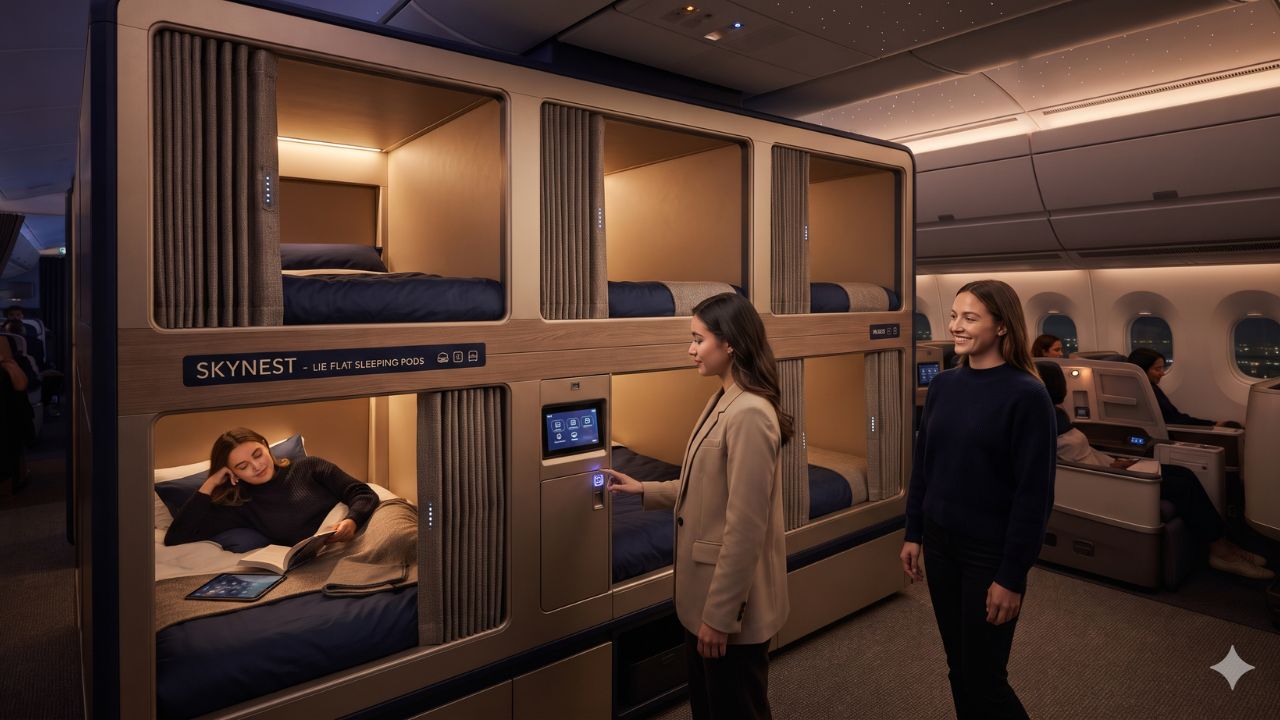
Air New Zealand and Global Airlines Redesign Mid-Cabin Spaces: Skynest and Premium Economy Guide 2026

Ayodhya Deepotsav 2026 Logistics Guide: Attending the 30 Lakh Lamp Festival in India