
World Children’s Festival 2026 Transforms Washington D.C. Into Global Family Travel Hub With STEAMS Education and Cultural Exchange
The 7th World Children’s Festival 2026 turned Washington D.C.’s National Mall into a three-day global gathering blending STEAMS education, creative workshops, and cultural diplomacy for families.

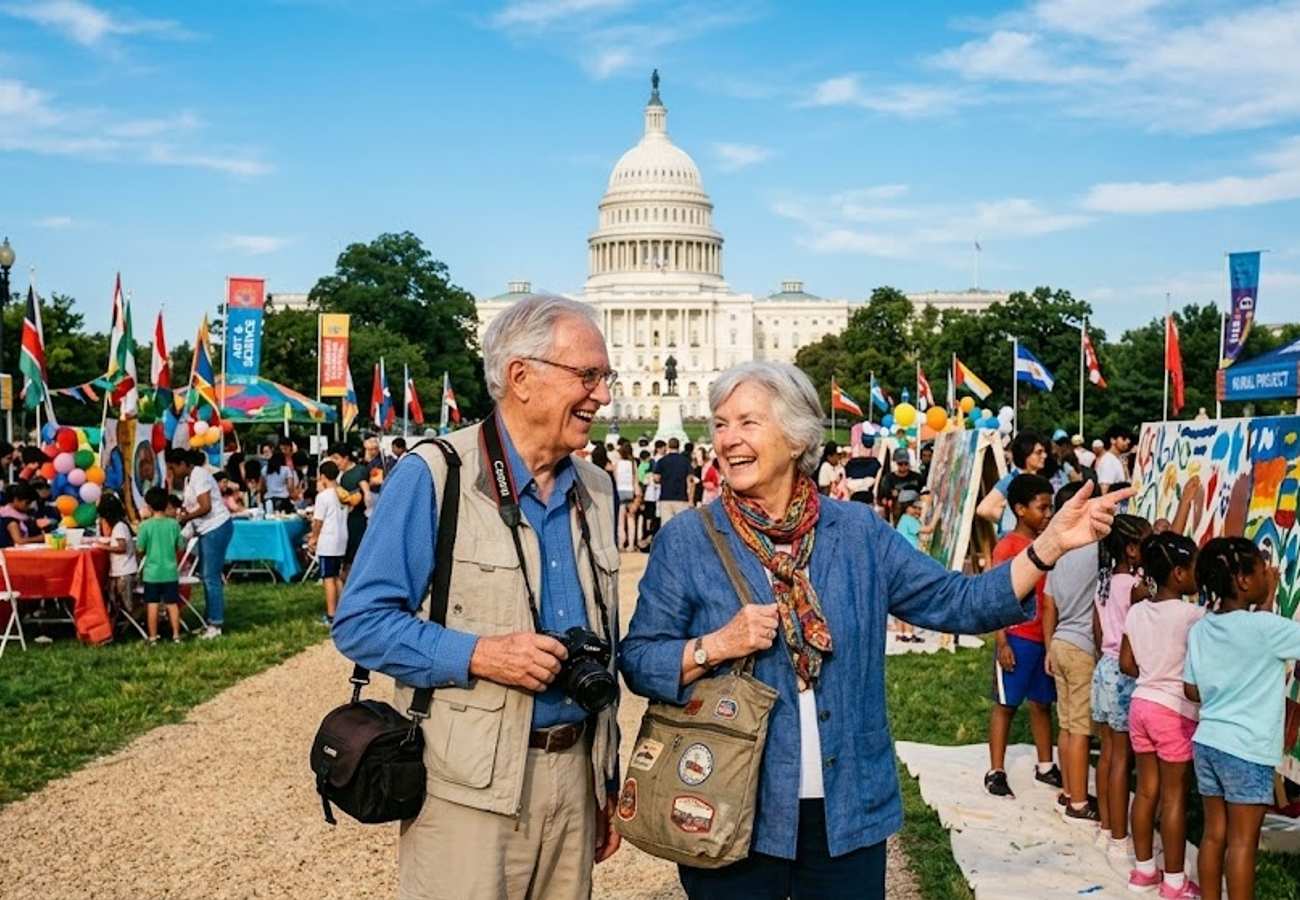
Image generated by AI
Washington, D.C. just proved that family travel can be far more than museums and monuments. The 7th World Children's Festival 2026 turned the National Mall into a three-day global classroom where children from diverse backgrounds engaged in STEAMS education, built a flag destined for Mars, and painted a mural for America's 250th birthday.
From July 25 to July 27, 2026, the International Child Art Foundation (ICAF) repositioned children not as passive spectators of culture but as active creators of it. Held directly across from the U.S. Capitol, the event merged tourism, education, and cultural diplomacy into a single experience that drew families seeking purpose-driven travel. The festival followed a STEAMS framework — integrating science, technology, engineering, mathematics, arts, and sports — to build problem-solving skills, emotional intelligence, and cross-cultural collaboration among young participants.
A Three-Day Journey From Environmental Awareness to Global Leadership
The festival's structure was deliberate. Each of the three days addressed a distinct theme, guiding children from personal and planetary responsibility toward imagination, and finally to peace-building and leadership.
Health & Environment Day — July 25, 2026
The opening day grounded the festival in shared global challenges. Children participated in environmental awareness programmes, health-focused activities, and sustainability education sessions. Rather than traditional classroom instruction, the day relied on interactive, science-based learning. Workshops typically ran about 50 minutes, with larger activities extending up to two hours to ensure active participation.
The philosophy behind this day was straightforward: children everywhere face common concerns, from environmental risks to community health. By using art as a universal language, the festival helped young participants discuss complex subjects and communicate ideas across cultural and language barriers.
Creativity & Imagination Day — July 26, 2026
The second day shifted the focus from understanding problems to imagining solutions. The standout project was the collaborative creation of the Children's Earth Flag — a symbolic artwork designed to represent children's hopes for the future. The project was tied to NASA's first human mission to Mars, giving children a tangible connection to humanity's next frontier.
Creative workshops spanned visual arts, design, performance, and problem-solving exercises. The STEAMS framework ensured that artistic expression carried equal weight to scientific learning. The organisers emphasised that creativity is not limited to producing artwork; it functions as a tool for analysing problems, communicating ideas, and building confidence through teamwork.
Peace & Leadership Day — July 27, 2026
The final day centred on peace-building, leadership skills, and America's founding principles. Children engaged in leadership seminars, empathy training, and cultural dialogue sessions. The culminating activity was a large-scale mural created as a gift to the United States for its 250th birthday celebration, linking the festival to the broader national commemorations taking place across the country.
Why This Event Matters for Family Travel and Cultural Tourism
The World Children's Festival 2026 reflects a broader shift in how families approach travel. Parents are increasingly looking beyond conventional attractions for experiences that educate, inspire, and create lasting memories. Washington, D.C. — already a top destination for educational tourism — gained an additional layer of appeal through this event, blending cultural discovery with hands-on learning.
The festival's location near the U.S. Capitol added symbolic weight. By positioning children as innovators and global citizens within sight of the nation's legislative centre, the event underscored the role of cultural exchange in shaping future generations. For families, the festival offered a travel experience where the destination itself became a platform for intercultural dialogue.
Festival Schedule and Activities at a Glance
| Date | Theme / Major Focus | Activities and Events | Important Details |
|---|---|---|---|
| July 25, 2026 (Saturday) | Health & Environment Day | Environmental awareness programmes, health-focused activities, sustainability education, science-based learning sessions | The opening day focused on building empathy through shared concerns about personal health and the planet. Children participated in activities designed to encourage responsibility towards themselves and Earth. |
| July 26, 2026 (Sunday) | Creativity & Imagination Day | Creative workshops, art activities, imagination-based collaboration, children's innovation projects | Participants worked together to imagine and create the "Children's Earth Flag", designed as a symbolic contribution for NASA's first human mission to Mars. |
| July 27, 2026 (Monday) | Peace & Leadership Day | Leadership seminars, empathy training, cultural dialogue sessions, large-scale mural creation | The final day focused on peace-building, leadership skills and America's founding principles. Children created a large mural as a gift to the United States for its 250th birthday celebration. |
Activity Categories and Learning Outcomes
| Activity Category | What Took Place | Purpose / Learning Outcome |
|---|---|---|
| STEAMS Education Activities | Science, technology, engineering, mathematics, arts, and sports activities were integrated into interactive learning sessions. | Encouraged children to combine creativity with scientific thinking and teamwork. |
| Creative Workshops | Short educational workshops covering visual arts, design, performance, and problem-solving exercises. | Helped children develop creative confidence, communication skills, and collaborative thinking. |
The Broader Significance for Destination Washington, D.C.
The festival's success signals that children's events can genuinely influence international tourism. Families travelled to Washington, D.C. not only for its monuments and museums but for a structured opportunity to engage with global peers through creativity and shared learning. The ICAF's model demonstrates that purposeful programming can elevate a city's tourism profile beyond traditional sightseeing.
By aligning the festival with America's 250th birthday celebrations, the organisers connected a children's event to a historic national milestone. This strategic positioning gave the festival additional cultural relevance and encouraged both domestic and international families to include it in their 2026 travel plans.
Key Takeaways
- The 7th World Children's Festival 2026 ran from July 25 to July 27 at the National Mall in Washington, D.C., organised by the International Child Art Foundation.
- The event used a STEAMS educational framework — combining science, technology, engineering, mathematics, arts, and sports.
- Day one focused on health and environmental awareness; day two on creativity, including the Children's Earth Flag for NASA's Mars mission; day three on peace, leadership, and a mural for America's 250th birthday.
- Workshops lasted approximately 50 minutes, with extended activities running up to two hours.
- The festival reinforced Washington, D.C.'s position as a leading destination for educational and family-focused cultural tourism.
Frequently Asked Questions
What was the World Children's Festival 2026? It was the 7th edition of a global children's festival organised by the International Child Art Foundation, held at the National Mall in Washington, D.C. from July 25 to July 27, 2026.
What is the STEAMS education model used at the festival? STEAMS integrates science, technology, engineering, mathematics, arts, and sports into interactive learning sessions designed to develop creativity, teamwork, and problem-solving skills.
What was the Children's Earth Flag project? It was a collaborative artwork created by young participants on Creativity & Imagination Day, designed as a symbolic contribution connected to NASA's first human mission to Mars.
How long were the festival workshops? Most workshops lasted around 50 minutes, while larger activities extended up to two hours to encourage active participation.
For families seeking travel that goes beyond sightseeing, Washington, D.C. just set a new benchmark for what a destination can offer the next generation.
Related Travel Guides
Disclaimer
This article is for informational and educational purposes only. It does not constitute legal, financial, or professional advice. While we strive to provide accurate and up-to-date information, travel policies, regulations, and conditions change rapidly. Always verify information with official sources before making travel decisions. Nomad Lawyer makes no representations about the accuracy, reliability, completeness, or suitability of the information provided. Readers should consult qualified professionals for advice specific to their circumstances. The views expressed in this article are those of the author and do not necessarily reflect the views of Nomad Lawyer.
Raushan Kumar
Founder & Lead Developer
Full-stack developer with 11+ years of experience and a passionate traveller. Raushan built Nomad Lawyer from the ground up with a vision to create the best travel and law experience on the web.
Learn more about our team →