
Middle East Crisis Triggers Historic Tourism Pivot: 307M Travelers Reroute to Croatia, Albania, Montenegro in 2026
Geopolitical turmoil across Beirut, Tehran, Baghdad, and Damascus forces 307 million global tourists to abandon the Middle East and flood emerging European destinations as travel maps redraw in real-time.

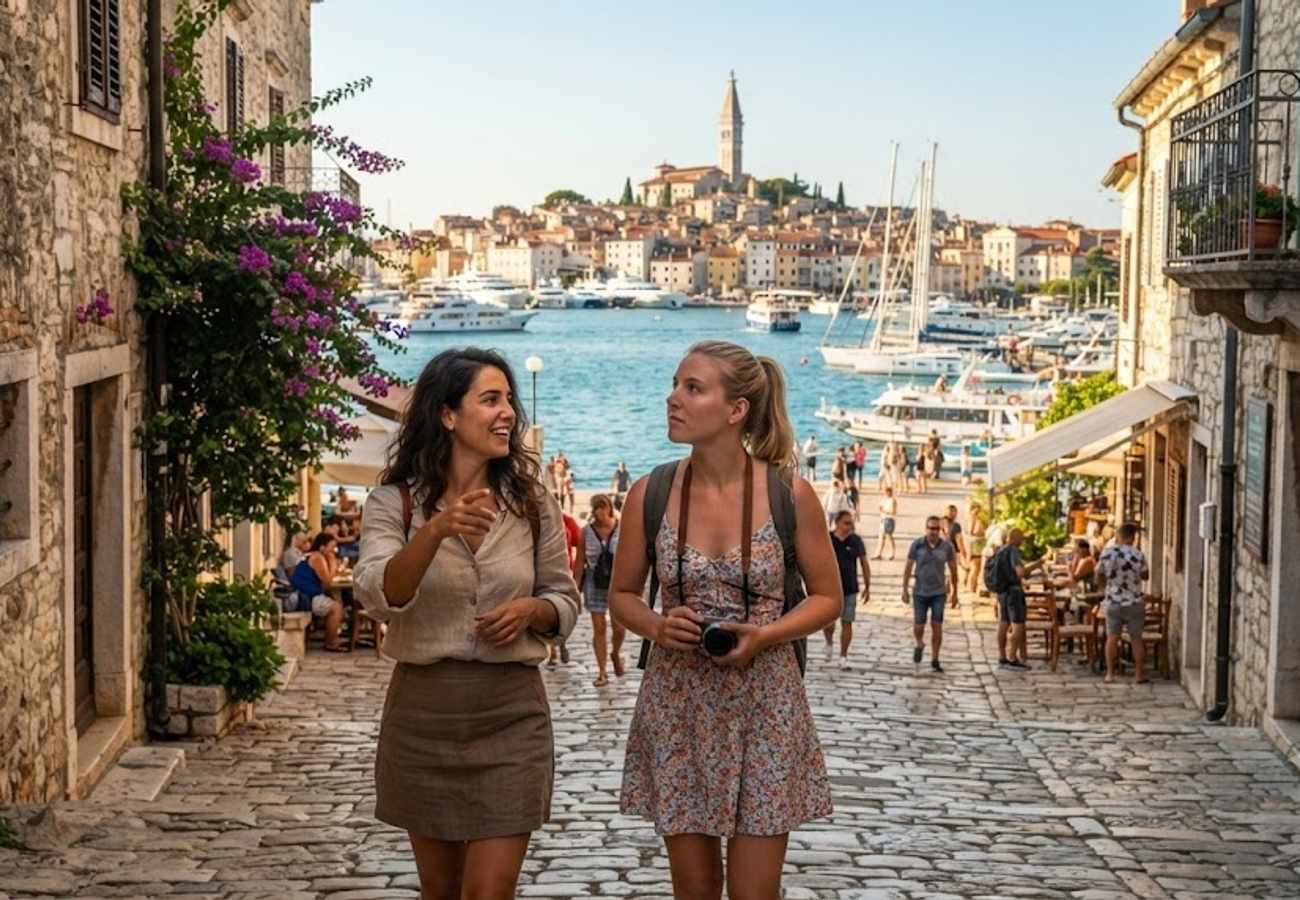
Image generated by AI
The Unraveling: 307 Million Tourists Flee the Middle East
The global tourism engine is sputtering. In the first quarter of 2026, an estimated 307 million international tourists travelled worldwide, marking a decisive 2% year-on-year growth. But beneath that seemingly stable headline lies a profound geographic catastrophe: the Middle East has collapsed by 14%, creating the most dramatic tourism redistribution since the pandemic.
This isn't gradual decline. This is a seismic shift.
As of July 2, 2026, Beirut, Tehran, Isfahan, Shiraz, Baghdad, Erbil, Damascus, Homs, and Sana'a are operating under explicit "Do Not Travel" designations from the U.S. State Department and International SOS. The result? A historic rerouting of global tourist flows toward Croatia, Montenegro, and Albania—regions previously relegated to niche markets for budget travelers and adventure seekers.
What's happening is unprecedented. The world's tourism map is being redrawn in real time.
The Numbers That Tell the Story
To understand the scale of this disruption, we need the data. In 2025, global tourism hit 1.52 billion international arrivals, generating USD 1.9 trillion in tourism receipts and USD 2.2 trillion in total export revenues (including passenger transport). This represented a definitive return to long-term growth trends, averaging 5% annually.
That trajectory hit a wall.
UN Tourism initially projected robust 3% to 4% growth for 2026. Current forecasts now predict losses of 1 to 2 percentage points, depending entirely on the duration and escalation of Middle Eastern hostilities. Here's the regional breakdown:
Europe: +4% growth (~130 million arrivals), driven by shoulder-season travel and massive overflow to "Italy-adjacent" destinations like Albania and Montenegro.
Africa: +4% growth (~81 million arrivals), with North Africa performing strongly despite sub-Saharan infrastructure challenges.
Asia-Pacific: +3% growth, remaining 11% below 2019 benchmarks but steady, with Oceania leading at +9%.
The Americas: +2% growth, fueled by a stunning +18% boom in Central America despite a 1% South American contraction.
Middle East: -14% collapse, driven by active conflict, airspace closures, and government travel bans.
The data is brutally clear: where stability exists, travelers flood in. Where danger lingers, they evaporate.
The No-Travel Zones: Understanding the Exclusion
The aftermath of the U.S.–Israel military campaign against Iran has created explicit exclusion zones across the Middle East. While a fragile temporary ceasefire extension technically exists, major government bodies maintain uncompromising restrictions.
Beirut, Lebanon: Despite occasional localized ceasefires, Lebanon remains under Level 4 ("Do Not Travel") designations. Residual impacts from Israeli air campaigns and persistent ground tensions along the southern border mean military escalation can occur without warning. International risk agencies continue advising complete evacuation of foreign nationals.
Tehran, Isfahan, and Shiraz, Iran: Following devastating military strikes, Iran faces massive internal instability. Severe economic collapse, coupled with strict international sanctions, has triggered the "Winter Uprising" protests—widespread civil unrest causing complete breakdowns in police authority and triggering violent government crackdowns. These cities are entirely unnavigable for outsiders.
Baghdad and Erbil, Iraq: High security risks persist. Active, decentralized insurgent forces and Iran-aligned militia groups retain the capability to target transport infrastructure and Western assets, making non-essential travel an extreme gamble.
Damascus and Homs, Syria: Facing profound internal "Shadow Government" crises alongside resurgent Islamic State forces, these cities experience inter-religious violence and perpetual urban insurgency threats. Both remain entirely unsafe.
Sana'a, Yemen: Proxy rivalries, drone and missile deployments, and maritime route threats ensure Yemen remains an absolute no-travel zone.
Reddit: "Just booked Croatia instead of the Maldives. Same budget, infinitely safer, and honestly? Way more interesting." — r/travel
The Pivot: "Coolcationing" Reshapes Luxury Travel
Faced with these restrictions, the luxury travel sector has undergone a philosophical revolution. According to mid-2026 booking data from the Global Travel Collection (GTC), affluent travelers are actively outsmarting geography and geopolitics.
The trend is called "Coolcationing."
Instead of sweltering in overcrowded European summers or navigating geopolitical landmines, ultra-high-net-worth travelers are deliberately pivoting toward Nordic countries, the Arctic, and Greenland. The data? Stark. European summer bookings among ultra-high-net-worth individuals have dropped 10% in 2026, while fall and shoulder-season bookings have spiked 25%.
This reflects a deeper truth: luxury in 2026 means autonomy, climate resilience, and escaping the geopolitical grid entirely.
The concurrent rise of "anti-tourism" reinforces this shift. Secondary destinations—quiet Greek islands, lesser-known Asian locations, Croatian coastal towns—are cannibalizing demand from traditional Mediterranean hotspots. Travelers want authenticity, safety, and escape from Instagram-saturated landmarks.
The Technology Accelerant: AI-Driven Bookings and Crypto Payments
Beyond geopolitical factors, technology is radically reshaping how trips get planned. Over 80% of travelers now use generative AI for trip planning, and one-third have authorized autonomous bookings—allowing AI systems to execute reservations without human intervention.
Meanwhile, cryptocurrency payments are gaining traction, while favorable exchange rates are driving arbitrage-conscious travelers toward undervalued destinations. These shifts are compounded by booming wellness tourism, featuring biomarker testing and longevity treatments—trends particularly strong in Central America, Southeast Asia, and Eastern Europe.
The modern traveler isn't choosing destinations based on prestige anymore. They're deploying real-time financial, safety, and climate data to optimize coordinates toward regions offering structural stability, favorable currency conversion, and escape from overcrowded traditional hotspots.
The Structural Winner: Eastern Europe's Moment
The clear beneficiaries of this historic redistribution are Croatia, Montenegro, and Albania. These regions, once considered "emerging" or "secondary," are now capturing overflow from the paralyzed Middle East and overcrowded Western Mediterranean.
Croatia is experiencing record summer bookings, particularly along the Dalmatian coast. Dubrovnik, Rovinj, and Split are reaching capacity months earlier than historical patterns. Hotels are reporting 95%+ occupancy rates through September.
Montenegro's Kotor Bay—long overshadowed by Croatia—is suddenly experiencing mass discovery. Boutique hotels in Perast and Tivat report advance bookings extending into 2027. The region's combination of affordability, dramatic coastlines, and relative anonymity has proven irresistible.
Albania's Riviera has transformed from backpacker territory into mainstream luxury destination. Boutique resorts in Sarandë and Vlorë are commanding premium pricing, with year-round occupancy trending upward.
These aren't marginal gains. Regional tourism boards report 30-40% increases in international arrivals compared to early 2026 projections.
What This Means for the Global Tourism Industry
The 2026 crisis represents a permanent structural shift in how global tourism operates. Three key insights emerge:
First, geopolitical risk is now priced into booking decisions in real time. Travelers monitor U.S. State Department travel advisories and International SOS risk maps with the same intensity they check weather forecasts.
Second, secondary destinations have permanent advantage. Once travelers discover Croatia's value proposition, they don't return to overcrowded alternatives. Market share loss is permanent.
Third, technology and financial flexibility are now table stakes. Travelers expect AI-powered recommendations, dynamic pricing, and alternative payment methods. Legacy booking models are losing ground.
The Middle East's tourism implosion will persist as long as geopolitical tensions remain. UN Tourism now estimates the region could lose USD 15-20 billion in annual tourism receipts through 2027. That capital is being redistributed to Europe, Asia, and the Americas—permanently shifting competitive advantage toward secondary destinations with structural stability.
The question isn't whether this shift is temporary. The data suggests it's permanent.
The world's travelers have voted with their wallets, and the results are irreversible.
Related Travel Guides
Disclaimer
This article is for informational and educational purposes only. It does not constitute legal, financial, or professional advice. While we strive to provide accurate and up-to-date information, travel policies, regulations, and conditions change rapidly. Always verify information with official sources before making travel decisions. Nomad Lawyer makes no representations about the accuracy, reliability, completeness, or suitability of the information provided. Readers should consult qualified professionals for advice specific to their circumstances. The views expressed in this article are those of the author and do not necessarily reflect the views of Nomad Lawyer.
Raushan Kumar
Founder & Lead Developer
Full-stack developer with 11+ years of experience and a passionate traveller. Raushan built Nomad Lawyer from the ground up with a vision to create the best travel and law experience on the web.
Learn more about our team →