
Malaysia vs Thailand 2026: Which Destination Suits Your Travel Style Better
Malaysia and Thailand compete for Southeast Asian travelers in 2026. Compare temples, beaches, culture and costs to decide which destination matches your travel priorities this year.

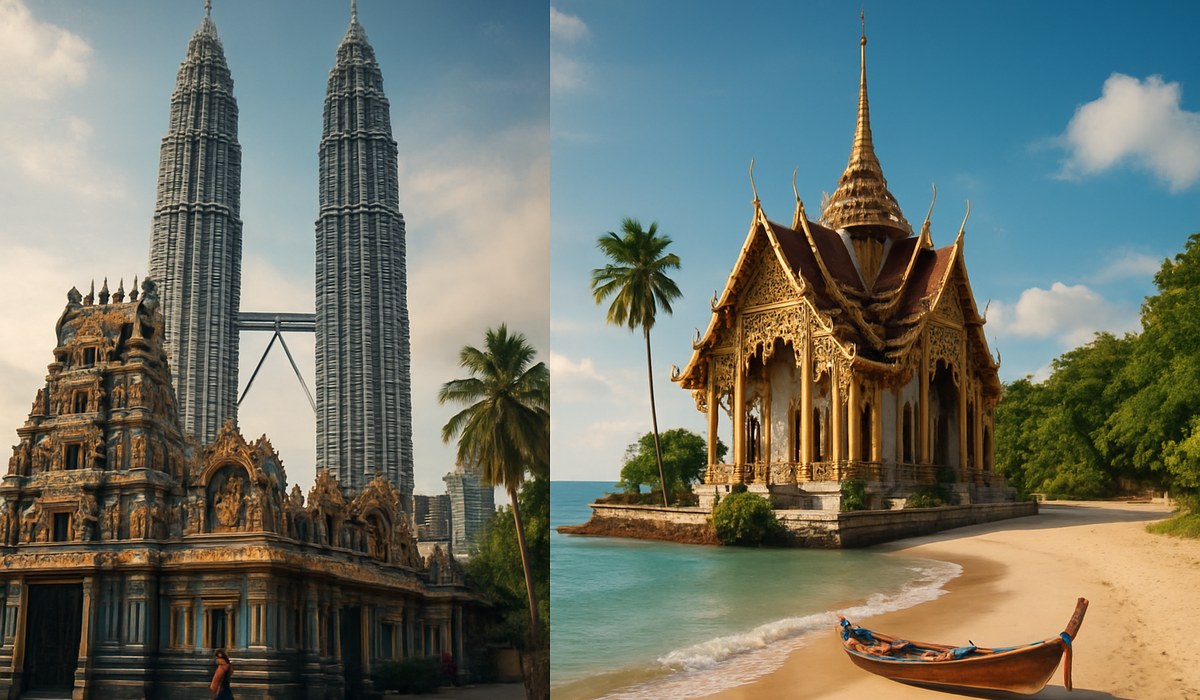
Image generated by AI
Choosing Between Malaysia and Thailand: A 2026 Comparison for Smart Travelers
Malaysia and Thailand dominate Southeast Asian itineraries, yet each destination delivers distinctly different experiences. Thailand draws over 39 million annual visitors to its famous temple complexes, island resorts and electric urban centers. Malaysia attracts growing numbers seeking multicultural heritage, quieter beaches and seamless English-language navigation. Understanding which destination aligns with your travel priorities helps travelers maximize their time and budget in the region.
Both nations offer tropical climates, Buddhist temples, street food culture and affordable accommodations. However, the vibe, accessibility and cultural landscape differ significantly. This comparison examines the critical factors that shape the Malaysia vs Thailand decision in 2026.
Overall Atmosphere: Bangkok Energy Versus Kuala Lumpur Order
Bangkok creates sensory overload from arrival; Kuala Lumpur offers a gentler urban introduction. The Thai capital pulses with neon signs, tuk-tuk horns and street vendors operating until midnight. Travelers stepping off planes at Suvarnabhumi Airport enter a city that rarely sleeps. Markets, temples and nightlife blur together on bustling streets where personal space becomes precious.
Kuala Lumpur presents a different rhythm. The skyline anchors around the Petronas Twin Towers and modern office parks, but neighborhoods transition rapidly to air-conditioned shopping malls and tree-lined residential streets. The mood remains urban yet measured, businesslike during daylight hours and dining-focused rather than party-centric after dark.
First-time Southeast Asia visitors often find Thailand's sensory intensity overwhelming. Malaysia frequently appeals to travelers who prioritize organized public transport, personal space and lower-key tourism culture. Both destinations welcome millions annually, but Thailand maintains stronger global recognition, while Malaysia's relative anonymity means fewer crowds at major attractions across the destination.
Visit official Thailand tourism and Malaysia tourism board for current visitor statistics and travel advisories.
Cultural Heritage: Buddhist Temples Versus Multicultural Tapestry
Thailand's cultural narrative centers on Theravada Buddhism and Thai monarchy, while Malaysia showcases religious and ethnic diversity. Golden temples, saffron-robed monks and royal portraits permeate Thai daily life. Buddhist art dominates the cultural landscape, creating a cohesive, though geographically nuanced, national identity.
Malaysia's population comprises Malays (primarily Muslim), large Chinese communities and significant Indian populations. Travelers encounter mosques, Hindu temples and Chinese clan houses within walking distances of each other, especially in Penang and Melaka. This multicultural reality shapes everything from cuisine to calendars, with Islamic, Chinese and Hindu festivals equally visible throughout the year.
Language accessibility distinguishes these destinations for English-speaking travelers. Thailand's Thai script and language dominate; English proficiency concentrates in tourism hubs and major cities. Outside these zones, communication becomes challenging. Malaysia, shaped by British colonial legacy and its regional business importance, integrates English throughout cities and tourist areas. Bilingual signage and widespread English fluency among service workers create smoother navigation and interactions for international travelers.
The destination choice depends on cultural interests. Those seeking Buddhist temple immersion and traditional meditation retreats favor Thailand. Travelers interested in visible religious diversity, colonial architecture and multicultural neighborhoods find Malaysia especially rewarding for exploration and cultural exchange.
Beach Experiences: Famous Resort Islands Versus Quieter Coastal Retreats
Thailand's Andaman coast features world-renowned islands with developed infrastructure; Malaysia offers calmer beaches with fewer crowds. Thai islands like Phuket, Krabi, Koh Samui and Koh Tao carry global recognition. These destinations range from luxury international resort complexes to rustic village bungalows. Longtail boats, limestone cliffs and turquoise waters define the Thai seascape in international travel imagery.
Malaysia's coastline attracts different traveler types. Langkawi in the northwest and the Perhentian and Redang island groups draw families, divers and independent explorers preferring quieter scenes. Nightlife remains subdued compared to Thai party hotspots. Beaches experience fewer visitors. Development spreads more spaciously, preserving a less commercialized atmosphere.
Borneo's Malaysian states—Sabah and Sarawak—offer wildlife-immersive experiences unavailable in Thailand. Jungle river safaris, wildlife spotting and Mount Kinabalu climbing attract adventure-focused travelers. This inland dimension adds substantial depth to Malaysian beach and island options.
Diving quality appears across both destinations. Thailand's Similan Islands and Koh Tao deliver accessibility and budget-friendly options. Malaysia's Sipadan Island ranks globally for serious divers seeking pristine coral and larger pelagic species. For beach vacation preferences, TripAdvisor reviews provide current traveler feedback on specific islands and resorts.
Best Time to Visit: Seasonal Patterns and Climate Considerations
Both destinations experience tropical climates with distinct wet and dry seasons requiring careful timing. Thailand's dry season runs November through February, delivering cool temperatures and minimal rainfall across most regions. This period attracts peak visitor numbers and commands premium accommodation prices. March through May brings heat and occasional pre-monsoon storms, while May through October represents the rainy season with higher humidity and lower tourism volume.
Malaysia's seasonal timing varies by location. Peninsula Malaysia experiences dry weather from December through March, while the east coast becomes impassable during November through March monsoons. Sabah and Sarawak on Borneo operate on different patterns, with drier periods from May through September. This complexity means choosing specific regions rather than the entire country.
March 2026 marks shoulder season for Thailand, offering manageable crowds and acceptable weather before peak summer heat. Malaysia's peninsula remains favorable in March, though east coast islands remain inaccessible. For Borneo exploration, March presents sub-optimal conditions.
Strategic timing amplifies travel quality significantly. Visiting outside November-February crowds reduces accommodation costs by 30-40 percent while maintaining acceptable weather. Early morning temple visits in March beat crowds that materialize by mid-morning in popular Thailand destinations. Planning around monsoons in Malaysia's east coast regions prevents wasted travel days entirely.
How to Get There: Airport Access and Regional Connectivity
Bangkok and Kuala Lumpur serve as primary gateways, with direct flights from North America, Europe and Australia. Suvarnabhumi Airport (BKK), Bangkok's main international hub, handles over 65 million annual passengers. Most major carriers offer direct routes from major Western cities. Kuala Lumpur International Airport (KUL) similarly attracts direct service from major global cities, with Malaysia Airlines and regional carriers offering competitive pricing.
Flight duration from US West Coast reaches approximately 17-20 hours to Bangkok and 18-21 hours to Kuala Lumpur, including connections. European departures require 14-16 hours direct service. Both airports offer excellent ground transportation into city centers via airport rail links, shared shuttles and ride-sharing services costing under $15 USD.
Choosing between gateways depends on itinerary design. Bangkok flights often undercut Kuala Lumpur pricing due to higher competition. However, Kuala Lumpur positioning benefits travelers planning Malaysia-first itineraries. Regional travel between destinations involves short flights (90 minutes) on AirAsia, Malaysia Airlines or Thai Airways, costing $30-80 USD depending on timing.
Lonely Planet's transport guides detail current flight schedules, booking strategies and overland crossing options. Many travelers book open-jaw tickets (arrive Bangkok, depart Kuala Lumpur) to maximize exploration without backtracking.
Practical Traveler Considerations: Visas, Costs and Safety
Both nations offer straightforward visa access, affordable daily budgets and reliable safety infrastructure for international tourists. Thailand grants most Western nationalities 30-day visa-exempt entry. Malaysia similarly permits visa-free stays of 30 days for US, UK, Australian and Canadian passport holders. Extensions require local immigration office visits costing minimal fees.
Daily budget calculations demonstrate comparable affordability. Budget travelers eat at street stalls and local restaurants for $3-5 daily meals, secure guesthouse beds for $8-15 nightly and use local transport for $0.50-2.00 per journey. Mid-range travelers spending $30-50 daily access comfortable hotels, tourist-friendly restaurants and organized tours. This identical cost structure makes budget considerations less decisive than experience preferences.
Safety records remain strong across both destinations' primary tourist zones. Petty theft and tourist scams exist in high-traffic areas, but violent crime affecting visitors remains statistically rare. Thailand experiences occasional political demonstrations in Bangkok, though these rarely impact tourist areas. Malaysia maintains consistently stable conditions throughout tourist regions.
Currency considerations matter for budgeting. The Thai Baht (฿) trades around 30-35 per US dollar; the Malaysian Ringgit (RM) trades around 4.2-4.6 per dollar. ATM networks function reliably in both countries, with minimal withdrawal fees. Credit cards face acceptance in most tourist establishments but less frequently in local neighborhood businesses.
Comparison Table: Key Destination Metrics
| Factor | Thailand | Malaysia |
|---|---|---|
| Annual International Arrivals | 39+ million (2025) | 18+ million (2025) |
| Primary Gateway Airport | BKK (Suvarnabhumi) | KUL (Kuala Lumpur Intl) |
| English Proficiency in Tourist Areas | Moderate (50-60%) | High (75-85%) |
| Visa Duration for Western Nationals | 30 days visa-exempt | 30 days visa-exempt |
| Daily Budget (Budget Traveler) | $25-35 USD | $25-35 USD |
| Popular Beach Season | November-February | December-March |
| Estimated Accommodation Costs | $10-30 per night | $12-32 per night |
| Primary Cultural Focus | Buddhism, Thai monarchy | Multicultural (Islam, Buddhism, Hinduism) |
| Major Adventure Activities | Island hopping, meditation retreats | Jungle trekking, wildlife safaris, diving |
| Traveler Crowds at Peak Sites | Very high (peak season) | Moderate-to-high (varies by location) |
What This Means for Travelers in 2026
Selecting between Malaysia and Thailand depends on personal priorities rather than inherent destination superiority. Consider these concrete decision factors:
-
Choose Thailand if you prioritize iconic beach resort experiences, established backpacker infrastructure, temple-intensive cultural immersion and high-energy nightlife scenes. Expect crowds at famous sites, higher tourism infrastructure maturity and extensive English-language tourism resources.
-
Choose Malaysia if you value quieter beaches, visible cultural diversity, easier English-language navigation, and adventure activities like jungle exploration and wildlife encounters. Accept more limited English outside major cities than Thailand offers.
-
Combine both destinations by routing through Bangkok (more flight options, competitive pricing) and exiting through Kuala Lumpur. This approach maximizes distinct experiences across a single trip without backtracking.
-
Time your travel around March-May or August-October to access shoulder seasons, lower prices and fewer crowds while maintaining acceptable weather.
-
Book regional flights early for routes between Bangkok and Kuala Lumpur (typically under $60 when booked 4+ weeks ahead) and consider 2-3 nights minimum in each country to justify transition logistics.
-
Arrange ground transportation before arriving—airport rail links and ride-sharing handle connections efficiently, preventing taxi scams and transportation confusion upon arrival.
Frequently Asked Questions
Which destination suits first-time Southeast Asia travelers: Malaysia or Thailand? Malaysia often appeals more to first-time visitors due to stronger English proficiency, organized public transport and lower-key atmosphere. However, experienced backpackers frequently prefer Thailand's established tourism infrastructure and iconic experiences. The choice depends on whether you prioritize ease-of-navigation or cultural intensity.
Is Malaysia Thailand which destination better for families traveling with children? Malaysia edges ahead for families due to English language accessibility, air-conditioned malls offering climate breaks and calmer beach environments. Quieter Malaysian islands involve less nightlife distraction. Thailand works equally well for families with young children in resort areas; however, Bangkok requires more navigation caution with busy streets and traffic.
Which destination offers better value: Malaysia or Thailand travel in 2026? Daily costs remain nearly identical—both budget approximately $25-35 for budget travelers and $50-100 for mid-range visitors. Thailand's higher visitor volume sometimes increases accommodation prices in peak season. Malaysia's lower international tourist numbers can yield better availability and occasional discounts during shoulder seasons.
Malaysia Thailand which offers superior beach diving and snorkeling opportunities? Thailand's Koh Tao provides world-class dive training and accessibility. Malaysia's Sipadan Island ranks among global top-20 dive sites for advanced divers. For casual snorkeling, Thailand offers easier access from resort islands. Malaysia requires more planning but rewards serious divers with pristine conditions and unique species encounters.
Related Travel Guides
The 9 Best Bucket List Destinations Across 50 States
Best European Cities for Solo Female Travelers
The 10 Best Islands in Thailand and Malaysia, According To Reddit
Disclaimer
This article is for informational and educational purposes only. It does not constitute legal, financial, or professional advice. While we strive to provide accurate and up-to-date information, travel policies, regulations, and conditions change rapidly. Always verify information with official sources before making travel decisions. Nomad Lawyer makes no representations about the accuracy, reliability, completeness, or suitability of the information provided. Readers should consult qualified professionals for advice specific to their circumstances. The views expressed in this article are those of the author and do not necessarily reflect the views of Nomad Lawyer.
Raushan Kumar
Founder & Lead Developer
Full-stack developer with 11+ years of experience and a passionate traveller. Raushan built Nomad Lawyer from the ground up with a vision to create the best travel and law experience on the web.
Learn more about our team →