
Wizz Air Joins United, Lufthansa, IAG in Starlink Wi-Fi Revolution—2027 Fleet Rollout Begins
Wizz Air becomes Europe's first ULCC to deploy fleet-wide Starlink internet. United Airlines, Lufthansa Group, and IAG follow suit as inflight connectivity becomes the new competitive battleground.

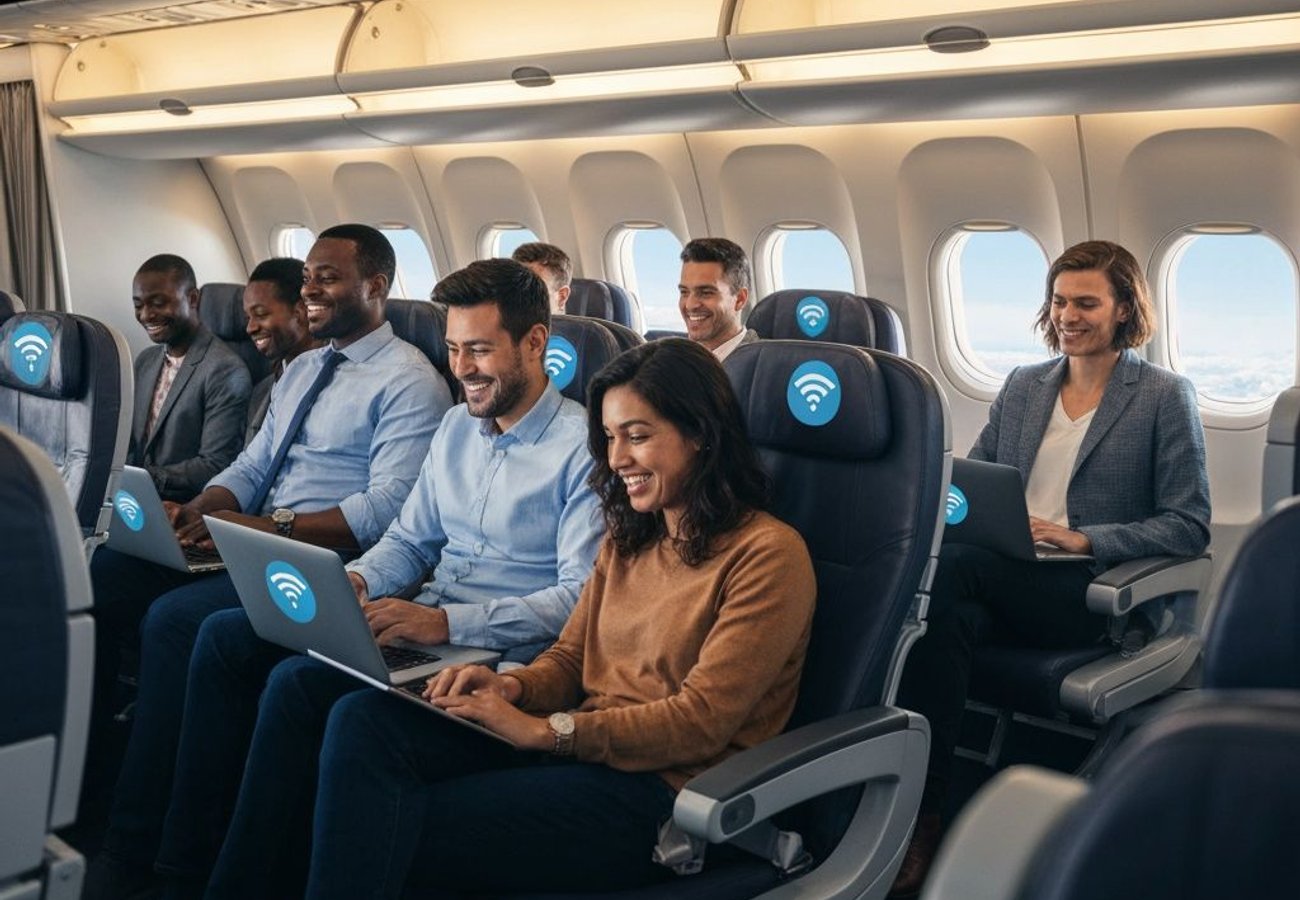
Image generated by AI
The Connectivity Wars Have Officially Begun—And Budget Airlines Are Leading the Charge
Europe's low-cost airline sector just fundamentally changed the inflight experience equation. Wizz Air announced a sweeping fleet-wide rollout of Starlink Wi-Fi beginning in 2027, positioning itself as the first European ultra-low-cost carrier to deploy SpaceX's satellite-powered internet across its entire operation. But here's what makes this announcement genuinely disruptive: it's forcing major legacy carriers like United Airlines, Lufthansa Group, and IAG to accelerate their own next-generation connectivity investments or risk looking antiquated.
The global airline industry just entered a new competitive frontier—and it's not about ticket prices anymore.
Why This Matters More Than You Think
For years, budget carriers competed on one metric alone: cost. Wizz Air undercut competitors on fares, kept seats narrow, and maximized turnaround times. That formula worked brilliantly for a decade. But passengers have evolved. Today's travelers expect their airplane cabin to function as an extension of their connected life on the ground.
Reddit: "I've stopped booking airlines without solid Wi-Fi. I work remote. If I can't email or video call at 30,000 feet, that airline doesn't exist to me anymore." — r/digitalnomad
Wizz Air recognized this shift first. By committing to Starlink's low-Earth-orbit satellite architecture, the carrier is essentially saying: "We're not just cheap anymore—we're cheap AND connected." That's a devastating competitive positioning.
The Technical Advantage That Changes Everything
Traditional inflight internet has always been a compromise. Older satellite systems transmit data from geostationary orbit roughly 22,000 miles above Earth. The result? Latency measured in full seconds. Streaming stutters. Video calls freeze. Work becomes frustrating.
Starlink operates completely differently. Its constellation orbits at roughly 340 miles altitude—66 times closer to Earth. This proximity translates to measurably faster data transmission, lower latency, and reliability that actually matches ground-based broadband expectations.
For business travelers, that's transformative. For leisure passengers streaming Netflix during a 12-hour transatlantic flight, it's the difference between buffering hell and seamless entertainment.
The technology gap between legacy inflight Wi-Fi and Starlink isn't marginal. It's seismic.
The Domino Effect: Why United, Lufthansa, and IAG Are Scrambling
United Airlines didn't wait long to signal its own Starlink commitment. Neither did Lufthansa Group—which operates Lufthansa, Swiss, Austrian, and Brussels Airlines. IAG, parent company of British Airways, Iberia, and Aer Lingus, similarly announced connectivity upgrades.
They weren't racing to match Wizz Air's innovation out of admiration.
These legacy carriers watched a budget operator make connectivity a defining competitive advantage—and realized the threat was real. Business travelers might tolerate narrow seats at Wizz Air fares if they can answer emails at 35,000 feet. Premium cabin passengers at legacy carriers might defect to budget competitors offering equivalent digital experience at half the price.
That dynamic has fundamentally inverted the traditional airline hierarchy.
What This Means for Your Next Flight: A Timeline
Wizz Air's deployment begins in 2027, with fleet-wide coverage expected by 2028-2029. United Airlines, Lufthansa Group, and IAG are pursuing similarly aggressive timelines, though specific launch dates remain proprietary.
What travelers should expect by 2027-2028:
- Seamless video conferencing at cruise altitude
- Streaming quality matching ground-based broadband
- Real-time messaging and social media without delays
- Cloud-based productivity tools functioning normally
- Global coverage across international routes to Europe, Middle East, Asia, and Africa
The competitive pressure created by Wizz Air's announcement is directly accelerating this technology deployment. Legacy carriers that move slowly risk losing digitally native passengers—particularly remote workers, digital nomads, and business travelers.
The Bigger Picture: Connected Travel as a Business Imperative
This isn't just about inflight Wi-Fi anymore. Airlines are recognizing a fundamental shift in passenger expectations.
Connectivity is no longer a luxury amenity. It's a baseline requirement. Airlines that fail to deliver seamless internet access across their fleets risk commoditization—competing solely on price and route networks. Airlines that successfully integrate connectivity into their brand identity create genuine competitive differentiation.
Wizz Air understood this first. By betting on Starlink before legacy carriers even committed, the carrier has positioned itself as the technological innovator in the budget segment. That perception matters enormously when shaping brand positioning and customer loyalty.
The result: every major airline with significant international operations is now forced into accelerated Starlink deployment. The competitive cascade Wizz Air initiated will likely reshape global airline connectivity infrastructure within 36 months.
What Happens to Legacy Systems? They Get Phased Out
Airlines deploying Starlink are essentially writing off their existing inflight internet infrastructure. That's a significant capital commitment—but the competitive necessity has become undeniable.
Within 5-7 years, traditional satellite-based inflight Wi-Fi will likely become a relic. Passengers will expect Starlink-quality connectivity as the default standard, not as a premium feature.
This represents one of the most significant technology transitions in commercial aviation since the introduction of WiFi itself in the early 2000s. And it's happening faster than most analysts expected—precisely because budget carriers like Wizz Air forced the competitive timeline.
The skies just got a whole lot more connected—and nobody's flying blind anymore.
Related Travel Guides
-
Bell Army Advances to Final Round of US Army Helicopter Training Competition
-
Airlines Converting Retired Boeing 777s Into Freighters as Cargo Demand Outpaces Aircraft Supply
Disclaimer: This article reflects airline announcements and technology timelines as of June 2026. Actual deployment dates, coverage availability, and service pricing may vary by airline and route. Passengers should verify specific Starlink availability with their carrier before booking. This content is for informational purposes and does not constitute travel advice or endorsements of any airline or technology provider.
Raushan Kumar
Founder & Lead Developer
Full-stack developer with 11+ years of experience and a passionate traveller. Raushan built Nomad Lawyer from the ground up with a vision to create the best travel and law experience on the web.
Learn more about our team →