
Airlines Converting Retired Boeing 777s Into Freighters as Cargo Demand Outpaces Aircraft Supply
Breaking airline news and aviation industry updates for 2026.

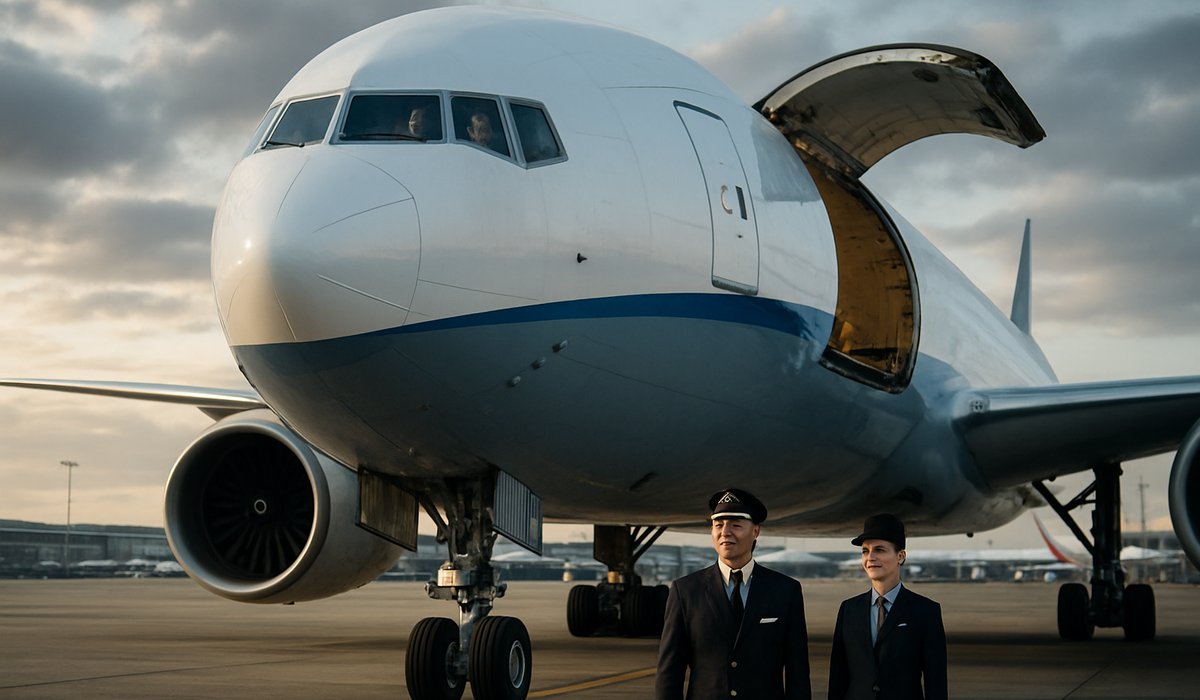
Image generated by AI
Airlines Converting Retired Boeing 777s Into Freighters as Cargo Demand Outpaces Aircraft Supply
A critical shortage of heavy-lift cargo planes forces carriers to extend the life of passenger jets through costly conversion programs
The Cargo Fleet Crisis Reshaping Global Supply Chains
The aviation industry faces an unprecedented challenge: a widening gap between cargo capacity and global shipping demand is forcing airlines to pursue unconventional solutions. Carriers are now investing heavily in converting retired Boeing 777 passenger aircraft into dedicated freight operations, a strategy that underscores the severity of equipment shortages plaguing the air cargo sector.
This shortage stems from a fundamental mismatch between retiring legacy freighters and inadequate new aircraft production. The Boeing 747 freighter—long considered the workhorse of international heavy cargo operations since its debut in the 1970s—is being retired across major carriers worldwide, leaving a capacity vacuum that factory-built replacements simply cannot fill.
The Supply-Demand Problem Driving Conversions
The primary substitute, the twin-engine Boeing 777-200F freighter, presents a critical limitation: it carries substantially less cargo volume than the quad-engine 747 it replaces. For carriers managing e-commerce logistics, parcel delivery, and time-sensitive freight routes—sectors experiencing explosive growth—this payload reduction creates operational bottlenecks that threaten profitability.
Rather than wait for new aircraft deliveries, which face extended lead times and supply chain delays, airlines are turning to aircraft conversion specialists. By retrofitting withdrawn 777 passenger variants with cargo-specific configurations—including reinforced flooring, removal of passenger seats, installation of specialized loading systems, and reconfigured fuselage structures—carriers unlock additional freight capacity without purchasing new aircraft.
Economic Drivers Behind the Strategy
The economics are compelling. Converting a retired passenger Boeing 777 into a dedicated freighter costs substantially less than acquiring a new-production aircraft, while offering immediate capacity relief. As e-commerce volumes continue accelerating globally and traditional belly-cargo space proves insufficient, the conversion model has become increasingly attractive to major international carriers seeking cost-effective solutions.
This trend also reflects broader supply chain vulnerabilities exposed during recent years of disrupted manufacturing. Aircraft production backlogs, particularly for specialized freighter variants, have created a multi-year wait for new equipment—time carriers cannot afford to lose amid peak demand periods.
Industry-Wide Implications
The conversion surge signals that global logistics infrastructure remains fundamentally constrained, with aviation capacity struggling to keep pace with digital commerce expansion. Airlines are absorbing conversion costs as a necessary investment to capture profitable cargo revenue during a period of structural capacity undersupply.
As fleet modernization continues across the industry, carriers expect conversion programs to remain viable for several years, effectively extending the operational life of Boeing 777 variants and reshaping long-term freight network architecture.
FAQ: Airline Cargo Conversions and Aviation Supply
Why are airlines converting passenger Boeing 777s into freighters? Carriers face a critical shortage of dedicated cargo aircraft. Aging Boeing 747 freighters are retiring faster than new aircraft can be delivered, forcing airlines to convert available passenger jets to meet surging e-commerce and logistics demand.
What's wrong with the Boeing 777-200F freighter? While it's the primary new heavy-lift aircraft in production, the twin-engine 777F carries measurably less cargo volume than the quad-engine 747 it replaces, creating insufficient capacity for volume-intensive e-commerce routes driving industry growth.
How much does it cost to convert a Boeing 777 into a freighter? Conversion costs vary by specialist and aircraft condition, but typically range significantly lower than purchasing new production aircraft—making it economically attractive despite substantial engineering and labor requirements.
Is this conversion trend temporary or long-term? Industry analysts expect conversion programs to remain prevalent for several years as manufacturing backlogs persist and e-commerce demand continues expanding, effectively extending Boeing 777 operational lifespans.
Which airlines are pursuing these conversion programs? Major international carriers with substantial cargo operations are investing in conversions, though specific programs vary by fleet composition and geographic route networks.
Related Travel Guides
Flight Delay Compensation Guide 2026
Understanding Airline Route Changes
Airport Security Process Updated (2026)
External Resources
Disclaimer
This article is for informational and educational purposes only. It does not constitute legal, financial, or professional advice. While we strive to provide accurate and up-to-date information, travel policies, regulations, and conditions change rapidly. Always verify information with official sources before making travel decisions. Nomad Lawyer makes no representations about the accuracy, reliability, completeness, or suitability of the information provided. Readers should consult qualified professionals for advice specific to their circumstances. The views expressed in this article are those of the author and do not necessarily reflect the views of Nomad Lawyer.
Kunal K Choudhary
Co-Founder & Contributor
A passionate traveller and tech enthusiast. Kunal contributes to the vision and growth of Nomad Lawyer, bringing fresh perspectives and driving the community forward.
Learn more about our team →