
Breaking Airline News: Wizz Air Deploys Massive Fleet-Wide Starlink Shield to Rescue European Passengers from Digital Travel Chaos
Breaking airline news: Amidst a terrifying era of massive passenger congestion, Wizz Air executes a brilliant technological bypass, deploying Starlink Wi-Fi to rescue travelers from extreme digital isolation during travel chaos.

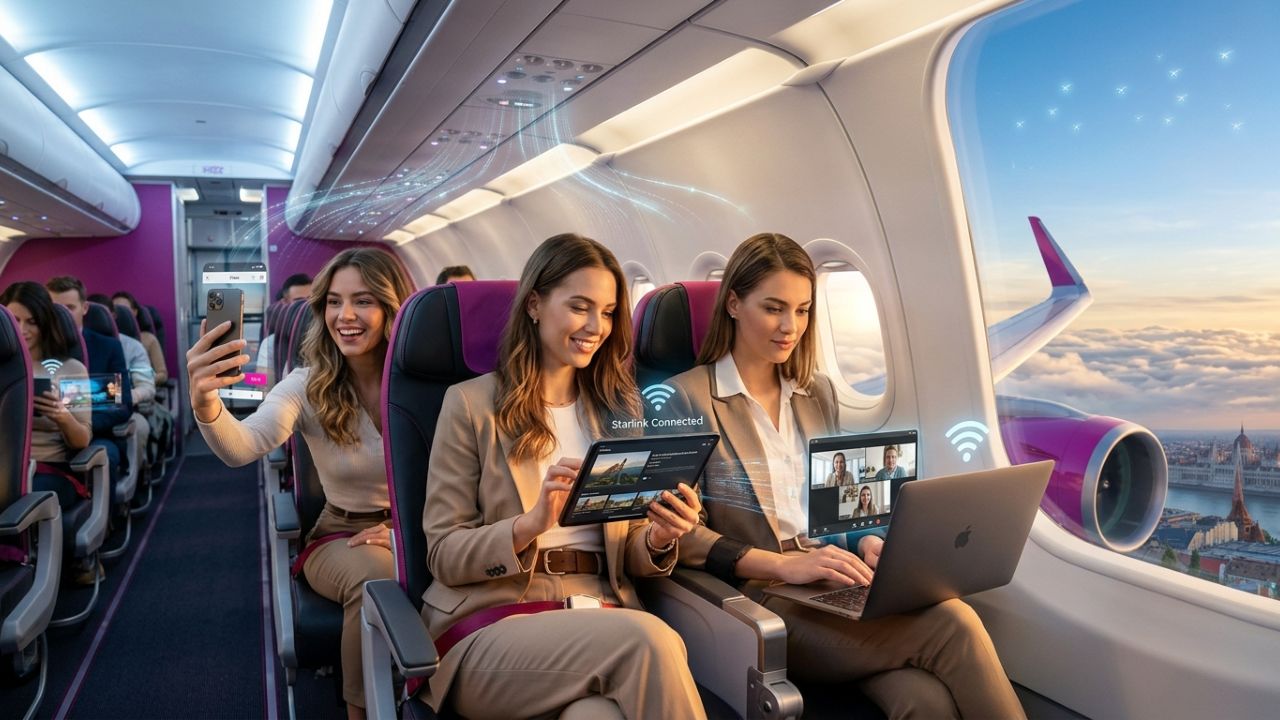
Image representing the intense strategic battle as global aviation authorities aggressively deploy advanced satellite technology to combat severe passenger stress and bypass paralyzing digital isolation during European travel chaos.
Breaking Airline News: Wizz Air Deploys Massive Fleet-Wide Starlink Shield to Rescue European Passengers from Digital Travel Chaos
As paralyzing airport disruptions, highly constrained operational bandwidth, and severe airspace friction violently threaten to completely choke the European aviation network, a massive ultra-low-cost carrier has executed a high-stakes technological maneuver. In a desperate bid to physically and psychologically rescue international business travelers and budget tourists from the terrifying threat of extreme digital isolation during massive flight delays, Hungary’s Wizz Air has aggressively launched a massive tactical bypass. Officially scheduled for an explosive fleet-wide rollout beginning in early 2027, the airline will universally deploy advanced Starlink Wi-Fi across its entire aircraft grid. By forcefully establishing this critical low-Earth orbit defense perimeter, this massive deployment is directly fighting to prevent the complete collapse of passenger morale, ensuring that furious travelers are no longer trapped by the terrifying unreliability and severe communications blackouts historically defining paralyzed, budget transit routes.
In a harrowing display of modern aviation strategy, the sheer volume of travelers currently overwhelming standard European transit corridors is forcing airline executives to completely rewrite their operational blueprints. For years, attempting to survive a massive ground stop or a grueling three-hour tarmac delay on an ultra-low-cost carrier meant enduring excruciating digital isolation, completely cut off from corporate networks and emergency family communications. Traditional inflight Wi-Fi systems, crippled by extreme latency, frequently triggered terrifying logistical bottlenecks for stranded passengers attempting to frantically rebook ruined itineraries. However, Wizz Air is aggressively fighting back against this structural nightmare. By forcefully integrating SpaceX's highly advanced Starlink technology, the carrier ensures that passengers can violently slash their exposure to cascading communication failures. This highly optimized technological model completely decompresses passenger anxiety, ultimately shielding millions of travelers from the agonizing misery of being totally disconnected during sudden, network-wide transport meltdowns.
Expanded Overview: The Massive Scale of the Digital Contagion
The terrifying crisis of overwhelming passenger stress currently gripping the European transit network brutally exposes the severe limitations of archaic, geostationary satellite systems. Recognizing that aggressively funneling massive volumes of budget travelers into cramped cabins without a digital safety net leads to severe psychological friction and terrifyingly volatile cabin environments during delays, aviation authorities are attempting to forcefully decompress the tension. Traditional satellites orbit an agonizing 35,000 kilometers away, ensuring that connections instantly fail during peak travel chaos. Now, Wizz Air's massive infrastructural shift to Starlink—orbiting a mere 550 kilometers above Earth—will aggressively decentralize data processing, entirely destroying the terrifying latency that routinely sparks severe passenger frustration and establishing the Hungarian carrier as a powerfully resilient, hyper-connected gateway across the continent.
Section-Wise Breakdown: The Operational Realignment
Breaking the Digital Transit Gridlock
To survive the terrifying surge in passenger demand without triggering immediate customer service meltdowns, Wizz Air’s massive technological expansion specifically targets the highly vulnerable budget passenger market. For over a decade, travelers relying on low fares have been entirely reliant on utilizing heavily congested airport terminal Wi-Fi before boarding. By enabling massive, uninterrupted high-speed internet from the exact second a passenger boards the aircraft, the airline is establishing an impenetrable digital transit network. This highly efficient maneuver drastically improves the in-flight survival rate, immediately rescuing travelers from the terrifying threat of missing critical business emails or being unable to contact loved ones while trapped on a violently delayed aircraft.
Deploying the A321neo Tactical Shield
To guarantee the absolute reliability of this restored digital route and defend against the technological failures that doomed previous inflight Wi-Fi iterations, Wizz Air is executing a brilliant fleet integration strategy. The airline is aggressively deploying the Starlink hardware exclusively across its massive Airbus A321neo fleet. This strategic defense mechanism drastically lowers operational risk. By integrating this technology into its newest, most efficient aircraft, Wizz Air ensures that the hardware can withstand the punishing, high-frequency turnaround times required by budget carriers, without plunging passengers into the terrifying travel chaos of sudden system outages.
Defending the Passenger Experience
The massive infrastructural shift aggressively centers around completely defending the passenger’s ability to operate seamlessly during a crisis. The Starlink system forcefully enables passengers to stream high-definition video, participate in critical corporate video calls, and access massive cloud-based tools without a single second of interruption. This capability is absolutely vital when severe weather or air traffic control strikes paralyze the European airspace; passengers can now remain highly productive or deeply entertained, violently undercutting the traditional anxiety associated with low-cost travel.
Crushing Regional Competitors
Looking beyond the immediate passenger benefit, this Starlink deployment acts as a massive strategic weapon against rival legacy carriers and ultra-low-cost giants. The European market is a terrifyingly competitive battlefield. By aggressively deploying technology previously reserved strictly for massive, full-service global carriers, Wizz Air is completely bypassing traditional airline hierarchies. This massive logistical integration ensures that Ryanair and easyJet are now violently forced to compete against a carrier that offers both rock-bottom fares and absolute digital supremacy.
Strategic Aviation Technology Matrix
To fully comprehend the massive logistical and strategic fallout of this new technological alliance, corporate travel managers and affected tourists must review the exact operational metrics defining the Wizz Air Starlink deployment. The following matrix provides a granular breakdown of the specific, officially verified strategic data driving this massive disruption mitigation strategy.
| Feature | Description |
|---|---|
| Aero Terminal Antenna | Supports speeds up to 1 Gbps per unit for HD streaming and gaming |
| Low Earth Orbit | Satellites orbit 550 km above Earth, minimizing signal lag |
| Global Coverage | Ensures continuous connectivity across Europe and long-haul flights |
| Gate-to-Gate Functionality | Available during taxiing, takeoff, cruise, and landing |
| Fleet Integration | Covers Airbus A321neo aircraft, maintaining consistent service across the fleet |
Passenger Impact: Surviving the Digital Blackout
For the millions of global tourists and corporate commuters attempting to navigate the rapidly expanding European transit corridors, this massive Starlink deployment represents a highly anticipated lifeline against severe operational delays. The brutal reality of enduring terrifyingly inconsistent ground delays inflicts intense psychological stress and entirely destroys meticulously planned business itineraries. By aggressively deploying this gate-to-gate connection, Wizz Air is attempting to actively prevent the terrifying friction that results in severely abandoned travel plans and entirely ruined vacations.
Bullet-Point Summary: Starlink Impact on Budget Travel Survival
- Entertainment Access: Stream massive HD movies, shows, and music without interruption during terrifying multi-hour tarmac delays.
- Work Efficiency: Cloud apps and high-stakes corporate video calls work flawlessly, shielding business travelers from the chaos of missed meetings.
- Multi-device Support: Smartphones, tablets, and laptops operate simultaneously, preventing digital bottlenecks within families.
- Family-Friendly Options: Educational and entertainment content remains fully accessible, instantly de-escalating cabin tension with restless children.
- Competitive Differentiation: Wizz Air becomes the absolute first ultra-low-cost European carrier with a massive fleet-wide Starlink shield.
Industry Analysis: The Economics of Digital Capacity
From a strategic aviation perspective, the travel turmoil currently forcing these massive network realignments highlights the terrifying vulnerability of disconnected fleets. Industry analysts confirm that securing this massive Starlink contract is an absolute masterstroke in corporate crisis management. Historically, airlines aggressively avoided installing heavy Wi-Fi radomes due to terrifying fuel penalties. However, Starlink's advanced, low-profile Aero Terminal Antenna aggressively lowers this systemic risk, allowing Wizz Air to execute rapid, highly tactical technological expansion without exposing itself to the terrifying economic friction that destroys budget airline margins.
Conclusion: A Strategic Retreat to Ensure Aviation Survival
As the extremely critical 2027 European travel seasons approach, the massive deployment of the Starlink shield by Wizz Air represents a massive warning to legacy carriers. The aggressive maneuvering by this airline proves that capturing market dominance requires terrifyingly swift and highly optimized technological deployments, connecting passengers directly to their digital lives while shielding them from regional congestion. Corporate travel buyers and everyday passengers attempting to navigate this highly unstable era of airport disruptions must embrace these new, highly efficient digital lifelines. By acting aggressively to leverage optimized Starlink flights, travelers can successfully survive the intense travel surges and completely avoid the paralyzing threat of being disconnected during massive travel chaos.
Key Takeaways
- Massive Tactical Bypass: Wizz Air is aggressively launching a fleet-wide Starlink Wi-Fi network in early 2027 to completely bypass the digital isolation of standard budget travel.
- Crushing Regional Gridlock: The new low-Earth orbit (550 km) technology allows passengers to aggressively avoid the severe latency and terrifying dropouts of traditional airline Wi-Fi.
- Gate-to-Gate Defense Secured: By ensuring connectivity during taxiing, takeoff, and landing, Wizz Air physically shields passengers from extreme anxiety during massive ground delays.
- Fleet Integration Optimized: The advanced technology will be seamlessly integrated into the massive Airbus A321neo fleet, guaranteeing speeds up to 1 Gbps.
- Traveler Advisory: Business passengers and families navigating European airspace must aggressively utilize these Starlink-equipped flights to perfectly maintain communications and shield themselves from the severe operational unpredictability of sudden flight groundings.
Related Travel Guides
Disclaimer
This article is for informational and educational purposes only. It does not constitute legal, financial, or professional advice. While we strive to provide accurate and up-to-date information, travel policies, regulations, and conditions change rapidly. Always verify information with official sources before making travel decisions. Nomad Lawyer makes no representations about the accuracy, reliability, completeness, or suitability of the information provided. Readers should consult qualified professionals for advice specific to their circumstances. The views expressed in this article are those of the author and do not necessarily reflect the views of Nomad Lawyer.
Kunal K Choudhary
Co-Founder & Contributor
A passionate traveller and tech enthusiast. Kunal contributes to the vision and growth of Nomad Lawyer, bringing fresh perspectives and driving the community forward.
Learn more about our team →