
B-21 Raider's Advanced Materials Technology Eliminates Need for Expensive Climate-Controlled Hangars
Breaking airline news and aviation industry updates for 2026.

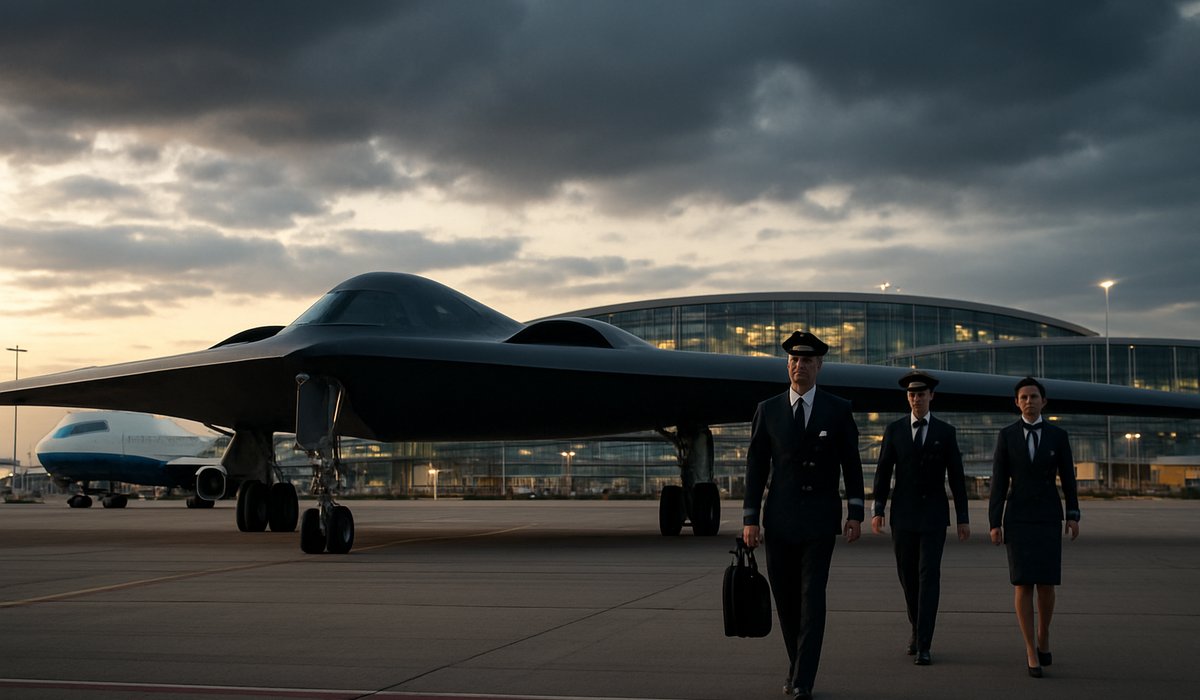
Image generated by AI
B-21 Raider's Advanced Materials Technology Eliminates Need for Expensive Climate-Controlled Hangars
Next-generation stealth bomber represents major leap forward in operational efficiency and maintenance costs over aging B-2 Spirit fleet
Generational Technological Advancement Changes Maintenance Paradigm
The U.S. Air Force's newly operational B-21 Raider marks a significant departure from its predecessor, the B-2 Spirit, fundamentally transforming how stealth aircraft are maintained and deployed. While some officials have characterized the B-21 as an "upgraded" variant of the Cold War-era B-2, military analysts and defense contractors describe it as a genuine generational advance that leverages four decades of materials science innovation.
The most consequential improvement lies in the aircraft's revolutionary Radar Absorbent Materials (RAM) coating system. Unlike the B-2 Spirit's notoriously temperamental stealth surfaces, which require climate-controlled hangars and extensive environmental management to prevent degradation, the B-21's advanced composite materials represent a dramatic enhancement in durability and operational resilience.
Superior Materials Enable Reduced Logistics Burden
Northrop Grumman engineers designed the B-21's RAM systems to withstand broader environmental fluctuations, eliminating the expensive infrastructure requirements that have constrained B-2 operations for three decades. The B-2 Spirit fleet has historically required sophisticated climate-control facilities to maintain optimal temperature and humidity levels—a constraint that significantly increases operational costs and reduces deployment flexibility.
The B-21's improved material composition addresses this vulnerability directly. By creating coatings resistant to environmental stress and thermal cycling, the new platform reduces both maintenance downtime and associated logistical overhead. This capability translates into genuine operational advantages: aircraft can deploy to austere locations, forward bases, and contingency airfields without specialized facilities, expanding strategic flexibility.
Implications for Future Military Aviation
This technological leap extends beyond mere cost reduction. The lower logistical "tail"—military terminology for the support infrastructure required to sustain operations—means the B-21 requires fewer personnel, reduced facility footprints, and streamlined supply chains compared to legacy systems. These efficiencies compound across fleet operations, potentially yielding substantial long-term savings for the Department of Defense.
The advancement also signals broader industry trends toward materials science innovation in defense aviation, where durability, maintainability, and operational independence increasingly define platform value. As geopolitical tensions persist and military readiness remains paramount, the B-21's engineering solutions position the aircraft as a genuinely transformative asset for 21st-century air operations.
FAQ
What is the main difference between B-21 Raider and B-2 Spirit maintenance requirements? The B-21 features advanced Radar Absorbent Materials that don't require climate-controlled hangars, unlike the B-2 Spirit's temperature-sensitive stealth coatings.
Why did the B-2 Spirit need specialized hangars? The B-2's stealth surface materials degraded under temperature and humidity fluctuations, necessitating expensive climate-control infrastructure to maintain aircraft integrity.
How does the B-21's lower logistical cost impact Air Force operations? Reduced maintenance infrastructure requirements allow faster deployments, expanded base options, and lower overall operational expenses across the fleet.
What technological advances enabled B-21's superior materials? Four decades of advances in composite science and materials engineering since the B-2's design in the 1980s improved coating durability and environmental resistance.
Can the B-21 operate from forward bases like other aircraft? Yes—the B-21's environmental durability allows operations from austere and forward-deployed locations without specialized facilities, enhancing strategic flexibility.
Related Travel Guides
Disclaimer
This article is for informational and educational purposes only. It does not constitute legal, financial, or professional advice. While we strive to provide accurate and up-to-date information, travel policies, regulations, and conditions change rapidly. Always verify information with official sources before making travel decisions. Nomad Lawyer makes no representations about the accuracy, reliability, completeness, or suitability of the information provided. Readers should consult qualified professionals for advice specific to their circumstances. The views expressed in this article are those of the author and do not necessarily reflect the views of Nomad Lawyer.
Kunal K Choudhary
Co-Founder & Contributor
A passionate traveller and tech enthusiast. Kunal contributes to the vision and growth of Nomad Lawyer, bringing fresh perspectives and driving the community forward.
Learn more about our team →