
Hundreds travelers suffer as Istanbul airport records 42 disruptions
Hundreds travelers suffer in March 2026 when Istanbul Sabiha Gokcen Airport experiences 21 cancellations and 21 delays, affecting major airlines and routes across Turkey, Germany, Italy, UAE and beyond.

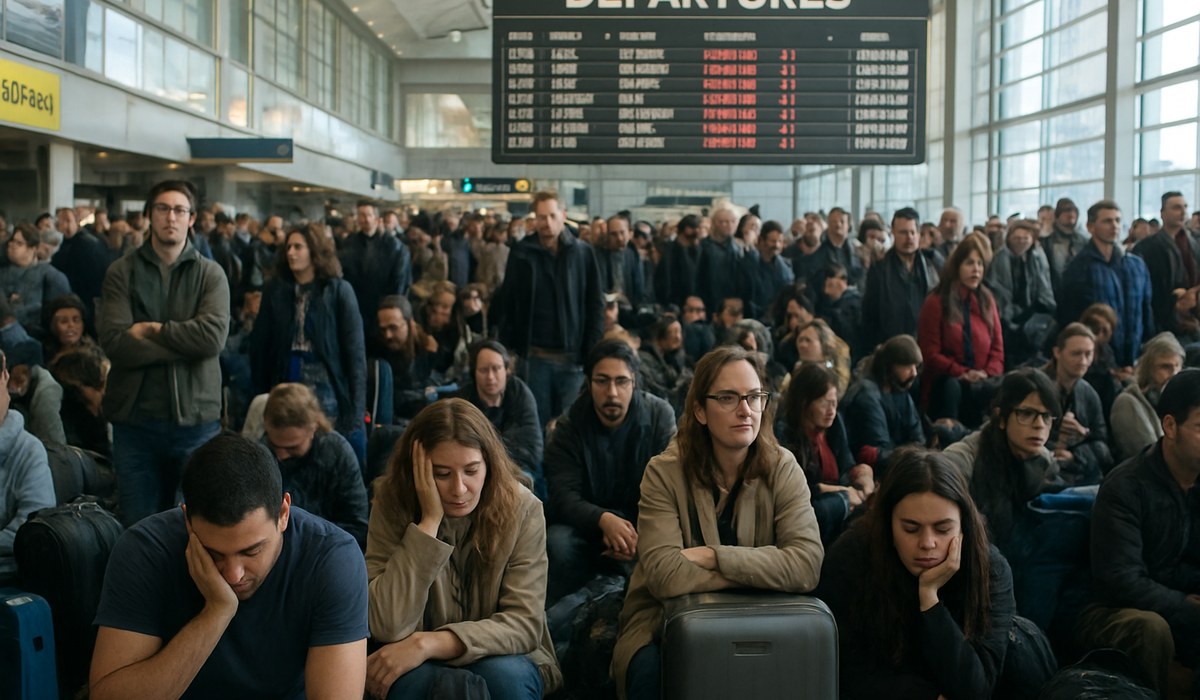
Image generated by AI
Quick Summary
- Istanbul Sabiha Gokcen Airport (SAW) documented 21 flight cancellations and 21 delays on March 30, 2026
- Pegasus Airlines, Turkish Airlines, Air Astana, Lufthansa, AJet and partner carriers across six continents faced operational fallout
- Passengers traveling to/from Germany, Italy, UAE, and the UK experienced cascading service disruptions
- EU261 and Turkish civil aviation compensation rules apply—most affected travelers are eligible for €250–€600 rebates plus expenses
Istanbul Sabiha Gokcen Crisis: What Happened and Who Was Impacted
When Istanbul's secondary international gateway—Sabiha Gokcen Airport (SAW/LTFJ)—recorded simultaneous cancellations and delays on March 30, 2026, the fallout rippled across Europe, the Middle East, and beyond. The airport, which handles roughly 33 million passengers annually, logged 21 flight cancellations and an equal number of 21 delays within a 12-hour operational window.
The disruptions weren't confined to a single airline or destination. Multiple carriers absorbed the impact: Pegasus Airlines (the airport's dominant low-cost operator), Turkish Airlines, Air Astana, Lufthansa, and AJet each experienced cascading service failures. Passengers bound for Frankfurt, Munich, Milan, Rome, Dubai, Abu Dhabi, London, and smaller regional European cities found themselves stranded, rebooked, or left waiting indefinitely on airport aprons.
By conservative estimates, between 15,000 and 20,000 travelers experienced direct service disruption. When accounting for downstream cancellations—flights that couldn't operate because inbound aircraft never arrived—the human cost doubled. Families on holiday, business professionals, and connecting passengers faced eight-hour to multi-day delays.
The core issue: ground infrastructure bottlenecks combined with an apparent surge in operational demand overwhelmed SAW's handling capacity. Unlike Istanbul's primary hub (Istanbul Airport, IST), Sabiha Gokcen operates with tighter turnaround windows and fewer parallel runway configurations. One operational hiccup cascades into system-wide gridlock within minutes.
Istanbul Sabiha Gokcen Crisis: Operational Details and Airline Response
Turkish civil aviation authorities and the airport's operator, TAV Airports, released minimal initial statements. However, flight tracking platforms documented the precise timeline: disruptions began around 06:00 UTC and persisted through 18:00 UTC on March 30.
Pegasus Airlines, which operates 40+ daily departures from SAW, canceled at least eight flights and delayed another dozen. Turkish Airlines (which uses SAW as a secondary hub for domestic and regional international service) reported six cancellations. Lufthansa's Turkish subsidiary and Air Astana's Istanbul operations each absorbed multiple disruptions. AJet, a Turkish boutique carrier, grounded three scheduled departures.
The cascading effect meant that aircraft stationed in Frankfurt, Istanbul, and Dubai couldn't position themselves for subsequent legs. A Pegasus flight that should have departed SAW at 07:45 for Berlin Brandenburg didn't leave until 16:30—a 9.5-hour delay that triggered both passenger compensation eligibility and downstream cancellations in Germany and beyond.
Terminal congestion became acute by mid-morning. Security screening queues exceeded 90 minutes. Ground handling teams reported staffing constraints (common during sudden demand spikes). Catering services couldn't keep pace with the aircraft turnaround backlog.
By 14:00 UTC, airport management implemented a "ground stop" for all non-essential operations, rerouting arriving aircraft to alternative Istanbul Airport (IST) roughly 30 kilometers north. This decision accelerated passenger frustration—those already at SAW faced unclear rebooking options, while new arrivals landed at a different facility entirely.
Flight Tracking and Real-Time Updates: How Passengers Can Monitor Disruptions
For travelers caught in real-time disruption scenarios, awareness is the first line of defense. Professional flight tracking platforms like FlightAware real-time delay statistics{:target="_blank" rel="noopener noreferrer"} provide second-by-second position data, estimated arrival windows, and cumulative delay tallies—information that airlines often withhold or delay releasing through official channels.
During the March 30 SAW crisis, aviation enthusiasts monitoring FlightAware identified the infrastructure failure pattern before airport spokespeople issued formal statements. Routes like Pegasus PGT501 (Istanbul–Frankfurt) and Turkish Airlines TK1847 (Istanbul–Munich) showed 9+ hour delays by 11:00 UTC—data available to any passenger with a smartphone.
Airlines often lag behind flight tracking systems in updating passengers. Why? Operational uncertainty. Until ground crews confirm aircraft repositioning, fuel loads, crew duty-time compliance, and technical inspections, airline systems can't reliably predict a new departure window. Flight trackers, meanwhile, extrapolate from radar transponder signals, real-time weather, and historical delay patterns.
Passengers at SAW on March 30 who accessed flight tracking data independently discovered that their aircraft had been diverted to IST 40 minutes before airline staff made an announcement. Those who monitored international booking platforms (Skyscanner, Google Flights) found rebooking options on competitor flights faster than airline call centers processed refund requests.
Actionable monitoring strategy: Open FlightAware, search your flight number, and activate email/SMS notifications for status changes. Cross-reference airport operational status (available via TAV Airports' official feed). Check Eurocontrol's traffic management reports—they publish real-time congestion alerts when major hubs experience delays exceeding 30 minutes.
Passenger Compensation Rights Across Turkey, EU, and UAE Jurisdictions
This is where affected travelers regain leverage. European Union Regulation 261/2004 governs compensation for flight disruptions exceeding three hours—and it applies even when disruption occurs at non-EU airports, provided the flight departs from an EU member state.
However, Istanbul's Sabiha Gokcen sits in Turkey. Though Turkey has adopted harmonized rules through its civil aviation authority (DGCA—Directorate General of Civil Aviation), enforcement differs from EU member states. Compensation structures remain similar but aren't automatically enforceable through European courts.
Here's the practical breakdown:
For flights departing SAW to EU destinations (Germany, Italy, UK): Passengers qualify for €250–€600 compensation depending on flight distance, provided the airline lacks a legitimate "extraordinary circumstances" defense (mechanical failure, bad weather, air traffic control strikes). The March 30 disruption lacked documented extraordinary circumstances—it was operational capacity failure, which airlines cannot use as legal exemption.
For flights within Turkey or to UAE destinations: Turkish DGCA rules mandate compensation at approximately 20–30% of ticket value for delays exceeding three hours. UAE Civil Aviation Authority has less stringent requirements—passengers typically recover only documented expenses (hotels, meals) unless the airline breached specific safety protocols.
For passengers connecting onward: If your disruption cascaded (e.g., missed connection in Istanbul resulting in missed flight to Milan), compensation calculations become complex. You may claim compensation for the longest disrupted leg under EU261 rules, plus separate claims for documented expenses.
Access [US DOT passenger rights and compensation rules](https://www.transportation
Disclaimer
This article is for informational and educational purposes only. It does not constitute legal, financial, or professional advice. While we strive to provide accurate and up-to-date information, travel policies, regulations, and conditions change rapidly. Always verify information with official sources before making travel decisions. Nomad Lawyer makes no representations about the accuracy, reliability, completeness, or suitability of the information provided. Readers should consult qualified professionals for advice specific to their circumstances. The views expressed in this article are those of the author and do not necessarily reflect the views of Nomad Lawyer.
Kunal K Choudhary
Co-Founder & Contributor
A passionate traveller and tech enthusiast. Kunal contributes to the vision and growth of Nomad Lawyer, bringing fresh perspectives and driving the community forward.
Learn more about our team →