
Wizz Air Delays Six Abu Dhabi Routes to January 2027 Amid EASA Security Guidance and Airspace Restrictions
Wizz Air postpones six Central and Eastern European routes to Abu Dhabi until January 2027 as EASA security bulletins and Iraqi airspace detours impact A321neo route economics.

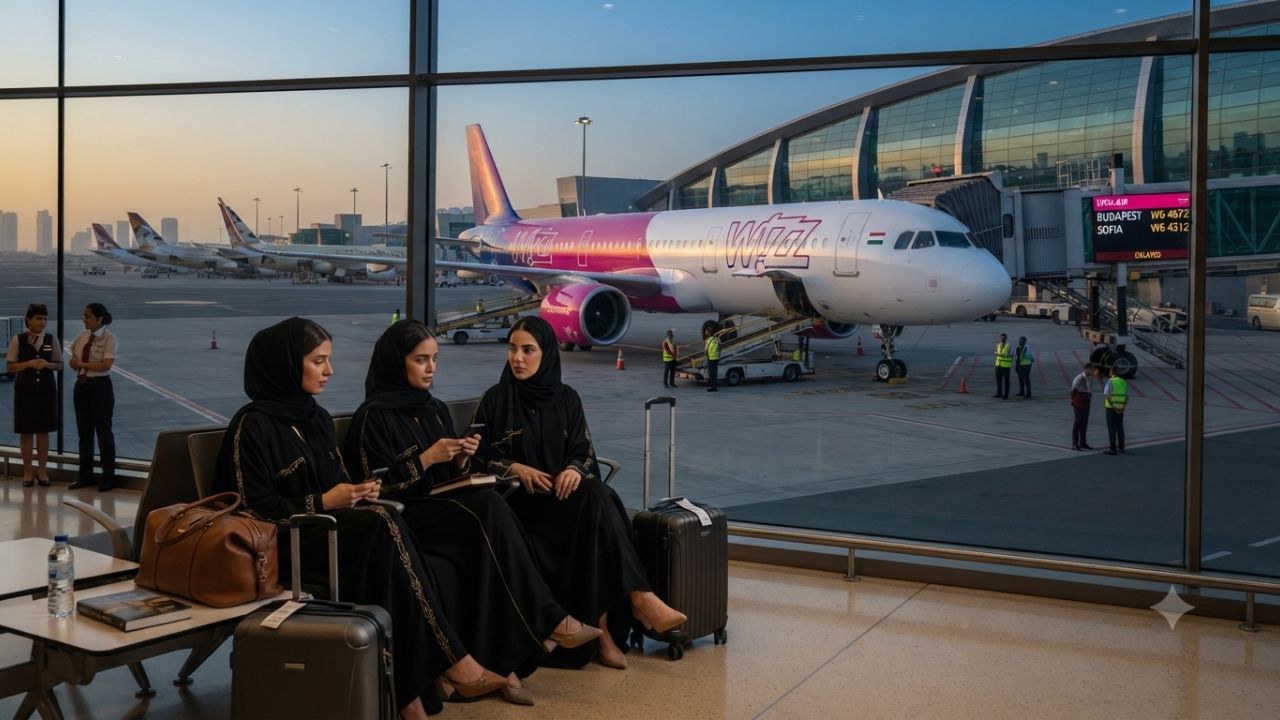
Wizz Air has postponed six European links to Abu Dhabi until January 2027 due to Middle Eastern airspace detours and security advisories. Image credit: Wizz Air
Central and Eastern European low-cost carrier Wizz Air has officially postponed the launch of six direct routes connecting European cities to Abu Dhabi, moving the planned October 2026 restart to January 10, 2027. Updated European aviation security guidance and mandatory airspace detours around Iraq have increased flight distances and operational costs, making these narrowbody routes commercially unviable for the upcoming winter season.
[Abu Dhabi, Oct 6, 2026] — Wizz Air has altered its winter schedule for the Middle East, confirming that six previously announced European services into Abu Dhabi International Airport will not take off until January 10, 2027. The carrier originally scheduled these services to launch between October 25 and October 27, 2026, as part of a major post-summer restoration campaign across the region.
The decision stems directly from updated Conflict Zone Information Bulletins issued by the European Union Aviation Safety Agency. EASA safety advisories currently direct European commercial operators to avoid flying within Iraqi airspace (FIR Baghdad) at all altitudes due to heightened military risks, potential missile traffic, and armed drone activities. For Wizz Air, avoiding this airspace requires expansive geographical detours that add significant flight time and fuel burn to its Airbus A321neo fleet.
WIZZ AIR ABU DHABI ROUTE REVISIONS
| Entity / Route | Metrics | Operational Status |
|---|---|---|
| Route | Original Restart | Revised Launch Date |
| Budapest (Hungary) | October 25, 2026 | January 10, 2027 |
| Katowice (Poland) | October 25, 2026 | January 10, 2027 |
| Kraków (Poland) | October 27, 2026 | January 10, 2027 |
| Sofia (Bulgaria) | October 27, 2026 | January 10, 2027 |
| Cluj-Napoca (Romania) | October 27, 2026 | January 10, 2027 |
| Larnaca (Cyprus) | October 27, 2026 | January 10, 2027 |
Postponed European Gateway Connections to Abu Dhabi
The six routes affected by Wizz Air's schedule update represent key point-to-point connections linking Central, Eastern, and Southern Europe directly with the United Arab Emirates. Before this adjustment, Wizz Air intended to operate 20 weekly flights across these specific city pairs starting in late October 2026.
Passengers holding reservations on these flights will now see their travel dates shifted or offered full refunds and rebooking options as Wizz Air contacts impacted customers directly.
| European Origin | Country | Original Scheduled Restart | Prior Weekly Frequency | Revised Launch Date |
|---|---|---|---|---|
| Budapest | Hungary | October 25, 2026 | 4 weekly flights | January 10, 2027 |
| Katowice | Poland | October 25, 2026 | 5 weekly flights | January 10, 2027 |
| Kraków | Poland | October 27, 2026 | 3 weekly flights | January 10, 2027 |
| Sofia | Bulgaria | October 27, 2026 | 3 weekly flights | January 10, 2027 |
| Cluj-Napoca | Romania | October 27, 2026 | 2 weekly flights | January 10, 2027 |
| Larnaca | Cyprus | October 27, 2026 | 3 weekly flights | January 10, 2027 |
The scheduled January 10 launch remains subject to ongoing security reviews and operational feasibility. Wizz Air has indicated that it will continually evaluate airspace availability and commercial conditions in the weeks leading up to early 2027.
Operational and Economic Mechanics of Avoiding Iraqi Airspace
While long-haul widebody aircraft often possess the range flexibility to absorb multi-hour airspace detours, ultra-low-cost carriers operating narrowbody jets face much tighter operational margins. Wizz Air relies heavily on dense seating configurations and maximum daily utilization of its Airbus A321neo fleet to keep unit costs low.
Avoiding Iraqi airspace alters the flight path between Central Europe and the Arabian Peninsula significantly. Bypassing FIR Baghdad requires aircraft to route around restricted corridors, which extends flying times and elevates overall fuel consumption.
For certain sectors operating at maximum range, these detours force Wizz Air to implement technical refueling stops en route. A technical stop introduces additional landing fees, ground handling charges, crew duty hour conflicts, and extended turnarounds, effectively destroying the economic model of low-fare flights. Combined with high international jet fuel prices, operating these long narrowbody sectors with added refueling stops yields unsustainable operating losses.
- Key operational pressures created by airspace detours include:
- Increased Block Times: Flights take 45 to 90 minutes longer per sector depending on the origin airport.
- Elevated Fuel Consumption: Additional fuel burned on detours reduces maximum passenger payload limits.
- Technical Refueling Stops: Selected A321neo flights must land midway to take on extra fuel, adding substantial airport fees.
- Reduced Aircraft Utilization: Longer sector times reduce the number of daily flights each airframe can complete.
- Crew Duty Limits: Extended routing risks exceeding maximum crew duty days, requiring complex staging of reserve crews.
Conflict-Zone Guidance and Regional Airspace Volatility
EASA regularly updates its Conflict Zone Information Bulletins to advise European Union air carriers on global airspace hazards. The bulletin regarding Iraqi airspace was revised on September 30, 2026, and remains valid through at least November 16, 2026, unless security conditions prompt an earlier review.
The safety agency highlighted ongoing military activity, air-defense operations, unannounced missile launches, and potential drone activity in the region as primary reasons for maintaining strict avoidance recommendations over Iraq.
It is important to emphasize that EASA has not declared Abu Dhabi International Airport or UAE airspace unsafe. Airlines operating widebody aircraft or alternative route structures continue flying into the region. Wizz Air's delay represents a commercial choice driven by narrowbody routing economics rather than a regional ban on flying to the UAE.
       [ Central & Eastern European Cities ]
                         |
                         v
          ( Direct Track via Iraq Blocked )
                         |
           +-------------+-------------+
           |                           |
           v                           v
  [ Western Detour ]          [ Southern Detour ]
 (Adds Flight Time)         (Requires Tech Stop)
           |                           |
           +-------------+-------------+
                         |
                         v
             [ Abu Dhabi Gateway (AUH) ]
Broader Network Adjustments Across Middle Eastern Destinations
The disruption to Abu Dhabi services follows Wizz Air's September 10 announcement, in which the airline outlined a major winter comeback across four Middle Eastern markets: Abu Dhabi, Dubai, Jeddah, and Amman. That overall package planned for 12 restored routes, 49 weekly flights, and approximately 470,000 seasonal seats.
Recent airspace developments have forced adjustments across other parts of that network as well:
- Amman, Jordan: Following a September 30 EASA bulletin advising against operations in the Amman Flight Information Region, Wizz Air suspended flights to Jordan through October 25, 2026.
- Dubai, UAE: Services connecting Budapest and Bucharest to Dubai remain on the winter schedule, though routing conditions are subject to continuous daily monitoring.
- Jeddah, Saudi Arabia: Services from Budapest, Rome, and Milan to Jeddah started earlier in September and continue under adjusted flight corridors.
The delay of the six Abu Dhabi routes is also notable because of changes in Wizz Air's regional operational footprint. Wizz Air Abu Dhabi, the local joint-venture subsidiary, ceased all operations on September 1, 2025. As a result, Wizz Air's presence in Abu Dhabi relies entirely on inbound aircraft based at European hubs, making those long-haul European legs vulnerable to corridor disruptions.
Essential Guidance for Impacted Wizz Air Passengers
Passengers holding reservations on any of the six affected Abu Dhabi routes between late October 2026 and early January 2027 should follow specific steps to resolve their travel plans:
- Verify Flight Status Directly: Access Wizz Air's official portal or mobile application using booking references to confirm if a specific leg is postponed.
- Review Passenger Rights Options: Passengers on cancelled flights can select a full refund to the original payment method, receive Wizz Air flight credits with promotional bonuses, or rebook for dates after January 10, 2027.
- Audit Separate Travel Components: If the Wizz Air flight was part of a self-built itinerary involving separate hotel bookings, rental cars, or connecting flights on separate tickets, contact those travel providers immediately to adjust dates.
- Avoid Non-Refundable Commitments: Given that the January 10, 2027 launch remains subject to future EASA security reviews, defer purchasing non-refundable hotel stays or tours in Abu Dhabi until flight schedules solidify.
Frequently Asked Questions
When will Wizz Air resume its delayed flights to Abu Dhabi?
Wizz Air currently plans to launch the six delayed Abu Dhabi routes on January 10, 2027. The airline previously scheduled these flights to start between October 25 and October 27, 2026.
Which specific routes are delayed until January 2027?
The delay affects Wizz Air flights connecting Abu Dhabi with six European hubs: Budapest (Hungary), Katowice (Poland), Kraków (Poland), Sofia (Bulgaria), Cluj-Napoca (Romania), and Larnaca (Cyprus).
Why did Wizz Air postpone the restart instead of rerouting flights?
Avoiding Iraqi airspace forces longer flight paths and requires technical refueling stops for A321neo aircraft on these long sectors. Additional fuel burn, technical stop fees, and elevated jet fuel prices make these low-fare flights commercially unviable under current routing constraints.
Is Abu Dhabi Airport closed to international flights?
No. Abu Dhabi International Airport is open and operating normally. The decision to delay flights belongs strictly to Wizz Air due to the specific routing and aircraft economics of flying narrowbody jets from Central Europe around restricted airspace.
What should I do if my flight was cancelled?
Wizz Air is notifying affected passengers directly. Booked passengers can request a 100% refund, convert their ticket to Wizz Air credit, or rebook their flight for travel dates after January 10, 2027.
Related Travel Guides
Disclaimer
This article is for informational and educational purposes only. It does not constitute legal, financial, or professional advice. While we strive to provide accurate and up-to-date information, travel policies, regulations, and conditions change rapidly. Always verify information with official sources before making travel decisions. Nomad Lawyer makes no representations about the accuracy, reliability, completeness, or suitability of the information provided. Readers should consult qualified professionals for advice specific to their circumstances. The views expressed in this article are those of the author and do not necessarily reflect the views of Nomad Lawyer.
Raushan Kumar
Founder & Lead Developer
Full-stack developer with 11+ years of experience and a passionate traveller. Raushan built Nomad Lawyer from the ground up with a vision to create the best travel and law experience on the web.
Learn more about our team →