
American Airlines Flight AA1396 Just Made an Emergency Landing in Little Rock — Here's What Travelers Need to Know
An American Airlines Airbus A319 en route from Nashville to Dallas was forced to divert to Little Rock, Arkansas due to an in-flight operational issue on March 14.

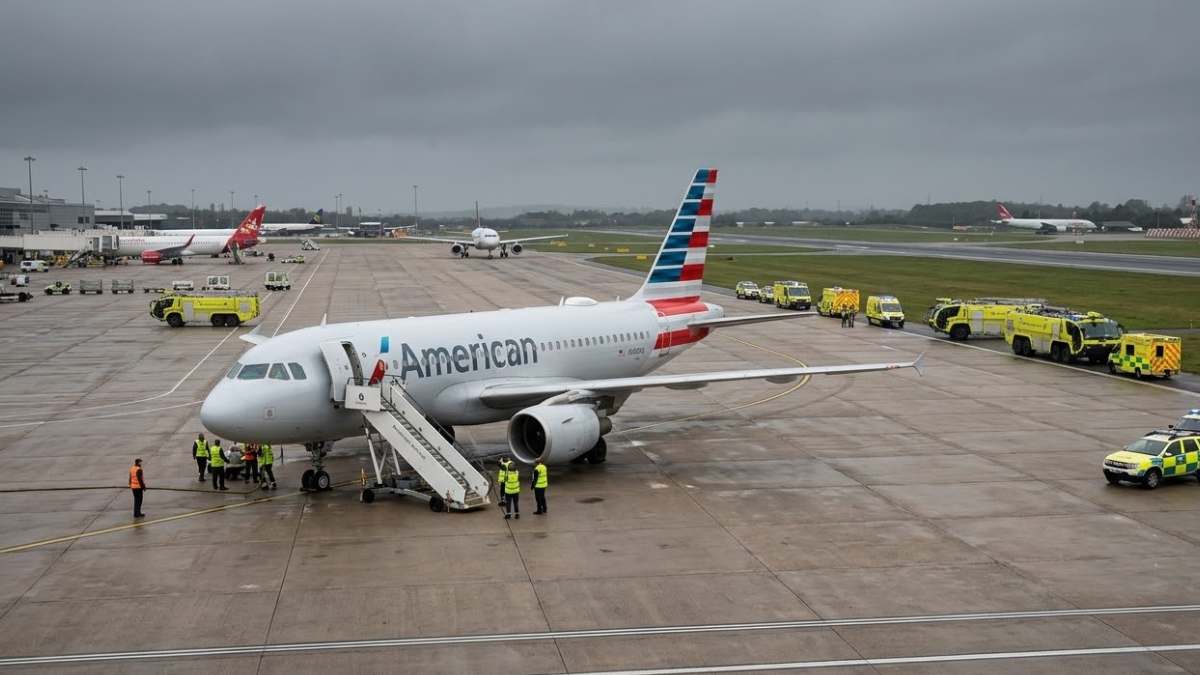
Image generated with AI
Quick Summary
- American Airlines Flight AA1396 diverted to Little Rock (LIT) during a routine flight from Nashville to Dallas
- The aircraft, an Airbus A319 (registration N730US), landed safely following strict aviation safety protocols
- The diversion was prompted by an in-flight operational concern
- Passengers are currently awaiting onward travel arrangements while the aircraft undergoes operational checks
Passengers on board a routine domestic flight from Tennessee to Texas experienced an unexpected disruption on March 14, 2026, when their aircraft was forced to divert mid-air. American Airlines Flight AA1396, originally scheduled to fly from Nashville International Airport (BNA) to Dallas/Fort Worth International Airport (DFW), made an emergency landing at Bill and Hillary Clinton National Airport in Little Rock (LIT). The crew initiated the diversion as a precautionary measure following an undisclosed in-flight operational issue, ensuring the safety of everyone on board.
Flight Diverts While En Route from Nashville to Dallas
What began as a standard short-haul operation quickly shifted when the flight deck crew detected an operational concern. American Airlines Flight AA1396 had departed Nashville earlier in the day, climbing toward cruising altitude en route to Dallas — one of the carrier's largest and busiest operational hubs.
However, during the active flight phase, the crew determined that continuing to Texas was not the safest course of action. Acting entirely within established aviation safety parameters, the pilots made the decision to reroute the aircraft toward Arkansas. Little Rock serves as a common and strategically located alternate airport for commercial flights crossing the central United States, making it the ideal diversion point for this incident.
Aircraft and Flight Details Confirm Diversion
Flight tracking data has provided clear confirmation of the aircraft's movements during the emergency landing sequence.
- Aircraft Type: Airbus A319 (a narrow-body jet frequently used for short- to medium-haul domestic routes)
- Registration Number: N730US
- Flight Number: AA1396
- Date of Incident: March 14, 2026
According to telemetric flight data, the final phase of the aircraft's diversion concluded at 18:07 UTC. At this exact moment, the aircraft recorded a barometric altitude of 0 feet, confirming a successful touchdown. Subsequent ground speed data registered at 0 knots, indicating the Airbus A319 had safely come to a complete stop on the Little Rock runway or taxiway. During its final approach into the airport, the aircraft maintained a track heading of approximately 42 degrees.
Little Rock Airport Serves as Alternate Landing Location
Bill and Hillary Clinton National Airport (LIT) in Little Rock is well-equipped to handle unscheduled arrivals from major commercial carriers. Its geographic positioning makes it a highly practical diversion location for flights operating between the southern and central grids of the U.S. airspace.
The airport features the necessary runway length, advanced air traffic control infrastructure, and immediate-response emergency teams required to safely accommodate an Airbus A319 under emergency or precautionary conditions.
Aviation Safety Protocols Guide Emergency Diversions
When a commercial flight diverts mid-air, it is not an improvised action. Pilots follow highly scripted, strict aviation safety protocols designed precisely for these moments.
During the AA1396 diversion, the flight crew continuously evaluated the aircraft's operational conditions and swiftly identified Little Rock as the nearest suitable airport. Air traffic controllers managed the process from the ground, clearing local airspace, providing the crew with new routing vectors, and coordinating with LIT airport authorities.
Ground teams in Little Rock simultaneously mobilized emergency response units to meet the aircraft upon landing — a standard precautionary procedure for any unscheduled landing, regardless of the severity of the in-flight issue.
While the term "emergency landing" can cause alarm, precautionary diversions happen regularly in commercial aviation. They can be triggered by technical alerts, sudden weather shifts, minor operational anomalies, or onboard medical emergencies. The overriding principle of commercial aviation is safety first — meaning crews are trained to divert even when an issue is purely precautionary rather than immediately critical.
Aircraft Remains Grounded for Operational Checks
Following the safe landing at Little Rock, the Airbus A319 remained grounded on the tarmac. Standard airline procedures dictate that any aircraft involved in a diversion must undergo thorough operational assessments.
Maintenance teams will now rigorously inspect the aircraft to determine whether mechanical repairs, extensive maintenance checks, or simple crew changes are required before the plane is cleared to return to active service. As of publication, American Airlines has not publicly confirmed the specific technical or operational reason that triggered the diversion of Flight AA1396.
Passengers Await Further Travel Arrangements
For the passengers of Flight AA1396, the safe landing marks the beginning of a logistical waiting period. American Airlines personnel on the ground in Little Rock are currently assisting those affected by the diversion.
In these scenarios, airlines typically deploy several solutions to ensure passengers reach their final destinations. This may include bringing in a replacement aircraft, booking passengers onto alternate scheduled flights out of Little Rock, or arranging localized ground transport.
Ultimately, the successful diversion of American Airlines Flight AA1396 is a testament to the effectiveness of modern aviation safety systems. From the highly trained flight crew making the critical call to divert, to the seamless coordination with air traffic control and ground response teams, the established procedures ensured the most important outcome: the complete safety of all passengers and crew on board.
Frequently Asked Questions
Why did American Airlines Flight AA1396 make an emergency landing? The aircraft diverted as a precautionary measure due to an undisclosed in-flight operational problem while en route from Nashville to Dallas. The crew followed safety protocols and landed safely in Little Rock.
What type of plane was operating Flight AA1396? The flight was operated by an Airbus A319, a narrow-body aircraft commonly used by American Airlines for domestic routes. Its registration number is N730US.
Where did Flight AA1396 land? The flight diverted to Bill and Hillary Clinton National Airport (LIT) in Little Rock, Arkansas, which frequently serves as an alternate landing location for central U.S. flight routes.
Were passengers on AA1396 hurt? No. The aircraft safely completed the emergency landing and came to a complete stop. Passengers are currently receiving assistance from the airline to arrange alternate travel to Dallas.
Related Travel Guides
600+ US Flight Cancellations: Delta, American & United Ground Thousands During March Storm
Canada Flight Chaos: 60 Cancellations and 635 Delays as Arctic Storms Ground Flights
Asia Hit by 568 Cancellations and 2,075 Delays — Bangkok, Delhi, Tokyo and Doha Worst Affected
Disclaimer
This article is for informational and educational purposes only. It does not constitute legal, financial, or professional advice. While we strive to provide accurate and up-to-date information, travel policies, regulations, and conditions change rapidly. Always verify information with official sources before making travel decisions. Nomad Lawyer makes no representations about the accuracy, reliability, completeness, or suitability of the information provided. Readers should consult qualified professionals for advice specific to their circumstances. The views expressed in this article are those of the author and do not necessarily reflect the views of Nomad Lawyer.
Raushan Kumar
Founder & Lead Developer
Full-stack developer with 11+ years of experience and a passionate traveller. Raushan built Nomad Lawyer from the ground up with a vision to create the best travel and law experience on the web.
Learn more about our team →