
Australia and New Zealand Airlines Cut Flight Capacity by 10% Amid Fuel Shortages and Airspace Crisis
Qantas, Jetstar, Air New Zealand, and Virgin Australia cut Oceania flight capacity by 10% in October 2026 as fuel market volatility and Middle East airspace detours drive up operating costs.

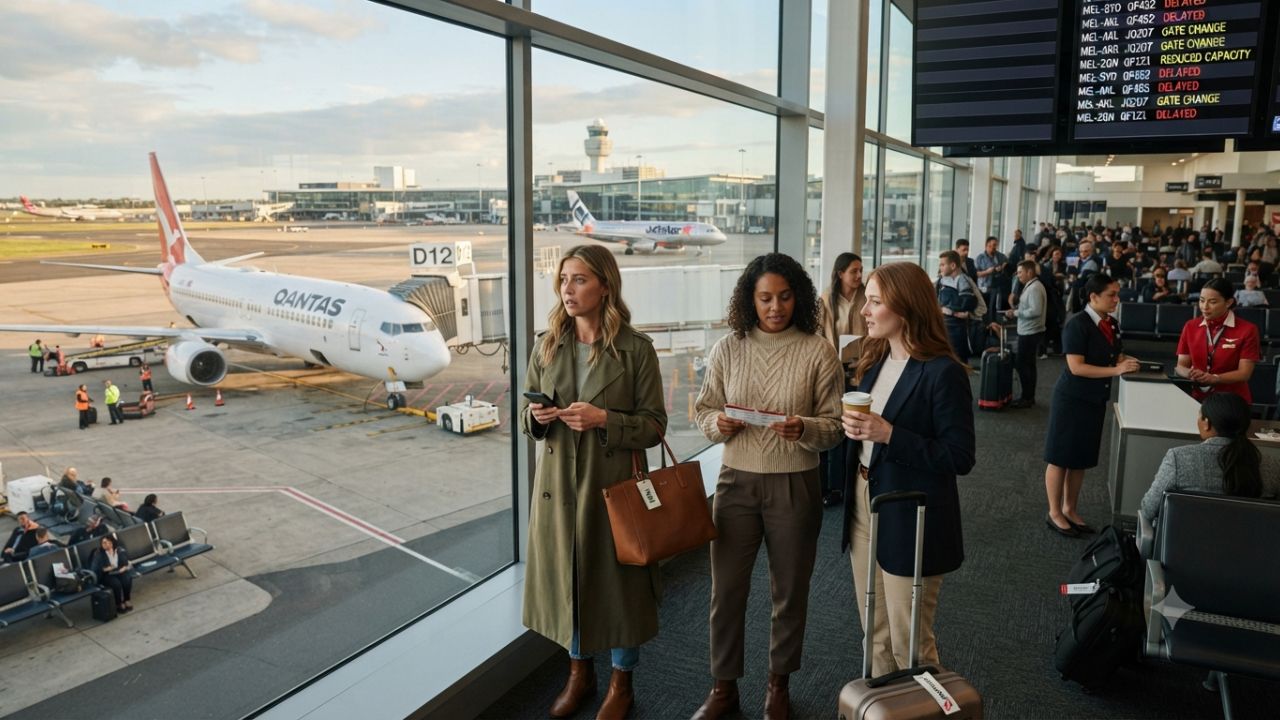
Oceania airlines implement sweeping 10% capacity reductions across domestic and trans-Tasman routes amid fuel price pressures. Image credit: Melbourne Airport
Major airlines across Oceania have formally instituted a 10 percent reduction in flight capacity across domestic and trans-Tasman routes, creating significant scheduling constraints and driving airfares up by 10 to 15 percent. Operational disruptions caused by global jet fuel supply bottlenecks and extended Middle East airspace detours have forced Qantas, Jetstar, Air New Zealand, and Virgin Australia to consolidate networks to manage soaring costs.
[Sydney, Oct 6, 2026] — Commercial aviation across Australia and New Zealand faces severe schedule contractions entering October 2026, as the region's primary carriers execute coordinated capacity reductions averaging 10 percent. The strategic trim impacts trunk routes between capital cities, regional links, and the trans-Tasman corridor connecting both nations.
Rising jet fuel prices and operational friction from long-haul reroutings have driven up carrier expenditures. Rather than maintaining full flight schedules at thin margins, airlines have systematically removed seats to protect operational reliability and balance sheet stability. The resulting seat scarcity has inflated ticket prices while leaving passengers with fewer daily flight options.
OCEANIA AIRLINE CAPACITY ADJUSTMENTS 2026
| Carrier | Key Capacity Adjustments & Network Actions |
|---|---|
| Qantas Group | Domestic capacity cuts; suspended regional |
| routes like Adelaide to Mount Gambier. | |
| Jetstar Airways | 12% trans-Tasman capacity trim; reduced |
| frequencies on Brisbane-Sydney/Melbourne. | |
| Air New Zealand | Frequency cuts on Auckland-Christchurch and |
| Wellington-Christchurch domestic sectors. | |
| Virgin Australia | East-coast corridor frequency trims; delayed |
| partner long-haul transit restorations. |
Structural Drivers of the 10 Percent Capacity Contraction
The primary force behind the schedule cuts is extreme volatility in global jet fuel refining and supply chains throughout 2026. Jet fuel represents the single largest variable expense for carriers in Oceania. Sudden price spikes forced airline management teams to abandon expansion plans and focus on operational consolidation.
Compounding these domestic pressures, persistent airspace closures in the Middle East have forced European and Gulf long-haul connections onto circuitous southern tracks. Rerouting aircraft around restricted corridors adds up to 5 percent to monthly fuel expenses for carriers serving the region.
       [ Global Jet Fuel Supply Strain ]
                      +
       [ Middle East Airspace Detours ]
                      |
                      v
      [ Soaring Airline Operating Costs ]
                      |
                      v
       [ 10% Oceania Schedule Reduction ]
                      |
       +--------------+--------------+
       |                             |
       v                             v
[ Airfares Up 10%-15% ]   [ 10% Lower Air Freight Capacity ]
These extended international sector times create wider network operational challenges. When long-haul flights experience delays while taking longer routes, aircraft rotations for subsequent domestic legs are disrupted. To prevent daily operational breakdowns across major hubs in Sydney, Melbourne, and Auckland, airlines chose to trim 10 percent of total network capacity to establish operational buffers.
Carrier Breakdown: Schedule Cuts Across Trans-Tasman and Domestic Networks
Every major airline operating within Australia and New Zealand has adjusted its network structure to navigate the current environment.
| Airline | Primary Network Actions | Specific Routes Impacted | Operational Objective |
|---|---|---|---|
| Qantas | Trimmed regional and domestic capacity to shield trunk profitability | Suspended Adelaide–Mount Gambier; consolidated main trunk departures | Consolidate resources on high-demand capital city routes |
| Jetstar | Slashed trans-Tasman capacity by 12%; reduced leisure frequencies | Reduced Gold Coast to Auckland/Christchurch/Queenstown; cut Brisbane–Sydney | Limit financial exposure to spot fuel price volatility |
| Air New Zealand | Overhauled schedule following 1,100+ earlier flight cancellations | Reduced rotations on Auckland–Christchurch and Wellington–Christchurch | Conserve fuel and stabilize core domestic inter-city network |
| Virgin Australia | Consolidated east-coast frequencies; restricted long-haul expansion | Trimmed Sydney–Melbourne–Brisbane frequency; delayed partner expansion | Preserve core grid operational reliability over network expansion |
Low-cost subsidiary Jetstar has implemented some of the deepest schedule cuts, reducing its trans-Tasman seat capacity by 12 percent. Major leisure routes connecting the Gold Coast with Auckland, Christchurch, and Queenstown have seen reduced weekly departures, while domestic routes linking Brisbane to Sydney and Melbourne operate on reduced schedules.
Air New Zealand's current schedule consolidation follows earlier operational challenges this year that resulted in more than 1,100 flight cancellations affecting 44,000 passengers. The national carrier has reduced daily rotations between Auckland, Wellington, and Christchurch to match available fuel supplies and manage fleet availability.
Consumer Protection and Regulatory Intervention
The sudden contraction in seat availability and rising airfares have triggered regulatory action in both nations.
Australian Competition and Consumer Commission Oversight
The Australian Competition and Consumer Commission has expanded its regulatory monitoring across the aviation sector. The ACCC is examining carrier refund procedures under Australian Consumer Law to ensure passenger funds are returned promptly when flights are cancelled due to schedule consolidation.
Simultaneously, the Australian Parliament is advancing new Aviation Consumer Protection legislation. This proposed framework aims to establish an independent aviation ombudsman capable of enforcing clear passenger compensation standards for airline-controlled cancellations.
New Zealand Ministry of Transport Monitoring
In New Zealand, the Ministry of Transport is enforcing compliance under the Consumer Guarantees Act. Regulatory officials are monitoring Air New Zealand and foreign carriers operating trans-Tasman routes to verify that passengers receive clear rebooking options or full refunds during schedule overhauls.
High-level bilateral discussions between Australian and New Zealand transport officials are evaluating potential targeted subsidies for essential trans-Tasman freight and passenger links to maintain bilateral economic activity.
Impact on Tourism, Hotel Occupancy, and Supply Chains
The 10 percent drop in seat capacity has affected broader tourism and freight sectors across Oceania.
- Tourism and Hospitality Disruption: Key destination markets including Queenstown, Cairns, and the Gold Coast report lower hotel occupancy rates due to reduced budget flight options. Hotels are offering extended-stay rates and targeting drive-market travelers to offset lower flight arrivals.
- Air Freight Restrictions: Approximately 80 percent of domestic air cargo moves in the belly hold of passenger aircraft. Removing 10 percent of commercial flights has constrained air freight capacity, creating transit delays for time-sensitive cargo such as fresh seafood, agricultural exports, and pharmaceuticals.
- Shift to Ground Transportation: Passengers along Australia's east coast are increasingly booking interstate rail and long-distance bus routes between Sydney, Canberra, and Melbourne. In New Zealand, Cook Strait inter-island ferry bookings have increased as travelers seek reliable alternatives to reduced domestic flights.
ECONOMIC IMPACT OF CAPACITY CUTS
| Metric | Recorded Trend / Shift |
|---|---|
| Trans-Tasman Fares | Increased by 10% to 15% year-over-year |
| Jetstar Trans-Tasman | Reduced by 12% in total seat availability |
| Regional Hotel Occupancy | Declined proportionally in major resort hubs |
| Air Freight Capacity | Reduced by 10% due to fewer passenger legs |
Strategic Policy Responses: Sustainable Aviation Fuel Mandates
To address the vulnerability exposed by global fossil fuel volatility, governments in Australia and New Zealand are accelerating investments in domestic Sustainable Aviation Fuel (SAF) production.
New policy initiatives introduced in late 2026 offer subsidies for regional biofuel refineries in Queensland and New Zealand's North Island. While SAF currently carries higher production costs than conventional jet fuel, establishing domestic refining infrastructure aims to protect regional aviation from future international fuel supply shocks.
Traveler Recommendations for Navigating Flight Reductions
Passengers traveling within Australia or across the trans-Tasman corridor during late 2026 and early 2027 should adapt their planning:
- Book Well in Advance: With 10 percent fewer seats available, last-minute flight availability is limited and fares increase sharply close to departure dates.
- Review Airline Cancellation Terms: Verify whether purchased fare classes qualify for cash refunds or credit vouchers in the event of schedule modifications.
- Secure Travel Insurance: Select travel insurance policies that explicitly cover travel disruptions resulting from airline schedule consolidations and capacity changes.
- Allow Extra Transit Time: Build buffer time into itineraries requiring multi-leg connections, as reduced flight frequencies limit same-day rebooking options if delays occur.
Frequently Asked Questions
Why have airlines cut flight capacity in Australia and New Zealand by 10%?
Airlines implemented schedule cuts due to global jet fuel supply shortages, elevated fuel prices, and operational complications caused by Middle East airspace detours. These factors significantly increased operating expenses across domestic and trans-Tasman routes.
Which airlines are reducing flights?
All major regional carriers have trimmed schedules, including Qantas, Jetstar, Air New Zealand, and Virgin Australia. Jetstar cut its trans-Tasman capacity by 12 percent, while Qantas suspended select regional connections like Adelaide–Mount Gambier.
How much have airfares increased as a result?
With 10 percent fewer seats available in the market, average airfares across domestic trunk routes and trans-Tasman services have risen by 10 to 15 percent compared to previous levels.
Are passenger refund rights protected during these schedule cuts?
Yes. The ACCC in Australia and the Ministry of Transport in New Zealand are actively monitoring carrier compliance under local consumer protection laws. Passengers whose flights are cancelled due to airline schedule reductions are entitled to rebooking or refunds.
How long are these flight reductions expected to last?
Airline projections indicate that tight seat availability and reduced schedules will persist through at least the first two quarters of 2027, until global fuel refining markets stabilize and international airspace restrictions ease.
Related Travel Guides
Disclaimer
This article is for informational and educational purposes only. It does not constitute legal, financial, or professional advice. While we strive to provide accurate and up-to-date information, travel policies, regulations, and conditions change rapidly. Always verify information with official sources before making travel decisions. Nomad Lawyer makes no representations about the accuracy, reliability, completeness, or suitability of the information provided. Readers should consult qualified professionals for advice specific to their circumstances. The views expressed in this article are those of the author and do not necessarily reflect the views of Nomad Lawyer.
Raushan Kumar
Founder & Lead Developer
Full-stack developer with 11+ years of experience and a passionate traveller. Raushan built Nomad Lawyer from the ground up with a vision to create the best travel and law experience on the web.
Learn more about our team →