
Why The F-16 Fighting Falcon Dominates Global Air Forces Without Advanced Thrust Vectoring Technology
Breaking airline news and aviation industry updates for 2026.

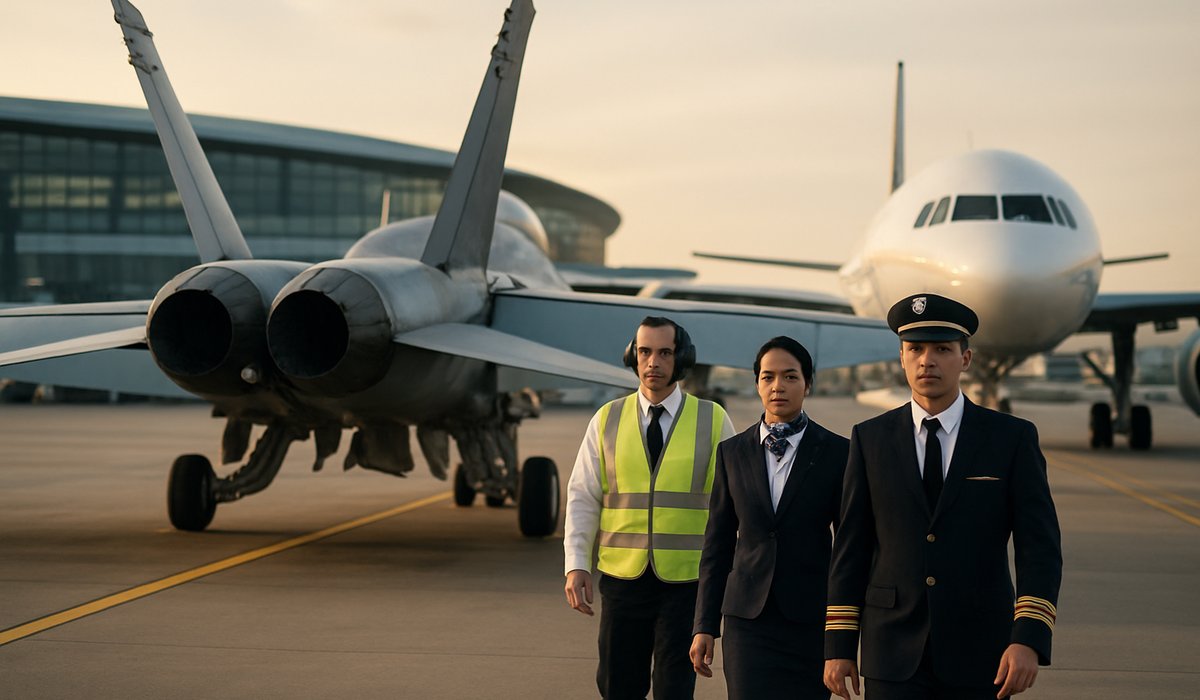
Image generated by AI
Why The F-16 Fighting Falcon Dominates Global Air Forces Without Advanced Thrust Vectoring Technology
The world's most-produced fighter jet relies on proven design principles rather than cutting-edge propulsion systems—a strategic choice that explains its five-decade market dominance
A Half-Century Design Still Leading the Skies
The F-16 Fighting Falcon, originally engineered by General Dynamics and now manufactured by Lockheed Martin, continues to cement its position as aviation's most prolific military aircraft despite design foundations stretching back over 50 years. Even as the United States Air Force deploys fifth-generation stealth fighters with advanced capabilities, the F-16 remains the backbone of American fighter squadrons—a testament to engineering fundamentals that transcend technological novelty.
Design Philosophy Over Technological Complexity
The absence of thrust vectoring nozzles on the F-16 reflects a deliberate engineering philosophy prioritizing reliability, maintainability, and cost-effectiveness over cutting-edge propulsion systems. Thrust vectoring technology—which allows jet nozzles to alter direction for enhanced maneuverability—adds significant complexity, weight, and maintenance requirements that would fundamentally alter the aircraft's operational economics.
Lockheed Martin's decision to maintain conventional nozzle architecture stems from the F-16's core design principle: delivering maximum combat effectiveness within practical budgetary constraints. The aircraft's exceptional turn rate and agility derive from aerodynamic design, lightweight construction, and responsive flight control systems rather than advanced engine vectoring, demonstrating that superior maneuverability doesn't necessarily demand the most sophisticated propulsion technology available.
Global Production Numbers Validate the Strategy
With thousands of F-16s delivered to allied nations across Europe, the Middle East, and Asia-Pacific regions, the Fighting Falcon's production numbers validate this engineering approach. The aircraft's simplicity compared to competitors translates directly into lower acquisition costs, reduced pilot training complexity, and streamlined logistics chains—factors that appeal to defense budgets worldwide.
The F-16's continued production runs underscore a fundamental principle in aviation procurement: proven, maintainable systems often outcompete technically advanced alternatives when operational sustainability and total lifecycle costs enter the equation.
The Broader Implications for Military Aviation
This design choice highlights an ongoing tension within defense aviation between technological advancement and practical operational reality. While newer platforms incorporate advanced features like thrust vectoring, the F-16's persistence suggests that generational technological leaps don't always guarantee market displacement when earlier designs remain operationally superior and economically rational.
Frequently Asked Questions
Why does the F-16 lack thrust vectoring nozzles when modern fighters have them? The F-16 prioritizes proven aerodynamic design, cost-effectiveness, and maintainability. Thrust vectoring adds complexity and weight without proportional benefits for the F-16's mission profile.
Is the F-16 outdated compared to fifth-generation fighters? No. The F-16 remains highly capable for most combat scenarios. While newer platforms offer stealth advantages, the Falcon's proven reliability and lower costs keep it dominant in global air forces.
How many F-16s have been produced worldwide? Over 4,600 F-16s have been delivered since production began, making it the most widely-operated fighter jet in history.
Will the F-16 eventually be retired from service? Not in the near term. Modern upgrade packages extend operational relevance, and many nations continue acquiring new airframes rather than transitioning to costlier fifth-generation alternatives.
Does thrust vectoring provide decisive advantages in modern air combat? Thrust vectoring enhances maneuverability but remains secondary to sensor systems, stealth capabilities, and pilot training in contemporary air warfare.
Related Travel Guides
Flight Delay Compensation Guide 2026
Understanding Airline Route Changes
Airport Security Process Updated (2026)
External Resources
Disclaimer
This article is for informational and educational purposes only. It does not constitute legal, financial, or professional advice. While we strive to provide accurate and up-to-date information, travel policies, regulations, and conditions change rapidly. Always verify information with official sources before making travel decisions. Nomad Lawyer makes no representations about the accuracy, reliability, completeness, or suitability of the information provided. Readers should consult qualified professionals for advice specific to their circumstances. The views expressed in this article are those of the author and do not necessarily reflect the views of Nomad Lawyer.
Kunal K Choudhary
Co-Founder & Contributor
A passionate traveller and tech enthusiast. Kunal contributes to the vision and growth of Nomad Lawyer, bringing fresh perspectives and driving the community forward.
Learn more about our team →