
Spirit Airlines' Collapse Could Drive Up Fares Across the Entire US Aviation Market—Even on Routes It Never Served
Breaking airline news and aviation industry updates for 2026.

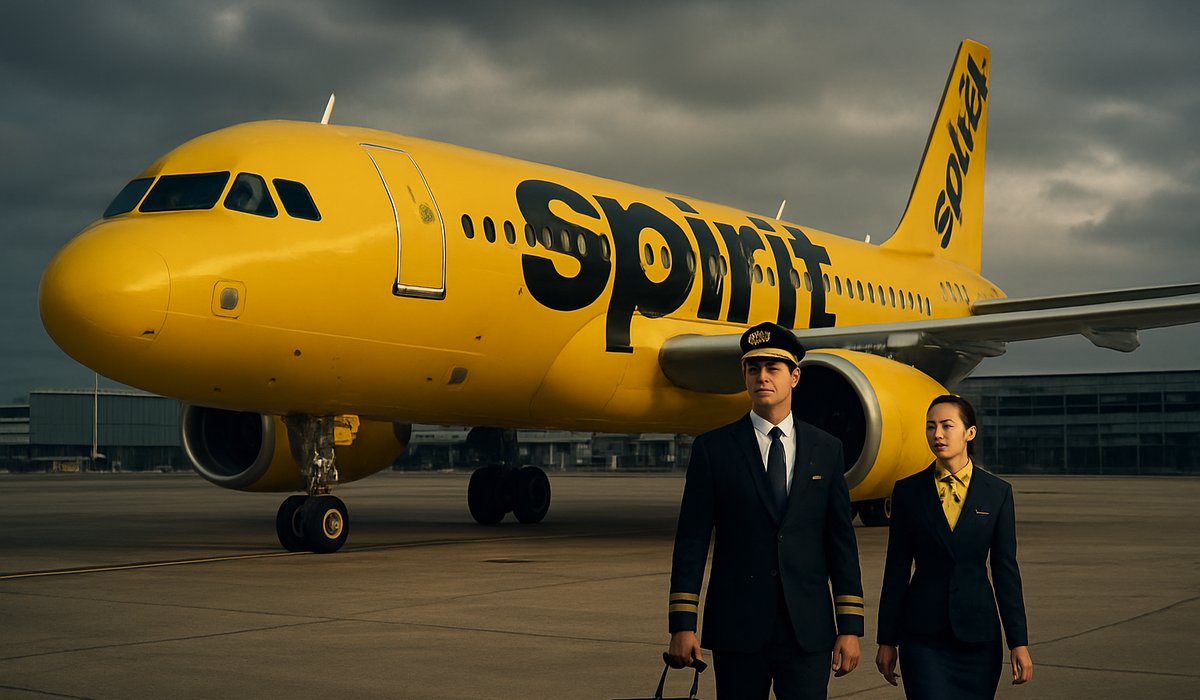
Image generated by AI
Spirit Airlines' Collapse Could Drive Up Fares Across the Entire US Aviation Market—Even on Routes It Never Served
The potential demise of America's largest budget carrier threatens to eliminate competitive pricing pressure, with far-reaching consequences for consumers nationwide
The Competitive Pressure Spirit Provides
The potential exit of Spirit Airlines from the commercial aviation landscape represents far more than the loss of a single carrier—it signals a fundamental shift in the competitive dynamics that have kept American airfares in check. Industry analysts warn that if the ultra-low-cost carrier (ULCC) ceases operations, the elimination of its aggressive pricing strategy could trigger widespread fare increases across routes where Spirit never operated a single flight.
Spirit's distinctive business model, built on razor-thin margins and relentless cost-cutting, has served as a competitive benchmark that forces larger carriers to justify their pricing. The airline's presence on specific routes has created a pricing ceiling effect that extends throughout the broader aviation market. Without this persistent downward pressure, legacy carriers and competing budget airlines face fewer incentives to maintain competitive fares on unrelated routes.
Understanding the Ripple Effect
The mechanism behind this counterintuitive outcome lies in how airlines structure their pricing strategies. Major carriers like American, Delta, and United operate interconnected networks where revenue from profitable routes subsidizes competition on price-sensitive segments. When a dominant low-cost competitor disappears entirely, the psychological and competitive incentive to maintain aggressive pricing weakens industry-wide.
"The presence of a viable ultra-low-cost competitor fundamentally changes how the entire market prices airfares," explained industry observers. Spirit's operational footprint extends across roughly 80 destinations within the United States, but its influence permeates a much larger sphere of pricing decisions made by competitors evaluating their competitive positioning.
Market Implications and Broader Trends
Aviation analysts tracking jet fuel price volatility and airline profitability metrics note that carriers have increasingly relied on ancillary revenue streams—baggage charges, seat selection fees, and booking penalties—to maintain margins. Spirit's potential disappearance would eliminate a competitor that normalized minimal baggage allowances and aggressive fee structures, removing a counterbalance to industry-wide pricing expansion.
The loss would occur amid broader consolidation pressures within the ULCC segment. With fewer budget-oriented options available to price-conscious travelers, legacy carriers would face reduced pressure to match aggressive promotional fares or maintain competitive baggage fee schedules.
Industry Response and Future Outlook
The situation underscores vulnerabilities within the ultra-low-cost carrier model following post-pandemic recovery challenges and sustained elevated fuel costs. Stakeholders across the aviation industry are monitoring Spirit's restructuring efforts closely, recognizing that its competitive role transcends its direct route network.
Frequently Asked Questions
How do airline fees connect to carriers like Spirit Airlines leaving the market? Ultra-low-cost carriers set competitive benchmarks for ancillary fees. Their exit reduces pricing pressure, allowing competitors to increase baggage charges and seat selection fees industry-wide.
Why would Spirit's collapse affect routes it never flew? Airlines adjust pricing strategies based on overall competitive positioning. The loss of a major competitor weakens incentives to maintain aggressive fares across entire networks, not just overlapping routes.
What is the relationship between jet fuel prices and ultra-low-cost carriers? ULCC models depend on operational efficiency to absorb fuel cost fluctuations. When fuel prices rise, these carriers' narrow margins compress first, increasing closure risk and reducing competitive pricing pressure.
How has the aviation industry changed since the pandemic regarding baggage charges? Carriers have expanded ancillary revenue reliance. With fewer budget competitors, pressure to maintain competitive fee structures diminishes, potentially increasing overall travel costs for consumers.
Could Spirit Airlines' disappearance raise ticket prices nationwide? Yes. Without Spirit's competitive presence forcing industry-wide pricing discipline, legacy carriers have greater flexibility to increase fares across both overlapping and non-overlapping routes.
Related Travel Guides
Flight Delay Compensation Guide 2026
Understanding Airline Route Changes
Airport Security Process Updated (2026)
External Resources
Disclaimer
This article is for informational and educational purposes only. It does not constitute legal, financial, or professional advice. While we strive to provide accurate and up-to-date information, travel policies, regulations, and conditions change rapidly. Always verify information with official sources before making travel decisions. Nomad Lawyer makes no representations about the accuracy, reliability, completeness, or suitability of the information provided. Readers should consult qualified professionals for advice specific to their circumstances. The views expressed in this article are those of the author and do not necessarily reflect the views of Nomad Lawyer.
Raushan Kumar
Founder & Lead Developer
Full-stack developer with 11+ years of experience and a passionate traveller. Raushan built Nomad Lawyer from the ground up with a vision to create the best travel and law experience on the web.
Learn more about our team →